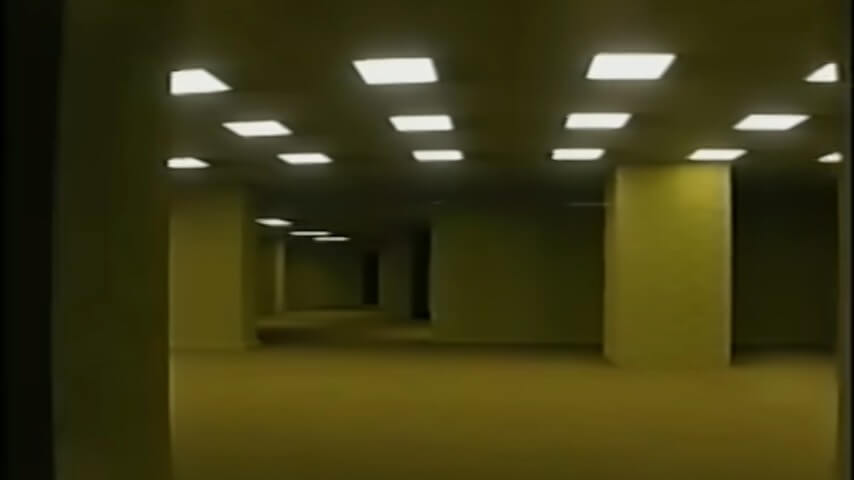
Film executives are kind of like Labrador retrievers—except instead of “Treat!” their ears perk up at phrases like “$400 million return on investment.” Nobody in Hollywood, for instance, has missed the fact that Kane Parsons’ Backrooms and Curry Barker’s Obsession have both built very large stacks of money over the last two months with roots firmly planted in the internet, and the hunt for the next online-phenomenon-turned-reliable-studio-money-maker is now well and truly underway. Now, The Wall Street Journal has issued a report diving deeper into the specific creators and producers looking to serve as the conduit from Hollywood to the YouTube generation, and it’s a fascinating reminder that there’ve been folks watching this particular pot for a couple of years at this point, just waiting for it to boil over.
Among other things, the piece outlines just how recent the tipping point has been: It details multiple instances of artists and their attached teams waiting to push for sales until after Backrooms hit theaters back in May, sensing that studio execs were about to get a powerful hankering for online-derived works. Aaron Koontz, who’s spent years directing and producing low-budget horror, and who’s positioning himself as a key producer in this space, says he was initially planning to shop around Alex Kister’s web series The Mandela Catalogue earlier this year, but then decided to wait until the specific week Parsons’ movie hit theaters before taking the film to market. The result was a bidding war that not only made Kister a millionaire, but pushed United Artists to allow the 22-year-old online movie maker to direct the film version of his horror shorts.
See also the Siren Head adaptation we wrote about earlier this month, based on artist Trevor Henderson’s viral horror creation. Despite its general ubiquity in low-budget video games and YouTube videos, Henderson had made basically no money off the online cryptid since he released it online in 2018. (Although he did garner at least some Hollywood attention, working as the monster designer for 2024’s Tarot.) Approached by that film’s producer, Scott Glassgold, about trying to sell the character in Hollywood, the pair decided to wait until after Parsons and Barker’s films landed at the box office. “Within days, studios were offering six figures for the rights,” and now, Henderson’s reportedly been paid more than $1 million for the character’s film use (while also retaining other rights to it). Filmmakers Zach Cregger and Brian Duffield, meanwhile, are currently working to adapt the creature for the big screen.
At the same time, the WSJ piece raises questions about ownership that it doesn’t fully address. Most notably, it reports that IT, and now Siren Head, producer Roy Lee is also working to adapt film shorts from popular online fiction collective The SCP Foundation, where hundreds of online authors have spent more than a decade embedding science fiction, horror, and even comedy stories within fictitious “security protocols” for dangerous supernatural objects and entities. The idea is that the most popular shorts, collected into an anthology, will then be adapted into features. Thing is, though, that the SCP has always been pretty adamant about its adherence to a Creative Commons license that, among other things, means anything made from works set in its universe is also covered under Creative Commons—which feels like the kind of thing that would give IP-hoarding Hollywood absolute conniptions. We’re not privy to any of these contracts, obviously, but they do raise the kinds of issues that are going to become extremely pertinent as authors and artists who garnered big online followings through collaboration, remixing, and freely working from ideas floating in the public consciousness now get strained, at what’s apparently going to be a pretty high rate and volume, through the Hollywood machine.


 Keep scrolling for more great stories.