In this week’s Staff Picks, our chief critics Monica Castillo and Saloni Gajjar recommend an eclectic art exhibit and the new book from the author of Say Nothing.
Monica Castillo: Ana Mendieta at the Tate Modern
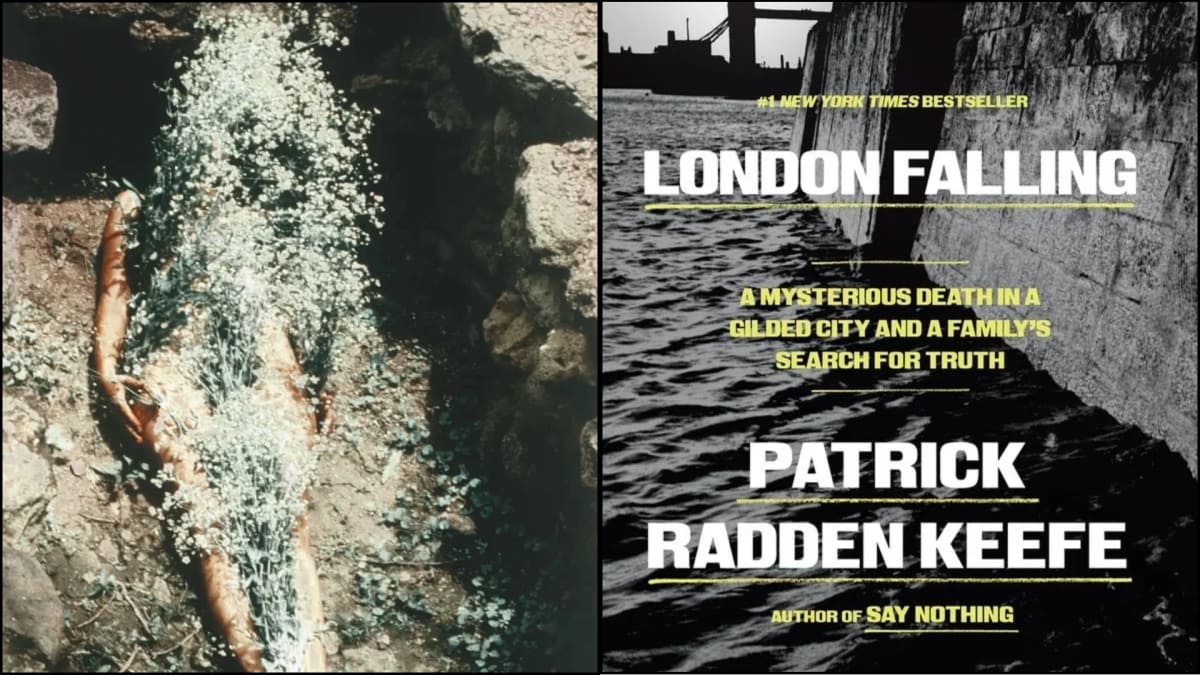
It was over a decade ago when I first learned about Ana Mendieta, the multidisciplinary Cuban-born artist. She was known for personal works of art that reflected her experience in exile, her reconnection with her culture after years in another country, and her exploration of themes of nature, the cycle of life, and the feminine experience. Although I’ve seen a number of her works over the years, I made the pilgrimage to the Tate Modern to catch their exhibition of her art, and I was not disappointed.
I saw many pieces I had never seen before, including a number of short films she made of her ephemeral art, a hypnotic collection of surreal yet mundane images—like watching the waves of the ocean wash away her recently constructed sand art in a part of Florida that holds a lot of emotional weight for the Cuban American community. There were works she made with her students during her time as an art teacher, rarely seen paintings from her early years in college, and a recreation of one of her largest pieces, an indoor installation piece from her Silueta series that recreates a forest clearing from local trees, leaves, and dirt, with the outline of a human form in green moss.
It is not meant to be walked through–the staged nature is meant to be a place of reflection on our relationship with the natural world—but its expansive overgrowth in the Tate’s large gallery gave me time to think of the nature of playfulness in Mendieta’s work, an element that often gets overlooked in some of the more somber themes of her work and life story. I’m now the same age as she was when she died, and while it took the world too long to catch up with her brilliance, I’m thrilled her work is getting the attention it deserves. If you can’t make it across the pond for the Tate’s exhibit, the Museum of Modern Art in New York just announced their career retrospective of the artist, bringing 200 of her works under the same exhibition next year. I’ll see you in line.
Saloni Gajjar: London Falling by Patrick Radden Keefe
As someone who devoured Patrick Radden Keefe’s Say Nothing, and because I was on a work trip to the U.K. a few weeks ago, I figured there was no better time to read the author’s latest, London Falling: A Mysterious Death In The Gilded City And A Family’s Search For Truth. (Keefe initially covered the subject matter in a 2024 New Yorker article that I hadn’t gotten to yet.) What I should have, but didn’t expect, was just how much the book would break my heart. Keefe uses a real-life tragedy as a gateway to probe into London’s dangerous underworld and, specifically, how certain gangsters are able to thrive in a city fueled by wealth, corruption, and ambition.
Keefe unfolds the true events in London Falling like a suspenseful murder mystery, but it’s actually a meticulously researched, compelling piece of narrative non-fiction. It centers on the suspicious November 2019 death of 19-year-old Zac Brettler, who jumped from the balcony of a luxury building on the Thames riverbank, right across an MI5 office building. While Brettler was born and raised in London’s Maida Vale neighborhood, he lied about his identity to others without his family’s knowledge. When he was still a student at a private high school, Brettler pretended to be Zac Ismailov, the son of a non-existent Russian oligarch set to inherit millions. He hoped this would bring him into the orbit of businessmen and investors to start making money early. As his parents tell Keefe over several in-depth and moving interviews, Brettler became obsessed with being rich and grew somewhat distant from them, as well his brother, Joe, in his final few years.
Instead, he started spending a lot of time with an older, well-dressed “entrepreneur,” Akbar Shamji, whose parents fled Uganda when Shamji was only 1-year-old. At some point, Shamji introduced Brettler to the debt collector and drug trafficker Verinder Sharma, a.k.a. Indian Dave (because he was born to Indian immigrants in Leicestershire, England). London Falling digs into each of their personal and familial backgrounds going back decades, and he also inspects London’s financial, religious, and immigration history, to reconstruct how the three men came together and wound up at Sharma’s apartment the night Brettler supposedly died by suicide.
As expected, London Falling is dense, but Keefe’s prose never feels labryinthine. On the contrary, he impressively tackles a plethora of viewpoints, none more so than Brettler’s parents, Rachelle and Matthew, who set out to learn why exactly their young son died and why the Metropolitan Police failed to figure it out. Keefe pulls from official records, police interview transcripts, emails, and security footage to piece together Brettler’s life and death in what is a terrific, terrifying, and traumatizing read. It’s no wonder A24 already has the rights to turn London Falling into a TV series.


 Keep scrolling for more great stories.