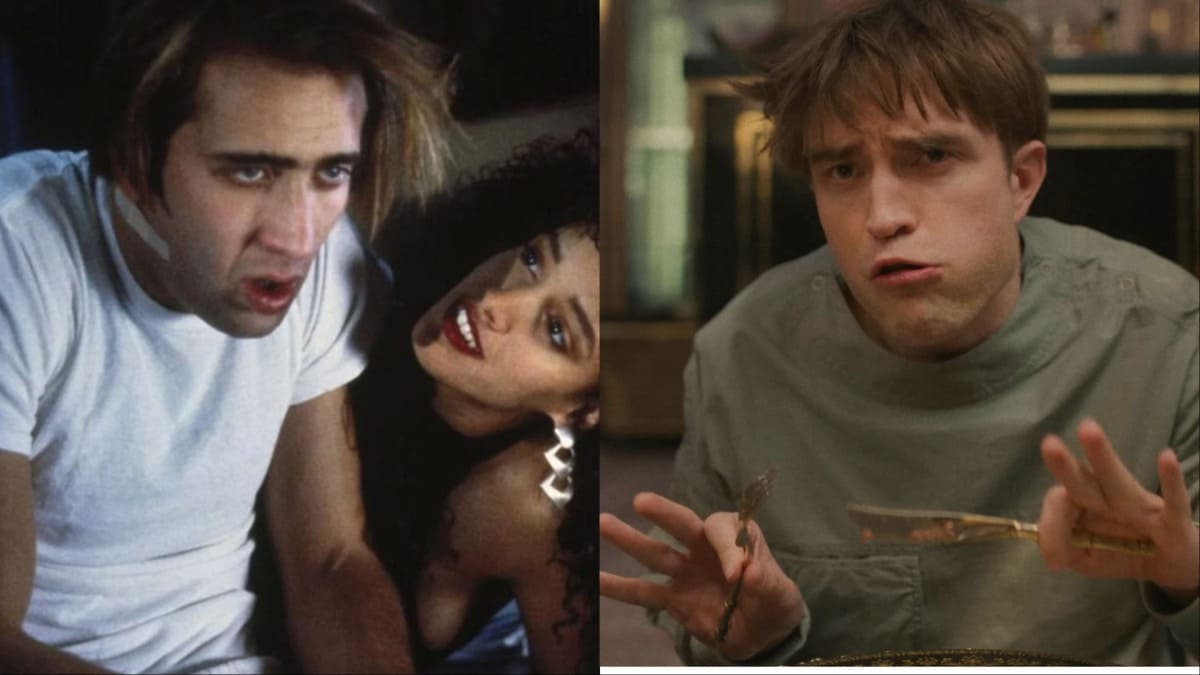
In Primetime, Lance Oppenheim’s trippy thriller about the rise and fall of To Catch A Predator, Chris Hansen, the host famous for the most ratings-friendly entrapments on network TV, is a man on a mission. He is ravenous in his hunt for success, and if he can spin it as an act of vigilante justice, then all the better. As played by Robert Pattinson, his voice and mannerisms are spot-on recreations of the real thing, but this Hansen is also not a man too concerned with his own humanity. He prowls like a wild animal, steely-eyed and single-minded in his rotten agenda. Pattinson’s Hansen is less a real person than a deranged creation of the entertainment-industrial complex. He arrives in Primetime as a clearly corrupt individual and only gets worse from there. It is a version of the real thing that could only have been concocted by Pattinson, who is perhaps his generation’s nerviest actor. With Primetime, and the rest of his big roles in 2026, he thoroughly cements that reputation while also earning a new crown: the heir to the throne of Nicolas Cage.
The one-time sparkly vampire has spent his post-Twilight years building up an enviable filmography of auteur-driven indie roles that have allowed him to indulge his most Cage-like sensibilities. Eager to avoid being pigeonholed as a traditional heartthrob, Pattinson has embraced the off-putting and unhinged, perhaps hinting at the “little gremlin” he’s said is inside of him. In films from filmmakers like Claire Denis, the Safdie brothers, and Bong Joon Ho, he has reveled in playing realism-disrupting oddballs who feel as though they are not of this realm. The more you look at his work, the more you realize how much common ground he shares with our most famous, freaky acting rule-breaker.
Nicolas Cage has described his acting style as “Western Kabuki” and “Nouveau Shamanic,” approaches to the craft that prioritize spontaneity and surprise over rigor. While it’s a method that can lead to naturalistic results, it’s more often led to off-kilter and occasionally alien characters. Even in stories of gritty realism, Cage performances can feel as though they’re ripped from an alternate universe, like the wacky-voiced high-school heartthrob in Peggy Sue Got Married or the deluded yuppie in Vampire’s Kiss. Expect weird outbursts, accents of unclear origin, and an intensity that swings wildly into the cartoonish. The world Cage characters inhabit may be familiar, but he is a figure of the uncanny. It’s a pattern familiar to Pattinson performances, and it’s what makes his work so thrilling.
Like many conventionally hot dudes who got their start playing eye candy for teenage girls, Pattinson has tried to shake off the shackles of his handsomeness through performances of antiheroes, sniveling creeps, and inept losers. When he does take on a role requiring some of that movie-star glow, he typically imbues it with a disconcerting edge. Consider The Odyssey, where his take on the scorned suitor Antinous was a sleazy cross between James Woods in Casino and Moe Szyslak from The Simpsons. You never imagine for one second that this weasel could successfully seduce Penelope, so sniveling and steeped in playground petulance is he. Antinous feels like the shadowverse sibling of Ronny Cammareri, the Byronic baker of melodramatic proportions in Moonstruck, albeit the one who’s no good at seducing women.
Great Cage characters break down the walls of verisimilitude and reveal the absurdity of even the heftiest of situations. In Con Air, Cameron Poe may be a former Army Ranger with an involuntary manslaughter charge, but amid the plane full of mass-murdering sociopaths and monologuing criminals, Cage plays him as an aw-shucks guy who rejects the trappings of the action-hero role. He’s an ill fit for the job, deliberately so, and it drives home the ludicrousness of the entire concept. Sometimes, you need that artifice, which Pattinson keenly understands. The King, David Michôd’s take on the Henry plays, is focused more on historical grit than the poeticism of Shakespeare. But right in the middle of this grimy and rather soporific film is Pattinson as the Dauphin, pale-faced and talking like Pepe Le Pew. He is the villain, and Pattinson plays him with a capital V. In any other situation, this guy would get punched in the face instantly, but his strain of disconcerting camp is necessary: only a literal royal could get away with this. The real world does not apply to this character, so why should the rules of the movie apply to the man playing him?
This is partly the logic behind both actors’ penchant for unexpected accent choices. They serve to give both Cage and Pattinson a foundation to build something distinctive upon while drawing parallels with their inspirations. Both actors are cineastes to the core, and every seemingly daft choice reveals that. Pattinson took inspiration from Ren And Stimpy for Mickey and his latest clone in the sci-fi comedy Mickey 17, which drove home the cartoonish nature of this heightened space satire. For his violent vigilante role in Kick-Ass, who else could Cage pay homage to but Adam West with his stilted and hilariously unthreatening cadence? Precise, Meryl Streep-level recreations of dialects matter less for these performers than the ways that the voice can reveal an untold truth. Cage and Pattinson have played real people, but being accurate in those inflections is not their focus. Surely, these shifts away from the familiar reveal something deeper about the inner lives of Charlie Kaufman and Chris Hansen than if the actors did copy-paste replications of their movements.
After a few years of being the meme-inspiring representation of “bad acting,” Cage has seen the cultural tides turn back in his favor. A string of acclaimed performances in indie hits like Mandy and Dream Scenario reminded audiences of his range, but also of the true potency of the Cage Rage when applied effectively. The intensity of his greatest performances always carries a strain of vulnerability, even when he’s bug-eyed and bellowing from the rooftops. In Pig, which features one of his greatest performances, Cage never raises his voice, but retains that outsider nature that balances peculiarity and tenderness. It’s a lot harder to be bizarre without going big, but Cage and Pattinson can pull it off.
So much of modern American film and TV prioritizes realism in both story and performance. The Oscars go wild for pinpoint-specific recreations of recognizable figures, or a blend of self-serious stoicism and yelled monologues that beg for critics to herald them for being oh-so-close to real life. When anything outsteps those boundaries, it feels uncanny, even reality-breaking, in comparison. Yet therein lies the opportunity for something genuinely new. Ethan Hawke, who worked with Cage on Lord Of War, said he was “the only actor since Marlon Brando that’s actually done anything new with the art of acting; he’s successfully taken us away from an obsession with naturalism into a kind of presentation style of acting that I imagine was popular with the old troubadours.” That nails both men’s approach to acting: presentation over performance, a willingness to challenge the stifling norms that limit actors to a staid definition of “accuracy,” even in roles based on real figures. The ludicrous and the intense are not enemies. Sometimes, you need someone to puncture the stoicism, and mercifully, Robert Pattinson is ensuring that Cage’s innovation will live on with a new generation.


 Keep scrolling for more great stories.