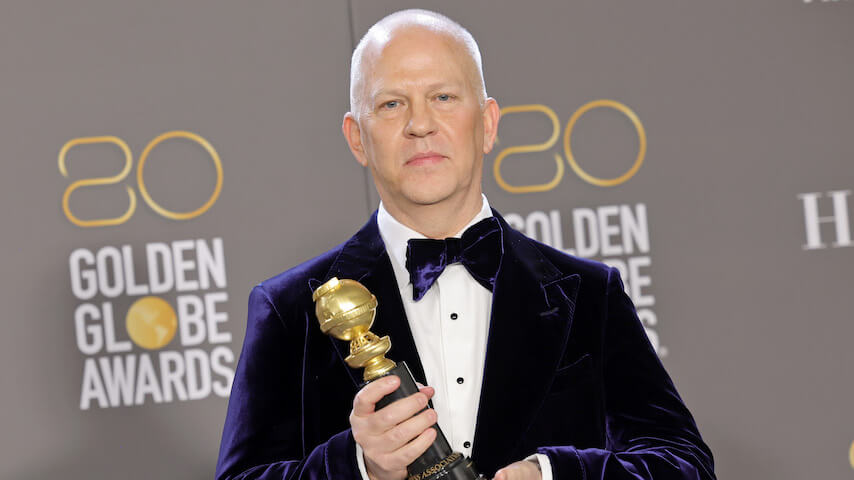
Say what you will about Ryan Murphy, but there is almost no genre that he hasn’t touched. Over the decades, he’s worked on shows as disparate as Glee, American Horror Story, and The People V. O.J. Simpson, and directed films like The Normal Heart and The Prom. Even so, you can generally tell a Murphy project when you see it. There is a certain tone, a certain look, a certain sensibility. But, says Murphy, that sensibility is not “camp.”
This is a takeaway from a new interview Murphy gave to Vanity Fair, which references most of the things he’s worked on in his career. When the conversation turned to one of his more recent, less-warmly-received projects, All’s Fair, Murphy dismissed the critical reception of it. “First of all, I think the critics are wrong. If you look at my career since I started, which was Popular, almost everything that I have made was never embraced critically,” Murphy says, citing The People V. O.J. Simpson as “the only time I felt embraced.” But with All’s Fair, Murphy says he was trying to tap into the energy of Knots Landing or Dynasty. “I made it for people like me who loved that heightened ‘80s soapy procedural thing,” says Murphy. “The critics called it camp, but camp is a lack of awareness. My work has awareness.”
Murphy does have some point here. If we look back to the term’s early definitions in “Notes On ‘Camp'”, critic Susan Sontag makes a distinction between “naive” and “deliberate” camp. Naive camp would be what Murphy called “a lack of awareness,” or what Sontag would call “Pure Camp,” which is “unintentional” and “dead serious.” However, Sontag allows for work that “has awareness,” of which she opines “Camp which knows itself to be Camp (“camping”) is usually less satisfying.” It’s hard to imagine that All’s Fair, a show which stars Kim Kardashian as a lawyer named Allura Grant and in which Sarah Paulson plays a different lawyer named Carrington Lane who calls Allura things like “cuntburger” and “Mayor McHeadcheese” has no camp element. But the degree to which it’s intentional—or satisfying—is up to you, the viewer.


 Keep scrolling for more great stories.