For this week’s Staff Picks, film editor Jacob Oller suggests a mournful gaming trip to a dilapidated South and senior TV editor Erik Adams finds a sweet, romantic place in the archives of one legendary new-wave act.
Jacob Oller: Norco
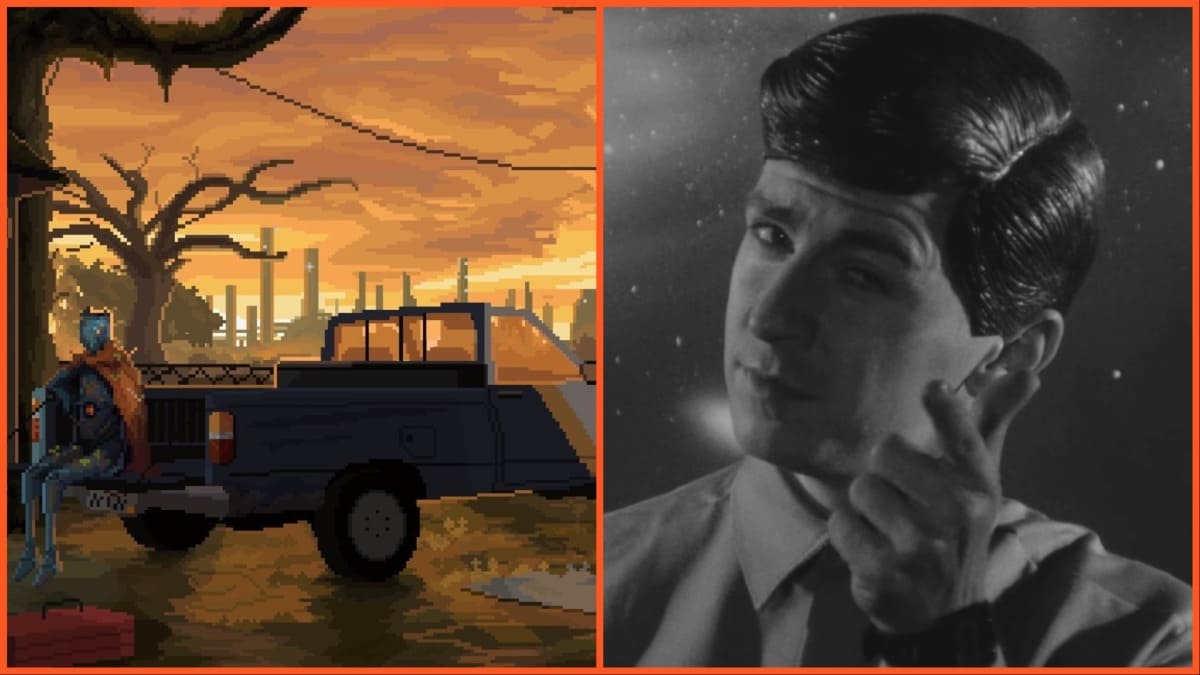
Fall is here in Chicago, which means that it’s time to go full-bore into media that reminds me of cool weather, autumnal colors, and wistful feelings. There are plenty of movies and shows that scratch that itch, but a narrative-driven point-and-click game I recently played through—2022’s indie trip to dystopian Louisiana, Norco—heightens that seasonal spirit into something just as disturbing as it is comforting.
Painted in expressionist, allegorical scenes of suburban decay that mirror the aftermath of Hurricane Katrina and the ravages of oil companies with a sci-fi twist, Norco is full of beautiful pixelated art and uncanny storytelling. Conglomerates and the pain they inflict upon communities is turned into the stuff of Lovecraft as your protagonist, Kay, returns home after her mother dies of cancer. What her mother was up to in the months leading up to her death—and what odd rabbit holes, involving cultists and warped artificial intelligences and large-scale cover-ups, her investigations led her down—makes up the mystery of the game. But it’s the aesthetic and tone, the overall feel of Norco, that immerses you in its location-specific melancholy. All oranges and browns, with leafless trees and layered clothing, the game looks like a bitter fall memory, even if there’s no biting wind ripping through the parishes of New Orleans. Full of clever dialogue, sharp insight into this community, and inventive unnatural flourishes, Norco will easily suck you in for a thoughtful, affecting afternoon inside.
Erik Adams: Devo: Restorations And Revelations (Collected Film Works 1976-1984)
When Chicago’s Music Box Theatre announced a screening of Devo music videos and other assorted ephemera from the new wave act’s ’70s and ’80s heyday, I approached it as I would any other repertory screening of an old favorite. I wasn’t expecting to see anything new, per se, but I was eager to see and hear some meaningful and familiar sights and sounds played as big and loud as possible, and in a space that can hold more people than my living room. So I’m happy to report that 50-plus years into Devo’s existence (and 26 years since an on-a-whim Halloween costume pulled me sideways into an obsession with the group), the self-proclaimed spud boys still have a capacity for (to borrow an intentional misspelling fromone of the clips featured among the night’s Restorations And Revelations) surprize.
This is a labor of love and obsession all its own: As he told the crowd at the Music Box that night, musician-artist-archivist Peter Conheim was tired of Devo’s groundbreaking videos looking “like shit,” so he reached out to the group to perform the same sort of restoration and reconstruction work he’s applied to the visual back catalog of likeminded art-rockersThe Residents. The results were a slight shock to the system. Without having to peer through the muck left behind by generations of videotape dubbing, I noticed for the first time that the tasteless piece of clip art featured prominently in “Love Without Anger” comes from a button Mark Mothersbaugh wears during the “Jocko Homo” portion of the band’s thesis-statement short film,The Truth About De-Evolution. With its images sharpened, but all the artifacts of aging filmstock intact, there’s an extra twist-of-the-knife in the black-and-white irony of “Beautiful World”—which, with each passing year, looks more and more like Devo’s true masterpiece.
That alone is worth recommending one of Conheim’s ever-mutating presentations to any Devotee, post-punk enthusiast, or film-preservation nerd. But what really put Restorations And Revelations over the top for me was everything placed around the videos, taped-off-TV and not-for-broadcast rarities that not only underlined the band’s pop-cultural status pre- and post-“Whip It,” but also traced their mounting frustration with how their music and message were being misinterpreted by the masses. There’s no such garbling in Conheim’s work; there could be no better articulation of Devo’s warnings about de-evolution and dystopia than news-magazine coverage of the band reluctantly playing a 2,000-capacity Beverly Hills birthday party straight out of Bret Easton Ellis’ most decadent nightmares. As an amateur dabbler in found-footage mixtapes, I found the whole thing inspiring. As a critic, journalist, and Devo fan, it was an entertaining reminder that every time I feel like I’ve seen it all, there’s always someone around to prove me wrong.


 Keep scrolling for more great stories.