“It’s unavoidable,” griped the titular host of the live talk show “Hanging With Dr. Z” (stand-up and former Simpsons writer Dana Gould, in some very impressive Dr. Zaius ape makeup and prosthetics and loud 1970s duds) over the weekend at Dynasty Typewriter in Los Angeles. He was riffing on the ongoing Epstein drama with the evening’s sidekick (played by Michael Hitchcock) before segueing into a joke about “El Mencho” and how refreshing it was (in a “good for him” sort of way) that the mistress whom authorities followed to locate the cartel boss was of legal driving age.
Dr. Z is more known for his head-spinning, half-century-old Hollywood name-drops than his takes on the here and now, but he’s not wrong: The Epstein fallout is indeed inescapable and seemingly never-ending. On Wednesday alone, Pam Bondi was subpoenaed to testify on the Epstein investigation, and New York magazine published a piece on publicist Peggy Siegal titled “The Grande Dame Of The Epstein Files.” Meanwhile, The Times‘ running list of very powerful people in politics, business, and entertainment who have fallen from grace over their connection to Epstein continues to grow.
Which has all made watching this big swing of a season of HBO’s Industry a surreal and eerie experience, with Mickey Down and Konrad Kay‘s fictitious and frenetic drama airing as real-life drama tied to the Epstein files unfolded. The two—this show, which ended its fourth season on Sunday and was thankfully granted a fifth and final one, and this world, which…who knows—seemed to be in conversation with one another, with certain scandals making waves almost in real time as the series delved into a cynical confluence of politics, financial apps for young people, shorts, journalism, blackmail, and sex trafficking.
Industry is a very British show, and it’s worth pausing to call out, if only because it seems so unlikely, all of the Epstein fallout in the U.K. that occurred between this season’s premiere and finale: Peter Mandelson, the former British ambassador to the U.S., was arrested last week; Andrew Mountbatten-Windsor was detained by police the week before that; and Morgan McSweeney resigned as chief of staff to Prime Minister Keir Starmer (who himself received calls to step down over Epstein-related revelations) the week before that. (To flip Tony Wilson’s quote in 24 Hour Party People, “we do things different here,” so the blowback in the States has been far less seismic. That said, positioning Eric Tao, who’s played by a great Ken Leung, behind President Trump on the golf course at the start of this season certainly seems intentional—and works as a bookend considering these episodes close out with the rise of a far-right figure and depictions of old powerful men in fancy rooms with girls.)
Works of art have captured scandals—or at least the spirits and pervading feelings of them—as they played out in reality before. To name two obvious examples from Dr. Z’s heyday, Buffalo Springfield’s “For What It’s Worth (Stop, Hey What’s That Sound)” was released in 1966 before the height of the anti-war moment a few years later, while Chinatown captured the in-the-moment paranoia and corruption—though not the literal substance—surrounding the Watergate scandal, hitting theaters two months before President Nixon resigned.
And over the last year on TV, we’re seeing storylines that reflect this specific moment. Last night’s episode of The Pitt had one that, per Caroline Siede’s recap, spoke to the “real-life immigration policies that are ripping families apart in the U.S.” In the fall, The Lowdown, a show that could be quite funny, had a twisty one involving white supremacists, who are on the rise. (Reflecting on the latter, creator Sterlin Harjo told us, “You know, there was a time when you could be white and tough and strong and like the outdoors and like to shoot a gun now and again and still say that Nazis suck.”)
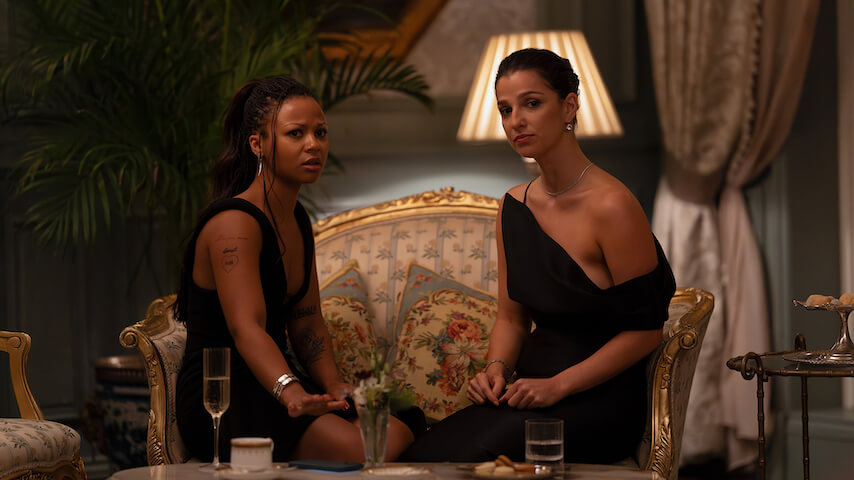
This brings things back to Industry: The biggest holy-shit reveal in this week’s finale was not that Yasmin Kara-Hanani (Marisa Abela, who talked to us about the hour with her co-star Myha’la) has become chummy with Nazis (the kind who own literal paintings by Adolf Hitler), nor that she backs a handsome, terrifying far-right politician (portrayed by The Agency‘s Edward Holcroft) who “won the Orwell scholarship then became everything he warned us about.” No, in a move that in retrospect seems obvious but felt shocking as it played out (perhaps because of the pace of the show and the narrative blanks you’re forced to fill in), we learned that Yas has essentially become Ghislaine Maxwell, putting young women with “no education, no real prospects” on the laps of bald old men with global influence who are looking “for a good time.”
It’s a revelation that’s gutting for the show’s main character, Myha’la’s Harper Stern, and the audience. But again, especially given the father-daughter dynamic depicted in season three, it’s obvious who some of Yas’ backstory is based on. In Sunday night’s episode of The Watch podcast, Down said, “We did find the biography of Ghislaine Maxwell, in her early years and in her relationship with [her father] Robert Maxwell quite interesting. Almost like Wikipedia-entry stuff. Like the idea of naming a boat after your daughter which you then die on is kind of interesting and salacious, and it felt like stuff we could shade into Yas’ character.” (For more on Maxwell’s relationship with her father, check out the recent episode of Fresh Air with journalist Vicky Ward.)
As far as Yas’ political shift, Kay noted in the same podcast that he and Down knew they had to tackle authoritarianism and asked, “Who is the most realistic character in their insecurities…who would most likely start to drift like a moth to the flame of that thing? And it became very clear to us that there was almost an inevitability of Yamin ending up being a comms director for this right-wing authoritarian.”
It’s a trick Industry is incredibly good at pulling off: making us connect, if only briefly, with what an outsider might describe as a monster, only for that monster to become worse and shock us. It did it last season with Eric, when he threw his colleague with terminal cancer under the bus. (In his final minutes on the show two weeks ago, Eric basically spells this out on CNN, with Leung’s delivery acting as a reminder of how much he will be missed here: “However bad you want to tell the audience I am, let me tell them: I’m worse.”) And it did it again this week with Yas. But it’s worth highlighting that the image we’re left with of her is not the confident woman who finally understands how this cynical world works and is becoming an awful part of it, but of a little girl, listening to her dad’s gross, drunken voicemail to her from beyond the grave, lying on the ground in a bathrobe in Paris and crying.
Like everything on this show, it’s complicated.
Tim Lowery is The A.V. Club‘s TV editor.


 Keep scrolling for more great stories.