In 1996, Phish’s Trey Anastasio formed a free-form jazz ensemble that came and went without much fanfare. 30 years later, their only album opens a door to a world of improvisational music that goes beyond jam bands.
“If you surrendered to the air, you could ride it.”The last line of Toni Morrison’s novel Song of Solomon has served as a source of inspiration since its publication in 1977, but it’s stronger than the usual motivational quotes-type platitudes. With hints of magical realism, the line is a symbol of freedom, imagination, self-expression, and a call to remove limitations, resonating especially with artists and writers.
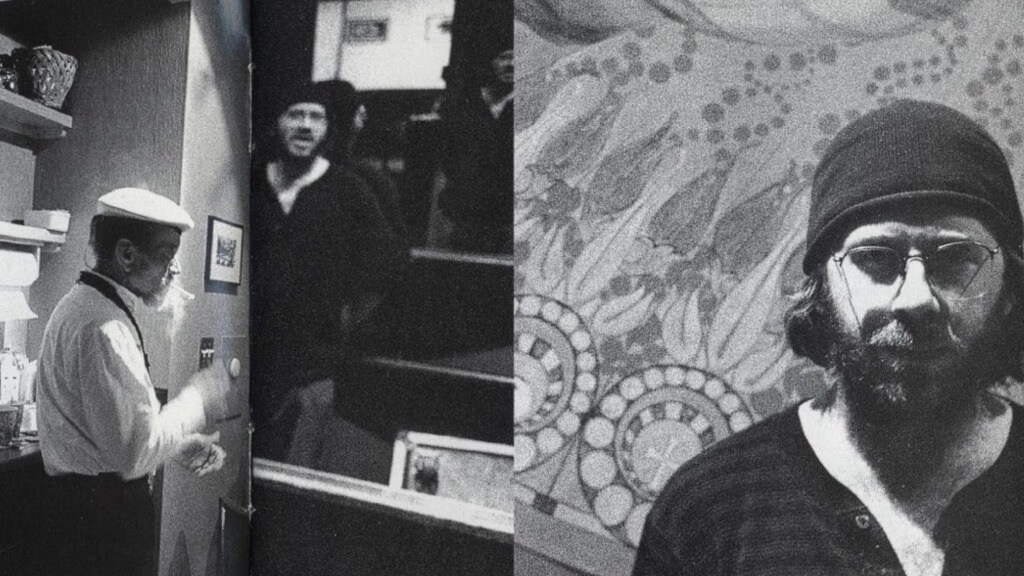
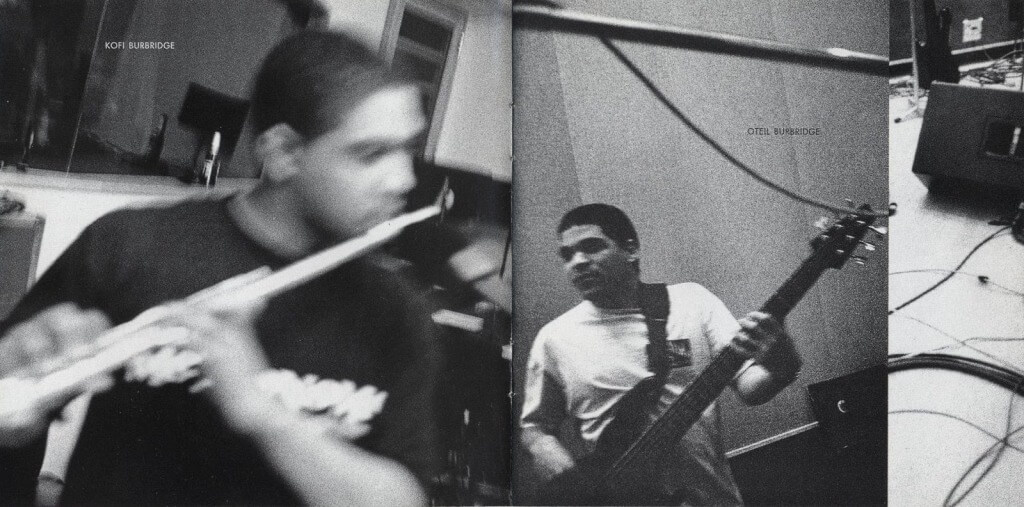
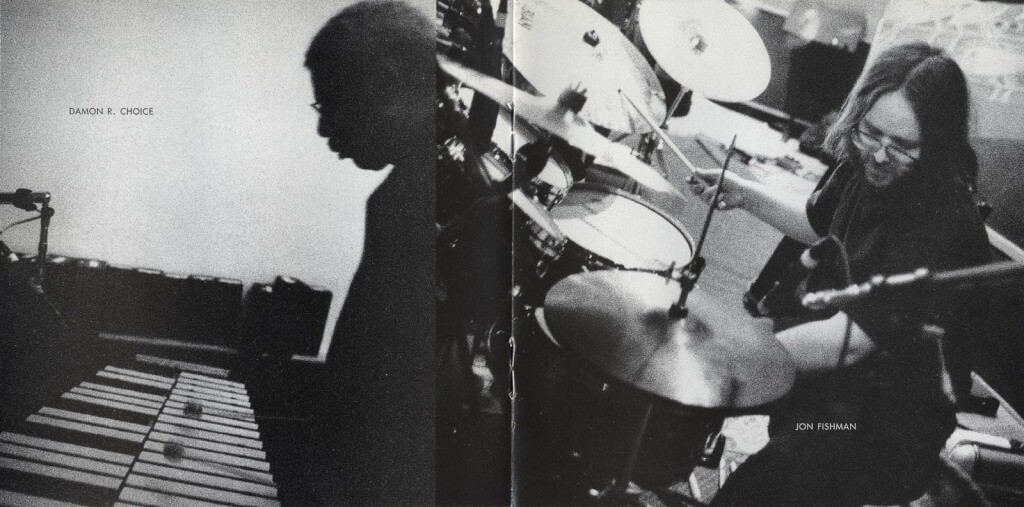
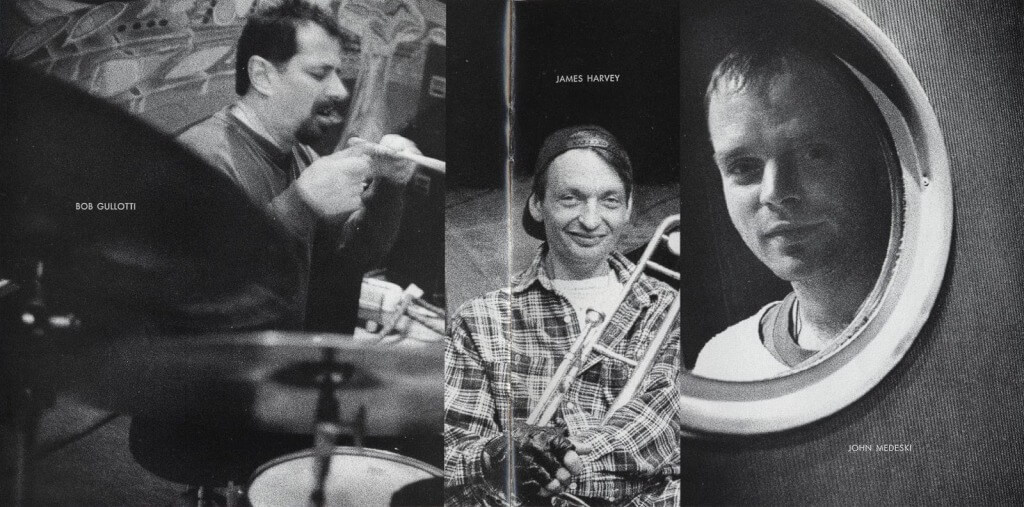
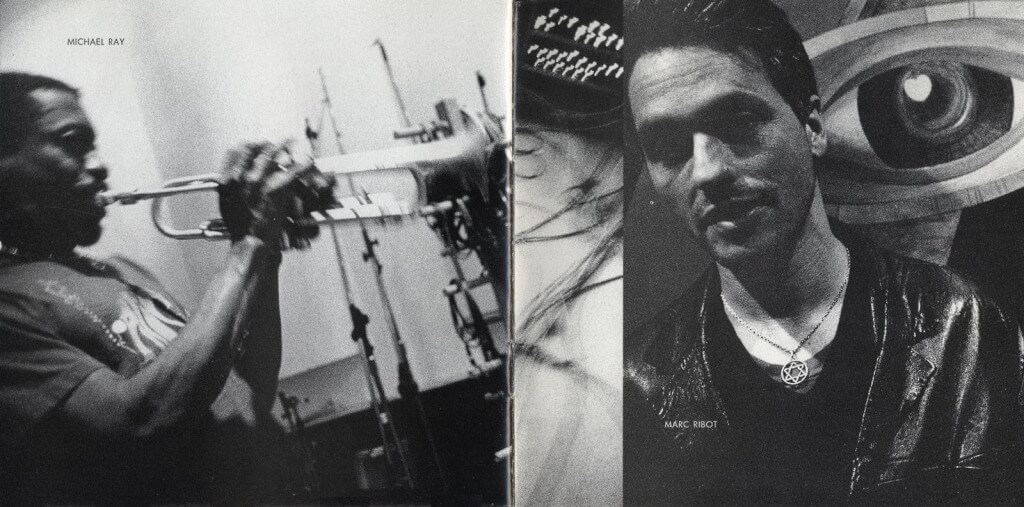
30 years ago, Trey Anastasio, the guitar player, primary songwriter, and driving force behind Phish, drew from Morrison’s stirring words for the moniker of his first solo endeavor. After his longtime band broke through to pop culture awareness beyond its core New England fanbase, Anastasio formed a free-form, big-band jazz ensemble dubbed Surrender to the Air. Elektra Records released the band’s self-titled album in spring 1996. The recording boasted an elite company of free jazz improvisers: Phish drummer Jon Fishman, guitar player Marc Ribot, keyboardist John Medeski, bass player Oteil Burbridge, his brother Kofi Burbridge on flute, Bob Gullotti on percussion, trombonist James Harvey, and, most importantly for Anastasio’s mission, three members of the Sun Ra Arkestra: trumpeter Michael Ray, Damon R. Choice on vibraphone, and saxophone master Marshall Allen, the grand doyen of free jazz.
Not only a name but also a mission statement, Surrender to the Air is the freest of free jazz. Like the best of that playing style, the group’s music is dense, frustrating, and even incomprehensible. At the same time, it also grooves and sparkles with hypnotic ideas that emerge and recede, and presents moments of beauty, grace, and ecstasy. The band came and went without much fanfare; album sales were middling, and the critical response was tepid at best. Though not surprising for an album of free-jazz improvisation without any recognizable songs, it was also viewed as disappointing by many Phish fans, some of whom might have expected more of a spotlight on Anastasio’s guitar. In the jazz community, the project was mostly dismissed as an indulgence by a member of that strange, neo-hippie band from Vermont. After the release of the album, Surrender to the Air performed two shows on April 1st and April 2nd, 1996 at the New York’s Academy of Music and never played again.
With the vantage point of 30 years hindsight, Surrender to the Air did have an impact. For many listeners, the album served as a gateway into the world of free jazz and improvisational music beyond Phish and the jam-band world. Nick Sanborn of Sylvan Esso is one, admitting that Surrender to the Air is “among Trey’s least renown albums, while also being one of his most quantifiably influential.” It was the first time he and fellow “band geek teens” heard free jazz, and it led him directly to artists such as Sun Ra, Herbie Hancock, Albert Ayler, Tzadik Records, and the Lounge Lizards. Sanborn is especially unequivocal about the album’s impact: “The disparity between its reception at the time and its effect is so wide—I think it objectively changed the musical trajectory of a ton of current artists.”
The germ of the idea that would eventually form into Surrender to the Air came to Anastasio when he attended a performance by Nigerian bandleader King Sunny Adé in the early ‘80s. In an appearance on the Alive Again podcast, Anastasio said what impacted him the most about Adé and the wide-ranging power of his band was how their music resonated with everyone in the venue with “complete inclusiveness.” He continued, “I was making every desperate attempt to try to figure out how you can have a layered inclusive group that included men, women, older, younger… all the different aspects of humanity. When I did Surrender to the Air, I was trying to get to this thing where it was everyone bouncing along at the same time.”
While inspired by Adé’s inclusive bounce, Anastasio’s decision to form a free-form jazz band also was an act of defiance. The bulk of his musical composition up until the mid-’90s had been focused on musical fugues, written under the influence of composer Ernie Stires. Anastasio explained to The Believer that “Fugues are very disciplined. It’s one theme and all development. You’re never allowed to bring in fresh ideas.” Free form jazz was the exact opposite of Stires’ musical philosophy, provoking an I’ll-show-him stance for Anasasio: “There may have been an element of rebellion to that record for me, because I knew my teacher absolutely loathed that kind of music.”
Despite a yearning for abandonment in the playing, Anastasio still sought a blend in the band’s framework, commenting in press materials that “the sound I wanted was free-form and the structure I wanted was structure. It was basically a matter of figuring how to get both of those things.” The format that he sought would be achieved by post-recording edits, utilizing techniques made famous by Teo Macero and Miles Davis. But first he needed to find the right players.
FOR HIS FIRST SOLO PROJECT, Anastasio went big. According to Parke Puterbaugh’s The Phish Biography, he claimed to have literally dreamt up the lineup for Surrender to the Air. They came from a variety of backgrounds, all possessing the skill, acumen, experience, and mindset required for free form playing. Anastasio didn’t have to go far to secure Fishman since the two had been playing together in Phish since 1983. Harvey was a member of Vermont’s Giant Country Horns, who periodically joined Phish onstage in the ‘80s and ‘90s. Gullotti was a long-time teacher at the Berklee College of Music and one-third of the experimental jazz band The Fringe. Ribot was a veteran of the downtown New York jazz scene, a member of the Lounge Lizards, and, at that point, most well-known for unforgettably searing solos on Tom Waits and Elvis Costello recordings.
The dirty little secret of the entire project was that it was an excuse for Anastasio to play with members of the Sun Ra Arkestra, especially Marshall Allen. As he expressed on Alive Again, Anastasio saw the Arkestra perform many times and Allen continually “ripped open my soul with his soloing” since “his tone is so instantly recognizable as Marshall Allen. He could play one note and it’s like, ‘There’s Marshall Allen.’” Anastasio was nervous to play with Allen for Surrendersince his playing is “like a finger pointing at this vast unknown consciousness pouring through his horn.” Oteil Burbridge marvels at Marshall Allen, who is still performing at age 101, and figures the saxophonist is “running on pure spirit power.” Photographs of Allen from his early days with Sun Ra are so old that they’re in black and white. “I know Trey and Fishman are just as blown away as I am at his longevity,” he shares.
Anastasio met Burbridge when Phish played on the original 1992 H.O.R.D.E. tour alongside the Aquarium Rescue Unit, of which Burbridge was a member. When I ask how Anastasio recruited him, Burbridge says, “I remember him saying, ‘How’d you like to do a record with a couple of Sun Ra’s guys?’ That was like the most rhetorical question ever. Both me and my brother Kofi were like, ‘Hell yeah we wanna be on that record!’”
Medeski and Anastasio first connected for a Medeski Martin & Wood performance in the mid-’90s. After their interaction was over, a fan backstage said, “Do you know who that was? They are playing Madison Square Garden tonight.” Medeski was floored. When Anastasio asked him to play with Surrender to the Air, his response was similar to Burbridge’s: “‘Those are all of my favorite musicians, too. That sounds great!”
IN THEPHISH BIOGRAPHY, Anastasio stated his goal for the album: “I wanted it to be symphonic in form yet jazz in language and thrash in energy.” To record it, Anastasio brought the band to Jimi Hendrix’s Electric Lady Studios in New York City. Burbridge recalls that when they entered Electric Lady Studios, it was hard not to think of the legendary guitarist and the implicit lessons he left. “Hendrix didn’t paint inside the lines, so it was a friendly environment for having no boundaries whatsoever.”
The music on Surrender to the Air is without choruses, and half of the songs are titled “And Furthermore.” The album is best experienced by listening as a whole in one sitting. The longer “And Furthermore” tracks feature the collective big band sound, undulating as if the musicians are conducting a giant group breathing exercise, but always with the sense of building anticipation. Every now and then, a player can be recognized as standing out from the morass, whether it’s a run by Medeski, the jagged, steampunk grinding of Ribot’s playing or Allen’s barbaric yawp. Throughout the course of the album, the sound shifts in tone from interstellar travel spaciness to underwater sonar pings to the screeching of a jet plane landing on a runway, but always returning to the stormy group sound issuing squall after squall. Sometimes, everyone goes off in their own direction at once, yet within the chaos, it’s apparent how they yearn to connect with each other, locking into driving grooves or lurching towards a crescendo like Frankenstein’s monster gathering way. In these moments, Anastasio seems to be urging them on like a mad scientist screaming, “Give my creation life!”
Dispersed throughout the album are shorter cuts featuring a smaller subset of the band. Anastasio said in Richard Gehr’s The Phish Book that he “asked the band to play some short transitional bits that I used later as musical glue to join different sections of the jams.” These interstitial moments allow for a palate cleanse between the tumult of the big band, such as the robot march of “Down” or the beautiful piano and vibes-led reverie of the second “Intro,” and the end credits of a noir movie sound of “Out.” Anastasio described the recording session as “very loose. Everybody was just set up in the room, and you’d just come and go as you please. Sometimes it broke down to just two people.” Similarly, he called the session in The Phish Biography “a big party with microphones and tape machines running.” Anastasio instructions were minimal, only sharing general ideas and concepts, but mostly, he wanted them to play free, or, as Medeski calls it, create “spontaneous compositions.”
From these relaxed guidelines, Anastasio was able to not only find coherence within the miasma of pure expression, but also form and shape. “The problem that I don’t like about most free form things is that it meanders,” Anastasio said in the press materials. “And to my ear, [the album] doesn’t meander; it has direction all the time. It keeps going down a course.” This speaks to Anastasio’s skill as an editor, taking lessons from In A Silent Way or Bitches Brew and sculpting the music into a narrative. What stood out for Burbridge was the murderer’s row of improvisors assembled in the room: “I was just so knocked out and honestly intimidated by the collection of musicians. It didn’t make it any easier that it was all totally free music. It’s all about your intention at that point. And these guys would know immediately if you were full of crap. It ended up being a truly amazing experience for me.”
AFTER RECORDING THE ALBUM, Anastasio brought the entire lineup together again for two live performances at the Academy of Music to celebrate the record’s release. For preparation, Anastasio stated in The Phish Book that “all I did backstage before the shows was try to keep the musicians from planning anything—and we did it.” Recalling the gigs, Burbridge says, “We knew [the Academy of Music] was closing its doors after those concerts. I remember choosing from various articles of costume-like clothing for the occasion. There was no pressure because there was nothing to rehearse or to get ‘wrong.’ It was just about that particular collection of spirits. Free spirits, I guess I should say. It was as easy and free flowing as the sessions were, which is not to say there weren’t some very explosive moments.”
Both concerts are now on YouTube (4/1/96 and 4/2/96) recorded by someone holding a ‘90s-era handheld video camera. Despite not being able to see all of the performers at one time, not to mention the shakiness of the video, both are energizing performances. They demonstrate the comprehensive power of Surrender to the Air as they veer into R&B-styled grooves, Living Colour-esque funk thrash, New Orleans second-line marches, interplanetary communications, and a 1950s horror movie soundtrack. Yet they always return back to their distinct cacophonous free-form assault. At times, the unified, layered, inclusive group sound of King Sunny Adé that Anastasio dreamt of is also apparent. In the videos, Anastasio can be seen directing the band, pointing and gesticulating in between in his own playing, all while grinning at the audacity of surrendering to the air. The second night included an un-announced guest: Anastasio and Fishman’s bandmate Page McConnell wandered onstage without any introduction to lend his hand at the spare keyboard.
There are more solos during the concerts than on the album, as the group allows for each player to get a spotlight as in a standard jazz performance. “When you play that kind of music, the environment is everything because you’re reacting, you’re playing, you’re creating things in the moment, for that moment,” Medeski says. “And the personnel obviously define a lot. But then there’s also that day of the year, whatever the astrological situation was, whatever the political scene—there are so many factors that affect music like that.”
Phish fan and archivist Todd Ahrens attended both concerts and remembers a “general excitement” when the shows were announced. “Even though the album was out, nobody really knew what to expect from the shows themselves and, since it was the first time Trey had done a side project, it was getting a fair amount of attention,” he elaborates. “At the time free jazz was a pretty far departure from what a lot of the Phish fanbase was enjoying and it seems like the shows came and went without much fanfare after. At the time everyone was fired up during and after the first show and the second night didn’t quite match up.” Anastasio had his own thoughts on the performances, as noted in the The Phish Book: “The shows were everything you would expect, complete with some incredible ups and dreadful downs. It was like being naked. Afterward I remember walking back to my hotel and thinking, ‘Well I don’t need to do that again.’”
Anastasio made good on his post-concert promise to never do anything else with Surrender to the Air again. There has not been a re-release of the album on vinyl nor has the band gotten together again for a reunion performance. Instead, Anastasio got swept back into the momentum that Phish was generating in the mid-’90s, touring relentlessly and experimenting within their studio recordings. Surrender to the Air had an impact on Anastasio’s playing philosophy, chiefly by taking an opposite approach. “After Surrender, I returned to my original path of getting there through a more traditional approach to liberating dissonance. To my mind this means not playing meaningless notes,” he said in The Phish Book. “But since all notes are potentially meaningful, we need to train ourselves to hear them as consonant rather than dissonant while playing with purpose and determination.”
A few years after Surrender to the Air popped up and retreated, Anastasio started another side project—the Trey Anastasio Band (or TAB, as they are commonly referred to)—which continues to this day. The music of TAB is not at all freeform and much more groove-based than Surrender, yet it feels familiar. “This band is an idea I’ve been carrying around in my head since before I did Surrender to the Air,” Anastasio said. “If you look at it, interestingly, it’s virtually the same band. Not the same people, but the same array of instruments: two drummers, organ, bass, guitar, and a horn section with flute, alto sax, trombone… This is a much more fully realized version of [Surrender].” Phish podcaster RJ Bee agrees. “I’ve come to understand [Surrender] as Trey’s first real attempt at branching out from Phish,” he says. “The early ‘90’s were so focused, so relentless, and this project was a bit of a departure. In my mind, [Surrender] was a first step toward TAB and all of Trey’s solo work. So, it’s important in that way, in addition to being a really unique recording.”
Medeski is most impressed with Anastasio’s gumption. “He could have done anything, something more commercially oriented, something more groove-oriented, but he came right out with the most abstract part of Trey.” He also has a great respect for Anastasio, because the temptation to do a guitar-centric project must have been immense. A record like Surrender to the Air took a lot of guts to make, Medeski figures, and it’s a testament to Anastasio’s work ethic. “It’s part of the reason [Phish has] the success they do is because the guy’s got a lot of energy and he’s a force of nature in terms of his work.”
LISTENING TO SURRENDER TO THE AIR TODAY, Phish fans are able to contextualize the record in similar ways, not only within the path of Anastasio’s career, but also within jam-band music. Ben Greenfield remembersbeing captivated by the lineup when seeing the Surrender to the Air CD case, recalling that his first thought was “this must surely be the most incredible album ever made.” But when he listened to it, his response was unfavorable. “My teenage ears were not quite prepared for the cacophony,” he recalls. Kevin R. (QueenCityJamz), an exploratory music fan who later embraced Sun Ra and Albert Ayler, felt similarly, calling his first impression as “one of slight befuddlement.” Musician J.M. Hart approached Surrender to the Air with only limited familiarity of its influences. He owned “maybe one Sun Ra record at the time” and enjoyed it, though he admits that he “understood it far less than I imagined I did.” The muted reception to the album, he tells me, was because “the jam-band world was not ready for this and the jazz community didn’t need it either,” even though a portion of Phish fans got behind the project à la Jerry Garcia forming Old & In the Way and leading Deadheads into the world of bluegrass.
The strangeness of Surrender to the Air was part of the appeal. Brian from PHILM encountered the album at the height of his Phish fandom, when he was also diving into the music of Frank Zappa, which had primed him for more “out there stuff.” The free jazz group certainly delivered on that, and Brian loved that Anastasio had created something separate from Phish that was “even weirder than them” and that he could lose himself in it yet still be “safe in Trey’s hands.” RJ Bee, co-founder of Osiris Media and co-host of the Helping Friendly Podcast, came across the album when he was deep into collecting Phish tapes. He was already familiar with the music of Medeski Martin & Wood, so the two bands sharing a stage on October 14, 1995 “was major for me, combining these wild, experimental jazz sounds with the jamming approach.” That spirit of experimentation shaped his openness to Anastasio’s project. “I was so open at that time, musically,” he says, before revealing that his initial reaction to Surrender to the Air was, “This is extremely weird.”
Phish fan Joel Gamble remembers being “really excited about the prospect of the album,” since he was already a fan of Phish, Aquarium Rescue Unit, and Medeski Martin & Wood. He knew the stature of the Sun Ra Arkestra, too. But in 1996 he was still “developing the vocabulary to process something like Surrender to the Air.” Buying the album the day it was released, he assumed that it would be “more funky and groove-laden” and not “a free-form freak out.” The reality of Surrender to the Air’s sound shocked him: “It was a puzzling move, given the momentum Phish was building” after Hoist reached #34 on the Billboard 200 and would be certified gold five months after Surrender to the Air’s release.
Greenfield says that revisiting the record today, “divorced from the expectations I had when I first saw the lineup,” he is able to accept it for what it is, explaining that “it’s simply a really solid experimental jazz album.” In an era of critical praise for jazz projects by artists such as André 3000 and Flea, Greenfield speculates that Surrender to the Air would garner more positive attention if it came out today. Kevin R. suggests the record might have found a different reception had it emerged during a different phase in Anastasio’s career, “I think if Surrender came out in 2006 or 2007 it woulda been a bigger hit,” he says, “if for nothing else than to be a highlight during the Phish hiatus.” Hart notes that Anastasio “is not a big ‘looking back’ guy,” but hopes that “2026 Trey is ready to reissue the record and accompany it with proper recordings of the shows.”
Gamble admits that, while the album once felt alien to him, Surrender to the Air “sounds pretty normal to me now,” because his “sonic palette has massively expanded in 30 years and nothing about it sounds out of place or particularly challenging anymore.” The music opened a portal to new, more challenging ideas, but Gamble suspects that the album would still feel chaotic to mainstream listeners even in 2026. Anastasio’s present-day stature would play a crucial part in the record’s reach, too. “If Surrender came out today, it seems like it would absolutely have more acclaim,” RJ Bee concurs. “Trey’s visibility at this point is so much greater than it was then—he’s a dean of not just jam music, but of guitar and of modern rock, live touring, and experimentation. Anything he does now gets a huge amount of press, and with social media, I could see this project getting a lot of attention—especially given all of the amazing musicians involved.” Ahrens, who witnessed the band performances first-hand, imagines how modern audiences might respond: “I think if these shows happened today, it would blow people’s minds.”
Scott Bunn is a writer and critic based outside of Asheville, NC, who is a contributor to Aquarium Drunkard and Asheville Stagesas well as operating his own blog, Recliner Notes.


 Keep scrolling for more great stories.