In the cultural imagination, South By Southwest, like its host city of Austin, rests on the laurels of what it was rather than what it is. It was only a matter of time until Texas got its own top-tier indie festival, given that Texan filmmaker Eagle Pennell was the one who influenced Robert Redford to launch the Sundance Institute in 1981. Pennell would be one of the two filmmakers to premiere at the inaugural SXSW Film Conference in 1994, and a number of his works would be showcased alongside newer voices like Austin Film Society co-founder Richard Linklater (Pennell’s film, Doc’s Full Service, would be his last before his death in 2002, retrospectively making that SXSW a symbolic torch-passing). What began as a music festival expanded into multimedia, following as its city went from a punk haven to one with a burgeoning “industry.”
In 1999, Linklater interviewed Bob Ray, the director of local no-budget film Rock Opera, which played in the Midnight Films selection at SXSW, and even then the two lamented the city’s expensive new era. “When I was doing Slacker 10 years ago, Austin was such a music town. It wasn’t really much of a film town at all,” Linklater said.
“For the past 10 years I was really into the music scene,” Ray said, “and I’ve seen how it has just died, especially with all the carpetbaggers, and the computer guys, and clubs closing or turning more upscale…all my friends used to live in houses, and now everyone’s like three, four people in an apartment just because the rent has gone through the roof.”
While the local underground that had built the city’s reputation was becoming less tenable, more eyes were on Austin than ever. In 2005, it became the center of the digital era of American independent film when a number of disparate DIY films were shown in SXSW’s Emerging Visions slate. People would have all sorts of names for it: “bedhead cinema,” “MySpace Neorealism,” or “Slackavettes,” the latter both an homage to the Austin legacy of Slacker and a (poorly spelled) nod to pioneering American independent John Cassavetes. The name that would stick, though, was “mumblecore,” a riff on “hardcore” and the fumbling, mumbling tendency of the millennials at the center of these movies. The term was jokingly coined at that year’s SXSW by Eric Masunaga, the sound mixer for Andrew Bujalski’s sophomore film playing at the festival, Mutual Appreciation.
This was an organic “movement” of filmmakers making similar enough early-adulthood films with new, cheap digital technology. Mumblecore was solidified by a 2007 IFC Center retrospective (“The New Talkies: Generation D. I. Y.,” which was covered by Dennis Lim for the New York Times, Mark Asch for Brooklyn Rail, Amy Taubin for Film Comment in what would become ur-texts for studying the movement), and by the social group that had formed and would continue to collaborate on each other’s films. But it was not a movement with a manifesto, and instead was simply a similar sprouting of film, collected together at SXSW.
“We simply programmed what we liked and the rest happened on its own,” recalled Matt Dentler, who was elevated to the festival’s producer for the 2005 showcase. “He made it his whole mission to program movies from people he’d never heard of before,” remembers Aaron Katz, who would himself join the movement’s ranks when his debut, Dance Party USA, played at SXSW in 2006.
20 years after it premiered, Dance Party USA stands as a perfect example of what mumblecore and SXSW were at the time: regional, ultra-low budget, digital, messy, young, fearless. The film was born during a ride on Portland’s MAX train, when Katz overheard a conversation where a teenage boy was recounting how he tried to sleep with a 14-year-old before finding out the girl had an STD. Katz was disgusted by the conversation but oddly curious about what kind of lives these teens led, and he tried to write down word-for-word what he remembered them saying, which turned into the second scene of his first film.
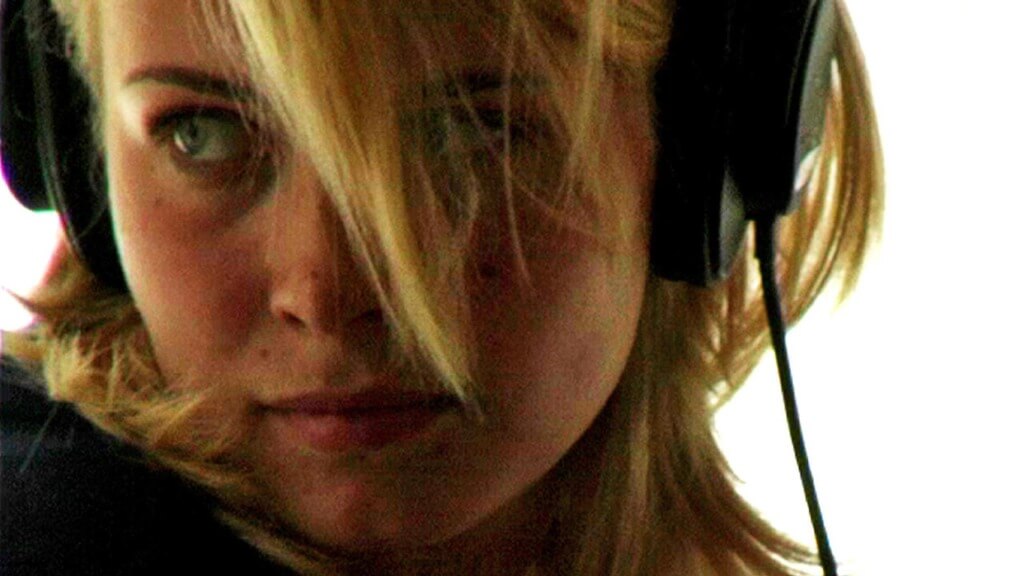
Dance Party USA opens with Jessica (Anna Kavan) waking up on the floor in the quietude of a post-party morning. In extended takes, Katz follows her as she hazingly explores the detritus of the night before. From there he cuts to the MAX, where Katz transposes the kid he overheard onto Gus, a seemingly plain-and-simple douchebag who is played with a seriousness by Cole Pensinger. From there, Katz reveals a world of boring parties and underlying violence, as teens on the cusp of adulthood wrestle with their ability to seriously hurt each other and their inability to confront it.
Jessica and Gus swirl around each other later that night at a house party. Gus talks to a girl who thinks the party is lame, and the two hook up. Jessica can’t find her friend and isn’t having much fun; someone tells her to keep drinking beer until it gets fun. A guy tries to flirt with her, and she ducks out when she remembers that he’s one of her friend’s little brothers. Jessica goes outside to watch the fireworks, rendered in sparkly pixelation. Gus sees her sitting by herself and sits down next to her. They haven’t met before, but she’s heard a lot of stories about him from her friend, his ex. Gus doesn’t think people know the real him. In a moment of shocking honesty, Gus recounts how the story he’s been telling about the 14-year-old girl, Kate, is made up. Kate is real, but she did not try to have sex with him—he saw her passed out at a party and raped her, which immediately haunted him. Gus’ frankness about his own horrific actions makes Jessica trust him.
In an interview for the Circle Collective Blu-ray for the film (paired with Katz’s sophomore feature, Quiet City), Katz reflects, 15 years after making Dance Party USA, that he’s not sure that his 22-year-old self was “fully equipped to really grapple with these things.” An older, more refined and experienced Katz would likely approach this heavy subject matter with more delicacy, but part of what makes Dance Party USA such an effectively troubling film is its eagerness. Katz and his crew were focused on “just trying to make literally anything that’s a movie.” That focus—on what the movie is doing in an immediate sense, rather than thinking out all of its implications—is what makes the film work. Katz spends much of his attention as a director focusing on making the performances with his amateur actors as good as possible. The final film, cut to a breezy 65 minutes by Zach Clark (whose own films Modern Love Is Automatic, White Reindeer, and Little Sister would go on to premiere at SXSW), is extraordinarily experiential, moving quick when the characters get bored and slowing down when they find themselves lost in self-reflection.
Dance Party USA, a movie made for $3,000 and shot on a consumer-grade Panasonic DVX-100 because it was the camera that Clark owned, served as a launching pad to get Quiet City off the ground: It shot later that same year before premiering at SXSW in 2007. That is what SXSW was in the mid-2000s, but since then it has coasted on its indie accomplishments as the festival has become more explicitly commercial and gentrified, just like its host city. Today, a SXSW badge will run you a little over $1,200 just to attend the film portion, and for $2,000 you can bundle in the music festival as well. Tech had already moved back into town when Linklater and Ray were lamenting the death of a more rough-and-tumble Austin in the ’90s; now that industry has turned the town into something completely unrecognizable.
In 2024, SXSW faced controversy over its sponsorship from the U.S. Army and defense contractors amidst the American-backed genocide in Gaza, and it’s just one example of how the festival has become indicative of the city itself, which has become a safe haven for right-wing influencers and fascist tech bros alike. If rent was a problem decades ago, it’s now a crisis. (Portland faces a similar economic crisis, and Anna Kavan reflects that shooting Dance Party USA in the city’s industrial east side makes it “a love letter to a part of Portland that doesn’t exist anymore, physically.”) Austin’s art scene was able to build itself because it was inexpensive, and it might never reach the same heights again because it has become a hub for big money.
No-budget films still premiere at SXSW, like last year’s The True Beauty Of Being Bitten By A Tick, but even that film comes from an established indie director (Pete Ohs) and an established Hollywood star (Callie Hernandez). It’s almost unimaginable that a new, no-budget name would appear out of the blue at SXSW like Aaron Katz did 20 years ago. While a festival of SXSW’s size will still have plenty worth seeing, it’s worth remembering a time when it championed films that cost as much as it now takes to attend.


 Keep scrolling for more great stories.