
The 150 greatest guitarists of all time
Our ranking of the biggest icons, forgotten heroes, and the best and brightest pickers throughout history.

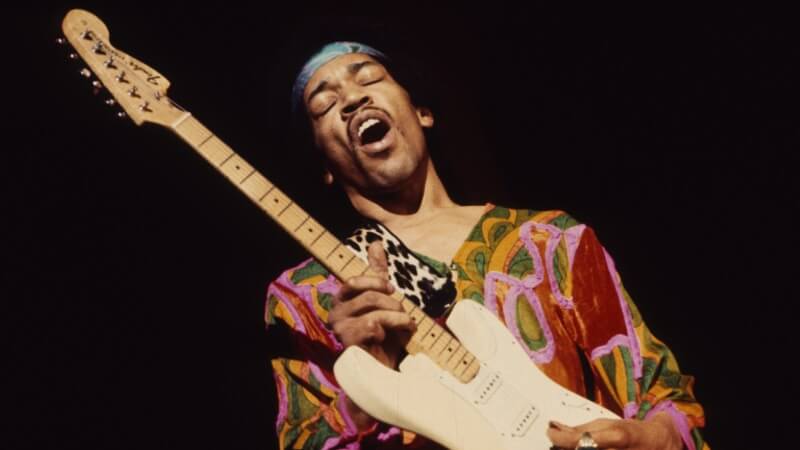
Let’s not waste any time here. Paste staff and contributors came together to build a definitive ranking of the greatest guitarists of all time. Here are 150 icons, forgotten heroes, and the best and brightest pickers in-between, as chosen by writers who play the guitar and writers who don’t.
*******
150. Kurt Cobain (Nirvana)
Depending on who you ask, Kurt Cobain is either regarded as the most overrated or underrated guitarist of all time. Those on Team Overrated point to his messy execution, his lack of formal technical skill. How, they ask, can you compare Cobain’s thrashing and blaring to Jerry Garcia’s intricate finesse? If you can’t already tell, I am not on that team. That framing, simply put, is just not how Cobain wielded his guitar power. He wasn’t necessarily a shredder so much as a riffer, creating melodies so addictive and hooky that it hardly matters when they mirror the vocal melody (see “Come As You Are,” “Blew,” “Heart Shaped Box”). If anything, it makes them hit harder. Cobain’s relationship with the guitar was physical and confrontational, from the on-stage and in-studio destruction of instruments to the sheer number of repairs many went through. He became synonymous with electric noise and chaos, only to reveal a starkly different acoustic persona with MTV Unplugged. His black Strat was carried, played, and eventually smashed with the same indifference. In bringing that abrasiveness to the forefront of rock, Cobain reshaped the instrument’s role, opening a pipeline that could carry listeners from Leadbelly to the Beatles to Meat Puppets straight to “About A Girl.” Under the scuzz and the grime are the foundations that hold the songs upright, with blistering emotions that spawn from every chord progression. —Cassidy Sollazzo
149. Memphis Minnie
Memphis Minnie recorded some 200 songs in her lifetime, including “When the Levee Breaks,” which Led Zeppelin made famous. But Minnie was a major player in the Beale Street blues scene in the 1920s, until she joined forces with Kansas Joe McCoy and signed with Columbia. Her adoption of amplifiers helped motivate one of the greatest stylistic shifts in blues history, as she developed this experimental style of country bridges and post-war electric rhythms. The impact she had on Chicago blues players can be dated back to her 708 Club days. They never made another one like Minnie. —Matt Mitchell
148. Bob Mould (Hüsker Dü)
Not that it’s a criterion that we considered, but I doubt any guitarist on this list burns more calories while playing than Bob Mould. The baldheaded artist thrashes, pinballs, and pogos nonstop as he performs, turning any size stage into a veritable bouncy house. Watching him, you try to fathom how he can manage to simultaneously sing, play, and monitor his heartrate without crashing out. That said, it’s also this “all-in” mentality that has fueled Mould’s artistry since his earliest days back in Saint Paul with punk legends Hüsker Dü. Known for creating a “wall of sound,” Mould thrives on the manic chaos of mixing distortion with melody, punk intensity with pop catchiness. It’s a kitchen-sink, tension-stretching formula that’s worked for Mould as a Hüsker, Sugar frontman, and now on his own whenever he records or takes to the stage with his guitar for a good sweat. —Matt Melis
147. Peggy Jones
“Queen of Mother of Guitar” is one hell of a nickname to get, and that’s who Peggy Jones was after years perfecting the rhythm guitar in Bo Diddley’s band. She started in a doo-wop group called the Bop Chords (perfect name), and met Diddley soon after, who was impressed by a woman with a guitar case. That’s her commanding the low line on “Hey! Bo Diddley,” “Road Runner,” and “Bo Diddley’s A Gunslinger.” While working with Diddley, she kept up with being a sidewoman, playing third-guitar on a lot of compositions but letting loose on Les Cooper’s “Wiggle Wobble” and the Animal’s “San Franciscan Nights.” She even toured with James Brown and Sam & Dave. But the best example of why Jones is a rhythm-and-blues badass is “Aztec,” which she composed and played all of the parts on. That’s one of the best instrumental tracks of all time. —Matt Mitchell
146. Dave Davies (The Kinks)
In many ways, it might be fitting to dub Dave Davies “the quiet Kink.” After all, Davies was more often than not content to let older brother Ray take the spotlight and steer The Kinks artistically. However, it was the younger Davies’ innovation and instinctive knack for noise on R&B-based hit single “You Really Got Me” that launched the band and influenced a generation of hard-rock acts. Turned off by the limitations of his guitar setup, Davies famously took a razor blade to the speaker cone of his amplifier and was pleasantly surprised by the gritty distortion buzzing through. “In that moment, I felt more like an inventor than a musician,” he recalled years later. In another universe, “You Really Got Me” might’ve remained the laid-back, jazz-indebted track that Ray Davies had intended. Instead, Dave Davies turned it into a raw blueprint for combining power chords and distortion in a way that could alienate, agitate, and blow the bloody doors off polite society. Some even call it the birth of heavy metal. It’s always the quiet ones, isn’t it? —Matt Melis
145. Lou Reed (The Velvet Underground)
As the lead singer and guitarist for The Velvet Underground, Lou Reed established himself as one of the first true alternative voices in rock music, crafting songs that were uncommercial yet nonetheless alluring for their enigmatic, psychedelic quality. Repetition was key to Reed’s formula, originating with his innovation of “ostrich tuning,” a technique where each guitar string is tuned to the same pitch to create an effect of dissonance. Alongside his bandmate John Cale, Reed could transfigure the notes of his guitar into something droning and hypnotic like on “Venus in Furs,” gleefully noisy like on “I’m Waiting for The Man,” and oh-so-gentle like on “Pale Blue Eyes” and “I Found a Reason.” Reed maintained some of his idiosyncrasies for his solo work, but managed to also make them more accessible, particularly on 1972’s Transformer and 1976’s Coney Island Baby. Though his success fluctuated throughout his career, Reed’s work endures mainly for being simultaneously of the time and ahead of it, pushing boundaries no matter how unconventional and transgressive his style may have seemed on the surface. —Sam Rosenberg
144. Rowland S. Howard (The Birthday Party)
There’s not a post-punk guitarist that fascinates me more than Rowland S. Howard, the player whose discordant style elevated the Birthday Party. He may be the greatest Australian to ever pick up an ax. He played like a deranged and tattered madman—which made him a perfect companion for a poet like Nick Cave 40 years ago. After the Birthday Party called it quits, Howard made records with Crime and the City Solution, Lydia Lunch, Nikki Sudden, and the Boys Next Door. In his prime, Howard made that Fender Jaguar of his yowl and bleed. —Matt Mitchell
143. Lita Ford (The Runaways)
Hanging out with Deep Purple on the Sunset Strip as a teenager was bound to leave a mark on Lita Ford, and she took that influence and came up with the godly engine that powered the Runaways. She doesn’t get the love she’s owed for being the best hair metal guitarist of all time, but here’s hoping that a placement on this list lessens the unjustness. “Black Widow” and “Hellbound Train” are beautifully-toned barn-burners pulled from the soul by fingers doused in the courage and the power of rock and fucking roll. —Matt Mitchell
142. Hubert Sumlin
Howlin’ Wolf was such a good bluesman that most folks don’t realize it’s Hubert Sumlin doing all the good guitar playing on those songs. Sumlin gave a lot of those recordings— “Killing Floor” and “Smokestack Lightning,” especially—some mean old licks. The guy was so well-respected that Muddy Waters poached him from Wolf’s band for a period. Jimmy Page dug him, so did the Allman Brothers. It’s impossible to hear his lead lines, which fall into Wolf’s singing, and not think you’re listening to the greatest chemistry between two players ever. That “Spoonful” riff is a dirty palace of curled-lip vibrato. Sumlin was always in the kitchen with the stove turned up high. —Matt Mitchell
141. Kurt Ballou (Converge)
Converge’s cocktail of punk and heavy metal is a good one. I hear some of their songs—“Distance and Meaning,” “Fault and Fracture”—and wonder why no other band sounds like that. The formula was there, in Kurt Ballou’s guitar transmissions, and his brutal and brief blitzes of power riffs. Ballou was a saxophonist first and then a bassoonist and a clarinetist. But after a friend lent him a Slayer tape, everything got more obvious. He’s made ten albums with Converge, and I think When Forever Comes Crashing is in the metalcore hall of fame. But I keep coming back to Jane Doe—songs where Ballou wounds, destroys, and resurrects. I feel lighter beneath the weight of all of his noise. —Matt Mitchell
140. T-Bone Walker
This is the guy that B.B. King mistook for Jesus Christ himself. I mean, that says it all doesn’t it? T-Bone Walker perfected greasy, bluesy bends that influenced everyone from Chuck Berry to Albert King. His string moves had bite, and his harmonies were sophisticated—swinging rhythms on the 9th and 13th chords. But how good was Walker, really? Well, he was a single-string genius who incorporated jazz ideas into his scale work, adopting double-time solo techniques that were almost exclusively performed by saxophonists. Walker wrote perfect licks in jazz and blues but no one could catch up to him in either genre. —Matt Mitchell
139. Vernon Reid (Living Color)
That first riff following the words of Malcolm X on Living Colour’s “Cult of Personality” introduced the world to Vernon Reid 38 years ago, but Reid’s influence has lasted long after the band’s iconic debut, filled with Reid’s shredding. Bringing speed metal virtuosity to funk and jazz improvisation to alt rock, Reid created something all his own. —Josh Jackson
138. Angus Young & Malcolm Young (AC/DC)
Anybody who’s picked up a guitar since 1975 and began picking at a nasty, ascendant riff has the Young brothers to thank. AC/DC were lifelong foils to new wave and pop music, destroying the blueprint once the old guard fell out of the spotlight. They resisted the commercial temptation of ballads and wrapped alleyway-dark lyrics around bellyaching, skin-splitting solos. It was music that, to my ears, always sounded like the heavens unzipping on me. The crude, circuit-breaking riffs of Angus Young and the heart-monitor strums of his brother Malcolm’s rhythm axe are especially tasty on “You Shook Me All Night Long.” The song’s chorus gets repeated over and over while Malcolm’s metronome strums loop beneath it. Angus flips the switch into a serpentine solo that quakes and shakes and aches. —Matt Mitchell
137. Andy Summers (The Police)
Andy Summers had a perfect tone, which he pulled from his own fascinations with jazz, reggae, and dubby rock and roll. The way I judge a great guitarist is if I can immediately recognize them on a recording, and few sound as sophisticated as Summers, whose Telecaster operated on instinct and impressive fretwork in the prologue of punk’s inaugural wave. He got to that style by deconstructing the genius of what rockers came before him. The electric guitar had mystery when it was in Summers’ hands. —Matt Mitchell
136. Ani DiFranco
As good a picker as she is a lyricist, Ani DiFranco is a vanguard of contemporary acoustic style. She used to busk around Buffalo with her guitar teacher and eventually developed a staccato style with agile fingerpicking and alt tunings. The acoustic guitar is a weapon in her art, a vessel for loudness that pushes up against authority. It’s why she’s not simply a folkster, but somebody whose instrument speaks in punk and jazz too. You feel DiFranco’s lines deeply. They’re never flashy but you remember the stories they tell. —Matt Mitchell
135. James Burton
There’s chicken scratch, the Carter scratch, and then chicken pickin’, James Burton’s playing style that evolved from him replacing the high strings on his Telecaster with banjo strings. Doing that made his guitar purr, ramble, and crack. This is the guy who rockers like Keith Richards learned from, and he wound up in studios with the Beach Boys, the Byrds, Glen Campbell, Cass Elliott, and, most importantly, Emmylou Harris. His guitar work on her album Luxury Liner are some of the best licks I’ve ever laid ears on. I don’t blame those folks for wanting a piece of Burton’s country bends in their work. He plays guitar like he’s running a blade. —Matt Mitchell
134. Kristin Hersh (Throwing Muses)
Kristin Hersh plays guitar like she’s trying to get every stray voltage in her brain onto the fretboard at once. With Throwing Muses and 50 Foot Wave, that means baritone grunt, alternate tunings, and angular, tension‑heavy chord progressions that make even a straight strum feel slightly crooked, like the song is walking with a limp. Her parts animate songs like “Counting Backwards,” where the rhythm guitar never just keeps time; it jitters around the beat, jabs at odd accents, and turns the whole track into a barely contained twitch. She loves low, growling baritone guitars and dropped tunings that let her slam out riffs and drones while still sneaking in odd little melodic jags, so the same part can feel bruised, beautiful, and slightly dangerous. Solo, she can pivot from delicately chiming Nashville‑tuned acoustics that mimic a 12‑string to brutally physical strumming that sounds like it might saw the neck in half, always keeping her guitar locked to the rhythm of that tumbling internal monologue in her lyrics. From the mostly acoustic whirls of Hips and Makers to the blown-out, grungier electric textures of Sunny Border Blue, Hersh’s guitar always feels like a second voice for all the feeling even the lyrics can’t quite carry on their own—tugging at the tempo, scraping at the harmony, and testing how much feeling the instrument can take before something gives. —Casey Epstein-Gross
133. Spanky Alford (The Soultronics)
Chalmers Edward Alford was Y2K R&B’s well-lit, slow-jamming sparkplug. It’s no wonder they called him spanky: double-stop licks and gospel chords. The guy had a terrific feel and a warm signature that showed out on the Roots’ “What They Do.” He grabbed the torch from George Benson and Wes Montgomery and dropped his pocket into songs by D’Angelo, Raphael Saadiq, 2Pac, and Mary J. Blige. That rich groove on D’Angelo’s “Untitled (How Does It Feel)” pulls every house down. —Matt Mitchell
132. Tom Morello (Rage Against the Machine)
How does Tom Morello make his guitar sound like that? In the famous “Bulls on Parade” solo, the Rage Against the Machine guitarist makes his instrument sound like a DJ scratching vinyl. In live footage, he almost looks like he’s bear-hugging it, messing with the pick-ups with one hand while scratching the upper frets with the other one. Throw some pedals in the mix, and you’ve got one of the most memorable guitar solos out there, one that displays Morello’s creativity and his talent for finding unconventional, imaginative ways to play a beloved instrument that no one else thought to do. —Grant Sharples
131. Emily Remler
After graduating from Berklee at age 18, Emily Remler figured out her sound by combining those of Johnny Winter and Wes Montgomery together. When she settled down as a first-call player in New Orleans in the late 1970s, she found enough blues and jazz clubs to gig at, working with Little Queenie and the Percolators, Bobby McFerrin, and Four Play before entering a recording studio for the first time. Herb Ellis called her “the new superstar of guitar” at a jazz festival, and Nancy Wilson took her on the road. Remler had a heavy thumb and it strummed all around the margins of the avant-garde while maintaining a rhythmic, rootsy ballast. —Matt Mitchell
130. Glenn Tipton & KK Downing (Judas Priest)
The immediate impact of Tony Iommi’s playing could be felt in an emerging Judas Priest in the mid-1970s. Granted, the band needed two guitarists just to follow Iommi’s lead, but Glenn Tipton and KK Downing had the juice. Doubled riffs, interchanging solos, super-charged lead lines—think about some of the twin-guitar bands that came after them: Metallica, Slayer, Iron Maiden. Tipton had that nasty, tasty tone while Downing’s gnarly style settled in nicely with the punkers cropping up around the same time. Those two guys were made for each other. Just listen to “Victim of Changes” and you’ll know it. —Matt Mitchell
129. Jack White (The White Stripes)
No matter what band he’s playing in, Jack White can do it all. But ever since the White Stripes’ 1999 eponymous debut, the Detroit native has upheld his reputation as a master of the six-string. His earnest blues covers, his oddball experimentations with tone, and his pure technical abilities render him the veritable mad scientist of modern-day guitar heroes. He has a wide-ranging portfolio these days as a label head, engineer, and audiophilic vinyl enthusiast, but his stunning guitar skills, in which riffs and licks reign supreme, will always be undeniable. —Grant Sharples
128. Odetta
We’ve got Bob Dylan because we had Odetta first, which has paid off in spades for about 60-some years or so. Her playing style fascinates me: she’d pluck bass notes with her thumb and chords/melodies with her fingers. The rhythms she could do by her lonesome would take full bands to reproduce. Her voice defined the Civil Rights Movement, but her picking style gave American folk music a dexterous, radical shape. Have you ever listened to the live version of “Deep Blue Sea”? You’ll be trying to untangle those chords for a long time. —Matt Mitchell
127. Brian May (Queen)
Queen wouldn’t be Queen without Freddie Mercury, but the group’s guitarist Brian May also deserves credit for making some of the most memorable and inspired contributions to their discography. “Bohemian Rhapsody,” for instance, begins with that classic acapella harmony and lilting, sorrowful piano riff, but the song’s epic, operatic melodrama mainly lies within May’s squealing guitar licks. Its hard-rock breakdown in particular is tough as hell; just ask Wayne, Garth, and their head-banging pals. “We Will Rock You,” which May co-wrote, also reflects the guitarist’s ability to both match Mercury’s theatricality and then somehow elevate it even more, outroing the anthem’s stomp-clap melody with a slick guitar loop. What really makes May a standout, aside from his gorgeous head of curly hair, is his versatility, the way his chords could capture the feeling of pure swagger (“Another One Bites the Dust”), the anxious joy of liberation (“I Want to Break Free”), and the sweetness of platonic love (“You’re My Best Friend”). Mercury may have embodied the face and voice of a rock star persona, but May’s work was essential in bringing out the rock element. —Sam Rosenberg
126. Willie Nelson
The enduring image of Willie Nelson resembles something closer to a folk hero than a mere musician. For decades now, the same familiar figure has ridden into towns across America: the bandana, the braids, the beard, the patriotic guitar strap, and, of course, an old steed named “Trigger” that has never let Nelson down. However, his iconic look, gifts as a songwriter, and inimitable, wiry baritone sometimes overshadow Nelson’s abilities as a guitarist. Together since 1969, Nelson and Trigger bring a unique, almost-jazzy quality to the studio or stage, a style that can feel improvisational but also conversational as his playing often lags slightly behind the beat. It’s a subtle style that coaxes the listener in and allows the timeless sentiments in Nelson’s songs to tug at the heart and stir the soul. —Matt Melis
125. Peter Buck (R.E.M.)
R.E.M. eventually blew up so big that it’s easy to forget just how weird of a band they were when they first emerged on the college radio scene. Apart from Michael Stipe’s enigmatic style as frontman and the band’s insistence on adhering to a DIY mentality, Peter Buck, Mike Mills, and Bill Berry basically tossed out the ‘80s rockstar playbook and forged ahead to create a unique sound that countless others would one day hope to imitate. Buck’s selfless guitar style and focus on songwriting are a major reason we’re still talking about R.E.M. today. On his Rickenbacker, he reintroduced the “jangle pop” originated by Roger McGuinn’s Byrds but added new edges and energy to the sound. His playing focused less on flashiness or speed and more on creating textured, chiming layers for the band’s songs to unfold on. And Guitar Center no doubt owes him a huge thank you for all the mandolins they sold when Buck’s improvised riff on “Losing My Religion” made every guitarist think they needed to own one. —Matt Melis
124. Tony Rice
It was left to Tony Rice to consolidate the innovations of Doc Watson and Clarence White and extend them into new territory. He pioneered the acoustic guitar as a soloing instrument in string bands—and then he pioneered the use of jazz harmonies and rhythms in those bands. It’s hard to forget the sound of Rice’s burnished baritone as it delivered contemporary folk songs with conversational ease. As a baby-boomer in Southern California in the early ’60s, he was in the right place at the right time to grab hold of the tectonic changes in the use of an acoustic guitar. —Geoffrey Himes
123. Stevie Ray Vaughan
Before he made Texas Flood, Stevie Ray Vaughan was a local hero in Austin, Texas, while playing in the band Double Trouble. That’s when David Bowie saw Vaughan play and asked him to play blues guitar on Let’s Dance. By the end of the 1980s, he was the kingpin of the American blues revival, headlining Madison Square Garden in 1989 and the Beale Street Music Festival a year later. Vaughan was influenced by Albert King, Muddy Waters, Guitar Slim, and Wes Montgomery alike, doing muscular tremolo picking on a beat-up Fender Strat. For six years, Vaughan was the best there ever was. That big tone is hard to chase, but it’s easy to return to. —Matt Mitchell
122. Derek Trucks & Susan Tedeschi
Husband-and-wife duo Derek Trucks and Susan Tedeschi are among the gold standard for 21st century guitar playing—Tedeschi Trucks Band has perfected the rootsy, bluesy, twangy strain of Americana rock that’s bewitched boomers and millennials alike. Everyone likes to talk about Tedeschi’s voice (and it is magical), but this is a guitar list. And I’m here to say that you haven’t lived until you’ve seen her shred behind her head, Hendrix-style. Both powerhouses in their own right (Trucks’s open E, bottleneck signature might as well make him the Duane Allman incarnate, and Tedeschi with her polished lyrical phrasing), they’re an entrancing duo to witness in action. They work against and between each other—Trucks with his grit and intensity, Tedeschi weaving in her smooth melodies and sneaky meanderings. Trucks especially travels through Tedeschi’s gripping vocal passages with an intuition that comes with sharing the stage together for almost 20 years. They break into honky psych jams (“Don’t Know What It Means”), ripping blues rock (“Come See About Me”), and slowed gospel-funk (“Ball and Chain”) just as easily as they cover Derek and the Dominos and John Prine. Their interplay is conversational, leaving just enough space to push, bend, or redirect a song, one never overpowering the other, unfolding alongside their bombastic backing band. —Cassidy Sollazzo
121. Doc Watson
There’s something almost folkloric about the Doc Watson story. Blind from an early age, Watson brought the musical traditions he grew up with in Appalachia and introduced them into the modern music discussion. However, Watson was far more than just an ambassador or preservationist. As a naturally gifted guitarist, he found revolutionary ways to update old-time sounds without compromising the integrity and spirit at the heart of these traditions. For example, his flatpicking style allowed outdated fiddle parts to be adapted for guitar, an innovation that inspired an entire generation of folk and bluegrass pickers. American roots music as we know it owes Watson a profound debt of gratitude. —Matt Melis
120. Buddy Guy
Buddy Guy’s licks ramble-tamble and stun the heart. He transformed Chicago blues and is a big reason that Clapton, Hendrix, Jeff Beck, and SRV picked up a guitar. He’s a virtuoso with a deep pocket full of ascending and descending fills, sustained solos, and bending tension. He makes his polka-dot Fenders scream and howl and sedate. His work turns me sideways; his tunings show us a hundred years of genius, in “Stone Crazy” and just about every damn thing Guy’s fingers come up with. —Matt Mitchell
119. Roger McGuinn (The Byrds)
History continues to smile kindly on The Byrds more than half a century after their initial breakup. Critics rightly credit the American band with being early pioneers of folk rock, psychedelic rock, and even country rock. At the helm of many of those breakthroughs stood founding Byrd Roger McGuinn with his signature 12-string Rickenbacker in hand. McGuinn’s innovations as a guitarist include combining older folk traditions (including banjo techniques) with emerging sounds coming across the pond from The Beatles and other British Invasion bands. This melding of ideas directly led to the classic “jingle-jangle” folk-rock style of chart-toppers like “Mr. Tambourine Man” and “Turn! Turn! Turn!” McGuinn would again blaze new paths by emulating elements of Ravi Shankar’s sitar and John Coltrane’s saxophone on single “Eight Miles High,” considered to be one of the earliest psychedelic rock songs. And though McGuinn’s time with Gram Parsons was short and famously heated, their work together on Sweetheart of the Rodeo remains an influential part of country rock’s roots. Basically, if a genre could be combined with rock and roll, you can trace it back to McGuinn’s guitar on those early Byrds albums. —Matt Melis
118. Charlie Christian
An essential voice in bebop and cool jazz that even Black Sabbath later ripped off, Charlie Christian got popular during World War II while playing guitar in Benny Goodman’s orchestra. Goodman had liked other pickers, and he even wanted to purchase Floyd Smith’s contract from Andy Kirk. But no dice. There’s a story out there that John Hammond put Christian in Goodman’s band without asking him first. All I know is that Christian showed up to the Victor Hugo restaurant in Los Angeles with Goodman and played 20 choruses of improvisation when the ensemble dove into “Rose Room.” Christian was making $150 a week peddling those rich tones and horn-sounding solos. The most important thing he ever did was revolutionize his instrument as a lead part. That’s an innovation rock and roll never left behind. —Matt Mitchell
117. Robert Quine
The most distinctive guitarist to come out of the CBGB’s scene, Akron-born Quine united the noise and energy of the Stooges and the Velvet Underground with the freeform unpredictability of jazz masters like John Coltrane and Miles Davis. He splattered torrents of notes over Richard Hell’s boho art-punk on the two Voidoids albums, and later brought his unmistakable work to records by Lou Reed, Tom Waits, Marianne Faithfull, Scritti Politti, John Zorn, and Matthew Sweet (that’s him squealing all over “Girlfriend”), among several others. He had the rare skill of fitting in seamlessly with a diverse variety of styles and collaborators while always being instantly recognizable, and although his influence is heard in many acolytes, nobody has come close to matching him. —Garrett Martin
116. Louise Post (Veruca Salt)
Veruca Salt’s Louise Post once described her own guitar style as “sonic assault,” and it’s hard to argue with that framing. Her playing is massive by design. A loyal power riffer, she’s drawn from grunge mainstays like Nirvana (she’s cited Bleach as an influence on “Straight” from their breakout Eight Arms to Hold You) as well as her early immersion in Metallica, and writes with a live setting in mind. Her guitar parts are built to always be bigger, louder, rougher, soaked in excess and intensity. The opening chords of “Volcano Girls” are instantly recognizable, but Post’s playing also leaves room for some flashing moments of shredding. The flanger-drenched lead on “Forsythia,” for example, veers psychedelic and hypnotic, especially for its time. Her downstroke-heavy approach pulses with pop immediacy even as it stays blown out and abrasive, cutting both low and deep. It’s relentless, over the top, and charged with energy. It takes me over and makes me want to drive my car through a wall in a good way—unavoidable and unapologetically up in your space. —Cassidy Sollazzo
115. Ricky Wilson (The B-52s)
As a child, the B-52s’ Ricky Wilson learned the basics of folk guitar from PBS. By the end of the ‘70s, he’d warped those sensibilities into the twisted, campy, outrageously fun riffs that became the foundation for the B-52s’s new wave takeover. Another loyal open-tuner, Wilson frequently opted to play with four or five strings (most often losing the third and fourth). His tone was snappy and bright, urgent and pulsing, but it was Wilson’s minor key surf rock lines that gave the B-52s that extra jolt of punk—the overtly rebellious version of ’80s doing ’50s. It’s the driving force that gives songs like “Give Me Back My Man” and “53 Miles West of Venus” their instantly recognizable, rush-to-the-system sound. His hooks were like sonic flares, perking ears through international radio airwaves. In that hurried immediacy, Wilson ushered in guitar weirdness at the dawn of a decade obsessed with polish, displaying how much personality could live inside a single, jagged line. —Cassidy Sollazzo
114. John Fogerty (Creedence Clearwater Revival)
Back when they were still known as Vision, Creedence Clearwater Revival made a change that would end up transforming them into one of the most successful rock bands of all time. Tom Fogerty switched to rhythm guitar and handed over lead vocals and principal songwriting duties to younger brother John. “I could sing, but John had a sound!” Tom explained. And it’s that sound—that “vision”—that turned four kids from California into the “swamp blues” juggernaut we still affectionately know today as simply CCR. Like many others on this list, Fogerty’s concise approach to guitar and songwriting made for instant ear appeal. He tagged songs with memorable intro hooks, used rhythm to transform simple solos into signature sounds, and seamlessly blended in ideas from the genres he loved. Add in his gritty tenor and CCR’s working-class themes, and you have an iconic sound and persona that we’d swear came straight out of the Lousianna bayou. —Matt Melis
113. Kim Deal & Kelley Deal (The Breeders)
There’s something almost deceptive about Kim and Kelley Deal’s playing—they’re experts at making the guitar look effortless and casual, but the closer you look, the more you realize how perfectly every scrape and chug locks into place. Kim brings over that no‑nonsense downstroke feel from her Pixies days, favoring chewy, mid‑rangey chords and simple figures that lean back against the drums just enough to make the whole song feel a little stoned and lopsided. Kelley, who basically learned on the fly as the Breeders took off, answers with bright, singable lines and bent‑note hooks that feel tailor-made to stick in your head for days. On Last Splash, you can hear the whole sisterly push‑and‑pull in fast‑forward: the rubbery, stop‑start main riff of “Cannonball,” those squawking harmonics and divebombs that sound like the song is laughing at itself, the gauzy, chiming leads of “Divine Hammer” that float just above Kim’s chunky strum. Later records keep that same scrappy elegance, with both Deals treating distortion like another shade of melody rather than a blunt weapon, letting small, slightly crooked figures repeat until they turn hypnotic. It’s not virtuoso fireworks so much as the sound of two players who trust their instincts enough to leave all the frayed edges in. —Casey Epstein-Gross
112. Mdou Moctar
You always look forward to the guitar solos in Mdou Moctar songs. The Tuareg bandleader is a guitar hero in every sense of the word. He’ll rail against French colonialism in his native Tamasheq, and then launch into a solo, often with hammer-ons and pull-offs galore, that feels like a chorus on its own merits. On albums like 2021’s Afrique Victime and 2024’s Funeral for Justice, his love of Tuareg culture, and his disdain for those who threaten to uproot it, resound through his playing alone. —Grant Sharples
111. Mike Campbell (Tom Petty & The Heartbreakers)
Nothing beats driving down a highway with the windows rolled down and a Tom Petty and the Heartbreakers song playing on the radio. While we can easily imagine the late Petty—an eternal blonde boy of summer—behind that wheel, we perhaps need to squint to recognize Mike Campbell—Petty’s longtime co-writer, co-producer, and lead guitarist—navigating in the passenger seat as the Heartbreakers run down their rock and roll dreams. And that’s how Campbell liked it. As selfless as any guitarist on this list, Campbell’s restrained, melodic style aimed to complement Petty’s performance, not compete for the spotlight. With more hooks than a tackle box and an ability to move seamlessly from rock and roll into Southern rock, pop, and more experimental styles, Campbell helped Petty craft a near-peerless catalog of radio-friendly rock songs. So respected is Campbell’s playing that everyone from Bob Dylan and George Harrison to Don Henley and Stevie Nicks have entrusted him with their legacies over the years. Running down a dream, indeed. —Matt Melis
110. Ira Kaplan (Yo La Tengo)
If Yo La Tengo has a house style, it mostly lives in Ira Kaplan’s guitar. His playing is the hinge the beloved indie group swings on, jumping from gently chiming arpeggios to skyscraper-tall walls of fuzz, often inside a single song. Early favorites like “Tom Courtenay” and “Sugarcube” ride on his distorted, melodic chords—tuneful enough to hum, gnarly enough to scrape a little skin off—while “Deeper Into Movies” pushes that approach to the limit, turning a simple progression into a thick, roaring blur. He’s just as deadly when he dials the volume back. On songs like “Pablo and Andrea” and “Stockholm Syndrome,” Kaplan leans into fragile, melancholy strums that can be shattered at any moment by a buzzing, stabbing lead that slices through and then vanishes, like a passing thought he can’t quite shake. And then there are the epics: “Blue Line Swinger,” “Spec Bebop,” and other live slow-burns where he builds a single idea from a murmur to a tidal wave of feedback and harmonics, layering drones, bent notes, and careening noise into something strangely serene. Yo La Tengo may be a band of three equal partners, but Kaplan’s guitar is the restless engine that keeps their whole universe in motion. —Casey Epstein-Gross
109. Robin Guthrie (Cocteau Twins)
Despite the tension that precipitated their romantic and professional breakup, guitarist Robin Guthrie of Cocteau Twins spent a good chunk of the ‘80s and ‘90s concocting some of the greatest dream pop music ever made with his former partner, singer Elizabeth Fraser. Guthrie’s sparkling, undulating guitar playing was the perfect canvas for Fraser’s hypnotically inscrutable vocals and lyrics, especially as their sound evolved from ambient, fuzzy shoegaze to something slightly more accessible yet still quite lovely. Guthrie’s work on the band’s final three records—1990’s Heaven or Las Vegas, 1994’s Four-Calendar Cafe, and 1996’s Milk & Kisses—is downright immaculate. His contributions to “Cherry-coloured funk” and the title track often get the most recognition for their irresistible, gleaming hooks, and validly so, but Guthrie also gave listeners plenty of euphoric, awe-inspiring moments to sit with on other songs. There’s the divine outro on “Fotzepolitic,” the beat drop on “Calfskin Smack,” and the buoyant swell of “Bluebeard,” “Tishbite,” and my personal CT fave “Squeeze-Wax.” “Ethereal” is too reductive and overused a word to describe Guthrie’s transcendent output. “Otherworldly” feels more apt. —Sam Rosenberg
108. Tracy Chapman
Tracy Chapman is proof that “just” strumming an acoustic can be as gripping as any shred solo if the right hands are doing the strumming. Her playing looks almost disarmingly plain at first glance—open chords, steady fingerpicking patterns, a small handful of harmonies—but the more you listen, the more you hear how tightly those guitar parts are welded to the stories she’s telling. “Fast Car” is the obvious example: a repeating picking pattern and subtle chord shifts that never quite resolve until the very end, mirroring the way the song’s narrator keeps circling back to the same dreams and disappointments. On “Talkin’ ’Bout a Revolution” and “Give Me One Reason,” she turns simple progressions into engines, using dynamics—soft fingerstyle verses that bloom into harder strums, clipped blues riffs that answer her vocal lines—to keep everything moving without ever crowding her voice. She’s not trying to reinvent the instrument; she’s showing how much drama you can pull out of six strings and a strong right hand when the guitar is treated as an equal narrative partner rather than just background accompaniment. —Casey Epstein-Gross
107. Jeff Hanneman & Kerry King (Slayer)
Jeff Hanneman and Kerry King play solos that scream—a demonic, demented brand of picking for a demonic, demented band like Slayer. The duo came alive in the first post-Judas Priest / post-Black Sabbath generation, pushing angular, chain-locked riffs through ten rounds of chaos. King might be most famous for playing the guitar solo in the Beastie Boys’ “Fight For Your Right (To Party),” and he also nearly joined Dave Mustaine in Megadeth in 1984, but he and Hanneman were born to burn it down together in Slayer. And their talent comes from far beyond Glenn Tipton and KK Downing’s twin-guitar illustrations: the Eagles, Ritchie Blackmore, and Foreigner all had influence on them. He and Hanneman are thrash metal superstars. —Matt Mitchell
106. Jeff “Skunk” Baxter
Skunk Baxter plays the way his nickname sounds. Those tones are potent, heard across Steely Dan and the Doobie Brothers’ best records. He was a session guitarist in Los Angeles when Donald Fagen and Walter Becker tapped him to co-found Steely Dan with them, and he shows up on Can’t Buy a Thrill, Countdown to Ectasy, and Pretzel Logic. He’s the guy doing the “Rikki Don’t Lose That Number,” and “My Old School” sounds tasty because those skunky bends. By the time he got to the Doobie Brothers, he was one of the most talented players in SoCal. That’s him all over Minute by Minute. Hot damn. Over the years, he showed up on records by Leo Sayer, Rod Stewart, Dolly Parton, Joni Mitchell, and the Beach Boys. He played the solo on Donna Summer’s “Hot Stuff.” A pretty nifty CV, I’d say. —Matt Mitchell
105. Eddie Van Halen (Van Halen)
Inventiveness lives on in Eddie Van Halen’s memory. The guy revolutionized guitar playing during one rock and roll’s weakest periods, all by two-hand tapping on the fretboard of his Frankenstrat. “Eruption” alone warrants a placement on this list, but that first string of Van Halen records—Van Halen, Van Halen II, Women and Children First, Fair Warning, Diver Down—is among the greatest streaks of guitar madness in history. Eddie had talent coming out of his ears. “Dance the Night Away,” “Ain’t Talkin’ ‘Bout Love,” and “Everybody Wants Some!!” feature some of his most whip-smart achievements. —Matt Mitchell
104. Lightnin’ Hopkins
How do you get a nickname like “Lightnin’?” Answer: You work next to a guy called “Thunder.” That’s exactly how Sam Hopkins became Lightnin’, and guitarists have been trying to bottle what Hopkins knew about the blues ever since. Part of Hopkins’ appeal stems from actually having lived the rough country life he sang about while farming and hoboing across Texas during his younger days. A powerful singer and master storyteller, he typically played alone but learned how to achieve a full-band sound through a fingerstyle that allowed him to play multiple parts while using the body of his guitar for percussion. A tireless performer and prolific in the studio, Hopkins continued to find new audiences right up until his death in 1982. Guitar heroes from Jimi Hendrix and Stevie Ray Vaughan to Billy Gibbons and Dan Auerbach (The Black Keys) have cited Hopkins as a major influence, and the bluesman also gets credited as an early architect of rock ‘n’ roll for how he blended so many different elements into his blues roots. —Matt Melis
103. Joey Santiago (Pixies)
“Rock me, Joe,” Black Francis says before the bridge of Pixies’ “Monkey Gone to Heaven,” and Joe heeds his frontman’s message by playing a simple but memorable guitar solo. This is what Joey Santiago is best at: hooks that sink into your skin and become one with your DNA. Whether it’s “Debaser,” “Where Is My Mind?,” or “Here Comes Your Man,” Santiago’s guitar lines demonstrate how the best earworms can be just as stirring as a virtuosic solo. —Grant Sharples
102. Pat Metheny
Pat Metheny has credits on Joni Mitchell and David Bowie records, yet neither of those appearances do his talent justice. He was shaped by the Beatles and Miles Davis and picked up a reputation as a pretty good jazz player because he wanted to be the next Wes Montgomery. But then again I don’t think he ever belonged to just one genre, having tinkered in ambient, folk, Latin, prog, fusion, and New Age over a 50-year span. His rig runs deep with hollow-bodies, twelve-strings, and GR-300s. Metheny’s an improvisational legend and he’s got 17 Grammys to show for it. —Matt Mitchell
101. Annie Clark (St. Vincent)
You don’t quite know what you’re gonna get with a St. Vincent song and that’s been by design since the beginning of her career. Annie Clark, the Oklahoma-born singer-songwriter behind St. Vincent, has always been interested in subverting expectations and her wielding of the guitar is one way in which she’s done so. “Now, Now,” the first track off her 2007 debut Marry Me, established that right out of the gate, with Clark’s pleading, pretty falsetto contrasting heavily against her thrumming and squealing guitar licks that build to a distorted climax this side of “A Day in the Life.” This pattern of Clark marrying her Kate Bush-esque vocals with a Davie Bowie/Byrne-inflected art-rock sensibility continued on later tracks to increasingly thrilling effect. The rubbery and operatic “Actor Out of Work” led to the early 2010s masterstroke “Cruel,” which led to the jutting, jittery bounce of “Birth in Reverse,” which led to “Los Ageless,” whose woozy, fuzzy guitar line has become almost synonymous with the city it’s playfully satirizing. These mesmeric gems are a testament to Clark’s singular originality as a rock artist, transfiguring classic vintage sounds into refreshingly current anthems. —Sam Rosenberg
100. Teenie Hodges
Hodges got his first licks playing guitar in his father’s band, the Germantown Blue Dots, before he accompanied his brothers in a group called the Impalas. He was a big part of the Hi Rhythm Section with Al Jackson Jr. and Archie Turner before settling in as a sideman in Al Green’s backing band. Hodges helped define the mid-century Memphis soul sound, and his contributions to “Take Me to the River” and “Love and Happiness” offered R&B a pocket that generations are still bowled over by. —Matt Mitchell
99. Bob Stinson (The Replacements)
The Replacements were notorious for showing up blitzed and completely sabotaging their own shows. They were also known for turning up even more smashed the next night and convincing an audience that they were the best rock band on the planet. Tension was the straw that stirred these Minneapolis misfits’ beer, and band founder and lead guitarist Bob Stinson was the visceral, fast-playing, crossdressing wildcard that balanced out frontman Paul Westerberg’s more introspective tendencies as a songwriter. They stomped along that chaotic tightrope together on their way to immortality with 1984’s Let It Be, and Stinson’s solos—untethered, authentic expressions often played on the wrong frets—became the thing of legend among ‘Mats fans. While time would reveal that the late Stinson had lived a tortured life with mental illness in addition to his visible substance abuse, the emotional chaos he brought to his performances as The Replacements’ lead guitarist revealed a genuine beauty shining through the cracks of so much tragic pain. —Matt Melis
98. João Gilberto
João Gilberto’s work with Stan Getz helped bring bossa nova closer to the mainstream, but his solo work—samba rhythms and jazz playing, like on “Chega de Saudade/No More Blues”—changed Brazilian guitar music for a lifetime. Gilberto made intricate melodies seem imitable, but no one could ever copy the intimate moves that those nylon strings made. He operated without vibrato and, using the influence of samba rhythms he heard as a child in Bahia, redefined the idea of polyrhythmic accompaniment. Gilberto’s tail of innovation is still being chased, but I have to believe that most of the minimalist guitar work that’s come out since the 1960s exists in tribute to him. —Matt Mitchell
97. Neil Young
After teaming up with Crazy Horse, Neil Young really began playing his guitar like a threat. Young’s lacerating guitar tone always signaled danger in the distance or something that he couldn’t trust. He holds onto one note on the “Down By The River” or “Cowgirl in the Sand” solos, like he’s striking the instrument in disgust. But he’s also a profoundly generous guitarist, taking listeners through the fall of the Aztec empire on “Cortez the Killer” or his scrawled-off death wish for the ‘60s on “Revolution Blues.” He plays with an instinctual, free-flowing certainty that guitarists have been trying to replicate since the 1970s to various levels of success. But none of them can do what Young does on “Powderfinger,” where his snarling tone takes on a harrowing quality. Even though Young dives head first into a final verse, that momentary melodic triumph, the wailed, uncertain final notes of his solo suggest something extraordinary: defeat. —Ethan Beck
96. Django Reinhardt
Jeff Beck and Dickey Betts thought highly of Django Reinhardt, as did Wes Montgomery. The guy was a kingpin of the single-note solo. After his fourth and fifth fingers got badly burned, doctors assumed he would never pick up a guitar again, but Reinhardt figured out how to pick with only the index and middle fingers on his left hand while using the two other fingers to play chords. He was inspired by gypsy technique and made good use of the entire fretboard. Reinhardt is a virtuoso—a dynamic, imaginative player operating in far-spanning octaves, note palettes that sounded like horns, and a full-blown melodic genius. Every Django strum feels new. —Matt Mitchell
95. Bonnie Raitt
The first woman to grace the cover of Guitar Player magazine, Bonnie Raitt grew up listening to the blues of Mississippi John Hurt and John Lee Hooker as much as folkies like Joan Baez. She made a career out of blending those two worlds, playing slide blues with the stem of an old wine bottle and wavering between the most delicate licks and meatier wails. —Josh Jackson
94. Brian Robertson & Scott Gorham (Thin Lizzy)
I’d reckon that the only “heavy” band that influenced as many acts as Black Sabbath was Thin Lizzy, one of those twin-guitar combinations that set the scene for Judas Priest and Iron Maiden by the end of the 1970s. Brian Robertson and Scott Gorham offered Phil Lynott’s songwriting a lot of streaking, harmonized barre chord phrases and tones that sat on the 3rd above the melodies. Robertson and Gorham used minimal effects and little to no reverb or delay. They didn’t play aggressive, nor did they ever seem showy. “Cowboy Song” and “Emerald” are strokes (up and down) of genius. —Matt Mitchell
93. Keith Richards & Mick Taylor (The Rolling Stones)
Keith Richards has had three great duet partners in his career: Brian Jones, Mick Taylor, and Ronnie Wood. But the Stones were at their best when Richards and Taylor tangoed on the high and low lines. Few popular rock records are better examples of guitar mastery than Sticky Fingers, as Richards’ riff on “Can’t You Hear Me Knocking” is one of the most menacing of its kind while Taylor lasers through the “You got plastic boots, y’all got cocaine eyes” lines like his teeth are jewels hanging from a chandelier. That’s history right there. Richards’ leads were tasty and loose, but Taylor’s single-line playing lent efficient rhythms and pushed the Stones into a virtuosic territory they’d never been in before—and never got back to after Taylor left the band. To me, the Stones are the rock and roll band because of the tandem symmetry of Richard and Taylor, supreme guitar foils.
92. Trey Anastasio (Phish)
Trey Anastasio has spent four decades proving that so-called “noodly” jam-guitar can be as architected and expressive as any conservatory showpiece. Coming out of the scruffy Vermont scene in the 1980s, Anastasio built a reputation as Jerry Garcia’s most devoted spiritual heir, borrowing Garcia’s diatonic “walking around the neck” patterns and modal flights while folding in jazz harmony, prog-rock compositional tricks, and a touch of classical counterpoint. On stage, he treats songs like “You Enjoy Myself,” “Reba,” and “Run Like an Antelope” as launchpads rather than set pieces, stretching simple riffs into 20‑minute narratives that build, break, and rebuild again in waves. Even studio fare like the more streamlined Farmhouse material grew out of groove-first experiments that he later retrofitted with hooks and solos, blurring the line between composed and improvised guitar writing. Anastasio’s 21st-century work shows no sign of coasting, either: the legendary 2003 “Nassau Tweezer” remains a fan touchstone for how he can steer a jam from clipped funk to widescreen, feedback-laced catharsis, and he still shows up in unexpected corners, like dropping a show-stealing guest solo on Guerilla Toss’s “Red Flag to Angry Bull” last year. —Casey Epstein-Gross
91. Elmore James
Elmore got a lot of mileage out of “Dust My Broom,” an interpretation of an old Robert Johnson song. But any mileage is good mileage, and James was a featured player in the mid-century blues boom. Robbie Robertson famously said he’d chase Elmore’s tone for 12 hours a day, strumming until his fingers bled. Luckily somebody finally let Robbie know that Elmore was a slide guitarist. Before he left us in 1963, he recorded great, single-string licks in “Shake Your Moneymaker” and “Standing at the Crossroads,” and “Rollin’ and Tumblin’.” B.B. King, Jerry Garcia, and Homesick James did a good job carrying on his legacy. —Matt Mitchell
90. J Mascis (Dinosaur Jr.)
The laconic, soft-spoken J Mascis doesn’t carry himself like a rockstar. However, for more than 40 years now, nobody’s guitar has spoken louder or more influentially across the landscape of alternative rock. As the driving force behind Dinosaur Jr., Mascis first got noticed for the pure, ear-splitting volume of his signature Fender Jazzmaster. But the distinctive sound we recognize today soon emerged as his slacker vocals and cocoon of distortion would crack open into incredibly melodic and explosive guitar solos (“Get Me” hosts a trifecta of them).. “I liked playing solos better than chords,” Mascis remembers. “That’s how I expressed myself, and the solos were always different.” All these years later, it seems unlikely that Mascis’ guitar will ever run out of things to say, and we remain all ears for it. —Matt Melis
89. Clarence White (The Byrds, Kentucky Colonels)
In recent years, I’ve spent a lot of time with Clarence White’s work. He’s a terrific story—a bluegrass wiz in the Kentucky Colonels that could bend electric strings to sound like a pedal steel by the time he made it to the Byrds. Flatpickers, Tele players, and minimalist afficianados alike have been coming back to White’s turnarounds for 50+ years. Because of him and Doc Watson, acoustic guitars got treated like lead instruments in bluegrass, but White’s push beats cleverly-detailed tones lit the fingerboards and fretboards right up. He’s the true California hippie bender. My favorite twang is the twang Clarence White came up with. —Matt Mitchell
88. Jonny Greenwood & Ed O’Brien (Radiohead)
Radiohead’s guitars are a full weather system: shocks of noise, shards of melody, and a constant electrical hum in the background. Jonny Greenwood’s parts veer from the strafing, half-sabotaging bursts in “Creep” to the whiplash shifts of “Paranoid Android,” where brittle fingerpicking, sky-splitting leads, and lurching riffs all feel like movements in a single, anxious suite. Ed O’Brien is the quiet co-conspirator, building swells of delay, reverb, and modulation that make even a simple progression feel haunted, then locking into wiry rhythms when the band leans back toward rock. As the group moved away from traditional guitar music, their roles only got stranger and more inventive—jagged, overdriven sprinting on “Bodysnatchers,” blurred, chiming harmonies and smeared chords elsewhere—showing how far you can stretch the idea of “two guitarists in a rock band” without breaking it. —Casey Epstein-Gross
87. Muddy Waters
Many of the great early bluesmen and women feel like almost mythical figures. We know so relatively little about them and may only have a handful of recordings to return to. It can be difficult to trace their influences at times. And then you have a later pioneer, like Muddy Waters, who you can’t listen to without being absolutely bombarded by the countless ways he put his stamp on modern music, especially rock and roll. Known as the “Father of Chicago Blues,” Waters’ own migration from Mississippi to Chicago marked the transformation of the Delta Blues into the raw, electrified urban form we now associate with the Windy City. Using his legendary slide guitar technique, Waters created a loud, emotional, and intense sound that laid the technical and spiritual groundwork for burgeoning greats like Clapton, Hendrix, and Page. Suffice it to say, rock and roll wouldn’t rock quite the same without Muddy. —Matt Melis
86. Richard Thompson
Richard Thompson’s guitar work has always lived in two worlds at once: plugged‑in and ferocious, unplugged and unnervingly intimate. From Fairport Convention’s electrified folk experiments to his duo work with Linda Thompson, he keeps finding new ways to braid British and Irish traditions into rock guitar language—whether it’s the tense, needling leads that tear through “Shoot Out the Lights” or the endless, raga-tinged build of “Calvary Cross.” His solo catalog only deepens that range, jumping from the medieval-to–Britney Spears time warp of 1000 Years of Popular Music to the intricate, travis-picked balladry of “1952 Vincent Black Lightning,” where lightning-fast fingerpicking somehow never gets in the way of the song’s fatal romance. Across all of it, he makes jaw-dropping technique feel like a natural outgrowth of the songs’ bruised wit, dark humor, and old-world melancholy. —Casey Epstein-Gross
85. Steve Lukather (Toto)
I think Lukather gets passed over in a lot of these “greatest of all time” conversations, and I don’t understand why. His contributions to Toto, including that perfect “Hold the Line” riff, would warrant a mention alone, but he also made a living as a deeply respected session guy. His work on Michael Jackson’s Thriller is a darling example of Lukather’s adaptability. If Quincy Jones thinks you’ve got the chops? No doubt about it. Lukather figured out how to make good use of funk and arena rock at the same time, which is why a lot of those early Toto records sound as sophisticated as they do. —Matt Mitchell
84. J.J. Cale
Chances are, J.J. Cale is your favorite guitarist’s favorite guitarist. An originator of the Tulsa Sound’s bluesy, swampy, country-rock disposition, Cale was a breezy, subdued, perpetually underrated but ever-influential figure who, despite being something of an anti-rock star, created a blueprint for players like Eric Clapton and Neil Young. A technical master, he worked crisp bends and syncopated riffs into down-home country rock with an almost unaffected finesse. Cale’s playing often makes me imagine him on a porch, rocking chair tilted back, cowboy hat on and straw in the corner of his mouth, noodling across the fretboard as his preferred mode of communication. The definition of a cool cat, he sat at the center of a bluesy rock sound that could be ‘50s rockabilly as easily as it could be mid-’70s psych rock. Naturally, Okie, and Troubadour each carry a similar unhurried confidence, a twang-rock core that ran notably against the grain of the early ‘70s rise in Led Zeppelin and other adjacent hard rock. Troubadour’s “Ride Me High” drifts warbly and psychedelic before kicking back into smooth, bendy folk-jazz on “Hold On,” placing his stylistic extremes side by side, his crisp tone persistent. Cale was inventive in style just as much as in construction. His $50 Harmony H162 acoustic came to define his rootsy sensibilities; after it was damaged on a flight, Cale took it apart and jerry-rigged it back together into a backless, hole-punched, bare-bones Franken-electric hybrid. —Cassidy Sollazzo
83. Sufjan Stevens
At the 2:10 mark in “Impossible Soul,” Sufjan Stevens dives into one of the most disgusting guitar solos ever. He feeds a whammy pedal through a fuzz pedal, and it fucking rules. My favorite part of Stevens’ musicality is that most of what he does is irreplicable. You can’t touch “Impossible Soul.” You can’t sniff the lead lines on “Djorhariah,” nor could you even get close to that intro in “Sister.” He doesn’t have just one signature tone, because he’s a virtuostic son of a gun ripping through nasty, noisy riffs and proper, potent solos. Sufjan is on the podium of “holy shit” lick-makers. He does rock and roll better than anyone, and none of his records sound like rock and roll. —Matt Mitchell
82. Adrian Smith & Dave Murray (Iron Maiden)
Looking at the guitarists in the greatest heavy metal bands in history, I think the tandem of Adrian Smith and Dave Murray is my favorite pairing. They saw what Glenn Tipton and KK Downing were doing in Judas Priest and made it better on Killers and the rest of those ‘80s Iron Maiden records. Smooth, clean-tone leads fell out of Murray, while Smith’s habit of dropping scorched-earth blues riffs gave Maiden an edge. Chemistry ruled the kingdom whenever Smith and Murray were on stage together. “Run to the Hills” and “The Evil That Men Do” are heavy metal hall of famers powered to life by the engine of Maiden’s dual leads. —Matt Mitchell
81. Chet Atkins
Atkins was the architect of the Nashville sound with Bob Ferguson and Owen Bradley, which helped popularize country music. He was a true stringman, keeping a mandolin, fiddle, banjo, and ukulele in his back pocket while utilizing a picking style he learned from listening to Merle Travis. Django Reinhardt and Les Paul were influences too, and Atkins’ musicianship broadened country’s appeal and gave it a needed commercial facelift. But Atkins’ success in moving country music to the mainstream isn’t what gets him here, it’s his ability to play chords and melodies together with a thumb-and-three-fingers plucking technique. Atkins’ talent is a phenomenon. He had the cleanest tone imaginable, and his playing taught generations about the genius of adaptability. —Matt Mitchell
80. Gabor Szabó
Gabor Szabó grew up in Budapest during the Hungarian revolution before moving to America to attend Berklee. He discovered jazz music while listening to Voice of America back home, letting the transmissions from the Western world spill out quietly. He and two refugees formed a jazz trio that failed, so he became a janitor. In the ‘60s, he played in an avant-garde chamber jazz ensemble with Chico Hamilton and Charles Lloyd, then he played in a jazz pop band with Gary McFarland. He utilized open E and B string drone riffs and combined Arabic folk music with raga, pop, and jazz. His style is unique and his reinterpretations of the Beatles and Burt Bacharach were experimental, exploratory. In his own recordings, especially in the ‘60s, his technique was dramatic, clean, and intuitive. Szabó played a song called “The Sorceror” and he ought to be referred to as such. —Matt Mitchell
79. Jerry Cantrell (Alice in Chains)
Few labels tossed around by critics have ever been as reductive as “grunge.” So many bands have been lumped under this moniker (is it a genre or a lifestyle?), and yet, most of them sound nothing alike. You’ll find multiple progenitors of the Seattle Sound on this list; however, that geographic bond is usually where the commonalities begin and end. Alice in Chains vocalist, lead guitarist, and primary songwriter Jerry Cantrell has never gotten bogged down by labels. Depending on the album or song, you could dub his playing as grunge, heavy metal, hard rock, blues, or even country or folk. And yet, you’ll know a Jerry Cantrell riff the moment you hear it: one of those churning, sludgy licks coming from a downtuned guitar, often unnerving or sinister but also eerily melodic. His playing sets the dark, moody tone for AiC songs that are as brutally vulnerable as they come, Cantrell’s guitar able to cast you “down in a hole” or lift you up as you grasp for one remaining glimmer of light. It’s an intense experience that defies simple labeling. —Matt Melis
78. Rory Gallagher
The first “Irish rock star” and “the greatest guitarist you’ve never heard of,” who Melody Maker named Guitarist of the Year in 1972, Rory Gallagher was a flannel-clad virtuoso with a Strat in hand—a mind-blowing talent who injected life into the blues during the Troubles in Ireland. He toured a lot, playing over 2,000 gigs, and figured out how to play guitar by copying other guitarists’ hand shapes he’d find in magazine pictures. Out of all the “key tracks” we’ve included in this list, the Delta-inspired “Bullfrog Blues” is near the very top for me. Gallagher was a big reason why Johnny Marr, the Edge, Brian May, Slash, and Gary Moore ever picked up their instruments. That’s a lot of history inspired by one man. —Matt Mitchell
77. Dean Ween (Ween)
In a 2013 interview with Guitar Moves, Dean Ween revealed his supposed secret: “No one’s figured it out yet… Everything I play is a variation on either ‘Maggot Brain’ or ‘Blue Sky.’” In the same interview, he also said barre chords are “all you need to start a band.” And while these things may be true, I don’t think the Ween co-founder gives himself enough credit. Though you can hear Dickey Betts, Duane Allman, and Eddie Hazel all over his most shreddable moments (see “Buckingham Green” and “Transdermal Celebration”), his power comes from his malleability and versatility, in his riffs just as much as his shreds. He can frolic into psychedelia (“What Deaner Was Talking About” wouldn’t be nearly as hallucinatory without his circling runs) and meander into almost ska-adjacent funk (“Roses Are Free”), all while keeping his roots in brash avant-punk close (“You Fucked Up”). And yeah, sure, I may be partial because he wrote a song about my SSRI. But have you heard the phaser on that one?? Deaner never settles for one voice, switching out pickups on his signature ‘61 Strat to warp his sound further. Beneath the humor, he’s one of rock’s most adaptable guitarists. —Cassidy Sollazzo
76. Terry Kath (Chicago)
This list would be incomplete without Jimi Hendrix’s favorite guitarist, the great Terry Kath, the string-bending soul of Chicago (the band and the city). He could make a Tele sing but his contributions to jazz-rock and blues have been mostly overlooked in favor of flashier players who stood at the front of the stage. It’s a shame, because he’s one of FM radio’s greatest experimenters. His tone was brilliant and his fingers were versatile. “25 or 6 to 4” is full of fills, licks, and descending riffs. Kath was the chromatic ballast in a seven-man ensemble. He didn’t need to have his name in lights; the brilliance of his guitar moves on “Free Form Guitar” and “Oh, Thank You Great Spirit” could reach even the cheap seats. —Matt Mitchell
75. Barney Kessel & Tommy Tedesco (The Wrecking Crew)
The Wrecking Crew helped bring the music of the Crystals, the Beach Boys, the Righteous Brothers, Simon & Garfunkel, and Herb Alpert & the Tijuana Brass to life in the 1960s. The ensemble was teeming with the greatest players ever: drummer Hal Blaine, bassist Carol Kaye, a young sideman named Glen Campbell. But the tandem of Barney Kessel and Tommy Tedesco were a guitar duo for the ages. Kessel, who had a Charlie Christian-influenced tone, played the opening notes to “Wouldn’t It Be Nice,” while Tedesco, one of the most recorded guitarists of all time, lent his colorful strums to “California Dreamin’.” Both of these guys played on so many Billboard hits it would take a completely new list just to get through them all, and Tedesco even had a second career in film soundtrack performances (Jaws, The Godfather, The Deer Hunter). These guys were the real deal—the finest strummers in the west. —Matt Mitchell
74. Viv Albertine (The Slits)
Because of Chrissie Hynde (another great guitarist), who told her to “shut up and get on with it” after Sid Vicious kicked her out of the Flowers of Romance, Viv Albertine joined the Slits. Albertine was a shock doctor who walked around Britain wearing ripped up party dresses and striped stockings. She was a punk Barbarella writing nasty, disaffected guitar riffs that made her ex boyfriend Mick Jones’ playing sound like smooth jazz. What I’m getting at is those Slits records captivate me and bash my head and speaker ina. All the cool shit back then was getting made by the punk girls. We’ve got all those riot grrls because Viv Albertine could shred with the best. —Matt Mitchell
73. George Harrison (The Beatles)
When people argue about who the best Beatle is, the debate is often contained to just Paul McCartney and John Lennon (or Ringo Starr if you’re Zooey Deschanel’s character in 500 Days of Summer). Personally, I’ve been seated on the George Harrison train for as far back as I can remember. The underrated guitarist is responsible for creating some of the band’s brightest, most affecting opening riffs—“Here Comes The Sun,” “Something,” “While My Guitar Gently Weeps,” and “Across the Universe,” to name a few—and diversifying the band’s repertoire (and rock music in general) by incorporating the sitar. Harrison also proved to be just as successful in reconjuring that same magic in his solo career. His first post-Beatles record, the masterful 1970 triple album All Things Must Pass, contained some of his most swooning efforts, from the romantic hits “My Sweet Lord” and “What is Life” to deep cuts like “Behind That Locked Door” and “Wah-Wah.” It’s no question Lennon and McCartney are objectively two of some of the greatest pop songwriters and musicians, but Harrison’s subdued, grounded personality and gifted ear for melody made him the Beatles’s secret weapon. —Sam Rosenberg
72. Eldon Shamblin (The Texas Playboys)
Eldon Shamblin lived and died in Oklahoma, and his work with Bob Wills’ Texas Playboys band and Merle Haggard’s backup crew the Strangers clattered the in-between. Shamblin learned how to pick by studying Eddie Lang’s techniques. By the time he was Wills’ lead arranger, Shamblin was the architect of “Texas swing.” Most of those country players back then were into jazz, and Shamblin’s voicings were clean and dry. He played closed notes more than open-string cowboy chords, giving him a sophisticated line of melody. His lick on “Bubbles in My Beer” comes into my dreams like a ragtime ghost. —Matt Mitchell
71. Frank Zappa (The Mothers of Invention)
Dweezil Zappa once referred to his dad’s playing style as “the battle between the chicken and the spider,” because of Frank’s plucky, irreplicable fusion of doo-wop, blues, big band, orchestra, and psych-rock. It was some real freakout shit lubed up with distortion, wah-wah, and brilliant, bursting solos. Zappa’s ax milked the madness of every band he fronted, Mothers of Invention especially. He wasn’t a theory guy, but a perfect note chaser whose phrasings mimicked speech patterns and rhythms. Zappa’s guitar playing was exaggerated, psychotic, and damn good. Just listen to Shut Up ‘n’ Play Yer Guitar. —Matt Mitchell
70. Jason Isbell
Jason Isbell, the grandson of a Pentecostal preacher and picker, started playing in garage and cover bands as a teenager, even playing the Opry at 16. Soon enough he was in his early twenties and turning the stove all the way up on the best Drive-By Truckers album, Decoration Day. Not many musicians could go pound for pound with Patterson Hood and Mike Cooley, but that’s what makes Isbell that guy. He can play it heavy and he can play it gently, like “Try” on Sirens of the Ditch or “If We Were Vampires” on The Nashville Sound. He’s even good on other people’s work, like the electric riff he drops into Justin Townes Earle’s “Harlem River Blues.” When he’s manning the 400 Unit, Isbell has good pickers like Sadler Vaden and Will Johnson accompanying him. But it’s hard to see him as anything but his generation’s Neil Young. Did you see that recent Truckers performance of “Hell No I Ain’t Happy” on Colbert? Jason Isbell plays the guitar like the University of Alabama plays football. —Matt Mitchell
69. Ernie Isley (Isley Brothers)
When Ernie Isley was young, a player by the name of Jimi Hendrix lived with his family in a New Jersey home filled with instruments—Stratocasters and jazz horns. Ernie loved José Feliciano’s interpretation of the Doors’ “Light My Fire” and self-taught himself how to play it. When he joined the Isley Brothers formally at the end of the ‘60s, he performed bass guitar on “It’s Your Thing.” By 1970 he was on the guitar, and by 1973, at the age of 21, he was a full-time member. His guitar work on “That Lady,” “Summer Breeze,” Choosey Lover” produced fantastic, recognizable funk riffs. The “That Lady” solo alone is one of the most impactful guitar moments of the 1970s. Ernie’s phase-shifted fuzztone sound was definitive for the era, and it gave psychedelic color to the Isley Brothers’ greatest R&B records. Ernie’s Strat made one of the coolest lead tones ever, not too shabby for Hendrix’s old bunkmate. —Matt Mitchell
68. Allen Collins & Gary Rossington (Lynyrd Skynyrd)
Allen Collins and Gary Rossington talk in paragraphs of hedonistic, raucous phrasings. Collins’ lead lines in “Gimme Three Steps” say a lot, in cocksure chords and snarling, seam-splitting riffs—all while the swaggy undercurrent of Rossington’s rhythm guitar twists and repeats. But the two men always took turns commanding the vibe: Rossington rumbles through “Saturday Night Special,” while Collins is the buttery soul of “Simple Man.” I come back to Rossington’s slide guitar during “Free Bird” all the time. Lynyrd Skynyrd had a good, muscular, deep-fried gravitas to them. They rollicked and they drank, spun tales about fast women and record deals, and used the Jacksonville club scene to bolster their country-rock empire. And who better to find that shape than Collins and Rossington? Because of them, Skynyrd’s music lands somewhere between a barroom prayer and a church-pew promise. —Matt Mitchell
67. Robert Johnson
Robert Johnson recorded a few-dozen songs in the year before his 1938 death—compositions that would turn Bob Dylan towards the pen. Johnson put slide, bass, and lead notes all in one riff, filling rooms with one instrument’s possibilities. Every blues band you’ve ever liked owes their career to Johnson, who sold his soul to the devil just to play good Delta licks. Some of his songs even have swing and ragtime parts. Johnson went unknown for decades, which made him more myth than man, but I dig that his story is rooted in legend instead of history. But listen to those 1930s recordings and you’ll hear a lifetime of blues captured by a 26-year-old Mississippian with more talent than the rest of the world combined. —Matt Mitchell
66. Robert Fripp (King Crimson)
Praised in some corners as “a brilliant mixture of melody and freakout” and dismissed in others as “ersatz shit,” prog rock giants King Crimson don’t engender any kind of casual fandom or circumspect listening. From the opening blast of “21st Century Schizoid Man,” listeners are given a choice to follow this group down whatever winding path they choose and face potential threats both internal and external or stay in a safe, warm place, blissfully unaware of the danger. With guitarist Robert Fripp at the helm, twisting his instrument out of all proportion, the journey of this Fripp takes on an epic scale: the soundtrack to a quest for a key to unlock vast stores of wisdom or riches untold. Or simply great guitar parts to get stoned and lose oneself in. Both are befitting the grandeur and surreality that Fripp tapped into early on and found scores of fans ready to heartily imbibe. —Robert Ham
65. Pete Townshend (The Who)
The Who managed to pair explosive maximum R&B sounds, a friendly embrace of psychedelia, Pete Townshend’s growing ambition that codified what a concept album could be, the gentle injection of electronic instruments into their massive sound, and a continued interest in straight up pop. With Townshend’s restless ideas usually driving the car, the Who were a bright and brilliant and unbowed outfit pushing sounds out that were humungous. Take a look at “Slip Kid.” It has one of Townshend’s greatest riffs—an incredible one-note guitar solo, uncharacteristic for the windmilling axman. He was a fan of making amp feedback musical, and his drone notes on “Substitute” were ahead of their time. But Townshend’s best performance, to my ears, is the operatic, sea-parting solo in “The Song Is Over.” It’s art reaching through the sky, not into it. —Matt Mitchell
64. Merle Travis
The godfather of alternating bass, solid-body electric, and rockabilly, you can hear Merle Travis’ style in everyone from Chet Atkins to Lindsey Buckingham. “Cannonball Rag” holds ragtime and blues at once; he flat-picked and thumb-picked, pulling bluegrass, gospel and jazz into syncopated curlicues from a Martin D-28 and a Gibson Super 400. The guy was so innovative that he (allegedly) inspired Leo Fender to design the Telecaster and even had a picking style named after him. —Matt Mitchell
63. Doug Martsch (Built to Spill)
You simply can’t imagine Built to Spill without Doug Martsch’s guitar. His parts loop and unspool in long, singing lines, stacking fuzzed melodies on top of each other until you’re not sure which one is the “riff” and which ones are just satellites. He’ll start in a Neil Young-esque zone—ragged, bent notes, slightly sour bends—and then stretch a phrase past where any classic-rock solo would stop, worrying at it until it feels less like heroics and more like someone pacing a room. The dynamics, too, are the real trick: in a song like “The Plan,” he can drop from an all-out roar to something almost conversational in a few bars, letting the distortion fall away so you can hear the clean skeleton of the part underneath, then slamming the fuzz back on like a door. “Carry the Zero,” “Randy Described Eternity,” and “You Were Right” all eventually give themselves over to those long, hazy freakouts where the band locks into a groove and Martsch just keeps circling, changing the angle of attack, finding new harmonies and dissonances inside the same few chords. It’s indie rock as both pyrotechnics and extended guitar meditation—searing, scrappy, and oddly tender even at its loudest. —Casey Epstein-Gross
62. Cordell Jackson
Every video I see of Cordell Jackson performing is the greatest video I’ve ever seen. Here is this old woman with a big perm and a floral church dress, and she’s shredding better than anybody that’s ever picked up a guitar. Jackson was born in Mississippi and her father commanded a string band. When she lived in Memphis, she worked as a riveter and wrote songs at night. Sam Phillips wouldn’t cut any of her records so she started her own label, making tunes under her own name from time to time. But in the ‘80s she started gigging and growing an audience. Had I been around back then, I’d have followed Jackson around like a Deadhead. Her riffs, man—red-hot missiles. She was a country picker through and through but found a warm community in punk clubs and DIY spaces well into her sixties. Aside from a Budweiser commercial ad where she dueled with Brian Setzer, Jackson died a forgotten rockabilly picker. But spend enough time with any of her live performances and you’ll figure it out: she put down some of the nastiest, meanest guitar licks of all time. —Matt Mitchell
61. Wata (Boris)
Boris is the greatest metal band of the last 30 years, and Wata powers that engine with her overtoned, overdriven notes, and Orange amplifier towers. Wata plays through fuzz and drones without ever producing just “noise,” and her dexterous playing experiments with doom metal, shoegaze, ambient, and even psych-rock. Boris’s avant-garde journey features Flood, Pink, and Noise in this century alone and, with her EBow in hand, Wata channels the art of Merzbow, Michio Kurihara, and Keiji Haino. —Matt Mitchell
60. Paco de Lucía
Paco de Lucía is the best flamenco guitarist ever. He was the first Spanish virtuoso in the genre to implement jazz and classical styles, and his picados were fast and his scale tones were warm. He pulled more invention out of his Hermanos Conde than any other flamenco player. And as flamenco Brazilian music, and Latin jazz fusion got closer to each other, de Lucía was at the forefront. He was as brilliant as Andrés Segovia and as accessible as Eric Clapton, full of dexterity and fluidity and contrast. de Lucía was an expert technician, he built an empire out of perfect phrases and effortless, expansive delicateness. —Matt Mitchell
59. Elliot Easton (The Cars)
“Just What I Needed,” The Cars’ all-timer headrush of a pop hit, would be incomplete without Elliot Easton. It’s a song that pinpoints the moment that infatuation hits with Benjamin Orr’s gangbusters chorus. But Orr gets usurped quickly by Easton, who articulates in 15 seconds of defensive pull-offs and blink-and-you’ll-miss-them grace notes what it took Orr a minute and a half to get across. But the entirety of The Cars is predicated on Easton’s rock-solid playing, like the jump ball of “Bye Bye Love” or the embarrassed soloing on “You’re All I’ve Got Tonight.” Easton’s additions are how The Cars were able to articulate the perfect pop agony of romance with no singing necessary. —Ethan Beck
58. Mike Bloomfield
Sometimes rock and roll can seem like the rebellious, spoiled child of rhythm and blues. We can get so wrapped up in the sounds that we love that we neglect the traditions that fed into them. However, even more forgotten can be the middlepersons who bridged the gap between artists with names like Lightnin’, Lead Belly, and Sister Rosetta and blues-indebted guitar gods like Page, Hendrix, and Clapton. Enter Mike Bloomfield. Having gotten his start playing alongside legends of the Chicago scene, Bloomfield—a wealthy Jewish kid—exhibited an innate understanding of the blues from a young age. His intense, yet intellectual, playing coupled with an ability to improvise and step into genres adjacent to the blues led to many of his career highlights playing with the legendary Paul Butterfield Blues Band; adding Telecaster licks on Bob Dylan’s “Like a Rolling Stone”; “going electric” with Dylan at Newport Folk Festival in 1965; and jamming on various projects with keyboardist Al Kooper. While Bloomfield’s life was cut tragically short by an accidental overdose in 1981, he’s considered by many of the greats to have been a mentor and major influence on their playing. —Matt Melis
57. Clarence “Gatemouth” Brown
At a T-Bone Walker concert in Houston in 1947, Walker fell ill and needed a replacement. A young Clarence Brown, nicknamed “gatemouth” by a high school teacher, stepped in, wrote “Gatemouth Boogie” on the spot, and tore the whole nightclub down. Brown was something of a virtuoso—a master soloist and blues stylist. His friendship with Roy Clark and appearances on Hee Haw put him in thousands, if not millions of American homes, and Brown made a good living jamming with Canned Heat and Montreux Jazz Festival and playing sideman for Professor Longhair. Brown was never a purist, but a wild, ferocious adapter—he combined Cajun, jazz, and country styles into his own boogie, and he could even play a mean blues fiddle. Albert Collins, Johnny Watson, and Guitar Slim took pages out of Brown’s book, and who knows if Frank Zappa would have ever picked up a guitar had it not been for Gatemouth. “Okie Dokie Stomp” is an American masterpiece. —Matt Mitchell
56. Jeff Tweedy & Nels Cline (Wilco)
Jeff Tweedy and Nels Cline are both phenomenal players themselves, but when working in conjunction, they’re virtually unstoppable. Tweedy, once the bass‑playing foil in Uncle Tupelo, spent the 2000s quietly rebuilding himself as a guitarist, moving from steady, empathic rhythm and fingerpicked acoustic work into leads that sound like thought made audible—hesitant, then surging, then barely holding together. Cline arrives from the avant-garde and jazz world like a spark thrown into that evolving language, bringing squalls of feedback, smeared chords, and liquid, harmonically adventurous lines that can sit as easily inside a country-rock tune as they can in a blown-out jam. When working in tandem, they let Wilco’s songs tilt seamlessly between understatement and upheaval: verses cradled by warm, ringing chords, choruses strafed by dissonant flurries or long, keening melodies that stretch a simple progression into something oddly cosmic. —Casey Epstein-Gross
55. John Lee Hooker
John Lee Hooker was a sharecropper’s son and one of the greatest hill county bluesmen ever. In the runoff from 1940s, piano-scored boogie-woogie music, Hooker built his own one-chord rhythms like William Moore had before him. He almost never played standard beats, shifting tempos from song to song. His collaboration with Canned Heat in 1970 is a boogie ‘n blues masterpiece, and his playing provoked Miles Davis into telling him, “John Lee, you the funkiest man alive. You sound like you buried up to your neck in mud!” A pretty good description of the picker who kept time with his feet. Ever since I watched Hooker play those strings in Blues Brothers, I’ve had “Boom Boom” on my mind. —Matt Mitchell
54. Nancy Wilson (Heart)
When you hear “Barracuda” for the first time, you don’t want it to ever quit. The older I get, the better Nancy Wilson’s guitar playing is. She could play circles around her male contemporaries, and “Crazy on You” and “Mistral Wind” illustrate why her flamenco-influenced style brought versatility and finesse to an era of rock and roll occupied by the conclusion of punk and the emergence of hair metal. She has a terrific feel for rhythm, and her ax screams even while it’s steering the ship. Her technique is multi-dimensional, as complimentary as it is crushing, volcanic. I saw her play the “Barracuda” lick in 2024 and she’s still got it. Shredding is like riding a bike. —Matt Mitchell
53. Ryo Kawasaki
An architect of Japanese jazz fusion, Ryo Kawasaki famously lent his ideas to Roland and Korg for the first guitar synthesizer. He worked with Elvin Jones, Chico Hamilton, and Gil Evans, blending electronica and funk and opening himself up to ragas and folk music. His efforts were cosmic, prototypical, and he invented sounds I’ve only heard come from him. Those spacey, experimental tangents helped make Kawasaki a technological and compositional pioneer. Growing up in Tokyo, he built his own radios and televisions. He was also deeply gifted at piano and violin. But he freestyled on the guitar in ways that would seem alien, impossible to some players on this list. Kawasaki had ingenuity coming out of his ears, and he’d end up becoming one of the most sampled guitarists in history. He took ideas, set them on fire, and then built them back together. Kawasaki was a one-of-one picker, a genius still getting untangled. —Matt Mitchell
52. Luther Perkins
Johnny Cash may have had that inventive chugging sound, but his records were good because Luther Perkins colored in-between the lines on them. Not to mention, Perkins is credited for creating Cash’s boom-chicka-boom style in the first place. As a member of the Tennessee Three, Perkins used a simple technique that splashed colorful fills all over some of the greatest country songs ever. He muted his bass strings with the heel of his hand like Merle Travis and scratched the rhythm notes above it. Cash once wrote that Keith Richards came to a show of his in England but only wanted to see Perkins. That solo of his on “Folsom Prison Blues” is so good it sounds like an accident. Perkins was Cash’s ultimate foil—a quiet, impressive picker with a sharp suit and an even sharper Tele. He was a brilliant, adaptive sideman playing in 3:1 ratios. His tone could wow for miles. —Matt Mitchell
51. Jimmy Page (Led Zeppelin)
A few of the most important, recognizable riffs in music history are from this man. Jimmy Page, a Yardbirds alum like Clapton and Beck and a once-in-demand session player, revolutionized heavy rock and roll while anchoring the head-banging sweeps of Led Zeppelin. For many, he’s the godliest guitar god of them all, an occultish riff master who could transform into a gentle, fingerpicking maestro when needed. The dynamic variety of Page’s style—“Stairway to Heaven,” “When the Levee Breaks,” “Rock and Roll,” and “Going to California” are all on the same album—allowed him to experiment with drones, textures, fingerpicking, and tunings. Page was a dedicated student of classical music—a brilliant, virtuosic magpie capable of bending his guitar into any sound, conventional or not. Put a cello bow in his hands and he’d take you someplace bluesy, distorted, and far away. I may not know much, but I’d know Page’s playing anywhere. —Matt Mitchell
50. Patrick Flegel (Women, Cindy Lee)
Patrick Flegel started slinging bowed guitar moves 20 years ago with his brother Matt in a band called Women—a band that made one of the best debut albums of all time and an even better successor. But eventually Women broke up and Flegel bounced around between short-lived offshoots. Then came Cindy Lee, the drag-rock pseudonym Xeroxed into life across six brilliant lo-fi records. Flegel graces a stage in gold-sequined dresses and knee-high go-go boots, places his Gibson SG across his chest, and pulls impossible sounds out of the strings. His guitar playing is messy but virtuostic. It’s heady, out of tune, and bending. Flegel, in a way I crave, operates as a sentimental, moody guitarist averse to staying in any one pocket. There is little bounce but a lot of sensation—creative impulses blown apart and patched back together. In “Flesh and Blood,” you can hear a foot pressing down on a pedal. “Dry Dive” expels metallic, noodly fascinations. Throughout “Love Remains,” Flegel’s lovey-dovey, swooning guitar shapes talk in paragraphs. With Women, he covered noise-rock in cobwebs and left the edges of songs like “Shaking Hand” ragged. As Cindy, the music is uncanny, androgynous, and splintered with feedback and reverb. Public Strain took guitar music to impossible places in 2010. Diamond Jubilee changed music forever two years ago. All paths come back to Flegel’s innovations. —Matt Mitchell
49. Curtis Mayfield
Mayfield eventually became known best for his singing chops, but he could do a fill better than most any player. His melody on “Gypsy Woman” changed Hendrix’s life (Jimi’s “Castles Made of Sand” shares a lot of DNA with the Impressions’ “People Get Ready”), and George Clinton even suggested that every guitar player in the 1960s was chasing after Mayfield’s style. Who could blame them? He was an expert at intervals and used a low-to-high tuning that couldn’t be replicated in standard. When people are trying to emulate Hendrix, they don’t realize that they’re emulating Mayfield through him. Mayfield didn’t need flashy solos to inspire everybody. His rhythms were as intricate as they come and his feel was deceptively simple. “Beast of Burden” and “The Weight” both took a page or two out of Mayfield’s playbook. Matt Mitchell
48. Nick Drake
I think about Nick Drake’s guitar playing in the same way I think about Joni Mitchell’s: acoustic-focused, finger-picked, standard-tuning-defiant, orchestral, somewhat obsessive. But where Mitchell started singular and later expanded into a full-band setting, Drake took the opposite trajectory. His debut, Five Leaves Left, and follow-up Bryter Layer were built around the guitar, but both albums, the latter especially, make room for strings, winds, and horns, extending as far as harpsichords and celestas (shoutout John Cale). Pink Moon was Drake’s only album recorded with just him and his guitar, and it’s the album that packs the biggest punch, even without the added context of it being his last. It showcases his skill: dissonant cluster chords, a kind of multi-instrumental treatment of a singular instrument (“Road” into “Which Will,” closer “From the Morning”), all carried by his finger picking. His tunings are unique, twisted, and still debated, and that uneasy dissonance, that lingering twinge, is what gives his songs their emotional weight. You can feel the weariness and the tension, but there’s also a warmth in the tone, especially on songs like “Northern Sky,” balanced by a clean, clear delivery. Drake existed in culty obscurity for years after his death in 1974, but over the last decade has become even more renowned, increasingly regarded at a near-genius level. Folk’s unsung hero. —Cassidy Sollazzo
47. Wes Montgomery
There are a lot of thumb pickers on this list, but Wes Montgomery might be my favorite of them all. He used the side of his thumb to play melodies across a handful of octaves, starting off as a soul-jazz and post-bop expert before revolutionizing jazz fusion, pop, and smooth jazz. Almost 70 years later, no one could match Montgomery’s soloing talents. He had Stevie Wonder, George Benson, Pat Martino, and Eric Johnson paying tribute to him in the decades after Bobby Broom said he brought something brand new to the electric guitar. —Matt Mitchell
46. Kevin Shields (My Bloody Valentine)
Kevin Shields stumbled upon an entirely new way of playing the guitar. By gripping the tremolo bar while strumming his Jazzmaster (or Jaguar), the My Bloody Valentine frontman conjured a “glide guitar” sound that has since become synonymous with shoegaze. That wavering, all-enveloping tone is now an MBV staple. Those first few moments of “Only Shallow,” the opening track of their 1991 masterpiece Loveless, ushered in a subgenre that changed music forever. Despite a host of imitators, there’s still only one MBV. —Grant Sharples
45. Robbie Robertson (The Band)
Full-throttle stage slides, windmill strums, and towering-inferno pyrotechnics grab a lot of attention when we think about guitar heroes. And yet, so many players on this list, like The Band’s Robbie Robertson, made their mark, in part, because they brought a certain humility to their instrument. Though he never stopped evolving and innovating as a solo artist, we’ll best remember the late Roberston as part of a unit, whether it be cranking up the volume behind a young Bob Dylan or embracing the creative camaraderie of The Band in their heyday. A cinematic storyteller by nature, Robertson’s hybrid picking technique and knack for economical, melodic, and moody playing largely defined The Band’s pioneering Americana sound, creating a catalog of songs that felt at once groundbreaking and as if they were as old as the dust blowing down a dirt road. He’s one of the rare guitarists and songwriters who can have you singing along to a full-throated chorus one moment and leave you quietly mesmerized the next by the sheer beauty of his playing. —Matt Melis
44. Al McKay (Earth, Wind & Fire)
Al McKay’s lead and rhythm lines defined Earth, Wind & Fire in the 1970s. Those opening chords in “September” are recognizable across generations. He was a true student of the Jimmy Nolen School of Funk—a lefty player who could lay down perfect single-note lines without overcrowding those horn-string-vocal arrangements that everyone associated with the band. McKay was a journeyman who wound up in one of the greatest funk bands of all time. Not a bad gig whatsoever, considering that his muted dyads, major sevenths, and metronomic pacing helped make Earth, Wind & Fire the sophisticated band we remember them as. “Shining Star,” “Sing a Song,” “Saturday Night”—the guy could wail without kicking up too obvious a fuss. He also co-wrote and played lead on one of my favorite songs of the ‘70s, the Emotions’ “Best of My Love.” McKay’s guitar playing was a power source. Flip him on and let him do his thing. —Matt Mitchell
43. Phil Manzanera (Roxy Music)
Underrated, impossible. That’s how I think of Phil Manzanera, a viable contender for the coolest dude featured on this list. He grew up on a diet of cumbia, bolero, and the Beatles. I don’t know how you listen to all of that and come out on the other side with the lines for “In Every Dream Home a Heartache” in hand, but I’ve learned it’s best to just let the music do the explaining. Manzanera did good work with other artists too, like Brian Eno and John Cale, but that Roxy Music tone sits inside me, man. 50 years ago, he wasn’t the flashiest of the glam-rock players, but he didn’t need to be. The experiments gelled with the panache and lit the medium on fire. Those Roxy Music guys seemed to arrive from outer space, Manzanera coming from another place entirely. —Matt Mitchell
42. Mother Maybelle Carter
I had a serious Walk the Line phase but it took a long time for me to realize that there’s not a single meaningful mention of Mother Maybelle Carter’s guitar contributions in that entire movie, despite a major portion of the story revolving around her daughter June. In real life, Carter learned how to fingerpick from Lesley Riddle and developed her own thumb-lead “Carter Scratch” style. Many country guitarists heard “Wildwood Flower,” “Coal Miner’s Blues,” and “Bury Me Under the Weeping Willow” and tried to emulate her flatpicking and bass fills. But there can only be one Mother Maybelle. In 1932, she filled in for Jimmie Rodgers during a recording session and played his parts perfectly. For decades she turned country music upside down by playing her parts first and playing them better than everyone else. —Matt Mitchell
41. Jeff Parker (Tortoise)
It’s easy to get caught in Jeff Parker’s web. Maybe he’ll offer one beat of a note, bringing in each measure with style. But the sands shift under his playing quickly. On 2024’s The Way Out of Easy, his delicately brushed, clean guitar patterns occasionally stand alone. Before you can blink, Josh Johnson’s alto saxophone or Anna Butterss’ double bass have taken control of the song while you were stuck in the mist of Parker’s guitar motifs. He began augmenting the sound of fusion ensembles in the late 1990s, while pushing post-rock quintet Tortoise to some of their jazziest work on 1998’s stunning, spiraling TNT. Parker’s work in the 21st century is just as worthy of acclaim. Only four months ago, he provided western touches and sustained, supportive playing to another solid Tortoise album. And he betrayed a certain confidence in his playing with 2021’s Forfolks, a series of pieces for solo guitar. Few guitarists can marshal drones and sturdy, soft touches into such sublime results. —Ethan Beck
40. Mark Knopfler (Dire Straits)
If “Sultans of Swing” told us that Mark Knopfler could play the guitar, then “Money for Nothing” illustrated how talented he was at turning the instrument inside out. Knopfler was something of a reluctant rockstar who spent time backing up Bob Dylan and scoring films. He wrote “Private Dancer” for Tina Turner and played lead guitar parts on Bryan Ferry’s Boys and Girls. When punk and disco were the talk of the town, Dire Straits made a blues-and-roots album. And when synth-pop was the flavor of the month and rap was on the rise, Dire Straits made a swaggering, everyman’s rock album. Even the Jimmy Iovine-produced Making Movies in 1980 was more romantic and macho-wacho than the gothic sounds coming out of UK bands like the Cure and Joy Division. “Romeo and Juliet” was a sentimental, gooey antithesis to anything on an album like Seventeen Seconds or Closer. Knopfler always seemed to be rebelling against the rebellions that sought to make his style of guitar-playing obsolete. He was a finger-picker who could play metallic, raunchy, and loose on “Tunnel of Love” and deep in the pocket during “Once Upon a Time in the West,” only to then flip the switch on distortion for “Money for Nothing.” He was nothing short of a genius—a headband-wearing talent so unbothered by conventionality that even his most academic performances felt somewhat off-kilter. —Matt Mitchell
39. Carrie Brownstein (Sleater-Kinney)
Carrie Brownstein, one-half of Sleater-Kinney, cut her teeth in an Olympia scene that placed an emphasis on emotive, blown out, and intense guitars. Over time, Brownstein has become a player with a strong voice. She often chases riffs that counter her bandmate Corin Tucker’s almost bass-like approach to the instrument. Their guitars constantly circle one another, intertwining melodies into a disorienting, all-consuming cyclone. On tracks like “Be Yr Mama” or “One More Hour,” you can physically feel Brownstein’s guitar brush against the vocals, getting harsh and abrasive to match a pulsing, staccato melody. With the latter, especially, high-pitched shrills vibrate on top of Tucker’s soaring vocals, the brewing turmoil hitting a fevered peak. Brownstein is also known for favoring her 1972 Gibson, a period when the model is often said to have dipped in quality. That preference gives her tone that tinny, pitchy edge—which, paired with her C# tuning, becomes a thick conduit for a one-of-a-kind melodic weight. —Cassidy Sollazzo
38. Steve Howe (Yes)
Look, it’s easy to poke fun at the excesses of prog rock (and the less said about latter-day Yes, the better), but during the British band’s peak, Steve Howe simply could not be topped. All lightning fast runs and complicated time signatures, his parts skittered from clipped, chiming arpeggios to spiraling jazz runs to blunt-force rock riffs, as if he was cycling through every guitar language he knew in real time. The harmonics and knotty lines that open “Roundabout,” the stabbing, off‑kilter figure at the center of “Long Distance Runaround,” and the jagged stabs that drive “Heart of the Sunrise” all feel like different faces of the same restless imagination. He’s just as happy turning the spotlight on himself with brisk, bluegrass‑meets–classical showpieces like “Clap” and “Mood for a Day,” where his hybrid picking and rapid shifts in feel sound almost impossibly casual. But “Starship Trooper” is where everything converges: after spending most of the song weaving around the rhythm section, Howe worries a few simple figures into a mesmerizing, skyward solo that makes prog excess feel downright inevitable and damn earned. —Casey Epstein-Gross
37. Elizabeth Cotten
Elizabeth Cotten is one of the most innovative guitarists in American music history. She recorded a number of studio albums, many of which have been reissued by Smithsonian Folkways, but her brilliance as a composer, picker and performer are most on display in her live recordings. Her finger-style of playing thrives in open-tuning songs and “Vestapol” is one of her best performances, complete with aching string bends. Cotton was self-taught and developed a distinctive left-handed style in which she held the guitar upside down so that she played the melody with her thumb and the bass primarily with her pointer finger. That positioning led her to a characteristic finger-picking technique that countless guitarists have tried to imitate and replicate. —Nate Logdson
36. Chuck Berry
Before Chuck Berry, rock and roll was just a phrase on the tip of Alan Freed’s tongue. Many guitarists have rewritten the genre in the 70 years since, but all roads lead back to Berry someway, somehow. He put country, swing, and blues music together and made it all boogie-woogie. Genius riffs, genius doublestops. Nearly every track he made in the mid-1950s could be considered a sacred text: “Maybellene,” “Roll Over Beethoven,” “Johnny B. Goode,” “Brown Eyed Handsome Man.” His moves birthed the Beatles, Hendrix, Zeppelin, and a million others. I’ll check back in on those songs every so often, and they all sound just as good. Time passed Berry by but his guitar innovations are still standing. Nothing preceded him. There’s only “after Chuck Berry.” —Matt Mitchell
35. Lindsey Buckingham (Fleetwood Mac)
When Lindsey Buckingham and Stevie Nicks adapted their post-Laurel Canyon guitar pop to fit with Fleetwood Mac’s stomping blue rock, Buckingham abilities as both a wailing, electric attention hog and a pristine, fingerpicked supporting player were needed. With his contributions to Rumours, he embodies red-hot rage to top off “Go Your Own Way,” strums gently over “Songbird,” and grabs the ball from John McVie’s bass turnaround on “The Chain.” The proto-bedroom-pop lofi experiments on Tusk, centered around Buckingham’s boom-chick guitar parts, are the closest you can get to studio insanity without spending millions yourself. Even if his solo material doesn’t compare, there’s still flashes of guitar brilliance. When The Killers wanted their 2020 song “Caution” to truly take flight, they called Buckingham and let him loose. —Ethan Beck
34. Marc Ribot
Most every guitar has six strings and somewhere between 18 and 24 frets, but a master like Marc Ribot makes you believe that the possibilities of what you can do with all that are truly infinite. Schooled in jazz, the New Jersey native got his start playing on Tom Waits’ Rain Dogs, and that set the tone for a career as a session musician with no creative boundaries. Waits himself is an underappreciated guitarist, but Ribot elevated five of his best albums, along with other musicians traveling their own lanes like John Zorn, Marianne Faithfull, Elvis Costello and Joe Henry. The musician’s musician adds unexpected turns to everything he does, more subtle and expressive than so many of his peers. —Josh Jackson
33. Jimmy Nolen
The “chicken scratch” king, Jimmy Nolen played lead guitar in James Brown’s bands. He was a disciple of T-Bone Walker and took gigs working with Jimmy Wilson, Johnny Otis, and George “Harmonica” Smith before getting together with Brown in Los Angeles. Nolen spent almost 20 years lending a groove to the hardest working man in show business. He invented his own way of picking by gently pressing strings against a fingerboard, releasing them to get a muted sound, and then rapidly strumming with an opposite hand on the bridge. Why you love “I Got You (I Feel Good)” and “I Got the Feeling” is likely because of Nolen’s scratch playing. —Matt Mitchell
32. Poison Ivy (The Cramps)
Though she was hardly the first woman guitarist to wind rockabilly up into her own leather-clad, haunted-house vision of the genre—Lady Bo, known for her work with Bo Diddley, was likely the first of this breed twenty years prior—Poison Ivy Rorschach (born Kristy Wallace) took the style to its most warped extreme, injecting the nascent punk scene with the heavy dose of shock-rock menace pedaled by Rorschach and Cramps co-founder Lux Interior. When declaring herself “the queen of rock n’ roll,” Rorschach dismissed the fact that she was never thought of as such by the rock intelligentsia as “pure sexism,” and she had a point, having stepped out not as a frontwoman to preen and pose, but as an integral element of her band’s sonic departure from the rock moves of the moment. In the band’s initial lineup, it was her dueling guitar work with Bryan Gregory (sans bass) that forged the band’s signature thrash, bringing the simplicity of the past to meet the terror of whatever the future had in store. For that alone, her spot in the hall of guitar greats should be blasted into (leopard print) stone. —Elise Soutar
31. Tom Verlaine & Richard Lloyd (Television)
Tom Verlaine and Richard Lloyd made twin‑guitar music into a death-defying tightrope act. In the middle of ’70s New York, when everyone else at CBGBs was pushing maximum fuzz and volume, Television showed up with clean, glassy tones, spring‑reverb shimmer, and lines so sharp they felt etched into the air. Verlaine’s parts tend to flutter and wander, full of nervy bends and crooked melodies, while Lloyd answers with more plotted, singing phrases, the two of them snapping in and out of unison like they’re finishing each other’s sentences at high speed. Marquee Moon is their big statement and their whole case file at once: chiming riffs, interlocking arpeggios, and a title track that stretches past ten minutes without ever slipping into sludge, just two guitars circling, overlapping, and slowly catching fire until you forget which one started the blaze. —Casey Epstein-Gross
30. Albert King
King once said had no guitar influences. He didn’t need any when he helped pioneer the electric blues with the right-handed Gibson Flying V he played upside down. His tuning couldn’t be untangled and his bending could almost touch the floor. Lesser players spent decades ripping King off because he was so damn good at playing. “Born Under a Bad Sign” is among the greatest blues guitar songs ever, but King’s quote about Hendrix is as legendary as his guitar tone: “I could have easily played his songs, but he couldn’t play mine.” Larger-than-life words from the 6-foot-4, 300-pound picker. —Matt Mitchell
29. Bert Jansch
Bert Jansch was a part of that UK wave of folk players that included Richard Thompson, but I’ve always liked his fingerpicking best. He adopted the Travis style at first but reconfigured it with odd chord voicings and added notes. He was an excellent bender, pulling semitones beneath chord notes. His singing gave his music rhythm, which allowed him to explore diminished and perfect fifths and experiment with weird time signatures. Jansch could play just about anything with strings on it—Appalachian dulcimer, cello-style guitars, banjo, electrics—but that acoustic guitar of his sang the brightest. One of my favorite guitarists ever, Johnny Marr, owes a lot of his career to Jansch, as does Jimmy Page, Mike Oldfield, Paul Simon, and Donovan. —Matt Mitchell
28. Andy Gill (Gang of Four)
You know the kind of guitar sounds you think of when you think of “post-punk”? Sharp chord spikes, stuttered rhythms, judicious use of feedback, a sense of dub reggae made by industrial machinery—a style that depends on rhythmic finesse but rarely relies on speed or melody, and that somehow sounds monolithic and brittle at the same time? Andy Gill basically invented that in Gang of Four (concurrently with Public Image Ltd.’s Keith Levene). Rock critics would never have been able to so thoroughly abuse the word “angular” without him. —Garrett Martin
27. Bo Diddley
All of the seminal talents on this list have gone on to influence generations of guitarists and shape the music landscape as we know it today. However, few, if any, have impacted modern music on as many fronts as Ellas Bates McDaniel aka Bo Diddley. On a surface level, a stage name, the thick specs, the checkered suits, and animated performances have all been adopted by so many others. As a player, the “Bo Diddley Beat,” a syncopated, five-accent rhythm, turned the guitar from a melodic focus to a beat-driven instrument; its influence can be seen across rock ‘n’ roll, pop, and hip-hop. Diddley also counts among the earliest guitarists to experiment with tremolo, reverb, and distortion using his famed rectangular guitars. He also helped break down boundaries for female guitarists by regularly including them in his bands. While his music might not quite get the streams its impact warrants, Diddley will forever be known as one of the main bridges between older musical traditions and the genres that dominate the airwaves today. —Matt Melis
26. Marv Tarplin (The Miracles)
It’s safe to say you have chops when Smokey Robinson poaches you to be his guitarist. Still, there’s no way that Marv Tarplin could’ve known what a monumental legacy he would go on to create as the guitarist and “secret weapon” of Smokey Robinson & the Miracles. His smooth guitar playing and genius as a songwriter are the melodic soul of dozens of Motown hits across the ‘60s and ‘70s, including songs for the Miracles, Marvin Gaye, The Four Tops, The Supremes, and Robinson’s own solo work. If Tarplin’s name doesn’t ring an immediate bell, then brush up by listening to the distilled, fluttering opening licks of “The Tracks of My Tears,” arguably his most recognizable credit. Before lyrics or harmonies ever entered the picture for the Miracles, there were Tarplin’s soulful melodies on guitar. “The music was born through those fingers,” Robinson once explained. “Marv’s fingers gave those songs first life.” —Matt Melis
25. George Benson
Players like George Washington Benson are uncommon. Born in Pittsburgh and raised in the city’s Hill District, he used to pick a ukulele on street corners at four years old, making a few bucks here and there until he turned eight and got a real gig working in an unlicensed nightclub on weekends. He’d learned how to play instrumental jazz music and worked under the stewardship of an organist named Jack McDuff, but Benson dreamt of playing like Hank Garland. For five years in the late ‘70s, Benson was a star. Breezin’ is an irresistible record—the makings of a jazz-funk great embracing the temptation of mass-market appeal. Benson stepped off his instrumental soapbox, took José Feliciano and Bobby Womack’s fast-fingered phrasings, and plugged them into his own fluid guitar moves. —Matt Mitchell
24. John Fahey
On his 1960s and ’70s records, John Fahey grabbed old Delta blues, hymns, and folk tunes by the collar, ran them through odd tunings and obsessive repetition, and came out the other side with something droning, haunted, and strangely serene—something, in other words, that served as catnip for the chemically altered. His fingerpicking is so fast and layered that it can sound like three players at once, yet the mood stays stubbornly intimate: one guy in a room, worrying a pattern until it turns into a small private tornado. Tracks like “Sligo River Blues” and “Requiem for John Hurt” show him at his most devastating: melodies that feel half-remembered from some American past, slowly pulled apart and reassembled into an experimental avant-garde trance. He may have called it “American primitive,” but the intricate storms he summoned from six steel strings still make most so-called guitar heroes sound a little under-evolved. —Casey Epstein-Gross
23. Andrés Segovia
The best classical guitarist ever, Andrés Segovia had more tonal abilities than practically anyone. His romantic and baroque works are exquisite; his form has transformed classical styles in two different centuries. Segovia plucked strings with only his nails, because they gave the notes colorful variance and dynamic volume. His right thumb made a heavy, creative bass sound and he made tension by experimenting with hand placements. Segovia, who played well into his nineties, was one of the first classical players to embrace nylon strings instead of catgut strings. He was a selective, romantic and baroque-performing guitarist who rejected atonal compositions, like Darius Milhaud’s Segoviana. After Segovia, the guitar was seen as a valuable tool in a concert orchestra. He wasn’t a radical by any means, but the respect he commanded for his instrument changed guitar playing globally. And his musical ancestry is vast. “All over the world I have ‘pupils’ I have never met,” he said. —Matt Mitchell
22. Duane Allman & Dickey Betts (Allman Brothers Band)
Everything you need to know about guitar music is in the Allman Brothers Band’s “Blue Sky.” Duane Allman and Dickey Betts trade solos for five minutes, riding a fine blade of country-rock precision. At the 2:29 mark, Betts joins in on the melody of Duane’s solo with such ease that I wouldn’t blame you for believing he’d be plucking along like that the whole time. Before Duane’s passing in 1972, he and Betts powered the band into an incredible live talent, captured on the great At Fillmore East record. In the years after, Betts came into his own with “Ramblin’ Man” and “Jessica” and kept the Allman Brothers Band’s flame alive. This is dirty country rock gussied up with jazz sophistication and jam-band sprawls. —Matt Mitchell
21. PJ Harvey
There’s no avoiding simple facts: if Polly Jean Harvey is ever given her choice of instrument to weaponize on stage or on record, her voice will emerge above any physical object you could place in her hands—vicious, weeping, triumphant, fragile. It’s almost impossible for a sound plucked out of an instrument to compete with the equivalent of an emotional atomic bomb. Yet, as a result, Harvey’s evident skill as a guitarist often goes unsung, even if it handily bolsters any vocal attack she’s chosen to employ across her varied career. Whether she’s bending the blues at a 45 degree angle and swinging her guitar like a blunt force object on Rid of Me, chiming her way through sparkling pop-rock gems on Stories of the City, Stories of the Sea, or strumming her way through folk horror poetics on her most recent record, I Inside the Old Year Dying, she’s been able to cram universes into her secondary instrument, sending us all reeling in awe—nearly as an afterthought. —Elise Soutar
20. Jerry Reed
You don’t get called the “Guitar Man” if you can’t play. Jerry Reed is my favorite guitarist of all time, because nobody put Cajun, blues, soul, and country styles together quite like him. He lived a couple of lives before he made “When You’re Hot, You’re Hot,” “You Took All the Ramblin’ Out of Me,” and “East Bound and Down,” playing as a sideman on Waylon Jennings and Joan Baez records. But comb through his solo catalogue and you’ll find some of the most inventive picking this side of Hank Williams Sr. On the silver screen he was a goofy, hound-loving truck driver. On stage, he gave country music a six-stringed edge. —Matt Mitchell
19. Masayoshi Takanaka
It’s criminal how many “greatest guitarist” lists Masayoshi Takanaka gets left off of. He’s the best Japanese guitarist ever—a virtuosic practitioner of jazz fusion, city pop, disco, and samba. He’s an adaptive genius, able to play it simple or dive far into his hyper-sophisticated pocket. Takanaka can rip it up with the best pickers, but he’s a howling cat in a paper bag of satisfying, well-executed skill. His solo in “The Moon Rose” must have unglued from some faraway, spectacular world. Any joe-schmoe can learn how to play a guitar, but nobody can play it like Masayoshi Takanaka. —Matt Mitchell
18. Jeff Beck
Before he picked up a Fender Stratocaster, Jeff Beck tried building a guitar out of glue, fence posts, and cigar boxes with hand-painted frets on it. He was many things: a virtuoso, a guitar god, a blues genius. Beck revolutionized the use of the wah-wah pedal, coming up with a human-like voice by plucking a string and adjusting the volume knob synchronously. Without Beck, there would be no Stevie Ray Vaughan, Eric Johnson, or Jack White. He collaborated with the world’s best: David Bowie, Tina Turner, Kate Bush, Ozzy Osbourne, the Pretenders. There is a live recording of Beck playing an instrumental rendition of the Beatles’ “She’s a Woman” on BBC 4 in 1974. I think about that performance often, how he could make a guitar sing with only his fingers. But that was how he always was. Beck rarely, if ever, used a pick. He’d strum with his thumb and index almost immortally, as if the heavens touched his hands in a way the rest of us will never experience. 50 years have gone by and all of Beck’s creative ticks and tricks are still indescribable. —Matt Mitchell
17. Tony Iommi (Black Sabbath)
Every player on this list is great, but Tony Iommi is the catalyst and the purpose of heavy metal music. All metal guitar—doom, sludge, black, hair, speed—can be traced back to him and his fingertipless fretting hand. After the accident, he adapted by down-tuning his guitar, hitting more power chords, and utilizing the “devil’s interval.” That’s how Black Sabbath got its sound and it’s how Iommi became the most important metal guitarist alive. And those early Sabbath records only get bigger and bigger, with Iommi’s guitar tuned three semitones below the standard pitch. The more slack he gave his strings, the hard he could bend them. He was a bluesman riffing in a minor-key shadowed in treble-boosted distortion tones. That’s the good stuff. —Matt Mitchell
16. Jerry Garcia & Bob Weir (Grateful Dead)
Good playing can take someone anywhere, and no guitarists have spawned more mileage than Jerry Garcia and Bob Weir, the cool-toned, hazy anchors of Grateful Dead’s vibe, feel, and soul. They played off each other always, alternating between chugging solos and bright lines depending who was singing into the microphone. Garcia could noodle with the psychedelic best of them, but Weir’s background riffs and steady chords always stuck out to me. He based a lot of his playing off of McCoy Tyner, John Coltrane’s pianist, and it gave him a fascinating, wooly style of rhythm and texture. Garcia of course had the tone and the breaks. He strummed heavy while Weir’s chords cut in subtly. “China Cat,” “Terrapin Station Medley,” “Friend of the Devil” illustrate how Garcia and Weir were two sides of the same phrase. There’s never been another tandem like them and never will be. —Matt Mitchell
15. Milton Nascimento
The first time I heard the opening acoustic chords of Milton Nascimento and Lô Borges’ Clube da Esquina, I felt a beacon open up above me, pulling me deeper into the heart of MPB. Nascimento has long been a figurehead of the Brazilian popular music canon, seamlessly weaving samba, bossa-jazz, and folk sentiments in a way that helped make him one of the most well-known Brazilian artists in the US, language barrier be damned. An early cultivator of the greater Clube da Esquina collective, Nascimento helped shape a sound that was as local as it was global. His acoustic compositions feel delicate and nimble, especially in how his guitar blends with and complements the other instruments (flute, horns, strings) that are often in the mix. On songs like “Nuvem Cigana,” his tinny tone (fuzzed, shimmering) threads through the instrumentation, brushing up against his falsetto in moments that verge on big-band swing. Working within the lineage of MPB, Nascimento brought those traditions to a broader audience, guided by a strong pop instinct in his songwriting and compositions. Tracks like “Para Lennon e McCartney” point to his more electric side during the early ‘70s, reflecting the duality in his music: Western influences alongside distinctly South American traditions. That balance helped place him on stages alongside artists as varied as James Taylor and Wayne Shorter. Even then, his guitar remains central, anchoring his hooks with its bright, vibrating presence. —Cassidy Sollazzo
14. Glen Campbell
Glen Campbell wasn’t just a prolific writer of radio hits with a five-decade track record. He was a legit guitar god, able to slip in and out of genres, from jazz to rock and blues in between—all with just his natural ability. Indeed, the jazz phrases in his playing are perhaps the most impressive element of his self-taught style. His sparkling “Gentle On My Mind” solo at the Grand Ole Opry in the ‘90s in the company of Chet Atkins, Roy Clark, Waylon Jennings, and Willie Nelson was good enough to get the rest of the folks staring. Campbell duetted often with Roy Clark, and his control of those scales was incredible. And he could play just about any stringed instrument. —Matthew Oshinsky
13. Leo Nocentelli (The Meters)
Among my most steadfast musical beliefs is that the Meters are the greatest band of all time. And a big reason for that is Leo Nocentelli’s guitar playing. He’s a funk god in my eyes, having penned both “Cissy Strut” and “Hey Pocky A-Way,” two R&B missiles rooted in a New Orleans sound. Nocentelli grew up copying the jazz guitarists that spilled out of phonograph records. He eventually adopted the rhythm and blues so he could get gig work, which landed him in studios with Dr. John, Robert Palmer, LaBelle, Robbie Robertson, Allen Toussaint, Keb’ Mo’, and others. There are a lot of capital L lead guitarists on this list, but Nocentelli’s complimentary habits allowed him to be among the greatest reactors in the business. He had the finesse of a superstar and the background talent of a session hero. Few combinations are better than that. —Matt Mitchell
12. Steve Cropper (Booker T. & The M.G.’s)
Steve “The Colonel” Cropper passed away at the beginning of December. He wasn’t a household name. For most readers, he was probably most recognizable as the longhaired, sunglasses-wearing guitarist backing Jake and Elwood Blues in 1980’s The Blues Brothers. However, for those familiar with Cropper’s contributions as a session player, songwriter, and producer, he looms large among the most important guitarists in rock and roll history. His big break came as a member of The Mar-Keys, the original house band for Stax Records in Memphis, and shortly after as a founding member of Booker T. & the M.G.’s. Known for his understated, rhythmic playing, Cropper helped shape Southern soul while writing and recording with legends like Otis Redding, Wilson Pickett, and Sam & Dave on many of their biggest hits. He could count The Beatles among his many fans—later recording with Ringo Starr—and collaborated with everyone from B.B. King and Etta James to Neil Young and Paul Simon. He may have sported a military nickname, but Cropper was true rock and roll royalty. —Matt Melis
11. Thurston Moore & Lee Ranaldo (Sonic Youth)
Thurston Moore and Lee Ranaldo treated the electric guitar like a piece of junk-shop sci-fi equipment someone accidentally wired into rock music, and in doing so, redefined rock guitar for good. Coming out of early-’80s no wave, they junked most of the usual rules—standard tunings, tidy chords, polite tones—and started shoving drumsticks, screwdrivers, and whatever else was lying around under the strings to see what kinds of snarls and overtones would fall out. Their parts rarely behave like traditional lead and rhythm; instead they move in tangled parallel, one scraping out droning clusters while the other saws at some crooked, ringing figure, the two guitars colliding into sheets of dissonance that somehow still feel like songs. When Sonic Youth does lean into hooks—“Schizophrenia,” “Teen Age Riot,” “Tuff Gnarl”—the riffs arrive already frayed, built from weird tunings and chiming harmonics that make even a simple progression sound slightly radioactive. Over long, wandering tracks like “The Sprawl” or “Total Trash,” Moore and Ranaldo let those tunings bloom into full-on bizarre bouquets: static-laced drones, feedback sirens, and sudden pockets of melody that appear and vanish like distant stations on a broken radio. They didn’t just expand the guitar vocabulary; they made a convincing case that the ugliest, strangest, most stubborn noises in the room might also be the most beautiful if you let them ring long enough. —Casey Epstein-Gross
10. Ry Cooder
Ry Cooder’s guitar CV is impossibly long. He’s lent his slide guitar to Captain Beefheart, Warren Zevon, Neil Young, the Rolling Stones, Little Feat, Randy Newman, John Lee Hooker, and Van Morrison, just to name a couple. I met him officially through his work on Wim Wenders’ Paris, Texas, where he composed one of the greatest film soundtracks ever off the back of Blind Willie Johnson’s “Dark Was the Night (Cold Was the Ground).” Cooder had interests in blues, calypso, gospel, and country music and could play a mean bottleneck lick. But he played more than just the guitar though, picking up banjos, bouzoukis, mandolas, tiples, and basses throughout his career. He’s so talented that he was in a trio with Doc Watson and Bill Monroe and showed them both up. When Cooder switched from banjo to acoustic guitar, he applied the former’s tunings and a three-finger roll to the latter, attracting rock musicians and experimentalists alike. He’s on Safe as Milk, one of my favorite albums ever, and the Stones’ Let It Bleed and Sticky Fingers, two rock and roll classics. It’s safe to say that Ry Cooder’s sound is everywhere my ears go. —Matt Mitchell
9. B.B. King
B.B. King is the blues. I look at the live album he cut at the Regal Theater in Chicago for all the reasons why: King is bursting at the seams with beating-heart guitar playing and ripe, blistering riffs and solos. It’s hot, hot, hot. With his “Lucille” strapped across his chest, King made that Gibson talk for decades. He’s the best bender of all time, and he poached his vibrato from T-Bone Walker but made it slicker. His sophisticated, staccato soloing lit up juke joints in the Delta until he was big enough to take his riffs everywhere else. And that’s what King did, touring from 1942 to 2014 (in 1956 he played 342 shows). He wasn’t the King of Blues for nothing. “The Thrill is Gone” should be the first song that every guitarist in training listens to. —Matt Mitchell
8. Joni Mitchell
Joni Mitchell was always a step ahead of all of the other singer-songwriters on guitar. She could simmer and hover atop a song (“Blue Motel Room”), supplement her vocal melodies with fingerpicked parts (“For the Roses”) or lean into her jazz side (“Jericho”). The alternate tunings all over Blue and Hejira provided Mitchell with an avenue for sideways, inventive chord voicings. It was her hidden language on the acoustic guitar and it often befuddled contemporaries: “Coyote” fascinated Bob Dylan and Roger McGuinn, while The Band slightly struggled to nail its woozy, dissonant feel on The Last Waltz. I always think of her sliding, multitracked acoustic chords on “This Flight Tonight,” so cavernous and rich that you spend an entire winter inside them. —Ethan Beck
7. Nile Rodgers (Chic)
When Daft Punk first teased their comeback single “Get Lucky” in the spring of 2013, all we could hear was 10 seconds of an instantly addictive guitar riff from Nile Rodgers. The slight change in sound from the French electronic duo was an immediately inviting one and once the song finally dropped and we could hear the full scope of Rodgers’ eternally catchy hook, it became one of their best. It also made perfect sense that Daft Punk recruited the funk legend and co-founder of the disco group Chic for their pivot from synths to live studio instrumentation. Rodgers was crucial in conceiving some of the grooviest soul-pop songs from the ‘70s and ‘80s: “Good Times,” “I Want Your Love,” “Le Freak,” “Soup for One,” “He’s The Greatest Dancer,” “I’m Coming Out,” and “Let’s Dance.” With just a few strokes of the guitar, Rodgers could craft a beat so instantly addictive and ingenious, it’s no wonder his work has been replicated and sampled extensively for decades. —Sam Rosenberg
6. John McLaughlin
After another music publication made a list like this one, somebody online was quick to point out that no “greatest guitarists” ranking is valid without John McLaughlin near the top. They were right, because how can you put Miles Davis’ favorite guitarist any lower than the top ten? His fingers could capture it all: flamenco, blues, jazz fusion, Western classical, folk. In the ‘70s he formed a band called the Mahavishnu Orchestra and did jazz rock with Indian influences. Harmonic sophistication got a facelift when McLaughlin started picking quickly and precisely; Pat Metheny called him the world’s greatest guitarist. McLaughlin played on Davis’ In a Silent Way and Bitches Brew and even had a song named after him on the latter, which lends him near-godly status. He once said that the guitar was “part of his body.” Who could argue with that? —Matt Mitchell
5. Eddie Hazel (Parliament-Funkadelic)
Parliament-Funkadelic guitar wizard Eddie Hazel seemed to know early on that he was put on this Earth to redefine the instrument’s legacy. His one-take, 10-minute opus “Maggot Brain” is now regarded as one of the most important and incendiary moments in music history, let alone guitar history. Hazel carried Jimi Hendrix’s gritty, distorted torch into the 1970s, making his guitar sing and wail across every Funkadelic album from their debut through Uncle Jam Wants You. His playing constantly teemed with emotion, fusing thick hard-rock licks with funky grooves, meandering tangents, and dynamic melodies. Hazel’s only solo LP, 1977’s Game, Dames and Guitar Thangs, includes covers of The Mamas and the Papas (a ripping “California Dreamin’”) and The Beatles (as if “I Want You (She’s So Heavy)” met a wah pedal and a dancefloor), putting Hazel’s inventive, lyrical approach to the instrument and his ever-expressive instincts on full display. Everything Hazel touched carried feeling to the point of overload, treating the guitar as a voice capable of excess, release, and drama. —Cassidy Sollazzo
4. Jimi Hendrix
The Rock and Roll Hall of Fame calls Jimi Hendrix “the greatest instrumentalist in the history of rock music,” and only a fool would argue with that. Hendrix, who got his start playing in the Isley Brothers’ backing band before touring with Little Richard, did things to his guitar that no living person had so much as attempted to do. He was a technical dynamo eager to play loose and boundless. Truly no picker has ever been so brilliant and so untethered to traditional ideals. Rock and roll owes a lot—nearly everything—to Hendrix. He changed tones, gear, rhythms, soloing, stage image, fashion. He’s the guitar hero—an innovator with an itch for overdriven, amplified rock licks. “Little Wing,” “Voodoo Child,” his Woodstock performance of “The Star-Spangled Banner”—every note he played on his upside-down right-handed Strat was transformative, quintessential. It isn’t difficult to see why Hendrix’s legacy has remained perfect for 50+ years: he gave explosive possibility to his instrument, and his take on the blues and psychedelia opened doors for metal, funk, and alt-rock. Feedback was his greatest accessory; ambition and improvisation were his dearest weapons. Everyone’s been chasing Hendrix since the moment he lit his guitar on fire at Monterey Pop. —Matt Mitchell
3. Johnny Marr (The Smiths)
For a writer and player so “absolutely steeped in every manifestation of pop,” as his ex-partner in the Smiths once put it—having trained his year by way of his young immigrant parents’ radio and record obsession during the ‘60s and ‘70s—there is an ineffable quality to Johnny Marr’s playing that defies the logic of influence or environment (as Noel Gallagher later put it, “You can’t play what he plays—even he can’t play what he plays.”). To call it a “gift” or bring the divine into it might be pushing it, but you’d be hard pressed to find any earthly explanation for a 23-year-old Johnny Marr being able to walk away from the band he co-founded having written at least a dozen of the most evocative, enduring indie songs of their decade—if not of pop history all together. For all the band’s lyricist and frontman brought to the mix, those contributions required the sensitivity, beauty, fullness, and withering bite that Marr continues to express with only six strings to truly transcend the artform. The fact that he’s been in constant demand as a guest player and sit-in member to several other bands in the following forty years speaks to the singularity of his craft: he’s reshaped our perception of how a guitar can be played to the point that no one can replicate his two-hand wall of sound. To “jangle” like you think he does is one thing, but to play the sound of our heartstrings, as he’s done for the past 43 years, is a gift only he can wield. —Elise Soutar
2. Sister Rosetta Tharpe
Born in Arkansas before the first World War, Sister Rosetta Tharpe played a guitar that swung between the church and the clubs. Little Richard thought of her as his favorite performer, and she built the stages that Chuck Berry and Elvis Presley would walk on. In her hands, gospel music found secular audiences. She was the first guitar god—a master of the boogie, the woogie, and the ramble-tambles in between. The greats used to travel across countries just to watch her make a guitar howl. Her bebop grooves, triplet licks, and double-stops were chromatic, suspended, and she could bend the stars out of the sky, playing blues rock phrases six ways to Sunday. I don’t know who actually invented rock and roll, but I always say it was Sister Rosetta Tharpe. —Matt Mitchell
1. Prince
In 1984, Prince rode a lightning bolt of guitar feedback to the top of charts. There’s been little since that sounds like “When Doves Cry,” which begins with a nocturnal emission of shredding and then waits, teasing the audience for three more minutes before letting the guitar creep back in. That opening salvo was Prince’s way of putting listeners on alert. He shuffled over to them, took a deep breath, and told pop listeners that he could do anything.
He’d been using scuzzy guitars to offset his funk long before “When Doves Cry,” beginning with his self-titled album, where that griminess sounds like he was worried about his sex jams sounding too clean. On “Why You Wanna Treat Me So Bad?,” he kicks off with a little squeal on his six string before eventually entering into a soaring solo, the kind that the word virtuoso was intended for. Prince proved able to do just about anything on guitar: licks that flip between Nile Rodgers and hair metal on “Uptown,” the wandering ambiance from “Joy in Repetition,” the sugary-sweet power-pop of “I Could Never Take the Place of Your Man.”
Prince always knew how to let a note play out, uninterrupted, as if it was ringing around the world. I always come back to his perfectly imperfect Super Bowl rendition of “Purple Rain.” He shouts “Can I play this guitar?”—a rhetorical question if there ever was one—and a giant white sheet blows up into the air, covering the stage, turning Prince into a shadow. Just a man and his guitar. As he bends the strings, he stretches his right hand up into the air, making it feel like that note would last forever. And then he comes back down. —Ethan Beck
 Keep scrolling for more great stories.