Featuring: a banner year for Backwoodz Studioz, a career-best effort from Earl Sweatshirt, two instant rage classics, and hits from the always-dependable Aesop Rock and Little Simz.
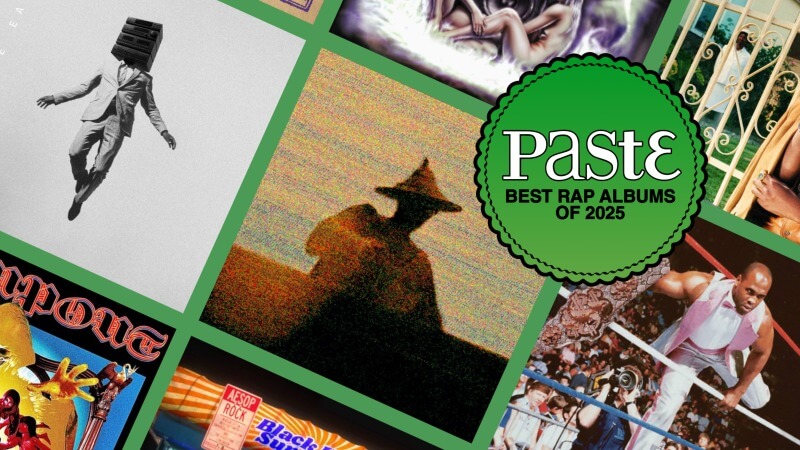
As the year comes to an end, we are wading deep into list season. Now that we’ve talked about the best albums, songs, debuts, and EPs of 2025, it’s time to get even more granular and pay tribute to a few genres before the holiday. Today, we’ve assembled a comprehensive list of our favorite rap albums released in the last 12 months. That includes another banner year for Backwoodz Studioz, a career-best effort from Earl Sweatshirt, two instant rage classics, and releases from always dependable names, like Aesop Rock, Little Simz, clipping., and more. This year also saw the return of two all-time great groups: De La Soul and Clipse. Being a hip-hop fan is pretty fun right now. Here is Paste‘s official ranking of the best rap albums of 2025.
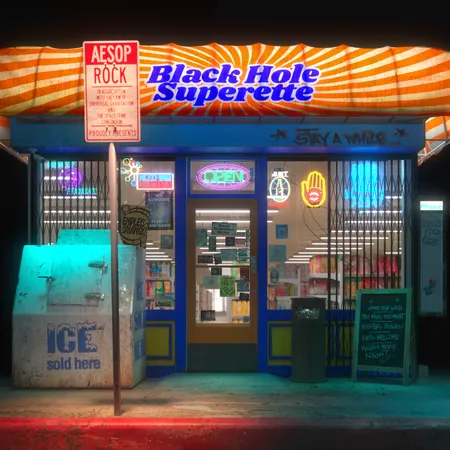
25. Aesop Rock: Black Hole Superette
When Aesop Rock is acting sardonic, he’s at his best. On “Unbelievable Shenanigans,” the final song on Black Hole Superette, he telegraphs his flow in conversational poetry. “People be like, ‘Wow, you’re such a hypocrite.’ And I’m like, ‘Yo, you can’t be this completely fuckin’ stupid. I hope you suffer horribly. Like, I’m not even a violent person, which makes me a double hypocrite.’” Rock excavates the selectiveness of memory (“It’s interesting what the memory cherry picks and what it pardons”) and reckons with trauma’s place in transformation (“We’re nothing if not silver linings stuffed into compartments”). He dissects the inner-workings of his own complications, rapping non-chalantly over choppy rhythm samples, clipped symphonies, and psychedelic vocal pieces. Hanni El Khatib closes the song—and album—with my favorite image of the year: “Memory, waiting on the edge of the sun, burning in the shape that I’ve become.” Black Hole Superette, with appearances from Open Mike Eagle (“So Be It”), Armand Hammer (“1010 Wins”), and Lupe Fiasco (“Charlie Horse”), elevates Aesop Rock even further into the rap pantheon. The dude kills it on his own. But when his friends step up to the mic, you’re always witnessing lyrical contrasts anchor into excellence. No tours, no interviews, nothing. Rock lays it down on his own terms. —Matt Mitchell[Rhymesayers]
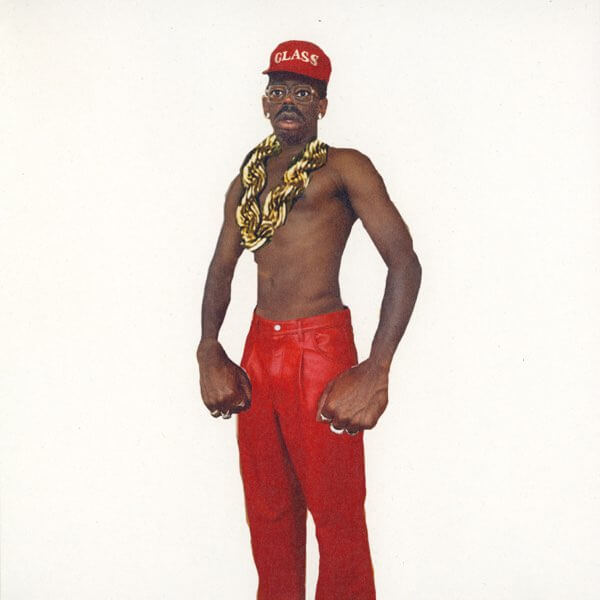
24. Tyler, The Creator: DON’T TAP THE GLASS
Released on a Monday after some weekend teasing, Tyler, The Creator’s ninth studio album is his most unpredictable effort in a decade. It’s genre fluidity is more obvious than CHROMAKOPIA or IGOR, as Tyler fiddles with house and techno music, tossing in some rap asides and synth-pop bonafides for good measure. The feature list is good, too, sporting names like Sk8brd and Yebba. The sample line-up is out of this world, as well. Here’s just a taste: 12 Gauge’s “Let Me Ride,” Ray Parker Jr.’s “All in the Way You Get Down,” and Crime Mob’s “Knuck If You Buck.” On “I’ll Take Care of You,” Tyler even samples his own song, “Cherry Bomb.” The highlight track is “Don’t You Worry Baby,” assisted by singer and co-writer Madison McFerrin. The song features her soulful interplay where, in the past, Tyler would have pitch-shifted his own vocals. It’s one of the rapper’s more inventive collaborations, one that finds him relinquishing full control. It allows McFerrin to be the rightful star of the song, as her “I’ll give you the world before you fall asleep” line provides great contrast to Tyler’s repetition of “Damn, girl, you better move your hips.” In a statement about Don’t Tap the Glass, Tyler shared: “THIS ALBUM WAS NOT MADE FOR SITTING STILL, DANCING DRIVING RUNNING ANY TYPE OF MOVEMENT IS RECOMMENDED TO MAYBE UNDERSTAND THE SPIRIT OF IT. ONLY AT FULL VOLUME.” True to his intentions, “Don’t You Worry Baby” is a totally ‘80s prom breakdown injected with modern trap flavor and sex-on-a-stick swagger. As the man himself demands, “Let me rock, pop it, shake it.” —Matt Mitchell[Columbia]
23. De La Soul: The Package
For years, getting a friend to put 3 Feet High and Rising on local files was like pulling teeth. But ever since De La Soul finally resolved the rights disputes that had kept their records shelved in the digital era, the group has slowly but surely been receiving the wider recognition they’ve always deserved. In the last two years, the reevaluation of De La Soul has introduced a new generation to the complete oeuvre, from underrated gems like Buhloone Mindstate to widespread classics like 3 Feet High and Rising. They’ve embarked on tours with the likes of Wu-Tang Clan, Nas, and Cypress Hill, reminding audiences of their status alongside legendary peers. Even before their recent reemergence, the group maintained their legacy as one of early hip-hop’s most enduring figures off the sheer strength of their catalog. Simply put, there are few artists that have left a footprint as prominent—not just in just hip hop, but popular music at large—as De La Soul. And with Cabin in the Sky, it’s clear that the group has only gotten better with time. The album refreshes the quirks that made De La Soul so charming across their tenure, while taking stock of the matured realities and changes they have been forced to reckon with. There is very little precedent for the sort of excellence De La Soul is achieving so deep into their career. To have one of rap music’s first great groups releasing great material 36 years after their original debut is a testament to the relative brevity of the genre’s lifespan and the unknown frontiers still possible within the culture. It lends to a massive optimism for the next 50 years of hip-hop, especially around a time when its doom and death are being proclaimed at every street corner. What will hip-hop look like in 2050, knowing that the current class of top talent could very possibly continue their excellence? That, in Daisy Age terms, is the real magic of Cabin in the Sky. —Benny Sun[Mass Appeal]
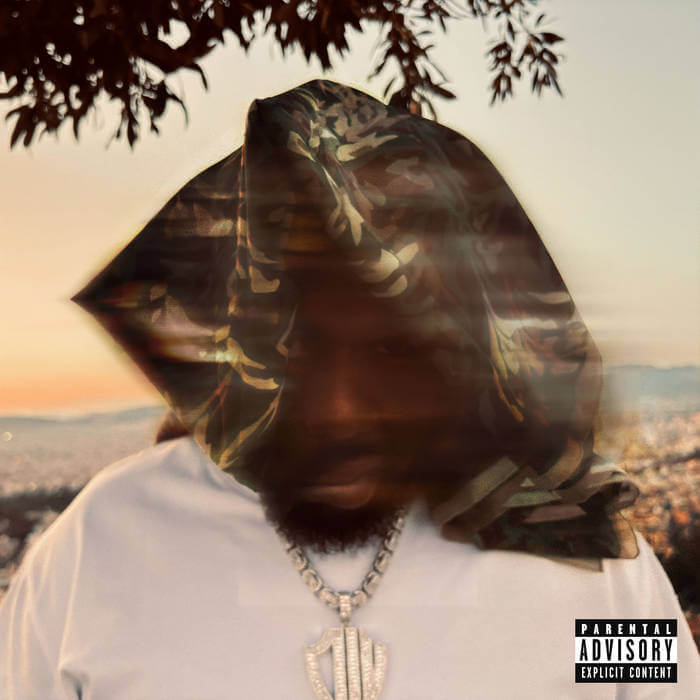
22. Conway the Machine: You Can’t Kill God With Bullets
Palermo and Slant Face Killah might be the most-underrated 1-2 punch this decade. Conway the Machine, pride of the East Coast, is finally seeing himself as a God—13 years after surviving gunshots to his head, neck, and shoulder. The title of his new album is apt. You Can’t Kill God With Bullets is another excellent entry into the rap pantheon, one full of Conway’s best co-conspirators: Roc Marciano, Whoo Kid, G Herbo, KNDRX. Justice League hops on the “Lightning Above the Adriatic Sea” production; Conway pushes a Timbaland beat on “Crazy Avery.” Conductor Williams guides “Diamonds” into coke-rap excellence. It’s one of my favorite Conway tracks since “Scatter Brain.” But storytelling is at a ten on the career-best “I Never Sleep,” as Conway remembers watching a friend getting arrested in his underwear on the front porch. “You can’t learn about it in school,” a sample reveals. The death toll on “Hold Back Tears” is full of family and friends. “I’m just making sure in all my verses the truth is told,” he acknowledges on “Lightning.” But don’t mistake the transparency for translucence. Conway the Machine has never been so on display, this memorable. —Matt Mitchell[Roc Nation]
21. ZORA: BELLAdonna
Side one of BELLAdonna is in all-caps, while side two exists in lowercase—matching the fluidity of the album’s climax and subsequent rest. “LUV LETTERS 2 MY STINK” is a woozy, bare-bones pyramid of verses where ZORA can flex her flow, in a no-frills cadence; “turn me out” pumps record scratches into the air while Myia Thornton drops a singing performance that wouldn’t sound out of place on a crunk&b interlude. The Prince guitar that defined Z1 isn’t totally absent, either; you can hear it in “THE BALLAD OF BELLADONNA” as it bridges the album’s halves, and ZORA even loops her chords into a mutated sample on “midnightmadness.” “sick sex” features guest vocals from social media names like Jaemy Paris and Duhgreatone, and the arrangement calls to mind the rhythms of Jimmy Jam and Terry Lewis’s contributions to Janet Jackson’s 1980s canon. On the work-of-art chasm “BODIES IN MY ROOM,” the color palette expands as ZORA’s vocal bends into this Auto-Tuned free-fall of voices turning inside out. Three years after Z1, BELLAdonna quakes with electronic impulses and colorful contrasts. It’s like a strobe light set to music, or an amalgamation of PC Music and the Neptunes. There is something plentiful here, in the neon-red of ZORA’s cinematic oasis—tones and tricks inspired by Three 6 Mafia, Children of the Corn tapes, and the fruits of Abel Ferrara’s filmography. The songs tell a story of a sexual ecstasy ripped away but now regained, served up mixtape-style. This album stinks, sweats, and shakes, vibrating in the calm rap of reclamation, answering machine messages that say “I love you,” and clapping samples. ZORA places a wreath of macabre, femme fatale bon mots and in-your-face, pyrotechnic instrumentals onto a musical lexicon sorely in need of a makeover. —Matt Mitchell[Get Better Records]
20. Navy Blue: The Sword & The Soaring
When he’s not skateboarding or modeling, Sage Elsesser makes music under the banner of Navy Blue. Between him and MIKE, rap has been in good hands for a minute now. His last record, Memoirs in Armour, was a favorite of mine in 2024. His new record, The Sword & The Soaring, lands the same. Produced by Elsesser’s “guiding light and force” Child Actor, “Orchard” is one of the best rap efforts of the year, arriving just as the autumn trees are readying their bareness for winter. The song is, as Navy Blue puts it, “connected through soil and roots, with expansiveness that resembles the infinite source.” Nebulas of jazz piano are unwound by a looping snare drum and cymbal vibration; Navy Blue reflects on family, death, and his river of grief, talking about how “life’s tapestry is tattering.” I could quote the whole song honestly, but I’ll keep it to just one sequence for now: “I love the dark because the light meaning my brother near / The forecast of his youth last a hundred years / Downpour of his rain, wasn’t nothing clear / It was literally opaque / Little me was up late / Watching life curve, bend, tryna get his soul straight.” Navy Blue’s latest has affected me deeply. Maybe it’s just that good. Or maybe my shadow just needed a light like this, a voice saying “we was dealt so many losses that we gotta win.” Maybe it’s both. Yeah, I’m gonna go with both. As he raps on “24 Gospel”: “I speak the language of the heart.” —Matt Mitchell[Freedom Sounds]
19. Preservation & Gabe ‘Nandez: Sortilège
Backwoodz put out records from billy woods and Armand Hammer this year. But that’s no reason to sleep on Sortilège, the latest from Gabe ‘Nandez. He met beatmaker Preservation while assisting woods with Aethiopes in 2022 and bonded over a shared francophone ancestry, and their debut linkup is geographical, generational, and revolutionary. Verses cut bluntly; beats never overwhelm the language. This is ‘Nandez’s show, but he spreads the wealth: Benjamin Booker reunites with Armand Hammer on “Mondo Cane,” while ‘Nandez performs a bilingual duet with Ze Nkoma Mpaga Ni Ngoko on “Nom de Guerre.” With production by Preservation, Sortilège is a powerful document with both eyes open. It’s a record up on heritage, figured resoundingly by a linchpin of the New York rap underground. Sortilège is drum heaven and brilliantly uncomplicated. The woods-assisted “War” hits exactly where it needs to, when ‘Nandez tells us that “the genocide will be televised ‘til it’s normalized.” Sortilège is a protest, a blueprint, and a breakthrough all at once. —Matt Mitchell[Backwoodz Studios]
18. clipping.: Dead Channel Sky
As a long-time clipping. fan, the experimental rap trio’s cyberpunk opus Dead Channel Sky was absolutely one of my most anticipated records of 2025, and I’m very happy to announce that it did not disappoint. The group’s first release since their phenomenal double-header horror records of 2019 and 2020, Dead Channel Sky is a whopping twenty tracks, each one riddled with innumerable hip-hop references and allusions to foundational cyberpunk texts, all spat out with ease and fervor by frontman Daveed Diggs—and tracks like “Dodger,” “Polaroids,” and closer “Ask What Happened” further cement Diggs as one of the foremost rap lyricists of our time. His flow is as varied, impeccable, and inimitable as ever, yet we also see him expand beyond clipping.’s typical even-keeled narration into huskier, more emotive realms (on “Mood Organ” and “Madcap,” for example), and it’s captivating. Similarly, while Jonathan Snipes and Bill Hutson’s production continues to be just as insanely incredible (and incredibly insane) as one would come to expect from them at this point, they still manage to venture into as-of-yet unexplored territories in clipping.’s discography, like in the French house number “Mirrorshades pt. 2” and the sampling of Human Resource’s 1991 European rave anthem “Dominator” in their track of the same name. Dead Channel Sky is a mixtape-style project that lays the cyberpunk-imagined future of the 80s and 90s directly atop our modern world in 2025—it’s an exploration of our present, viewed through the lens of that future that was once predicted by cyberpunk writers (and sounded out by rappers and artists) of the past. The resulting palimpsest is staggering, unlike anything else released today, and utterly impossible to look away from. —Casey Epstein-Gross[Sub Pop]
17. Jane Remover: Revengeseekerz
The intervals of stillness that balmed Census Designated have vanished, as Jane Remover stacks diss upon diss, vaunting through rap templates that have been submerged beneath mayhemic, static-walled cyphers. “There’s two of me, I’m cloning out,” they bawl on “TWICE REMOVED.” “Dead man flexing, show some ass now.” Jane may rap like their shit is whack, but the poetry they siphon into “Experimental Skin” vibrates through the sensory overload: “I taste all the past, present, future too”; “I’d give you all the stars along a tightrope / Thing God became a part of you”; “I been the same bitch you went missing for.” Revengeseekerz is not just a horizon of touch or an appetite for wrongdoing, but a portal. From the haunted “Of course you can touch my body” anaphora in “angels in camo” to the “Bitches dick suck then they go and bite my sound” sneak in “Dreamflasher,” Jane presents a complicated, scornful world. These songs contradict themselves, peddling a fast living while the bodies in motion ache to settle. “Dreamflasher” is the skeleton key for Jane Remover, a condemnation of success in the sprawl of good dick and the messes we make when the lights go down. Fame is irrelevant if there’s no one praying on your name back home; In their cybernated mysticism, Jane sings, “Baby tell me what’s the point of preaching to the choir if I can’t see you in the crowd.” “TURN UP OR DIE” jerks and tremors like edits in a grindhouse cut-scene, dropping gauzy, compressed melodies into a melange of chipped and shredded circuitry. “Give dead bitches proper sendoff,” Jane raps, before the song crescendos into the best beat drop of 2025. Out of a pocket of futuristic, siren synths awakens a motto: “Make some noise, do it live, save the file, do or die.” —Matt Mitchell[deadAir]
16. Clipse: Let God Sort Em Out
16 years after their last album, Clipse returned this summer with Let God Sort Em Out, perhaps the final resume piece needed to cement them as one of the three greatest duos in rap history, joining Mobb Deep and OutKast at the very top. “So Be It” is one of the best songs of the year, and it’s all about rich perspectives and welcoming beefs, and the brothers take aim at Travis Scott and Kylie Jenner, talking about lip gloss poppin’ and Calabasas snatching their pride like a chain. Malice serves up sticky bars, using tweets, the Neptunes, and the Paris riots to talk shit on rap’s absence of integrity, while his brother’s flow sounds either godly or familiar. Pusha says it himself: “If they catch me, don’t forget me, resurrect me.” On the flip, “Ace Trumpets” makes 99% of rap tracks look like child’s play. It’s a return to the form they put on ice for a decade. Siblings Pusha T and Malice can rap circles around each other. Coke rap hasn’t sounded this good since Pusha’s last LP, thanks to a rimshot snare ‘n’ bass beat supplied by Pharrell Williams. Pusha’s chorus here is dependable (the transition from “ballerinas doin’ pirouettes inside of my snowglobe” to “you had to see it, strippers shakin’ ass and watchin’ the dough blow” is particularly slick), but his brother serves up the stickiest bars, spitting about being “dressed in House of Gucci made from selling Lady Gaga” and “never leavin’ home without my piece like I’m Mahatma.” Malice’s flow sounds either godly or familiar. I mean, he says it himself: “I done disappeared and reappeared without a ‘voilà.” —Matt Mitchell[Roc Nation]
15. Che: REST IN BASS
The debate over the best rage album of 2025 surrounds two titles: Rest in Bass and Jump Out. On the former, a 19-year-old Che rises out of the Atlanta underground with blown-out bass, bombastic melodies, distortion, and skittering synths. Rest in Bass has already set a fascinating precedent for Southern rap, calling upon his co-conspirators Chuckyy and OsamaSon to make sense of Che’s digicore party. We’re seeing some of the most impulsive and inventive hip-hop wade into industrial and electronic prisms right now, and Rest in Bass is maybe the best example of that. Cut-up beats, punk thrashes, bippy crashouts, and ear-bursting decibel levels give songs like “DIE YOUNG” and “ON FLEEK” offer a compressed and disorienting touch. In the wake of Playboi Carti’s influence, Che’s already got his hand on the torch. —Matt Mitchell[10k]
14. redveil: sankofa
Every December there’s a 2025 album released too late for year-end lists. Last year it was Cameron Winter, this year it’s redveil, a Maryland rapper who’s been rummaging around in the underground since 2019’s Bittersweet Cry, which he released at age 15. But we haven’t heard from him in three years, when he shared the underrated learn 2 swim. Now in his twenties, sankofa is a total breakthrough that shapeshifts through psychedelia, backpack rap, noise-rock, and piano-and-microphone pop. It’s a versatile record top to bottom, utilizing redveil’s singing voice and his attention to detail on beats and samples. “stay the night” is all passion, as is “pray 4 me.” Hearing sankofa play out is like sitting with a gospel. “history” and “time (a dream deferred)” are sticky and quick, while the Smino-assisted “brown sugar” summons the spirit of D’Angelo in soulful fragments. sankofa is a coming-of-age album for a rapper forced to grow up in a post-2020 world. IRL relationships are fewer than ever, and we’re tasked with cultivating intimacy and trust through screens. These songs reach for community. The title references the Akan proverb “it is not taboo to go back for what you forgot (or left behind).” On sankofa, no stone is left unturned. —Matt Mitchell[Fashionably Early Records]
13. MIKE: Showbiz!
For MIKE, music and community are intersecting lines on the same chart; they’re two worthy pursuits that produce a symbiotic effect for their counterpart. On top of managing the Young World festival and his 10k record label, he is a producer for various artists, releases music under his dj blackpower moniker, and still makes time for his work as MIKE. More than any of his other albums, Showbiz! embodies the communal spirit that its creator so frequently espouses. His insular, funhouse-mirror instrumentals permeate the record like viscous syrup spreading over a tall stack of pancakes. But here, he sometimes cedes production duties to likeminded artists such as Laron (“Showbiz! (Intro)”), Salami Rose Joe Louis (“Zombie pt. 2”), and Surf Gang’s Harrison (“Belly 1”). Each understands the gravitational pull of MIKE’s work, a tapestry of woozy samples, shimmering keyboards, and shapeshifting drums. Every element orbits his unmistakable voice, built on a compelling hybrid of somnambulant delivery and dextrous wordplay. As Showbiz! suggests, that’s what MIKE is ultimately doing this for. On “Artist of the Century,” he ends the chorus with one of the album’s most indelible lines: “I been puttin’ up with strife since a youngin / The prize isn’t much, but the price is abundant.” Even if underground hip-hop is far from the most lucrative career path, making art and finding your faction can yield different kinds of riches, ones that value the soul over the bank account. MIKE understands that intuitively, and it’s clear from his craft alone. —Grant Sharples[10k]
12. Jim Legxacy: black british music (2025)
Braggadocio abounds throughout, but black british music mostly concerns itself with tales of economic strife, upward mobility, houselessness, romantic yearning, and familial melancholy. “issues of trust” finds Jim Legxacy in ballad mode with orchestral string flourishes, finger-picked acoustic guitars, and introspective lyrics about his strained relationship with his father: “I still can’t talk about it,” he admits in his swooning timbre. Meanwhile, the emo-tinged dembow bop “sos” wrestles with the difficulty of watching the one you love chase after someone else. “He won’t take you out / I know you’ve asked a thousand times,” he sings, his emotive voice perched evenly between desperation and determination. At the same time, these new songs demonstrate Jim Legxacy’s refusal to repeat himself. While black british music largely adheres to the Afrobeats-emo fusion he cemented on homeless n***a pop music, he adapts that blend in fresh ways, whether it’s through acoustic balladry (“issues of trust”), lush alt-pop (“‘06 wayne rooney”), or anthemic Britpop (“dexters phone call”). It also helps that Legxacy understands the power of brevity; most songs hover around the two-minute mark, and the whole project blazes by in less than 35 minutes. Coupled with the sheer amount of ideas he manages to pack into a single track, black british music encourages endless re-listens with plenty of minute details you maybe didn’t notice on the previous go-around. There’s the gliding, cushiony synth bass on “d.b.a.b”; the pitch-shifted vocal samples in the background of “big time forward”; the soft, fuzzy coating of the guitars on the dexter in the newsagent-featuring “dexters phone call.” There’s a lot to take in, but never is it overwhelming. It ensures a longevity that makes the replay button all the more enticing. —Grant Sharples[XL]
11. Saba & No ID: From the Private Collection of Saba and No ID
Continuing his evolving relationship with producer No ID, Chicago rapper Saba took his time rolling out their collaborative project, The Private Collection of Saba and No ID, a proper follow-up to his great 2022 record Few Good Things. After dropping “How to Impress God,” “Woes of the World” and “Crash,” The Private Collection is finally here and features contributions from Eryn Allen Kane, BJ Chicago Kid, Raphael Saadiq, Kelly Rowland, MFnMelo, Ibeyi, Frsh Waters and Tru, among countless others. This is a family album; a vault of a Midwest great’s most synergized successes. It boasts “head.rap,” a song so good it ended up on our year-end list in December 2024. “head.rap” shines thanks to a resounding choir of backing vocals from singers Madison McFerrin, Ogi and Jordan Ward. In the verses, Saba contemplates Black hairstyles, growing out dreadlocks and self-expression. “Searchin’ for an avenue, ways to reflect my current attitude,” he muses. Views of the world / I’m Malik to my grandma, who used to braid my hair / But I had to cut ‘em at the school / And it was Black ran, I’m just a Black man lookin’ for a good day.” No ID’s production flourishes here, too, with flutters of guitar and hand-clap percussion. On “a FEW songs,” one of my favorite tracks of the year, the beats loop and bounce; stabs of a half-dozen different keys pierce through a soul-stirring vocal harmony from Ogi. Love Mansuy’s “shit is temporary” chorus bridges Saba’s verse into Smino’s, as they rap about their long search for a come-up in a changing ‘hood (“We been on our way—fashionably late, past tense”). “Back in the day, we was on blogs and searching for different perspectives,” Saba spits. “And Benjamins and Jacksons, ‘cause it was a recession.” Smino picks up the story down the road, talking about going “from North Side to Porsche rides to courtside to sold-out shows” and flashes a double entendre of “We bae” and Wee-Bay from The Wire. “a FEW songs” spans a decade or two and ends in affirmative revelation: “It’s okay to change it all, so beautiful,” Ogi hums on a piano fadeout. Saba and his counterpart No ID should make a thousand songs together. But if I can only have one for the rest of my life, I’ll pick “a FEW songs” every time. —Matt Mitchell[From the Private Collection]
10. Earl Sweatshirt: Live Laugh Love
Live Laugh Love doesn’t present Earl Sweatshirt as a new man. He references his past, both the good and bad, but, as he looks back on older works, trials, and victories, there isn’t a sense of regret, but acceptance—even a twinge of gratitude in the acknowledgement that the fires he once faced led to the picket fence he now enjoys. “TOURMALINE” swings with the romance of a Sinatra classic, as Earl intertwines his long journey towards self-betterment with his unabashed love for his wife. He inhabits the technique that made the words of Gil Scott-Heron immortal, weaponizing dire circumstances and transforming them into little splotches of hope. Whereas humor on Earl’s earlier records squeezed mild amusement out of cynical circumstances, his comedy now feels lighthearted and rooted in joy. Comedian Mandal delivers an early monologue on “gsw vs sac,” riffing on the hedonism of Uber Eats over a wailing sample before formalizing the thesis of the record: “You ain’t runnin’ from nowhere but your own self, and that’s where you exactly need to be.” Few dudes have ever sounded this cool on a recording. Sonically, Live Laugh Love feels like a collage of the spaces Earl Sweatshirt has spent the last five years studying, offering a strong push-pull between his sonic past and present. —Benny Sun[Tan Cressida/Warner]
9. Little Simz: Lotus
It’s a special level of rap when you can take the lyrics, omit the music, and be left with just a beautiful piece of writing. Furthermore, it takes a special caliber of rapper to construct these phrases and rhyme schemes into reflections of human emotion that are both digestible and entertaining for audiences. I think of generational talents like Black Thought, Rakim, Ms. Lauryn Hill, and, in recent years, Little Simz. The London rapper has more than earned her place in any “best lyricists” conversation, repeatedly proving why she is one of the most compelling voices contributing to modern hip-hop. Since her 2021 record Sometimes I Might Be Introvert won both the Mercury Prize and a BRIT Award, Simz hasn’t had to prove anything, but she has continued to air her voice, calling out the whole of the music industry on 2022’s NO THANK YOU for its hypocrisy, greed, and inequality. Opening along an infectious bass groove and soul-infused vocal refrain, “Free” is a bouncing, stirring anthem of self-liberation and resilience. In the first verse, Simz expounds on her definition of love before testing it against her feelings of fear, delivering each line completely composed yet with unclouded emotional intent. Never have I wanted to quote an entire song as much as here. Each bar on Lotus is a masterful display of storytelling and personal affirmation—every line standing resolute for its sharp portrayal of life, trust, obsession, mortality, and knowledge. I think of a 2011 interview with Jay-Z in which he said, “Rap is poetry. It’s thought provoking; there’s thought behind it… If you take those lyrics and you pull them away from the music and put ‘em on the wall somewhere and someone had to look at them, they would say, ‘This is genius. This is genius work,” and if Lotus doesn’t deserve that spot on the wall, no album does. —Gavyn Green[AWAL/Age 101]
8. OsamaSon: Jump Out
Ohio-born and South Carolina-bred OsamaSon had a banner year, thanks to two pretty great rap records: Jump Out and Psykotic. The former is the one for me, and maybe the first rage rap record I’ve truly gotten hooked on. You can tell that OsamaSon is working through the afterglow of Playboi Carti’s ascent, considering that “Insta” sounds like a Whole Lotta Red B-side. But the SoundCloud era is thriving because of OsamaSon’s work. Jump Out might be the best mixtape release of 2025, blowing the door to rage rap off its hinges. Out of all the records on this list, I don’t think there’s a run of songs better than “New Tune,” “Waffle House,” and “I Got the Fye.” Good production from Skai, Gyro, Legion, OK, and Warren elevate the 808s, panning ad-libs, and synths, while OsamaSon’s maximalist and bewildering experiments push the limits of what rage is supposed to be. “Ref” is all noise, “Waffle House” sounds like a videogame, and the Future sample on “I Serve the Base” is covered in slime. Jump Out sounds like a party. All head-pounding, Auto-Tuned chaos, no aftershock. —Matt Mitchell[Atlantic]
7. Armand Hammer: Mercy
“What’s the role of a poet in a time like this?” The question crops up about halfway through Armand Hammer’s latest record, Mercy, but the singularly talented duo of billy woods and ELUCID spend the whole 40-odd minutes circling it and refusing an easy thesis. The Alchemist’s production clears out the room—keys that glint like broken glass, bass that presses on your ribs, percussion that flickers in and out—so the pair can do what they do best: file reports from inside the mess. The pain here isn’t spectacle, it’s ambient pressure; a mood that stains daily life until even the small things feel radioactive. From beginning to end, the record keeps shifting its weight without loosening its grip. “Peshawar” side-eyes our machine age (“Thou shalt not make a machine in the likeness of a human”), “Nil by Mouth” stalks forward on grit and breath, “Glue Traps” zooms down to the apartment level—stoves, neighbors, hustles—until the whole block becomes a diagram. Elsewhere the palette widens: the water-drunk reverie of “Calypso Gene,” the string-tight panic of “Crisis Phone” (with Pink Siifu), the widescreen haze of “California Games.” Guests (Earl Sweatshirt, Quelle Chris, Cleo Reed, Kapwani, Silka) slip in like new angles rather than relief valves. Then “Super Nintendo” closes the book with cartridge glow and backward glances—nostalgia that refuses to lie. The album doesn’t argue for hope so much as practice it in fragments: a hand unclenched, a corner turned, a breath counted. Mercy (both the record and the noun) is not merely a gift but an act of endurance, of continued purpose in a world that seems devoid of it. What’s the role of a poet in a time like this? woods answers honestly, without triumph or despair: “I’m still grappling.” —Casey Epstein-Gross[Backwoodz Studioz]
6. Westside Gunn: HEELS HAVE EYES 2
Westside Gunn dropped three projects titled HEELS HAVE EYES this year, and we already featured the first one in our best EPs list. I’ve been obsessed with the trilogy, especially HEELS HAVE EYES 2, a masterclass in kayfabe. As a rap fan obsessed with wrestling, there is no better emcee alive than Westside Gunn. Whether he’s commenting on a recent, high-profile villain turn (“HEEL CENA”), talking shit on the guy who appears whenever you say his name (“BLOW HENDRY”), or riffing about Iron Shiek’s old tag partner (“BRIKOLAI VOLKOFF”), Gunn remains firmly in his element. Production from Conductor Williams and Denny Laflare elevate “MANDELA” and “GLOWREALAH,” while features from Stove God Cooks, MIKE, Eastside Flip, Brother Tom Sos, and Benny the Butcher turn HEELS HAVE EYES 2 into a communal shoot. Freestyles, vintage soul clips, and Million Dollar Man iconography abound. The soulful chop vibrating in the backdrop of “LOVE YOU PT. 2” is the most satisfying finale of any album featured in this list. Nobody samples like Westside Gunn samples. —Matt Mitchell[Griselda]
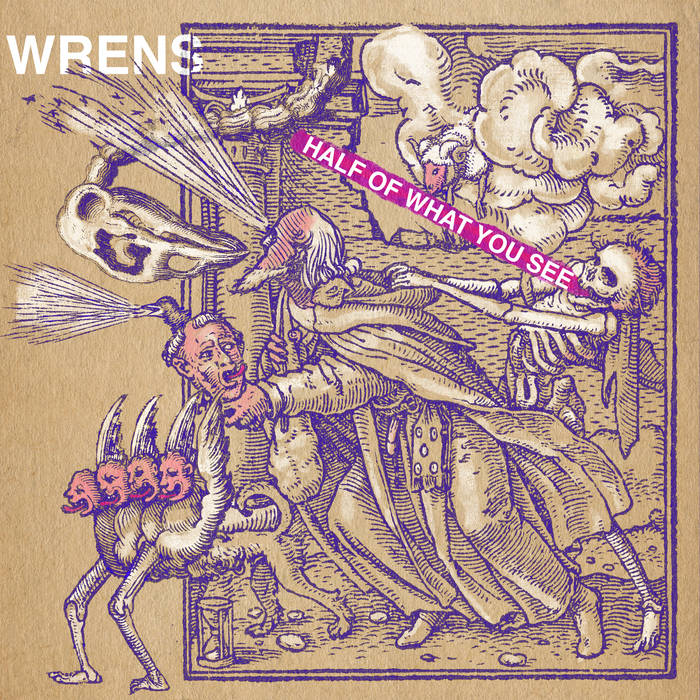
5. Wrens: Half of What You See
No, indieheads, this is unfortunately not the long-awaited The Meadowlands follow-up from The Wrens—but it is a pretty damn good jazz-rap record. On Half of What You See, the Brooklyn quartet known as WRENS sound like they’ve wired their entire practice room into a single (malfunctioning?) nervous system: electronics twitching, drums feinting and lunging, trumpet lines darting between cello scrapes and synth murmurs like they’re trying to finish one another’s sentences. What’s striking isn’t the noise or the density—those were already part of the band’s DNA—but the sense of purpose running underneath. On instrumental track “Longbow,” the cello and keys move in slow, deliberate circles while the electronics color the edges rather than swallow the frame. Ryan Easter sets the horn down to rap on “Snake,” his low, heavy drag of a flow threading wit, dread, and Biblical allegory through a rhythm section that keeps shifting its center of gravity. Even “Charlie Parker,” which hosts some of the most delightfully unhinged moments on a record with a whole lot of them, moves with an odd internal logic—Easter’s voice deadpan against a backdrop that sounds like a band sprinting through rapidly collapsing scaffolding. What makes the album stick is how unpretentious it all feels; the experimentation is all evidently grounded in pure love of the game. Despite the knotted structures and tumbling arrangements, there’s an ease to the way they play—an undercurrent of humor, of invention for its own sake, of four musicians catching each other in mid-air. Half of What You See is chaotic, yes, but it’s the rare kind of chaos where you can truly hear the joy inside the dissonance. —Casey Epstein-Gross[Out of Your Head]
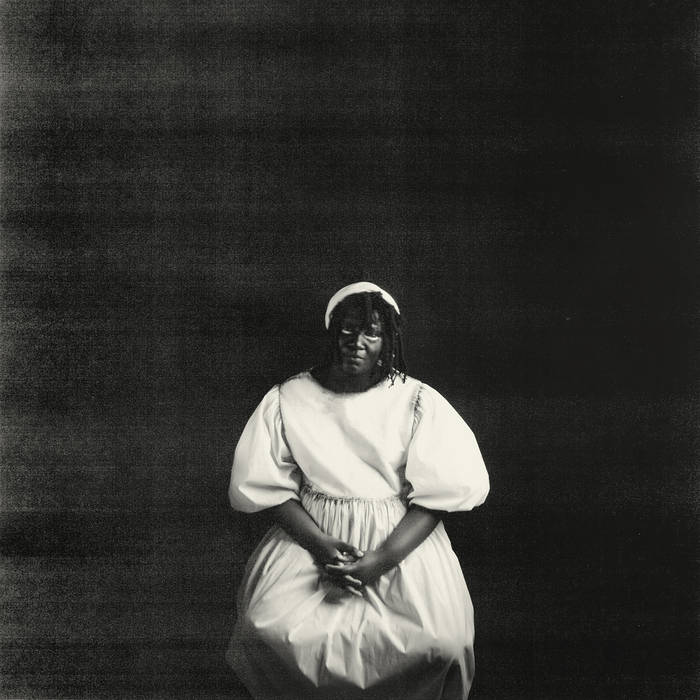
4. Backxwash: Only Dust Remains
On Only Dust Remains, Ashanti Mutinta conjures everything from the meta-existentialism of Moor Mother, to the prog-rap of Young Fathers, digital intricacies of clipping., and Yeezus levels of damp, brash Auto-Tune. The perspective repeatedly switches between micro and macro, as Backxwash, ever the intergenerational, socio-political magician in rap, casts a spell on Black trans life through gothic, scorched-earth overtures, unpredictable pop tangents and prompt lyrical critiques of global corruption and genocide. Vicious lead single “Wake Up” boils for seven minutes and lends itself to the testimonies of trauma. Loud, swirling and complex samples collapse into a terrifying overture, where Mutinta shouting “WAKE THE FUCK UP!” over and over becomes an instrument added into the mess. “9th Heaven” is an electric squash of anxiety, as Backxwash’s flow stretches around a crying vocal sample. She reckons with labor, drugs and purpose. Piano notes twirl like pirouettes, as she summons a “drummer coming,” programming beats into a Biblical ecstasy evoked through mentions of the archangel Gabriel and Adam eating the apple. On “History of Violence,” she condemns the world’s leaders using freedom as a bartering chip; she recalls videos of dying Palestinian children and reckons with what power fuels a slaughtering of innocent children: “These fuckers gonna say it’s all about peace. Check the stats, motherfucker, it’s all about greed.” Only Dust Remains is Backxwash’s most conventional album yet, but its resistance and expansiveness are never sacrificed. These songs are caustic, knotty monoliths, and Mutinta bedecks her sacrifices with challenging, orchestrated resignations; the occultic, unsettled energy of her previous releases gets substituted with potent electronic abstraction. —Matt Mitchell[Ugly Hag]
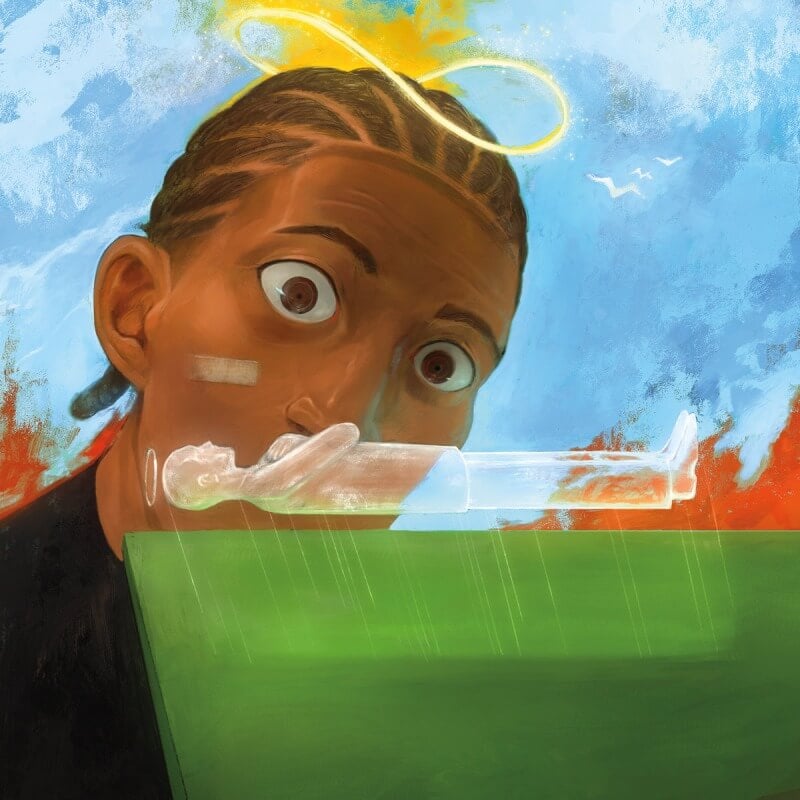
3. McKinley Dixon: Magic, Alive!
Magic, Alive! is McKinley Dixon’s fifth album, and it’s also the biggest risk he’s taken yet—a collection of tracks always flirting with overproduction and clutter. The music is brimming with orchestration; it’s not “everything but the kitchen sink,” but “everything and the kitchen table.” Dixon isn’t afraid to add more voices and hands into his musical soup, and each song is an elixir of jazz-rap, with pockets layered in chain-link grandeur. Every chapter of Magic, Alive! is bigger than him, yet his verses focus on the micro with historical hip-hop citations, literary allusions, and horror films metabolized into heady sonic palettes. Like the illustrations he animates in his spare time, the rarely-pedantic Dixon meticulously sketches expressions of people he both knows and imagines. His lyrical fascinations with mythology are decorated in rare and endangered fits of orchestral patterns; the noisy percussion, mechanical poetry, and blood-boiling strings haunt the magic Dixon is chasing in the epilogue of Beloved! Paradise! Jazz!?’s block-bending cynicism but never smear it. As he raps on “Listen Gentle”: “It’s tragic, trying to keep my kindness in my steps with lightning in my eyes.” Dixon sinks his teeth into the Magic, Alive! story on “We’re Outside, Rejoice!,” as he summons a concrete pastoral again but doesn’t wear out its meaning. There are far too many front doors still unopened on his turf to stop painting the neighborhood just yet. A tint of blue washes over the brotherhood at the song’s core: “I love laying with you here in the grass, feels like it was just us in the worlds that passed.” Dixon speaks in Toni Morrison titles while seeking redemption and clinging to memories the bodies around him have sung into life. “My face inhales the sun, grab your hand with no plan then we run!” Magic, Alive! is a conceptual, allegorical achievement—a story of three young kids whose friend passes away, the monuments they build in his memory, and the lives they’d kill themselves to restore. —Matt Mitchell[City Slang]
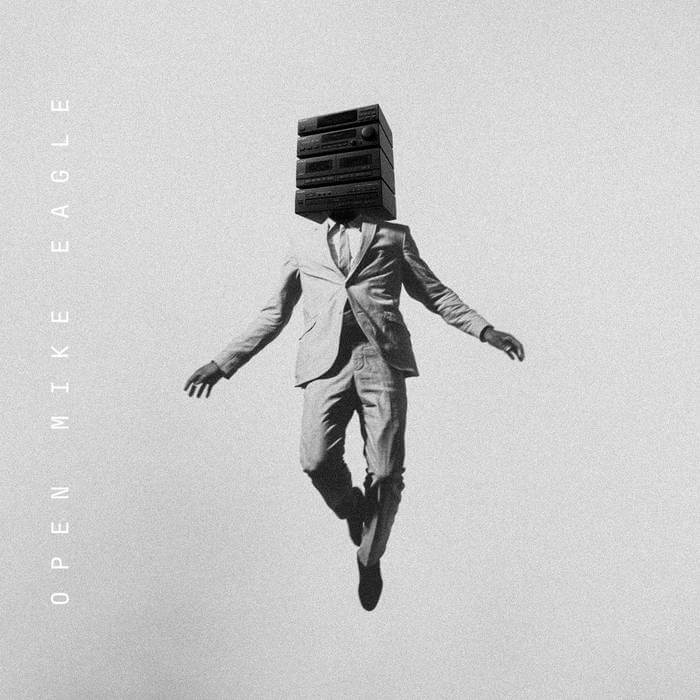
2. Open Mike Eagle: Neighborhood Gods Unlimited
Neighborhood Gods Unlimited takes all of those questions—about where “we” end and the technologies mediating us begin—and turns them into the album’s central metaphor. It’s a record about being split into pieces: selfhood as a broken phone screen, a reflection refracted in dozens of directions, a pile of black glass scattered across a city street, a horde of half-finished demos now lost to the void. That’s not my metaphor, but Open Mike Eagle’s own, impossible to miss on the aptly titled “ok but im the phone screen,” where he grieves the parts of himself—the voice memos, the notes, the to-be-songs—that instantaneously evaporated the moment the phone hit the ground, lost forever because he forgot to upload them to the cloud. (In a great, intentionally facetious moment, he compares the incident to RZA’s infamous, devastating studio flood: “It’s like that but, like, less- less devastating”). And as the title cheekily informs us, Mike is not just the bereft but the bereaved: he is the cracked screen he’s grieving. That concept threads throughout the entire record. A sampled voice at the end of the opening song, “woke up knowing everything (opening theme),” asks, baffled, “I saw the man broken, how he put his self together?” Both “contraband (the plug has bags of me)” and “mirror pieces in a leather bound briefcase” provide potential answers to that all-important question, but not good ones. On “contraband,” Mike imagines discretely bargaining with a local dealer to buy back the chopped-up slices of himself making rounds on the streets: “Bought myself back in plastic bags / Let’s call it contraband.” But even after scoring that fix, it doesn’t take long for Mike to find himself fiending once more. In fact, the end of the next song, “almost broke my nucleus accumbens,” is overtaken by a last-minute coda consisting solely of Mike pressing, over and over, “How do I get some more me?” What keeps Neighborhood Gods Unlimited from collapsing under its own conceptual weight—having to shoulder an entire TV series pitch is no joke—is, as always, the line-by-line genius of Open Mike Eagle’s lyricism. Even at his most unobtrusive, his wordplay remains sharp and strange, peppered with left-field pop culture references, shrewd political commentary, and a vulnerability that cuts through the fog. —Casey Epstein-Gross[Auto Reverse]
1. billy woods: GOLLIWOG
Psychodrama is nothing new to a Brooklynite whose decades-long career is defined by records steeped in anxious atmospherics, but rarely has that dread sounded so acute. GOLLIWOG’s myriad producers, many of whom are previous contributors to billy woods’ catalogue, color-grade the MC’s murky tableaus. Sometimes, they fabricate the entire set. On “STAR87,” Conductor Williams pairs tinny boom-bap with quivering violins, errant bass, and the unceasing ring of landlines. (“They wanna know where the bodies is hid,” woods’ narrator reveals eventually, as if it would ever help.) woods opens “Waterproof Mascara” with a portrait of a weeping mother before shifting subject but Preservation keeps that weeping in the foreground, looping incessantly like a dark splinter lodged in the heart. The crackle of a palpitating digital heartbeat thrums underneath al.divino’s introductory verse on “Maquiladoras” until the first gunshot is fired, after which a heartbreaking piano chord punctuates the demarcated timeline. In lesser hands, GOLLIWOG might read too overwhelming or leaden to be enjoyable, but in the same vein as 2023’s patchwork Maps, woods makes plenty of room for crucial doses of levity. Modern existential nightmares receive an absurdity apropos to their context (“Uncanny valley AI hit him with the hesi screaming ‘Carrie,’” cracks woods on “Corinthians”); dream and nightmare logic allows for a surprise punchline (“I time-traveled and still picked Darko Miličić,” on “Cold Sweat”); the twisted, MF DOOM-honoring “Misery” is a lascivious, evocative outlier; dark comedy naturally abounds on a particularly gutting anecdote in “Lead Paint Test” (“Father put her out her misery on the kitchen floor / Mom said, ‘Be proud of her, she made it home’”). It’s woods being woods. Even when the subject is heavy, his pen can’t help but carve a devilish grin. —Rob Moura[Backwoodz Studios]


 When Aesop Rock is acting sardonic, he’s at his best. On “Unbelievable Shenanigans,” the final song on Black Hole Superette, he telegraphs his flow in conversational poetry. “People be like, ‘Wow, you’re such a hypocrite.’ And I’m like, ‘Yo, you can’t be this completely fuckin’ stupid. I hope you suffer horribly. Like, I’m not even a violent person, which makes me a double hypocrite.’” Rock excavates the selectiveness of memory (“It’s interesting what the memory cherry picks and what it pardons”) and reckons with trauma’s place in transformation (“We’re nothing if not silver linings stuffed into compartments”). He dissects the inner-workings of his own complications, rapping non-chalantly over choppy rhythm samples, clipped symphonies, and psychedelic vocal pieces. Hanni El Khatib closes the song—and album—with my favorite image of the year: “Memory, waiting on the edge of the sun, burning in the shape that I’ve become.” Black Hole Superette, with appearances from Open Mike Eagle (“So Be It”), Armand Hammer (“1010 Wins”), and Lupe Fiasco (“Charlie Horse”), elevates Aesop Rock even further into the rap pantheon. The dude kills it on his own. But when his friends step up to the mic, you’re always witnessing lyrical contrasts anchor into excellence. No tours, no interviews, nothing. Rock lays it down on his own terms. —Matt Mitchell [Rhymesayers]
 Released on a Monday after some weekend teasing, Tyler, The Creator’s ninth studio album is his most unpredictable effort in a decade. It’s genre fluidity is more obvious than CHROMAKOPIA or IGOR, as Tyler fiddles with house and techno music, tossing in some rap asides and synth-pop bonafides for good measure. The feature list is good, too, sporting names like Sk8brd and Yebba. The sample line-up is out of this world, as well. Here’s just a taste: 12 Gauge’s “Let Me Ride,” Ray Parker Jr.’s “All in the Way You Get Down,” and Crime Mob’s “Knuck If You Buck.” On “I’ll Take Care of You,” Tyler even samples his own song, “Cherry Bomb.” The highlight track is “Don’t You Worry Baby,” assisted by singer and co-writer Madison McFerrin. The song features her soulful interplay where, in the past, Tyler would have pitch-shifted his own vocals. It’s one of the rapper’s more inventive collaborations, one that finds him relinquishing full control. It allows McFerrin to be the rightful star of the song, as her “I’ll give you the world before you fall asleep” line provides great contrast to Tyler’s repetition of “Damn, girl, you better move your hips.” In a statement about Don’t Tap the Glass, Tyler shared: “THIS ALBUM WAS NOT MADE FOR SITTING STILL, DANCING DRIVING RUNNING ANY TYPE OF MOVEMENT IS RECOMMENDED TO MAYBE UNDERSTAND THE SPIRIT OF IT. ONLY AT FULL VOLUME.” True to his intentions, “Don’t You Worry Baby” is a totally ‘80s prom breakdown injected with modern trap flavor and sex-on-a-stick swagger. As the man himself demands, “Let me rock, pop it, shake it.” —Matt Mitchell [Columbia]
  For years, getting a friend to put 3 Feet High and Rising on local files was like pulling teeth. But ever since De La Soul finally resolved the rights disputes that had kept their records shelved in the digital era, the group has slowly but surely been receiving the wider recognition they’ve always deserved. In the last two years, the reevaluation of De La Soul has introduced a new generation to the complete oeuvre, from underrated gems like Buhloone Mindstate to widespread classics like 3 Feet High and Rising. They’ve embarked on tours with the likes of Wu-Tang Clan, Nas, and Cypress Hill, reminding audiences of their status alongside legendary peers. Even before their recent reemergence, the group maintained their legacy as one of early hip-hop’s most enduring figures off the sheer strength of their catalog. Simply put, there are few artists that have left a footprint as prominent—not just in just hip hop, but popular music at large—as De La Soul. And with Cabin in the Sky, it’s clear that the group has only gotten better with time. The album refreshes the quirks that made De La Soul so charming across their tenure, while taking stock of the matured realities and changes they have been forced to reckon with. There is very little precedent for the sort of excellence De La Soul is achieving so deep into their career. To have one of rap music’s first great groups releasing great material 36 years after their original debut is a testament to the relative brevity of the genre’s lifespan and the unknown frontiers still possible within the culture. It lends to a massive optimism for the next 50 years of hip-hop, especially around a time when its doom and death are being proclaimed at every street corner. What will hip-hop look like in 2050, knowing that the current class of top talent could very possibly continue their excellence? That, in Daisy Age terms, is the real magic of Cabin in the Sky. —Benny Sun [Mass Appeal]
 Palermo and Slant Face Killah might be the most-underrated 1-2 punch this decade. Conway the Machine, pride of the East Coast, is finally seeing himself as a God—13 years after surviving gunshots to his head, neck, and shoulder. The title of his new album is apt. You Can’t Kill God With Bullets is another excellent entry into the rap pantheon, one full of Conway’s best co-conspirators: Roc Marciano, Whoo Kid, G Herbo, KNDRX. Justice League hops on the “Lightning Above the Adriatic Sea” production; Conway pushes a Timbaland beat on “Crazy Avery.” Conductor Williams guides “Diamonds” into coke-rap excellence. It’s one of my favorite Conway tracks since “Scatter Brain.” But storytelling is at a ten on the career-best “I Never Sleep,” as Conway remembers watching a friend getting arrested in his underwear on the front porch. “You can’t learn about it in school,” a sample reveals. The death toll on “Hold Back Tears” is full of family and friends. “I’m just making sure in all my verses the truth is told,” he acknowledges on “Lightning.” But don’t mistake the transparency for translucence. Conway the Machine has never been so on display, this memorable. —Matt Mitchell [Roc Nation]
 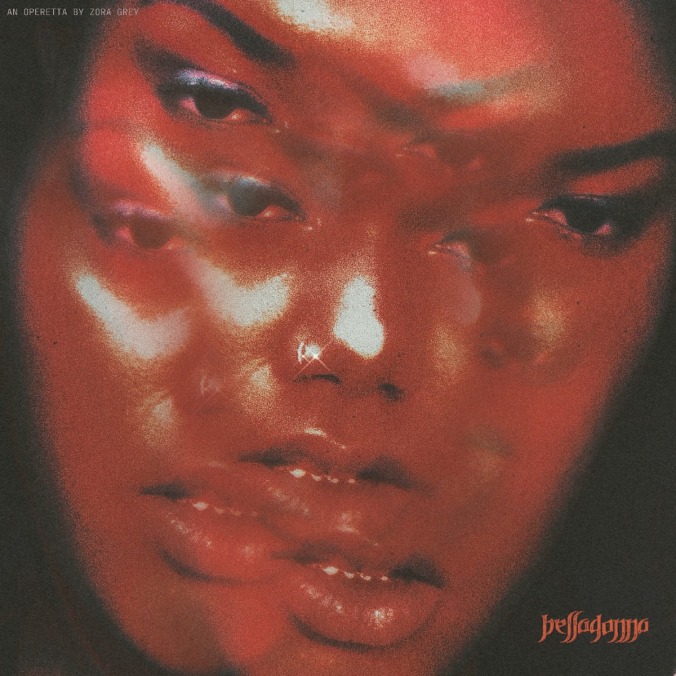 Side one of BELLAdonna is in all-caps, while side two exists in lowercase—matching the fluidity of the album’s climax and subsequent rest. “LUV LETTERS 2 MY STINK” is a woozy, bare-bones pyramid of verses where ZORA can flex her flow, in a no-frills cadence; “turn me out” pumps record scratches into the air while Myia Thornton drops a singing performance that wouldn’t sound out of place on a crunk&b interlude. The Prince guitar that defined Z1 isn’t totally absent, either; you can hear it in “THE BALLAD OF BELLADONNA” as it bridges the album’s halves, and ZORA even loops her chords into a mutated sample on “midnightmadness.” “sick sex” features guest vocals from social media names like Jaemy Paris and Duhgreatone, and the arrangement calls to mind the rhythms of Jimmy Jam and Terry Lewis’s contributions to Janet Jackson’s 1980s canon. On the work-of-art chasm “BODIES IN MY ROOM,” the color palette expands as ZORA’s vocal bends into this Auto-Tuned free-fall of voices turning inside out. Three years after Z1, BELLAdonna quakes with electronic impulses and colorful contrasts. It’s like a strobe light set to music, or an amalgamation of PC Music and the Neptunes. There is something plentiful here, in the neon-red of ZORA’s cinematic oasis—tones and tricks inspired by Three 6 Mafia, Children of the Corn tapes, and the fruits of Abel Ferrara’s filmography. The songs tell a story of a sexual ecstasy ripped away but now regained, served up mixtape-style. This album stinks, sweats, and shakes, vibrating in the calm rap of reclamation, answering machine messages that say “I love you,” and clapping samples. ZORA places a wreath of macabre, femme fatale bon mots and in-your-face, pyrotechnic instrumentals onto a musical lexicon sorely in need of a makeover. —Matt Mitchell [Get Better Records]
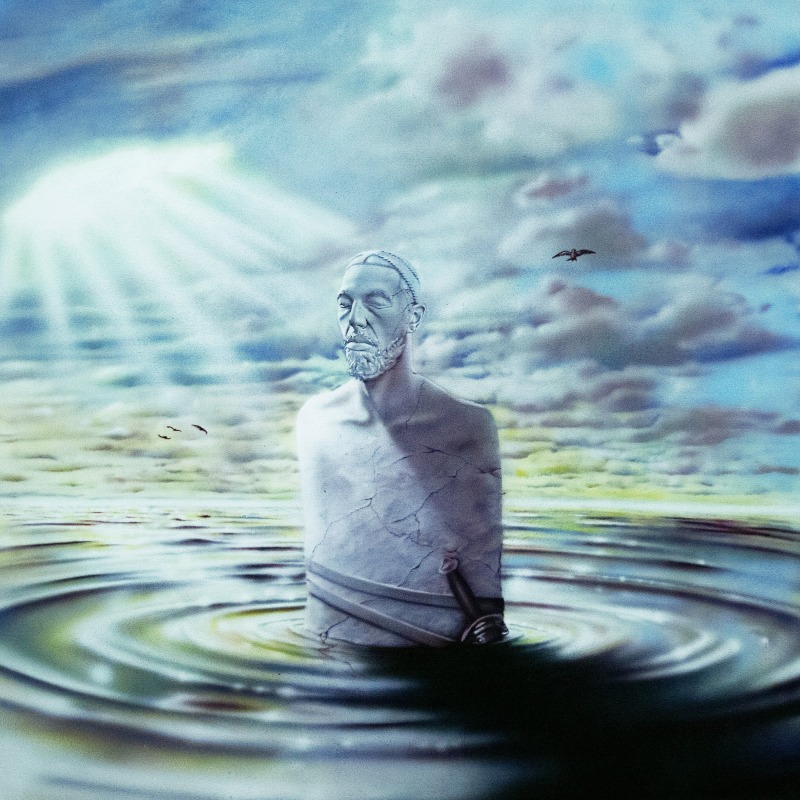 When he’s not skateboarding or modeling, Sage Elsesser makes music under the banner of Navy Blue. Between him and MIKE, rap has been in good hands for a minute now. His last record, Memoirs in Armour, was a favorite of mine in 2024. His new record, The Sword & The Soaring, lands the same. Produced by Elsesser’s “guiding light and force” Child Actor, “Orchard” is one of the best rap efforts of the year, arriving just as the autumn trees are readying their bareness for winter. The song is, as Navy Blue puts it, “connected through soil and roots, with expansiveness that resembles the infinite source.” Nebulas of jazz piano are unwound by a looping snare drum and cymbal vibration; Navy Blue reflects on family, death, and his river of grief, talking about how “life’s tapestry is tattering.” I could quote the whole song honestly, but I’ll keep it to just one sequence for now: “I love the dark because the light meaning my brother near / The forecast of his youth last a hundred years / Downpour of his rain, wasn’t nothing clear / It was literally opaque / Little me was up late / Watching life curve, bend, tryna get his soul straight.” Navy Blue’s latest has affected me deeply. Maybe it’s just that good. Or maybe my shadow just needed a light like this, a voice saying “we was dealt so many losses that we gotta win.” Maybe it’s both. Yeah, I’m gonna go with both. As he raps on “24 Gospel”: “I speak the language of the heart.” —Matt Mitchell [Freedom Sounds]
 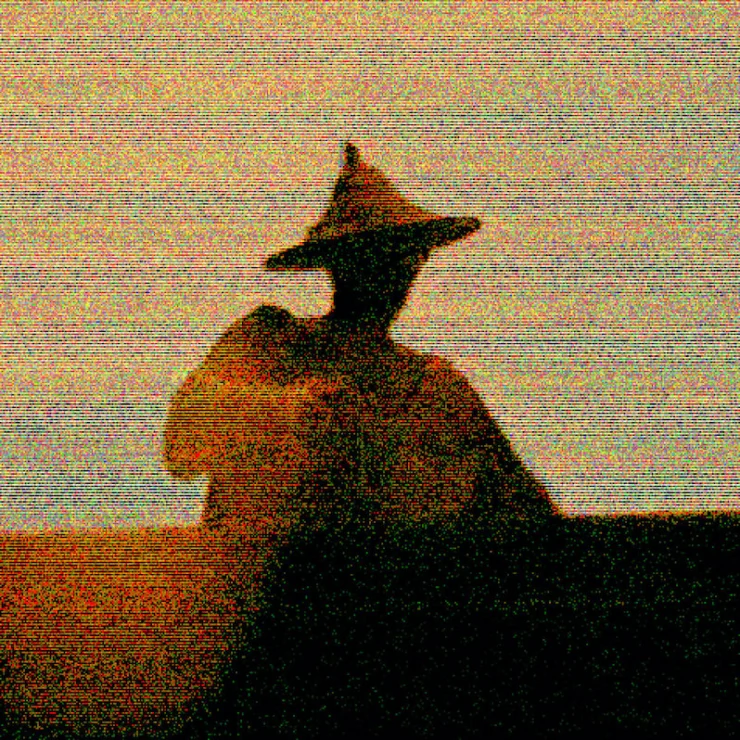 Backwoodz put out records from billy woods and Armand Hammer this year. But that’s no reason to sleep on Sortilège, the latest from Gabe ‘Nandez. He met beatmaker Preservation while assisting woods with Aethiopes in 2022 and bonded over a shared francophone ancestry, and their debut linkup is geographical, generational, and revolutionary. Verses cut bluntly; beats never overwhelm the language. This is ‘Nandez’s show, but he spreads the wealth: Benjamin Booker reunites with Armand Hammer on “Mondo Cane,” while ‘Nandez performs a bilingual duet with Ze Nkoma Mpaga Ni Ngoko on “Nom de Guerre.” With production by Preservation, Sortilège is a powerful document with both eyes open. It’s a record up on heritage, figured resoundingly by a linchpin of the New York rap underground. Sortilège is drum heaven and brilliantly uncomplicated. The woods-assisted “War” hits exactly where it needs to, when ‘Nandez tells us that “the genocide will be televised ‘til it’s normalized.” Sortilège is a protest, a blueprint, and a breakthrough all at once. —Matt Mitchell [Backwoodz Studios]
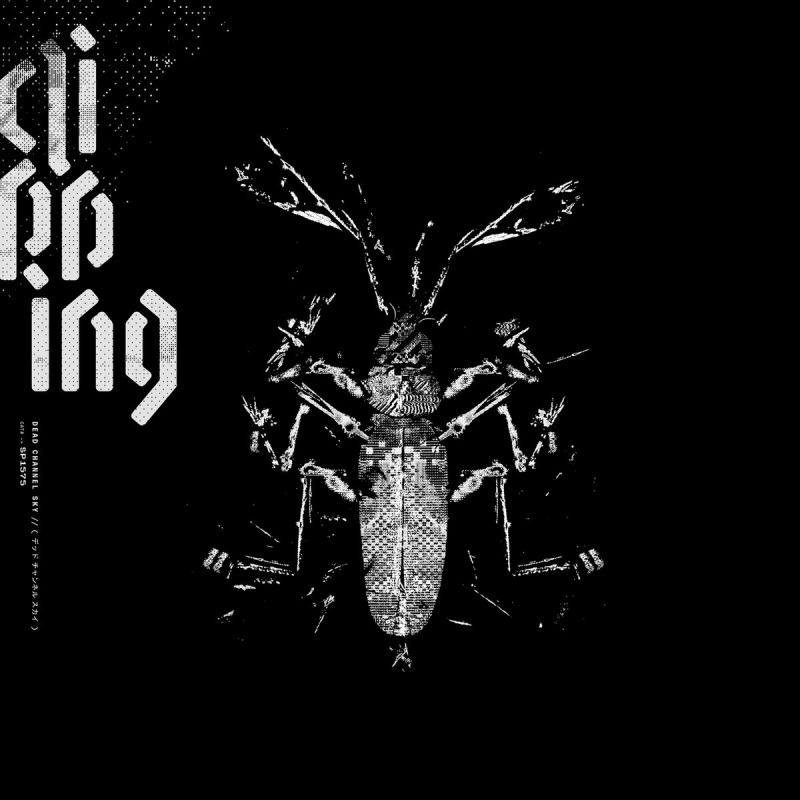 As a long-time clipping. fan, the experimental rap trio’s cyberpunk opus Dead Channel Sky was absolutely one of my most anticipated records of 2025, and I’m very happy to announce that it did not disappoint. The group’s first release since their phenomenal double-header horror records of 2019 and 2020, Dead Channel Sky is a whopping twenty tracks, each one riddled with innumerable hip-hop references and allusions to foundational cyberpunk texts, all spat out with ease and fervor by frontman Daveed Diggs—and tracks like “Dodger,” “Polaroids,” and closer “Ask What Happened” further cement Diggs as one of the foremost rap lyricists of our time. His flow is as varied, impeccable, and inimitable as ever, yet we also see him expand beyond clipping.’s typical even-keeled narration into huskier, more emotive realms (on “Mood Organ” and “Madcap,” for example), and it’s captivating. Similarly, while Jonathan Snipes and Bill Hutson’s production continues to be just as insanely incredible (and incredibly insane) as one would come to expect from them at this point, they still manage to venture into as-of-yet unexplored territories in clipping.’s discography, like in the French house number “Mirrorshades pt. 2” and the sampling of Human Resource’s 1991 European rave anthem “Dominator” in their track of the same name. Dead Channel Sky is a mixtape-style project that lays the cyberpunk-imagined future of the 80s and 90s directly atop our modern world in 2025—it’s an exploration of our present, viewed through the lens of that future that was once predicted by cyberpunk writers (and sounded out by rappers and artists) of the past. The resulting palimpsest is staggering, unlike anything else released today, and utterly impossible to look away from. —Casey Epstein-Gross [Sub Pop]
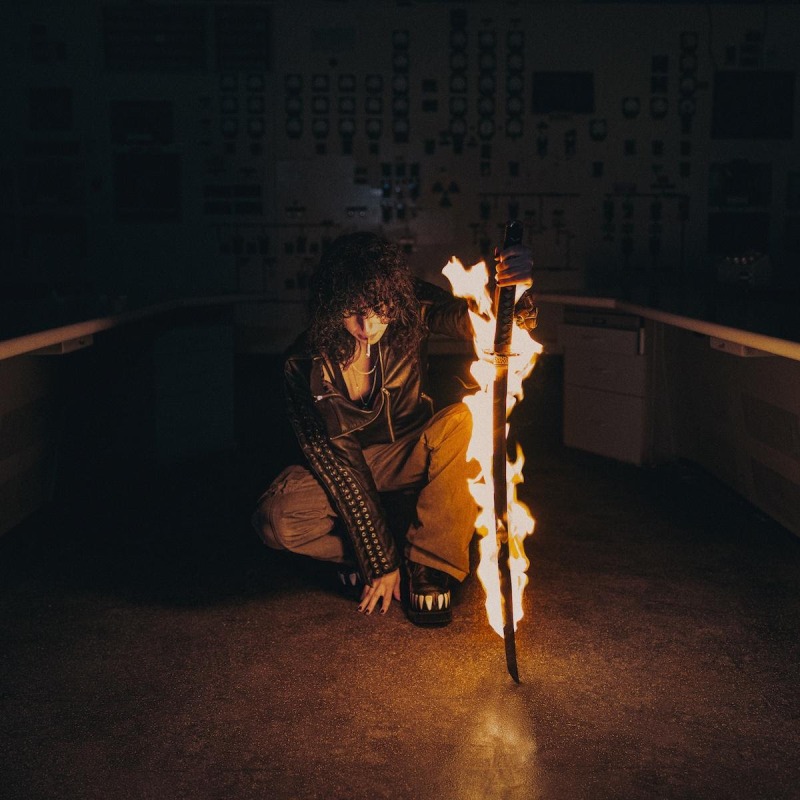 The intervals of stillness that balmed Census Designated have vanished, as Jane Remover stacks diss upon diss, vaunting through rap templates that have been submerged beneath mayhemic, static-walled cyphers. “There’s two of me, I’m cloning out,” they bawl on “TWICE REMOVED.” “Dead man flexing, show some ass now.” Jane may rap like their shit is whack, but the poetry they siphon into “Experimental Skin” vibrates through the sensory overload: “I taste all the past, present, future too”; “I’d give you all the stars along a tightrope / Thing God became a part of you”; “I been the same bitch you went missing for.” Revengeseekerz is not just a horizon of touch or an appetite for wrongdoing, but a portal. From the haunted “Of course you can touch my body” anaphora in “angels in camo” to the “Bitches dick suck then they go and bite my sound” sneak in “Dreamflasher,” Jane presents a complicated, scornful world. These songs contradict themselves, peddling a fast living while the bodies in motion ache to settle. “Dreamflasher” is the skeleton key for Jane Remover, a condemnation of success in the sprawl of good dick and the messes we make when the lights go down. Fame is irrelevant if there’s no one praying on your name back home; In their cybernated mysticism, Jane sings, “Baby tell me what’s the point of preaching to the choir if I can’t see you in the crowd.” “TURN UP OR DIE” jerks and tremors like edits in a grindhouse cut-scene, dropping gauzy, compressed melodies into a melange of chipped and shredded circuitry. “Give dead bitches proper sendoff,” Jane raps, before the song crescendos into the best beat drop of 2025. Out of a pocket of futuristic, siren synths awakens a motto: “Make some noise, do it live, save the file, do or die.” —Matt Mitchell [deadAir]
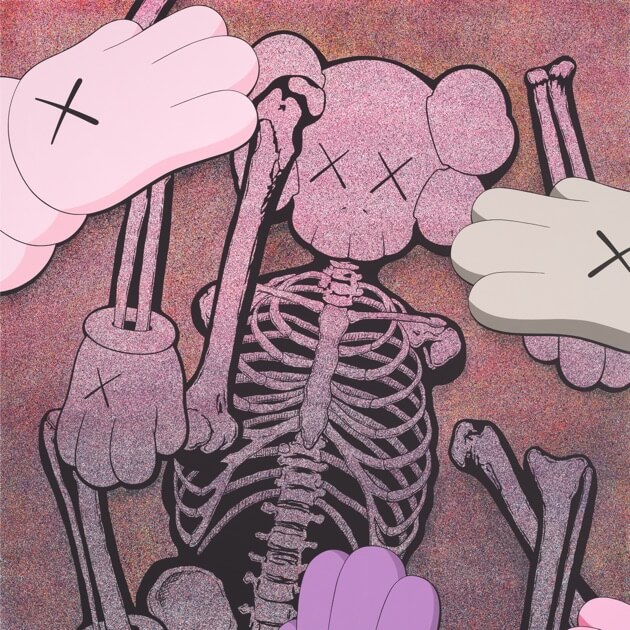 16 years after their last album, Clipse returned this summer with Let God Sort Em Out, perhaps the final resume piece needed to cement them as one of the three greatest duos in rap history, joining Mobb Deep and OutKast at the very top. “So Be It” is one of the best songs of the year, and it’s all about rich perspectives and welcoming beefs, and the brothers take aim at Travis Scott and Kylie Jenner, talking about lip gloss poppin’ and Calabasas snatching their pride like a chain. Malice serves up sticky bars, using tweets, the Neptunes, and the Paris riots to talk shit on rap’s absence of integrity, while his brother’s flow sounds either godly or familiar. Pusha says it himself: “If they catch me, don’t forget me, resurrect me.” On the flip, “Ace Trumpets” makes 99% of rap tracks look like child’s play. It’s a return to the form they put on ice for a decade. Siblings Pusha T and Malice can rap circles around each other. Coke rap hasn’t sounded this good since Pusha’s last LP, thanks to a rimshot snare ‘n’ bass beat supplied by Pharrell Williams. Pusha’s chorus here is dependable (the transition from “ballerinas doin’ pirouettes inside of my snowglobe” to “you had to see it, strippers shakin’ ass and watchin’ the dough blow” is particularly slick), but his brother serves up the stickiest bars, spitting about being “dressed in House of Gucci made from selling Lady Gaga” and “never leavin’ home without my piece like I’m Mahatma.” Malice’s flow sounds either godly or familiar. I mean, he says it himself: “I done disappeared and reappeared without a ‘voilà.” —Matt Mitchell [Roc Nation]
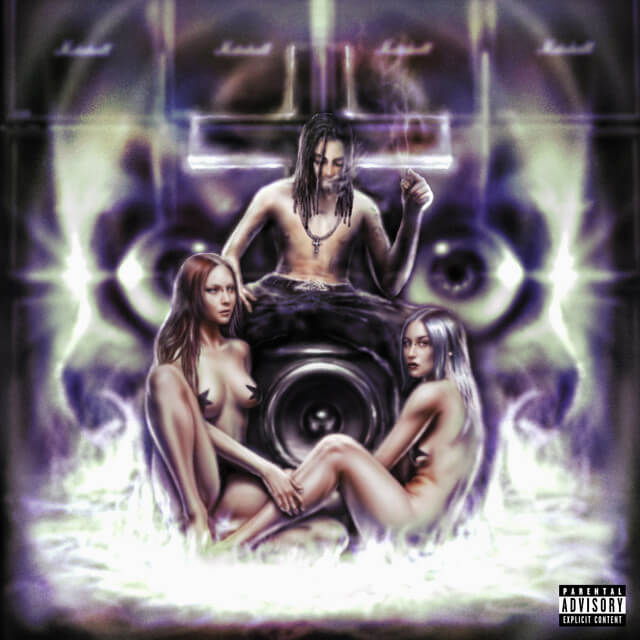 The debate over the best rage album of 2025 surrounds two titles: Rest in Bass and Jump Out. On the former, a 19-year-old Che rises out of the Atlanta underground with blown-out bass, bombastic melodies, distortion, and skittering synths. Rest in Bass has already set a fascinating precedent for Southern rap, calling upon his co-conspirators Chuckyy and OsamaSon to make sense of Che’s digicore party. We’re seeing some of the most impulsive and inventive hip-hop wade into industrial and electronic prisms right now, and Rest in Bass is maybe the best example of that. Cut-up beats, punk thrashes, bippy crashouts, and ear-bursting decibel levels give songs like “DIE YOUNG” and “ON FLEEK” offer a compressed and disorienting touch. In the wake of Playboi Carti’s influence, Che’s already got his hand on the torch. —Matt Mitchell [10k]
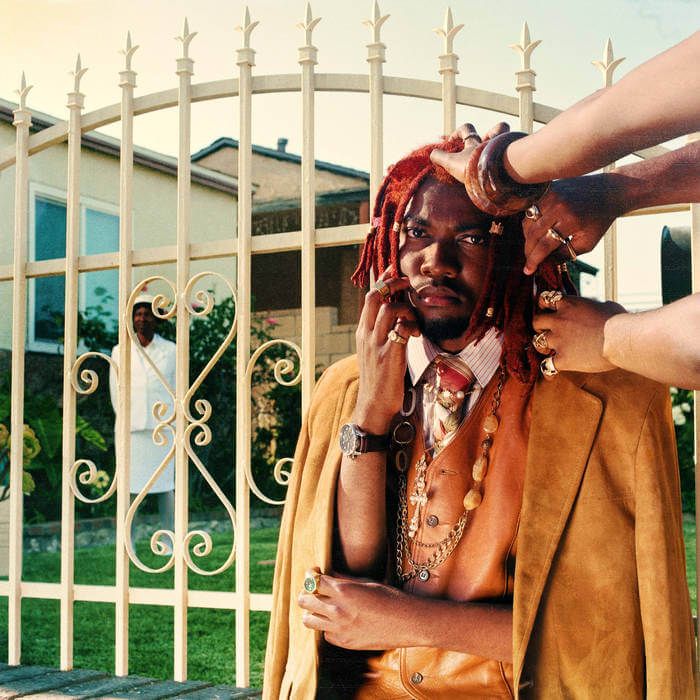 Every December there’s a 2025 album released too late for year-end lists. Last year it was Cameron Winter, this year it’s redveil, a Maryland rapper who’s been rummaging around in the underground since 2019’s Bittersweet Cry, which he released at age 15. But we haven’t heard from him in three years, when he shared the underrated learn 2 swim. Now in his twenties, sankofa is a total breakthrough that shapeshifts through psychedelia, backpack rap, noise-rock, and piano-and-microphone pop. It’s a versatile record top to bottom, utilizing redveil’s singing voice and his attention to detail on beats and samples. “stay the night” is all passion, as is “pray 4 me.” Hearing sankofa play out is like sitting with a gospel. “history” and “time (a dream deferred)” are sticky and quick, while the Smino-assisted “brown sugar” summons the spirit of D’Angelo in soulful fragments. sankofa is a coming-of-age album for a rapper forced to grow up in a post-2020 world. IRL relationships are fewer than ever, and we’re tasked with cultivating intimacy and trust through screens. These songs reach for community. The title references the Akan proverb “it is not taboo to go back for what you forgot (or left behind).” On sankofa, no stone is left unturned. —Matt Mitchell [Fashionably Early Records]
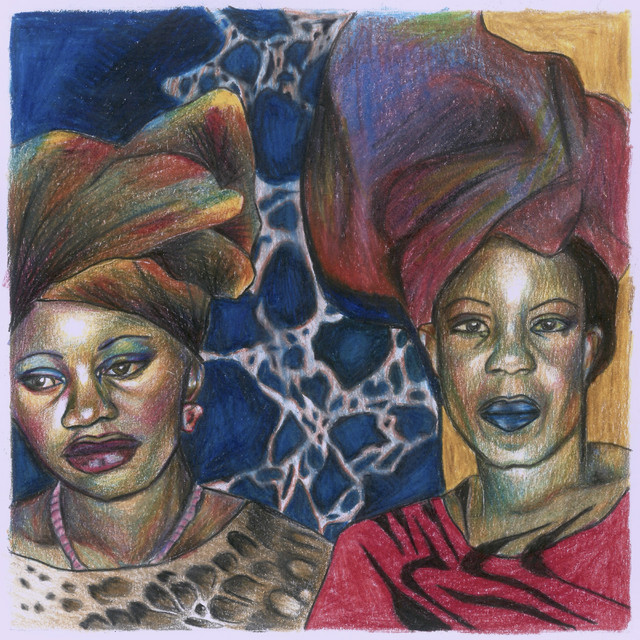 For MIKE, music and community are intersecting lines on the same chart; they’re two worthy pursuits that produce a symbiotic effect for their counterpart. On top of managing the Young World festival and his 10k record label, he is a producer for various artists, releases music under his dj blackpower moniker, and still makes time for his work as MIKE. More than any of his other albums, Showbiz! embodies the communal spirit that its creator so frequently espouses. His insular, funhouse-mirror instrumentals permeate the record like viscous syrup spreading over a tall stack of pancakes. But here, he sometimes cedes production duties to likeminded artists such as Laron (“Showbiz! (Intro)”), Salami Rose Joe Louis (“Zombie pt. 2”), and Surf Gang’s Harrison (“Belly 1”). Each understands the gravitational pull of MIKE’s work, a tapestry of woozy samples, shimmering keyboards, and shapeshifting drums. Every element orbits his unmistakable voice, built on a compelling hybrid of somnambulant delivery and dextrous wordplay. As Showbiz! suggests, that’s what MIKE is ultimately doing this for. On “Artist of the Century,” he ends the chorus with one of the album’s most indelible lines: “I been puttin’ up with strife since a youngin / The prize isn’t much, but the price is abundant.” Even if underground hip-hop is far from the most lucrative career path, making art and finding your faction can yield different kinds of riches, ones that value the soul over the bank account. MIKE understands that intuitively, and it’s clear from his craft alone. —Grant Sharples [10k]
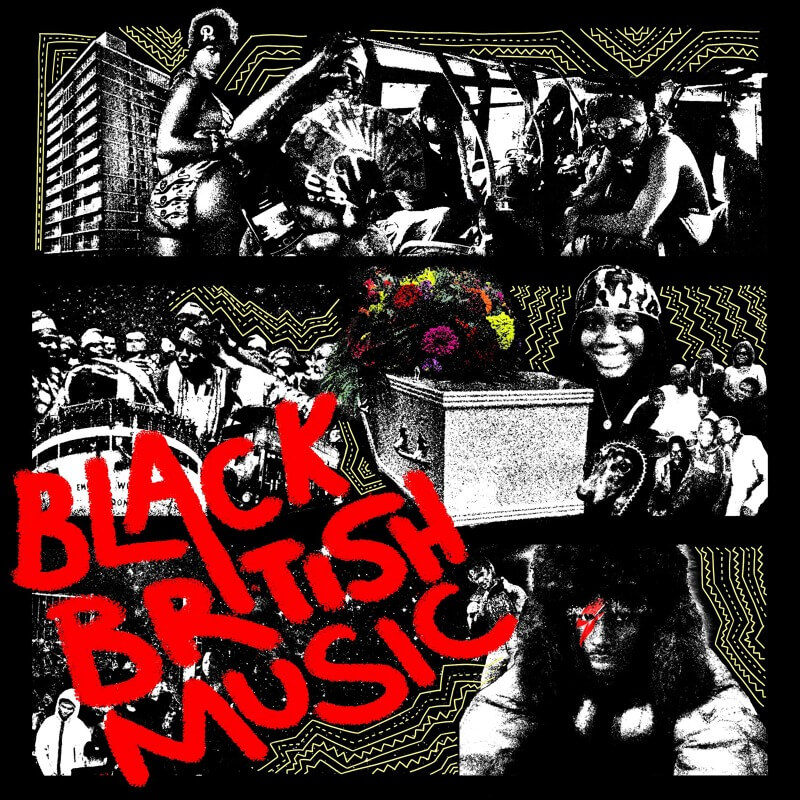 Braggadocio abounds throughout, but black british music mostly concerns itself with tales of economic strife, upward mobility, houselessness, romantic yearning, and familial melancholy. “issues of trust” finds Jim Legxacy in ballad mode with orchestral string flourishes, finger-picked acoustic guitars, and introspective lyrics about his strained relationship with his father: “I still can’t talk about it,” he admits in his swooning timbre. Meanwhile, the emo-tinged dembow bop “sos” wrestles with the difficulty of watching the one you love chase after someone else. “He won’t take you out / I know you’ve asked a thousand times,” he sings, his emotive voice perched evenly between desperation and determination. At the same time, these new songs demonstrate Jim Legxacy’s refusal to repeat himself. While black british music largely adheres to the Afrobeats-emo fusion he cemented on homeless n***a pop music, he adapts that blend in fresh ways, whether it’s through acoustic balladry (“issues of trust”), lush alt-pop (“‘06 wayne rooney”), or anthemic Britpop (“dexters phone call”). It also helps that Legxacy understands the power of brevity; most songs hover around the two-minute mark, and the whole project blazes by in less than 35 minutes. Coupled with the sheer amount of ideas he manages to pack into a single track, black british music encourages endless re-listens with plenty of minute details you maybe didn’t notice on the previous go-around. There’s the gliding, cushiony synth bass on “d.b.a.b”; the pitch-shifted vocal samples in the background of “big time forward”; the soft, fuzzy coating of the guitars on the dexter in the newsagent-featuring “dexters phone call.” There’s a lot to take in, but never is it overwhelming. It ensures a longevity that makes the replay button all the more enticing. —Grant Sharples [XL]
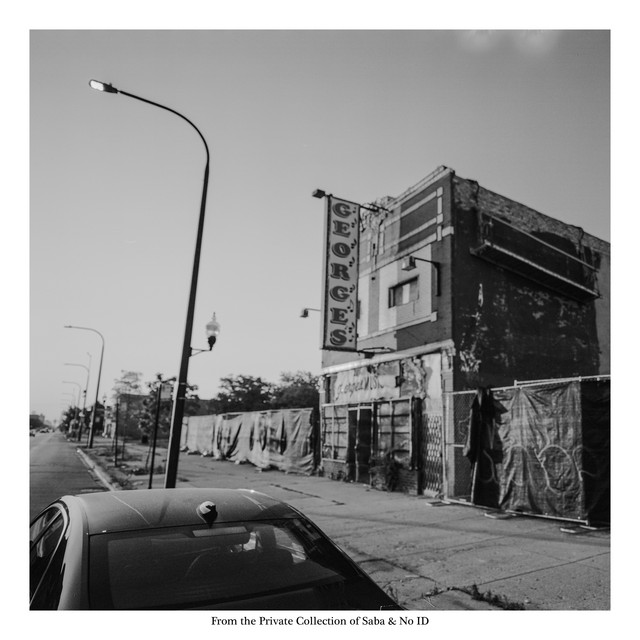 Continuing his evolving relationship with producer No ID, Chicago rapper Saba took his time rolling out their collaborative project, The Private Collection of Saba and No ID, a proper follow-up to his great 2022 record Few Good Things. After dropping “How to Impress God,” “Woes of the World” and “Crash,” The Private Collection is finally here and features contributions from Eryn Allen Kane, BJ Chicago Kid, Raphael Saadiq, Kelly Rowland, MFnMelo, Ibeyi, Frsh Waters and Tru, among countless others. This is a family album; a vault of a Midwest great’s most synergized successes. It boasts “head.rap,” a song so good it ended up on our year-end list in December 2024. “head.rap” shines thanks to a resounding choir of backing vocals from singers Madison McFerrin, Ogi and Jordan Ward. In the verses, Saba contemplates Black hairstyles, growing out dreadlocks and self-expression. “Searchin’ for an avenue, ways to reflect my current attitude,” he muses. Views of the world / I’m Malik to my grandma, who used to braid my hair / But I had to cut ‘em at the school / And it was Black ran, I’m just a Black man lookin’ for a good day.” No ID’s production flourishes here, too, with flutters of guitar and hand-clap percussion. On “a FEW songs,” one of my favorite tracks of the year, the beats loop and bounce; stabs of a half-dozen different keys pierce through a soul-stirring vocal harmony from Ogi. Love Mansuy’s “shit is temporary” chorus bridges Saba’s verse into Smino’s, as they rap about their long search for a come-up in a changing ‘hood (“We been on our way—fashionably late, past tense”). “Back in the day, we was on blogs and searching for different perspectives,” Saba spits. “And Benjamins and Jacksons, ‘cause it was a recession.” Smino picks up the story down the road, talking about going “from North Side to Porsche rides to courtside to sold-out shows” and flashes a double entendre of “We bae” and Wee-Bay from The Wire. “a FEW songs” spans a decade or two and ends in affirmative revelation: “It’s okay to change it all, so beautiful,” Ogi hums on a piano fadeout. Saba and his counterpart No ID should make a thousand songs together. But if I can only have one for the rest of my life, I’ll pick “a FEW songs” every time. —Matt Mitchell [From the Private Collection]
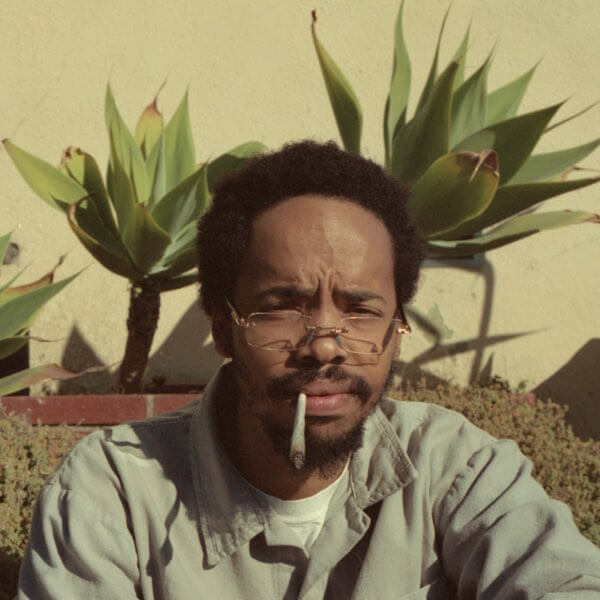 Live Laugh Love doesn’t present Earl Sweatshirt as a new man. He references his past, both the good and bad, but, as he looks back on older works, trials, and victories, there isn’t a sense of regret, but acceptance—even a twinge of gratitude in the acknowledgement that the fires he once faced led to the picket fence he now enjoys. “TOURMALINE” swings with the romance of a Sinatra classic, as Earl intertwines his long journey towards self-betterment with his unabashed love for his wife. He inhabits the technique that made the words of Gil Scott-Heron immortal, weaponizing dire circumstances and transforming them into little splotches of hope. Whereas humor on Earl’s earlier records squeezed mild amusement out of cynical circumstances, his comedy now feels lighthearted and rooted in joy. Comedian Mandal delivers an early monologue on “gsw vs sac,” riffing on the hedonism of Uber Eats over a wailing sample before formalizing the thesis of the record: “You ain’t runnin’ from nowhere but your own self, and that’s where you exactly need to be.” Few dudes have ever sounded this cool on a recording. Sonically, Live Laugh Love feels like a collage of the spaces Earl Sweatshirt has spent the last five years studying, offering a strong push-pull between his sonic past and present. —Benny Sun [Tan Cressida/Warner]
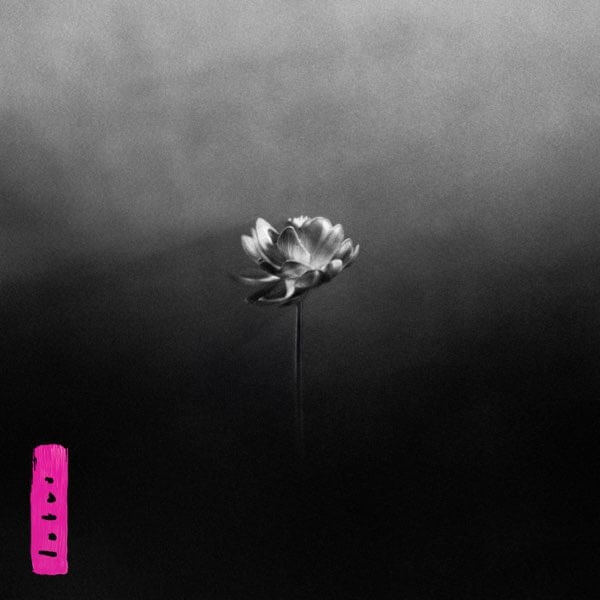 It’s a special level of rap when you can take the lyrics, omit the music, and be left with just a beautiful piece of writing. Furthermore, it takes a special caliber of rapper to construct these phrases and rhyme schemes into reflections of human emotion that are both digestible and entertaining for audiences. I think of generational talents like Black Thought, Rakim, Ms. Lauryn Hill, and, in recent years, Little Simz. The London rapper has more than earned her place in any “best lyricists” conversation, repeatedly proving why she is one of the most compelling voices contributing to modern hip-hop. Since her 2021 record Sometimes I Might Be Introvert won both the Mercury Prize and a BRIT Award, Simz hasn’t had to prove anything, but she has continued to air her voice, calling out the whole of the music industry on 2022’s NO THANK YOU for its hypocrisy, greed, and inequality. Opening along an infectious bass groove and soul-infused vocal refrain, “Free” is a bouncing, stirring anthem of self-liberation and resilience. In the first verse, Simz expounds on her definition of love before testing it against her feelings of fear, delivering each line completely composed yet with unclouded emotional intent. Never have I wanted to quote an entire song as much as here. Each bar on Lotus is a masterful display of storytelling and personal affirmation—every line standing resolute for its sharp portrayal of life, trust, obsession, mortality, and knowledge. I think of a 2011 interview with Jay-Z in which he said, “Rap is poetry. It’s thought provoking; there’s thought behind it… If you take those lyrics and you pull them away from the music and put ‘em on the wall somewhere and someone had to look at them, they would say, ‘This is genius. This is genius work,” and if Lotus doesn’t deserve that spot on the wall, no album does. —Gavyn Green [AWAL/Age 101]
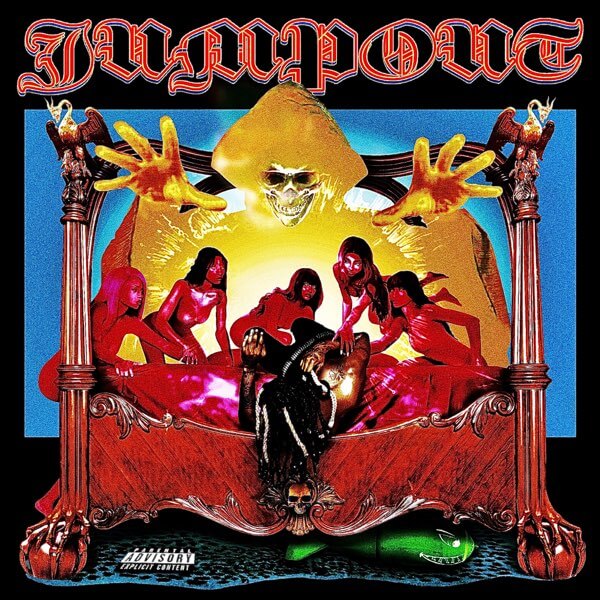 Ohio-born and South Carolina-bred OsamaSon had a banner year, thanks to two pretty great rap records: Jump Out and Psykotic. The former is the one for me, and maybe the first rage rap record I’ve truly gotten hooked on. You can tell that OsamaSon is working through the afterglow of Playboi Carti’s ascent, considering that “Insta” sounds like a Whole Lotta Red B-side. But the SoundCloud era is thriving because of OsamaSon’s work. Jump Out might be the best mixtape release of 2025, blowing the door to rage rap off its hinges. Out of all the records on this list, I don’t think there’s a run of songs better than “New Tune,” “Waffle House,” and “I Got the Fye.” Good production from Skai, Gyro, Legion, OK, and Warren elevate the 808s, panning ad-libs, and synths, while OsamaSon’s maximalist and bewildering experiments push the limits of what rage is supposed to be. “Ref” is all noise, “Waffle House” sounds like a videogame, and the Future sample on “I Serve the Base” is covered in slime. Jump Out sounds like a party. All head-pounding, Auto-Tuned chaos, no aftershock. —Matt Mitchell [Atlantic]
 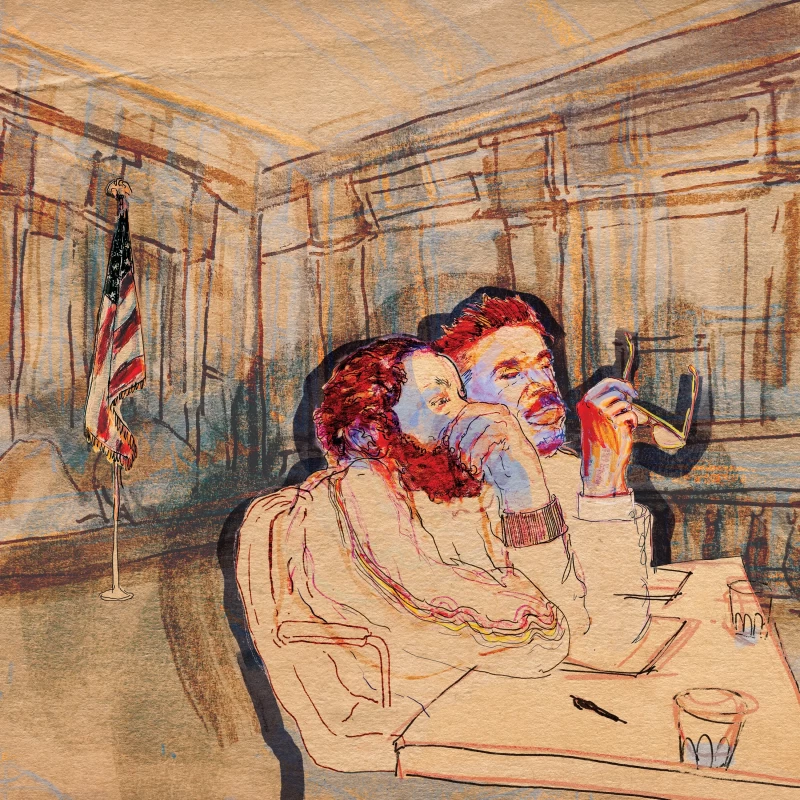 “What’s the role of a poet in a time like this?” The question crops up about halfway through Armand Hammer’s latest record, Mercy, but the singularly talented duo of billy woods and ELUCID spend the whole 40-odd minutes circling it and refusing an easy thesis. The Alchemist’s production clears out the room—keys that glint like broken glass, bass that presses on your ribs, percussion that flickers in and out—so the pair can do what they do best: file reports from inside the mess. The pain here isn’t spectacle, it’s ambient pressure; a mood that stains daily life until even the small things feel radioactive. From beginning to end, the record keeps shifting its weight without loosening its grip. “Peshawar” side-eyes our machine age (“Thou shalt not make a machine in the likeness of a human”), “Nil by Mouth” stalks forward on grit and breath, “Glue Traps” zooms down to the apartment level—stoves, neighbors, hustles—until the whole block becomes a diagram. Elsewhere the palette widens: the water-drunk reverie of “Calypso Gene,” the string-tight panic of “Crisis Phone” (with Pink Siifu), the widescreen haze of “California Games.” Guests (Earl Sweatshirt, Quelle Chris, Cleo Reed, Kapwani, Silka) slip in like new angles rather than relief valves. Then “Super Nintendo” closes the book with cartridge glow and backward glances—nostalgia that refuses to lie. The album doesn’t argue for hope so much as practice it in fragments: a hand unclenched, a corner turned, a breath counted. Mercy (both the record and the noun) is not merely a gift but an act of endurance, of continued purpose in a world that seems devoid of it. What’s the role of a poet in a time like this? woods answers honestly, without triumph or despair: “I’m still grappling.” —Casey Epstein-Gross [Backwoodz Studioz]
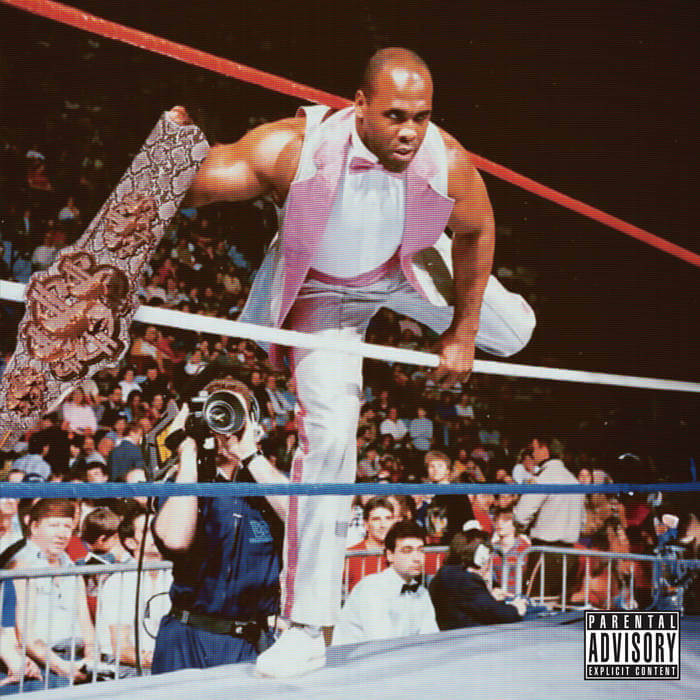 Westside Gunn dropped three projects titled HEELS HAVE EYES this year, and we already featured the first one in our best EPs list. I’ve been obsessed with the trilogy, especially HEELS HAVE EYES 2, a masterclass in kayfabe. As a rap fan obsessed with wrestling, there is no better emcee alive than Westside Gunn. Whether he’s commenting on a recent, high-profile villain turn (“HEEL CENA”), talking shit on the guy who appears whenever you say his name (“BLOW HENDRY”), or riffing about Iron Shiek’s old tag partner (“BRIKOLAI VOLKOFF”), Gunn remains firmly in his element. Production from Conductor Williams and Denny Laflare elevate “MANDELA” and “GLOWREALAH,” while features from Stove God Cooks, MIKE, Eastside Flip, Brother Tom Sos, and Benny the Butcher turn HEELS HAVE EYES 2 into a communal shoot. Freestyles, vintage soul clips, and Million Dollar Man iconography abound. The soulful chop vibrating in the backdrop of “LOVE YOU PT. 2” is the most satisfying finale of any album featured in this list. Nobody samples like Westside Gunn samples. —Matt Mitchell [Griselda]
 No, indieheads, this is unfortunately not the long-awaited
  On Only Dust Remains, Ashanti Mutinta conjures everything from the meta-existentialism of
  Magic, Alive! is McKinley Dixon’s fifth album, and it’s also the biggest risk he’s taken yet—a collection of tracks always flirting with overproduction and clutter. The music is brimming with orchestration; it’s not “everything but the kitchen sink,” but “everything and the kitchen table.” Dixon isn’t afraid to add more voices and hands into his musical soup, and each song is an elixir of jazz-rap, with pockets layered in chain-link grandeur. Every chapter of Magic, Alive! is bigger than him, yet his verses focus on the micro with historical hip-hop citations, literary allusions, and horror films metabolized into heady sonic palettes. Like the illustrations he animates in his spare time, the rarely-pedantic Dixon meticulously sketches expressions of people he both knows and imagines. His lyrical fascinations with mythology are decorated in rare and endangered fits of orchestral patterns; the noisy percussion, mechanical poetry, and blood-boiling strings haunt the magic Dixon is chasing in the epilogue of Beloved! Paradise! Jazz!?’s block-bending cynicism but never smear it. As he raps on “Listen Gentle”: “It’s tragic, trying to keep my kindness in my steps with lightning in my eyes.” Dixon sinks his teeth into the Magic, Alive! story on “We’re Outside, Rejoice!,” as he summons a concrete pastoral again but doesn’t wear out its meaning. There are far too many front doors still unopened on his turf to stop painting the neighborhood just yet. A tint of blue washes over the brotherhood at the song’s core: “I love laying with you here in the grass, feels like it was just us in the worlds that passed.” Dixon speaks in Toni Morrison titles while seeking redemption and clinging to memories the bodies around him have sung into life. “My face inhales the sun, grab your hand with no plan then we run!” Magic, Alive! is a conceptual, allegorical achievement—a story of three young kids whose friend passes away, the monuments they build in his memory, and the lives they’d kill themselves to restore. —Matt Mitchell [City Slang]
 Neighborhood Gods Unlimited takes all of those questions—about where “we” end and the technologies mediating us begin—and turns them into the album’s central metaphor. It’s a record about being split into pieces: selfhood as a broken phone screen, a reflection refracted in dozens of directions, a pile of black glass scattered across a city street, a horde of half-finished demos now lost to the void. That’s not my metaphor, but Open Mike Eagle’s own, impossible to miss on the aptly titled “ok but im the phone screen,” where he grieves the parts of himself—the voice memos, the notes, the to-be-songs—that instantaneously evaporated the moment the phone hit the ground, lost forever because he forgot to upload them to the cloud. (In a great, intentionally facetious moment, he compares the incident to RZA’s infamous, devastating studio flood: “It’s like that but, like, less- less devastating”). And as the title cheekily informs us, Mike is not just the bereft but the bereaved: he is the cracked screen he’s grieving. That concept threads throughout the entire record. A sampled voice at the end of the opening song, “woke up knowing everything (opening theme),” asks, baffled, “I saw the man broken, how he put his self together?” Both “contraband (the plug has bags of me)” and “mirror pieces in a leather bound briefcase” provide potential answers to that all-important question, but not good ones. On “contraband,” Mike imagines discretely bargaining with a local dealer to buy back the chopped-up slices of himself making rounds on the streets: “Bought myself back in plastic bags / Let’s call it contraband.” But even after scoring that fix, it doesn’t take long for Mike to find himself fiending once more. In fact, the end of the next song, “almost broke my nucleus accumbens,” is overtaken by a last-minute coda consisting solely of Mike pressing, over and over, “How do I get some more me?” What keeps Neighborhood Gods Unlimited from collapsing under its own conceptual weight—having to shoulder an entire TV series pitch is no joke—is, as always, the line-by-line genius of Open Mike Eagle’s lyricism. Even at his most unobtrusive, his wordplay remains sharp and strange, peppered with left-field pop culture references, shrewd political commentary, and a vulnerability that cuts through the fog. —Casey Epstein-Gross [Auto Reverse]
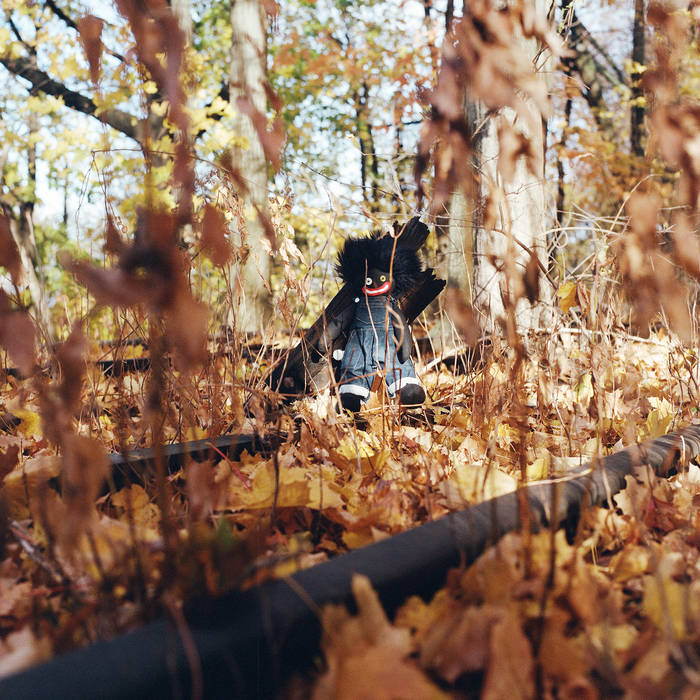 Psychodrama is nothing new to a Brooklynite whose decades-long career is defined by records steeped in anxious atmospherics, but rarely has that dread sounded so acute. GOLLIWOG’s myriad producers, many of whom are previous contributors to billy woods’ catalogue, color-grade the MC’s murky tableaus. Sometimes, they fabricate the entire set. On “STAR87,” Conductor Williams pairs tinny boom-bap with quivering violins, errant bass, and the unceasing ring of landlines. (“They wanna know where the bodies is hid,” woods’ narrator reveals eventually, as if it would ever help.) woods opens “Waterproof Mascara” with a portrait of a weeping mother before shifting subject but Preservation keeps that weeping in the foreground, looping incessantly like a dark splinter lodged in the heart. The crackle of a palpitating digital heartbeat thrums underneath al.divino’s introductory verse on “Maquiladoras” until the first gunshot is fired, after which a heartbreaking piano chord punctuates the demarcated timeline. In lesser hands, GOLLIWOG might read too overwhelming or leaden to be enjoyable, but in the same vein as 2023’s patchwork
  Keep scrolling for more great stories.