
The Broken Hearts Club said gay love stories didn’t need to be tragedies anymore

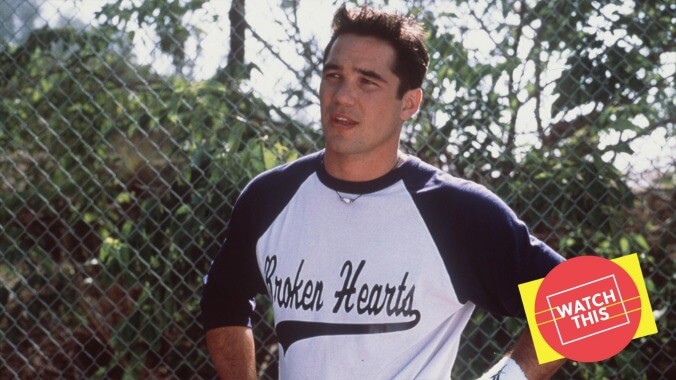
Watch This offers movie recommendations inspired by new releases, premieres, current events, or occasionally just our own inscrutable whims. As part of Y2k week here at The A.V. Club, we’ve listed the 25 best films of the year 2000. These are some of our favorites that didn’t make the countdown.
The Broken Hearts Club: A Romantic Comedy (2000)
After decades of slow progress in LGBTQ representation on screen, the HIV/AIDS epidemic of the late 1980s and early ’90s set things back. Almost all gay stories became tragedies centered around the devastating effects of the virus. (Even Broadway’s celebration of the sexually liberated, Rent, revolved around AZT breaks.) Drag became the first way to reintroduce gay men to audiences through stories that weren’t as sad as 1993’s Philadelphia. Over-the-top offerings such as 1994’s Priscilla, Queen Of The Desert, 1995’s To Wong Foo, Thanks For Everything! Julie Newmar, and 1996’s The Birdcage provided representation, but they mainly avoided anything involving romance—or, God forbid, sex. It wouldn’t be until 2000’s Broken Hearts Club that American audiences were given a film that treated young gay men the same as their straight counterparts. It was such an oddity that they had to put the genre in the full title, affixing A Romantic Comedy on the end of it.
He’s never admitted as much, but it seems fair to assume that Broken Hearts Club writer-director Greg Berlanti saw Sex And The City’s first season in 1998 and thought, “What’s the gay version of that?” Even the opening sequence of a quartet of friends at a café gossiping about men seems like a gender-swapped version of something from the pages of a Darren Star script. At this West Hollywood coffee shop, the central figures are Dennis (Timothy Olyphant), the aspiring photographer; Howie (Matt McGrath), the grad student stuck in an unhealthy relationship with his ex (Justin Theroux); Patrick (Ben Weber), the self-proclaimed ugly duckling; and Benji (Zach Braff), the bleach-blonde party kid. But these are just a few members of the film’s large ensemble, which also includes Cole (Dean Cain), the heartthrob actor; Taylor (Billy Porter), the flamboyant diva-worshiper; Jack (John Mahoney), the elder statesman and owner of the restaurant that employs half the group; Kevin (Andrew Keegan), the “newbie”; and Anne (Mary McCormack), Patrick’s lesbian sister who asks him to donate his sperm so she can have a child with Leslie (Nia Long).
 Keep scrolling for more great stories.