It all looks so familiar, but something’s off. There’s the Swedish Chef, but his segments are littered with captions in multiple languages. Here are those old coots Statler and Waldorf, but they’re occupying easy chairs and trading their usually boisterous repartee at lower volumes and slower speeds. In a cluttered backstage area, Sam The Eagle grouses about low moral character and Floyd Pepper spouts hippie nonsense, but their activities are overseen by a yellow, sleepy-eyed nobody named Nigel. It’s enough to make anyone familiar with the Muppets and their most storied TV effort, The Muppet Show, ask, “What is this?”
This is The Muppet Show: Sex And Violence, one of two stabs Jim Henson took at building a home for his most famous creations on ABC in the mid-1970s. As you might guess from the descriptions about its contents and its saucy subtitle, there’s some miscalculation at play and some insecurity. Henson himself insisted on the Sex And Violence billing. Itwas both a knowing dig at and an acknowledgment of the public perception that the Muppets were “children’s entertainment.” Despite a number of appearances on The Tonight Show and a portfolio full of commercials whose pitches boiled down to “Use this product, or suffer the comedically extreme consequences,” Henson worked with puppets, and in the eyes of the TV industry, that branded him with a scarlet letter. And then along came Sesame Street to stamp the whole damn alphabet across his chest.
Sesame Street made the Muppets stars, but it wasn’t a Muppet show. While Henson had creative input, and he was specifically sought out for the job, he and fellow Muppet performers like Frank Oz and Jerry Nelson were hired guns, just as they’d been for most of the ’50s and ’60s and now the ’70s. The showcase for a vision all their own had so far eluded them, but it wasn’t for lack of trying. A year before Sex And Violence, Henson struck a deal with an enterprising ABC exec named Michael Eisner to produce a pilot for a weekly Muppet series at the network. The result was The Muppets Valentine Show, a madcap patchwork of songs and sketches about love with special guest star Mia Farrow. The reviews were good, the ABC brass were impressed, but a series order remained out of reach. As had been the case for more than a decade, the Henson crew did not succeed, and they would try, try again. No wonder the characters they’d eventually play on The Muppet Show were so accustomed to persevering in the face of hecklers, explosions, and co-stars who wanted to eat them.
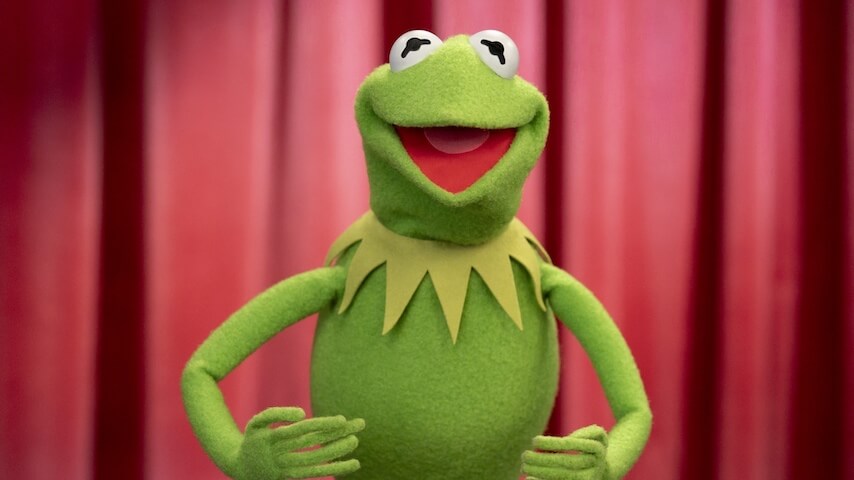
And now those very same characters (under new management and, with a few exceptions, from different performers) find themselves in a familiar situation. While Disney+’s recent revival of The Muppet Show is being promoted as a one-off 50th anniversary “special event,” initial trade reports indicate—and Kermit The Frog jokingly suggests in the show itself—that this could just be the beginning of a whole new most sensational, inspirational, celebrational era. And since the special also aired on Disney+’s network-TV sibling, it means that Kermit and the gang are right back where they were in 1974 and ’75: doing a wintertime special on ABC and hoping it marks the raising of a curtain rather than the lowering of one. Test balloons like these are a tradition almost as old as the frog himself, and Muppet history is littered with intriguing “what if”s and busted pilots, each more intriguing than the next. And thanks to diligent archivists sanctioned and unsanctioned, many of them are no longer as lost as they once were.
The lost kingdom of Tinkerdee
While the very first Muppet show, Sam And Friends, was still enjoying its run as the toast of Washington, D.C., Henson’s restless mind was stirring up new TV ideas like Zoocus—that’s “zoo” plus “circus”—a variety-show concept that never got past the planning stages. In character sketches and notebook brainstorming, you can see the seeds of future projects: a set design that hints at the colonnaded staging of the Muppet Show theme song, or a character who resembles eager gofer Scooter in profile if not in temperament. But neither zoos nor circuses would be the settings that most fired Henson’s imagination during this period. After Sam And Friends wrapped in 1961, its creator’s thoughts turned to the lands of storybooks and fairy tales.
It’s a natural fit: faraway kingdoms whose fantastical denizens could be rendered in the abstract and exaggerated forms of Henson’s puppets. It probably wouldn’t help the Muppets establish themselves as entertainment for adults and kids alike, but it’s not like adapting the Brothers Grimm and Charles Perrault had hurt Walt Disney’s standing with audiences of all ages. Nor had “Fractured Fairy Tales” sapped any of the sophistication from Jay Ward Productions’ Rocky and Bullwinkle cartoons.
As author Brian Jay Jones notes in Jim Henson: The Biography, it’s the latter that 1962’s Tales Of The Tinkerdee most closely resembles. Despite taking place in medieval times, the sense of humor in its story of a snaggletoothed witch crashing a royal birthday party is hip and knowing. Most of the dialogue for that witch—the one-fanged, raccoon-eyed Taminella Grinderfall—is directed to the camera. In what feels like a nod to another contemporary influence, The Soupy Sales Show, Taminella shares her cavernous home with an unseen, grunting, hideous beast and a dimwitted ogre named Charlie, who’s only shown as a pair of legs or an an arm wielding a club (all, like Charlie’s voice, belonging to Henson). Kermit is on hand to play both wandering minstrel and narrator, throwing Elizabethan “eths” onto 20th-century coinages (“toucheth not that dial”) and singing intentionally corny puns.
Once Kermit has dispensethed with introductions to the full ensemble—including the blustery, cigar-chomping King Goshposh and the sweet-natured Princess Gwendolinda—Tales Of The Tinkerdee plays out in a succession of gag-heavy scenes. A mewling prime minister informs Goshposh that his order for a cake with 267 layers was misheard as 267 candles. (“That doesn’t look like a birthday cake; that looks like a pastry porcupine!”) Taminella’s mastery of disguise leads Charlie to wallop her with his club. Everyone but Kermit and Charlie takes a turn hiding and/or locked in a hallway closet. The script, by Henson and his longtime creative partner Jerry Juhl, delights in echoing long-winded lines for comedic effect: A sung description of Gwendolinda—“fair-haired beauty for whose love every knight in the kingdom would gladly risk his head”—gets trotted back out as spoken dialogue, and announcements of the princess’ birthday gifts turn into a game of telephone between the prime minister, the witch, and the ogre.
Tales Of The Tinkerdee failed to strike a chord in 1962, but for Muppet completists and comedy nerds alike, it’s still worth looking up. As played by Juhl, Taminella is a born star—an “oops, the villain is more fun than the hero” figure à la The River Bottom Nightmare Band from Emmett Otter’s Jug Band Christmas, with a dash of divalike tendencies that would find their ideal vessel in The Muppet Show’s Miss Piggy. The flimsy scenery, with its picture-book-illustration flourishes, gives the whole production a shabby charm. (Though, on a technical level, Tales Of The Tinkerdee represented a great leap forward in Muppet building, thanks to the gloved, “live hand” technique that allows Taminella to stir a cauldron or fiddle with a Santa Claus getup mid-scene.)
Though the gates were shut on Tales Of The Tinkerdee, its cardboard castle would be raided for parts for years to come. A new live-hand puppet, Rowlf The Dog, would become the first nationally televised Muppet sensation as a sidekick on The Jimmy Dean show in 1963. A year later, Juhl and Henson would return to the Goshposh’s realm for another pilot, The Land Of Tinkerdee. A gentler affair in the mold of Captain Kangaroo or Mister Rogers’ Neighborhood, The Land Of Tinkerdee went nowhere, as did a similarly lo-fi attempt at adapting the three-panel rhythms and satirical jabs of funny-pages fixture The Wizard Of Id.
In between those projects, Henson was connected with the duo of Jon Stone and Tom Whedon, who were trying to make a Saturday-morning series based on Snow White. This creative core would stick together through a rejection from CBS and an ABC-mandated change of princesses from Snow White to Cinderella—but even with original songs by up-and-coming composer Joe Raposo, they couldn’t get the green light. No matter: Henson took that pilot and turned it into “Hey Cinderella!,” the first of three Tales From Muppetland specials that helped him gain a foothold in primetime. (The second of those specials, “The Frog Prince,” co-starred updated versions of the Goshposh and Taminella puppets.) More importantly, Stone brought Henson, Raposo, and Whedon into the fold of a fledgling Children’s Television Workshop, where they’d finally get a series to air (and keep it there) with Sesame Street.
Love, Sex, and frogs
Sesame Street opened all sorts of doors for Henson, Juhl, and an expanding company of performers, puppet builders, and assorted tinkerers. The time was right to pitch The Muppet Show, a “half hour PRIME TIME BIG BUDGET SHOW STARRING THE MUPPETS,” per the pen-and-marker cover of one pitch document. But as a characteristically blunt Frank Oz recalls in Jim Henson: The Biography, their pitch—complete with live appearances by the Muppets—rarely arrived at the right doors:
“‘We would carry these big, heavy motherfuckin’ black boxes in cabs to go across town to try to sell the show to network executives […] We’d perform it, and someone would say, “That’s great! Bob”—or some other fuckin’ guy—“has to see this!” So then we’d do it some more.’ The problem, said Oz, was that no matter how many times they performed, they never seemed to have the person in the room who could actually approve a project.”
Enter Michael Eisner. Eisner saw an appeal and potential in the Muppets that escaped most of his colleagues—perhaps to an extreme degree, given his aggressive and ultimately successful attempts to acquire the characters during his tenure as the chairman and CEO of the Walt Disney Company. A full decade before he was regularly saying “hello” to viewers of Disney’s various 1980s anthology series, he helped introduce a new batch of Muppets to TV viewers of the ’70s, each arriving on ABC in the hope of finding a spot in the network’s lineup.
The two pilots Eisner made possible, The Muppets Valentine Show and The Muppet Show: Sex And Violence, are a study in contrasts. The former, as a byproduct of its seasonal theme, gets a little too squishy at times. The latter, to its detriment, chooses chaos. The sweet spot Henson and crew found with The Muppet Show lay somewhere in between—but following the tepid response to Sex And Violence’s March 19, 1975 broadcast, he wouldn’t be locating that sweet spot on ABC.
It’s easy to compare each of these pilots to The Muppet Show and see where and how they went wrong. That show has such a clear-cut, easily graspable concept: Every week, Kermit The Frog emcees a variety show out of a vaudevillian theater. Between feature spots for a human guest star, fresh production numbers, and recurring acts like daredevil performance artist Gonzo The Great, comedian Fozzie Bear, and sci-fi send-up Pigs In Space, we see what’s going on behind the scenes. Even in its earliest episodes, that formula is apparent.
It’s harder to say what a continuation of The Muppets Valentine Show would look like. Its segments spin out from the conservatory-like living room of an old Victorian house, but it’s not quite clear why it’s a gathering place for B-squad Muppets like haughty Mildred Huxtetter or grumpy George The Janitor. In a too-clever conceit, hepcat Wally sits behind a typewriter and composes the show as it proceeds—typing out Mia Farrow’s arrival, for instance, or setting up her scene opposite Muppet dog Rufus in a flurry of screenwriter lingo. But despite his devotion to writing an entertaining show, his above-it-all air makes him feel ill-suited for the ringleader role.
At least he’s a better host than Nigel. If there’s anything that makes the addled pacing of Sex And Violence particularly grating, it’s that the guy nominally in charge is so laid-back and resigned to letting it all happen. “Well, you see, this show jumps from place to place. You’ll get used to it,”he tells a dance partner at one point, in tones that indicate neither excitement nor dismay at the prospect. There’s a source of tension missing—someone, anyone, attempting to lasso this tornado of bits. Stuffed shirt Sam The Eagle makes pleas to tone things down, but never from a place of wanting to give the audience a good time.
His objections feel overstated anyway: Most of Sex And Violence wouldn’t look out of place on The Muppet Show, and its pretensions toward edginess are little more than a centerpiece “seven deadly sins pageant,” the name of which is said over and over again as if that alone will explain what a seven deadly sins pageant is, or how it’s supposed to work. It doesn’t feel like much thought went into it before the cameras rolled, either: The various sins (who are, it deserves noting, imaginatively designed and built) are paraded through Nigel’s control room over the course of the show, only to be greeted with a bait-and-switch “it seems like our time has run out” send-off from the host. The sins descend on him, but are unfortunately prevented from tearing the little jerk limb from limb.
The solution to the hole at the center of each pilot is hiding in plain sight. Not wanting to draft too much off of Kermit’s post-Sesame Street renown, Henson confines his signature character to the margins in Valentine Show and Sex And Violence. He pops up briefly to make a Sesame Street allusion in the second pilot. In the first, he’s just another part of the ensemble, starring in a sketch based on “Frog Went A-Courting” and putting on his reporter’s coat for a dispatch from the planet Koozebane that received an encore performance during The Muppet Show’s first season.
His most lasting contribution comes before “Frog Went A-Courting.” Standing center stage, he delivers an introduction, struggling mightily to get the attention of his co-stars while they attend to the aftermath of an explosion. They don’t listen, but he carries on anyway, dropping back to nudge the aptly named Droop into responding to his repeated prompts of “Boy, could I tell you about love.”
That fight against the current, that assumption of a calm-in-the-eye-of-the-storm role—that’s something you could build a long-running television show around. It would require going back to the drawing board, but when Henson and Juhl did, they brought these aspects of Kermit with them, along with the celebrity-guest element of Valentine Show, a less keyed-up take on the Sex And Violence format, and a handful of characters from each pilot. Sam, Floyd and his fellow members of Dr. Teeth And The Electric Mayhem, Mildred, George, Droop, Statler, Waldorf, and the Swedish Chef would all live to see another day. Even drippy Nigel managed to make the cut, cast as the conductor of the Muppet Theatre orchestra. Thankfully, after season one, we’d never hear him speak again.
Disney pluses and minuses
The rest, as they say, is history. After finding an eager backer in British producer Lew Grade, The Muppet Show ran for five seasons and 120 episodes, airing in first-run syndication in the United States and exported to more than 100 other countries for an estimated global viewing audience of 235 million. It spawned feature films, animated spin-offs, and oodles of merchandise, and stayed in televised rotation well after its 1981 conclusion. With characters so beloved and lucrative, it only makes sense that they’d outlive their eponymous show—and, eventually, their creator.
The Muppets had a wild ride after Henson died in May 1990. They were property of the Henson family, then a German media conglomerate, then the Hensons again, before finally landing at Disney in 2004—where their old pal Michael Eisner had been warming up a spot for them before merger negotiations fell apart in the wake of Henson’s death. They’ve made good movies, sloppy movies, one movie that’s now a consecrated part of the Christmas season, and a handful of TV shows that, even at their best, wither in the long shadow of The Muppet Show.
But even the lowest points of 2015’s The Muppets(that’s the ABC mockumentary, not the 2011 Jason Segel-Amy Adams movie) look like Rita Moreno doing Emmy-winning seduction opposite Animal when placed next to the circa-2000 pitch reel for a Fox series that was then called The Muppets Present. This hard sell from Kermit and Pepe The King Prawn (the latter a breakout from the two-season ’90s series Muppets Tonight) wants you to know that The Muppets Present will not be your parents’ Muppet show. This is the Muppets with Fox attitude—Pepe and Kermit say “ass” a few times, and footage of Michelle Pfeiffer, Cindy Crawford, and other Muppets Tonight guests have fake censorship bars plastered on top of their bathing-suit areas. It’s the kind of thing that says, “We’ll have none of the underlying warmth and earnestness that makes the Muppets the Muppets, please—not when we could be cracking wise about how Kermit is almost always naked.”
The pitch had to work for somebody, because a Muppet show started working its way through the Fox development pipeline in 2002. According to The Hollywood Reporter, Austin Powers producers Team Todd were involved. From what screenwriter-turned-fantasy sports guru and self-proclaimed “Muppet freak” Matthew Berry wrote for ESPN in 2013, he and writing partner Eric Abrams inherited the project after a duo of Simpsons veterans jumped off of it. Berry posted his and Abrams’ script online following that ESPN column, and it’s far from the tryhard update that the pitch reel implies. Mandated references to turn-of-the-21st-century culture abound—there’s a Jackass parody in the cold open, Piggy is wooed by Eminem, Fozzie goes on Blind Date—but the funny stuff is vintage Muppets. My favorite part is the runner where Kermit’s attempts to do a scene from King Lear are continuously disrupted by Scooter’s attempts to keep the segment on budget. Sure, trying “to start things off on a cultural high note” is more of Sam’s thing, but can’t you picture Kermit trying to keep his cool while growing increasingly flustered about acting opposite a bare human hand or an anthropomorphic Coca-Cola can voiced by Kelsey Grammer?
Berry’s Muppet story ends with a classic bit of tortured-TV-exec logic. The head of Fox thought the script was very funny, had no notes for the writers, but did have a question: Did it have to be the Muppets? For the first decade or so of Disney’s stewardship of the Muppets, it felt like the people in charge were asking the same question. But the new Muppet Show premieres during a prolific period for the characters: Since the launch of Disney+, they’ve starred in a pair of new series and a Halloween special, too. Sure, Muppets Now and The Muppets Mayhem only lasted one season each, but at least they made it to the screen. Ironically, the same can’t be said for Muppets Live Another Day.
A project whose existence wasn’t fully acknowledged until it was canceled, Muppets Live Another Day brought together some heavy hitters of 2010s Disney: a script by Frozenstar Josh Gad and Once Upon A Timecreators Adam Horowitz and Eddy Kitsis, with songs by the Oscar winners who gave Gad his very own snowman’s ode to summer, Robert Lopez and Kristen Anderson-Lopez. Taking place a year after the events of 1984’s Muppets Take Manhattan, Muppets Live Another Day would’ve followed Kermit as he reunited his friends in order to find a missing Rowlf.
The day the news of the cancellation broke, a post on Gad’s Instagram elaborated on what he called a show “about what happens after you’ve reached the end of the rainbow”:
“It was going to be Muppets by way of Stranger Things and feel like a movie spread over six to eight episodes. Part of the joy for us, by placing the Muppets in the middle of the 1980s, was to subvert and comment on our current love for all things nostalgia while at the same time allowing the characters to tell a story that would ultimately lead to and end in present day, revealing some secrets along the way.”
That does sound awfully complicated, doesn’t it? There’s nothing wrong with a Muppet project that digs a little deeper, but it does seem like pondering a culture-wide fetishization of the past might be too much to ask of characters who remain in the public eye partially because of a culture-wide fetishization of the past. The script for a visual gag-laden scene in which Rowlf and Steve Martin exchange some solidly funny zingers suggests the heavier material wouldn’t bog things down. But it doesn’t distract from the fact that “Kermit reunites the Muppets” was already the arc of the Jason Segel movie. At the very least, Gad’s description smacks of the late peak TV/early streaming boom gold rush for shows that were more like eight-hour movies.
The thing that Berry and Abrams’ script gets right is that the Muppets don’t suffer for lack of continuity. These are characters who can have their limbs stretched to ludicrous lengths one week and come back as their normal proportioned selves the next. There’s no need to explain where they’ve been between new projects—they’ve been in the Muppet Theatre, or the swamp at the beginning of The Muppet Movie, or a favorite YouTube video. The Muppet TV projects that have stalled out are the ones where the Muppets need to work with the show. The Muppet Show remains unbeaten because that’s the one where the show was made to work for the Muppets.



 Keep scrolling for more great stories.