[Editor’s note: The following contains spoilers for The Odyssey.]
Despite hours of clashing swords and killer giants, Christopher Nolan’s The Odyssey contains a moving political message for modern-day audiences. The modernity of the adaptation is not just reflected in the IMAX camera gear or awe-inducing effects, but in the way it warns of corrupt leadership, a penchant for violence, and an inability to appreciate the beauty and gifts that we do have—all of which is wrapped up in the online outrage over its diverse cast, which completely misses the ultimate point of the movie. Like a Trojan Horse that brings peace rather than war, The Odyssey hides its politics in the casings of an epic-sized adventure.
After years of war, betrayal, and violence, Odysseus (Matt Damon) sets home to reunite with his family, only to choose a treacherous path that leads him and his crew to lands of giants, a cyclops, a witch, a nymph, shades, and sirens. But once home in Ithaca, Odysseus reflects on the years spent at war and sea, and realizes that the real enemy was always inside his own gates. Destruction begat self-destruction, and the violence began when he violated the social contract to his own ends. Ironically, it’s after another bout of violence emptying his home of the leeching suitors trying to court his wife Penelope (Anne Hathaway) that he forges a new path towards peace and honor, finally atoning for his absence and his bloodshed, memorializing the men lost in battle and on his journey home. But instead of heeding the message of Nolan’s new movie, the angriest among those discussing The Odyssey online keep choosing violence, heaping hate upon the diverse cast.
Even before the movie’s release, there was a spate of far-right outrage over historical “inaccuracies,” online fury boiling over the news that Black and queer people existed in ancient times. Short of casting a human born from a swan egg, Nolan simply had to cast a beautiful woman for the role of Helen Of Troy, and the honor went to Lupita Nyong’o. There was also hand-wringing among transphobic pearl-clutchers over the casting of Elliot Page, who gives one of the most stirring performances in the movie as Sinon, the doomed boy sent to war in a spoiled rich kid’s place. While Sinon died heroically, the man he replaced lived off the lie that he would have fought if chosen.
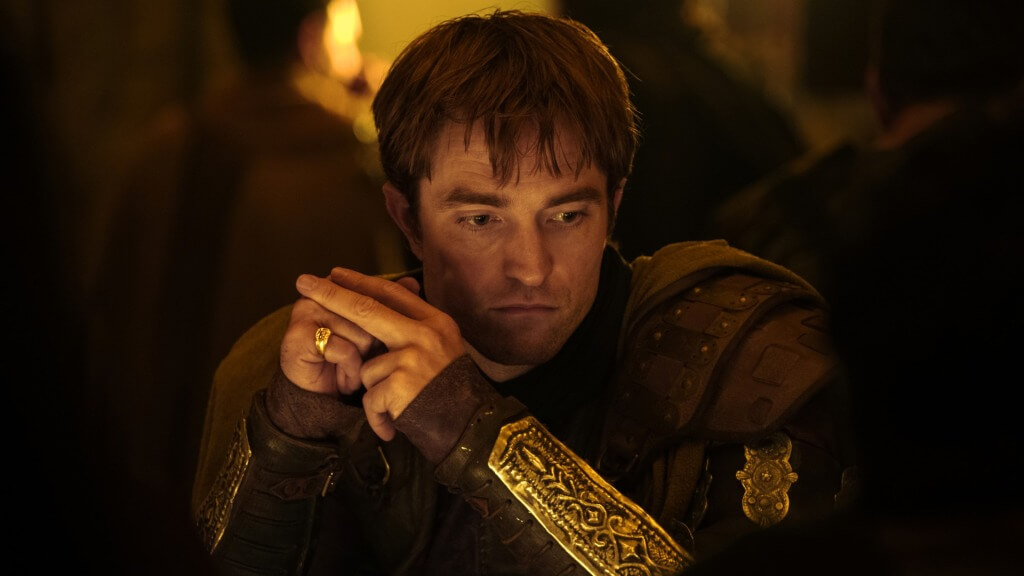
How apropos that a spoiled rotten oligarch like Elon Musk is spearheading the charge among trolls. The hordes of privileged suitors ravaging Odysseus’ palace becomes a comment on the current state of leadership in many corners of the world, including the administration currently turning the White House into a hub of corruption and bribery. The hoarding of wealth and power has become linked and more explicit than ever. With the rightful ruler lost at sea in The Odyssey, a swell of familiarly power-hungry contenders fill the void, contributing nothing while draining the stores of wine and food at neverending banquets. They terrorize longtime servants, abuse Odysseus’ dog Argus, and corner Penelope with their desperate tactics. They offer nothing to the people of Ithaca but a potential seat warmer, a series of men looking to be the city’s next king only for their own benefit. Antinous (Robert Pattinson), the brat who benefitted by sending the poorer Sinon to war in his place, is an especially slimy character, manipulating those around him to do his dirty work in the hopes of a chance at the throne. Power is all they seek, and they threaten to leave the place in ruins from their single-minded conquest.
In The Odyssey, characters cite Zeus’ Law as a de facto law of the land, and when breaking it, bring about darkness. It’s a Golden Rule concept: Take care of strangers when they come to your home, as they may be gods in disguise. It’s almost an idyllic premise at a time in the United States when its leadership has made it policy to mock any sign of kindness and specifically persecute immigrants. Penelope and her son Telemachus (Tom Holland) model that rule, taking in beggars and extending their hospitality to them just as they host the rowdy lot of suitors who abuse Zeus’ Law. Antinous abuses it a step further, sending a group of rogues to beat Odysseus’ shepherd Eumaeus (John Leguizamo) when the latter offers the thugs food and shelter. When reflecting on his years in the Trojan War, Odysseus realizes that in giving the Trojans a peace offering full of soldiers, he betrayed their trust and Zeus’ Law. Like Robert Oppenheimer in Nolan’s previous film, Odysseus shows remorse over betraying the future of mankind in order to win a war.
Another parallel provides a modern take on an age-old mystery and draws further comparisons to today’s fearmongering over immigrants. Between Odysseus, Penelope, and the suitors, everyone fears the so-called Sea People. No one knows if they’re a mighty band of pirates or god-powered marauders, but the fear of an outside force conquering Ithaca is enough for people to consider making bad decisions to fill the leadership void, potentially handing over the keys to the kingdom to an unworthy draft dodger like Antinous (another reflection of present-day leadership). The surprise reveal is that the call was coming from inside Greece all along: the Sea People were simply other Greeks who turned on each other in fear. “There’s always blame on other people or on outsiders without quite realizing who those outsiders actually are,” Nolan said. Whether directly or not, the fear of the Sea People dovetails with the end of the Bronze Age, and the ushering in of an era of darkness—that same kind of hate continues to make it feel as if we’re en route to another dark age.
The Odyssey is both a cautionary tale and a hopeful one. Home can be found, and we can choose to do better by flushing out leaders who merely seek to make their followers afraid of the unknown, vilifying neighbors for the sake of ill-gotten power and personal enrichment. We can choose to look for leaders who espouse kindness, instead of those who would enact violence against their own family, like Agamemnon (Benny Safdie), in order to plunge thousands into further danger and death. When Odysseus complains to Athena (Zendaya), asking why the gods can’t talk to mere mortals more directly, she answers that they do so through the natural world—the one currently under siege by this administration, hellbent on rolling back environmental protections and destroying our natural resources. Of all the takeaways from Christopher Nolan’s film, it’s this running theme that feels most modern: Gods and leaders are what we make of them, so choose them wisely.


 Keep scrolling for more great stories.