“Everybody wants to believe they have some control over their lives and how people see them.” That line opens The Trial Of Alec Baldwin, a documentary hitting theaters this week about the actor’s experiences following the accidental shooting on the set of Rust that killed cinematographer Halyna Hutchins. Baldwin, the man making that statement as a camera crew follows him all the way to a New Mexico courtroom, where he faces criminal charges of involuntary manslaughter, immediately notes that this might be a futile endeavor. “The worst thing for me is to be misunderstood,” he adds, which may explain why he allowed director Rory Kennedy to document these painful moments.
Certainly, there’s some dignity in allowing an Emmy-winning filmmaker, one who has made films on topics as hefty as Abu Ghraib and the Vietnam War, to tell this story. Kennedy’s work is celebrated for its journalistic approach, which feels befitting of Baldwin’s highly serious self-image. But not even this straightforward, no-nonsense style can stop Baldwin from getting in his own way. It makes you wonder how that same confessed control freak ended up saying yes to a reality series from the network that brought us the Duggars and Honey Boo-Boo.
The Baldwins, which premiered on TLC after the case against Baldwin was dismissed with prejudice over a disclosure violation, was always a strange sell. Why would a respected actor known for his intensity agree to do something so clearly beneath him? It’s not like it was a Real Housewives show, which still carries a certain cultural cache in the 2020s. This is a network known for ravenously gawking at the marginalized subjects it claims to be educating its audience on, often resulting in major ethical fallouts. The whole thing felt like a dare gone awry, or a pitch Jack Donaghy made on 30 Rock after Cricket Night In America or MILF Island was canceled.
If anything piqued audiences’ interest in The Baldwins, it was their morbid curiosity around Baldwin’s wife Hilaria, who is 26 years his junior and mother to seven of his eight kids, and who had become infamous due to a years-long scam where she pretended to be Spanish. What was the dynamic like between a high-profile thespian and a yoga teacher who lied about her upbringing for seemingly no reason? One could imagine TLC executives greenlighting this show under the impression that it could yield either a fun trainwreck or fizzy insight into two mismatched eccentrics. It was tougher to see what the Baldwins themselves got out of this, except for a decent payday. Then the shooting happened.
Given Baldwin’s executive producer credit on The Baldwins, one supposes he was eager to present an idealized image of his family, even if the choice of medium was perplexing. With potential jail time in his future, this presentation became paramount, so why not add another film crew to tell a big-screen side of the story? Both The Baldwins and The Trial Of Alec Baldwin intend to put a warmer, less aggressive face to the defendant in a case that had exploded worldwide, and become a hotbed of conspiracy theories and political point-scoring. But one aired on a channel infamous for its voyeuristic sleaze, and the other came from a celebrated Oscar nominee. The Baldwins asks you to laugh at and with this family. The Trial Of Alec Baldwin asks you to be empathetic, but still find entertainment in this tragedy. Both are hindered by their subject’s pain and ego.
Kennedy takes a simple approach to TTOAB, typical of this kind of documentary—think drone shots of landscapes, discussions of his youth, footage of old interviews, and news segments detailing his highs and lows. The lion’s share of the near-two-hour runtime is dedicated to Baldwin himself, explaining his career and family as everything crashes around him. It’s a bog-standard recount, and, when he’s just being Alec Baldwin the movie star, you’re reminded of why the actor has endured for over four decades: He’s witty, a clear cineaste who does spot-on impressions of Marlon Brando and Sean Connery, and he speaks eloquently about the things he cares about. It’s a practiced act but a good one. But then his defenses go up, and the audience rolls their eyes once more.
Baldwin can’t stop tripping over his own feet as he scrambles to explain his innocence. Talking to the paparazzi and then doing a staggeringly misguided Good Morning America interview gave him some of the worst PR he’d experienced since the infamous “rude, thoughtless pig” phone call to his eldest daughter Ireland (her comments on her father’s anger issues and generational pain offer some of the most clarifying parts of his backstory). Even his friends have to admit that he screwed up, leaving Hutchins’ husband to claim that Baldwin viewed himself as a bigger victim than the woman who died. It’s aggravating to watch Baldwin, usually unprompted, dig this hole so deep for himself.
On TLC, the mood is meant to be lighter, although the edge of network-endorsed cruelty is always there. Kids and pets scramble for dominance in a five-bedroom apartment too small for such a brood. Episode titles are puns on Baldwin’s movies, like “Glengarry Glen Floss” and “Mission: Impossible—Rug Nation,” the latter of which is about a wacky cycle of doggy potty training. The “accidental 30 Rock” of it all is tough to escape. You keep expecting Tracy Jordan to make an impromptu cameo, a notion that would only make The Baldwins marginally more surreal.
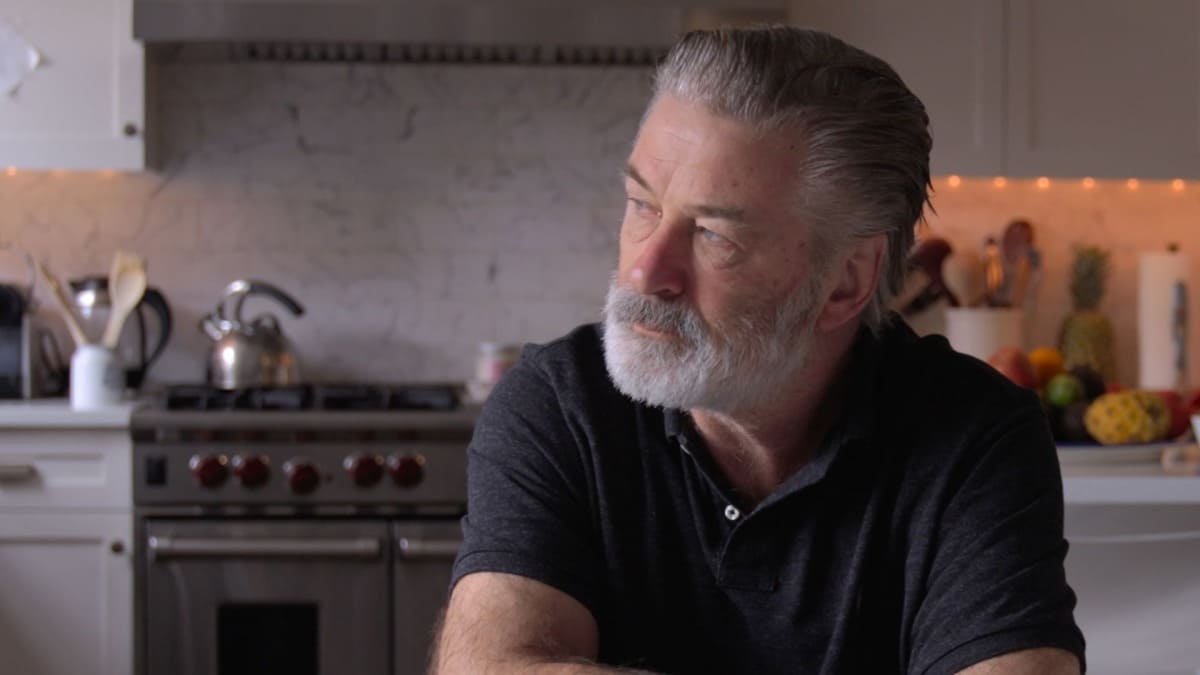
But Baldwin is no Jack Donaghy, forever in control and above it all. Rather, he is diminished, a sad figure overtired and lost in his own home. He tries to keep up a positive image for his many kids, who are cute and rambunctious, but is an evidently ill fit for this medium. He cries out for a talk show or an episode of The Match Game, not the Hollywood version of Jon And Kate Plus 8. Seeing him clean a garbage can—something he does as a symptom of his OCD—while asking the cameramen if they really want to film this has you wondering why they didn’t just call “cut.” Was there so little else for them to shoot? TLC, so used to instructing its audiences to laugh derisively at hurt and marginalized people, hoped for more schadenfreude. Certainly, poking fun at OCD is par for the course for the cabler. But the mood is too dim to elicit any entertainment value, however callous.
Hilaria also makes for an odd reality TV star, at least in the TLC mold. She would probably have made a great Real Housewife, flitting between English and Spanish accents and henpecking Alec as she tries to keep a herd of kids in line. Alec admits that, some time after their fifth child, his wife began “calling all the shots,” to which she says, rather passive-aggressively, “Yes, I agree that’s your reality of it.” Her non-explanations for her fake Spaniard image aren’t even fun to laugh at; you almost yearn for a Bravo-esque villain edit, or for her to embrace the inherent ludicrousness of her façade. Indeed, neither Baldwins knows how to be in on the joke, which is the only way to survive the leering scorn of TLC.
The second half of the eight-episode series focuses on the family’s post-trial life, and Hilaria is eager to bring some normalcy back to the family, but those days are long past. Alec agrees to attend therapy, for one, and his worries over whether or not to return to work are major. Hilaria becomes her husband’s biggest cheerleader. “I feel like the world very much misunderstands Alec. He’s a tender soul,” she says. Her love is undeniable in both series and film, but who asked for this endless cavalcade of defenses for Baldwin, and all in the aftermath of a woman losing her life? It doesn’t take long for her support to feel like a sidelining of the Hutchins family’s pain, making the infotainment feel all the more like shoddy PR.
These moments are infuriating, but they’re also in conjunction with some stark confessions of trauma, starker perhaps than anything in TTOAB. “I’m happier when I’m asleep than when I’m awake,” Baldwin confesses to a friend in one episode. It’s a painful admittance, one that looms forebodingly over this show and any attempts to wring laughter from moments like a date night or dog-poo problem. Watching those typical TLC reality show moments, you cannot escape the smothering feeling that we’re watching a man at a time in his life when he should not be anywhere near a camera.
That sensation isn’t as overwhelming in The Trial Of Alec Baldwin, but it’s still present. His openness about sleepless nights and scenes where he finds out about Hutchins’ death are uncomfortable to watch. He makes nihilistic claims that he’s never been happy in his entire life and that he hates acting. In the film, it’s Hilaria who pulls him back from the edge, a rare glimpse of their warm dynamic that The Baldwins never musters (and no, she doesn’t have a Spanish accent in the film at all). The balance between the pair is flipped from TV show to movie. Hilaria goes from the henpecking mistress of the house to the spouse who has to constantly keep her husband from crashing out.
As TTOAB evolves into a courtroom drama, Kennedy’s camera finds surer ground, no longer bound to Hurricane Alec. It becomes riveting stuff, with three days of action revealing the ineptitude of the prosecution, which buried key evidence and mostly rested on the prosecutor’s own distaste for Baldwin. This final half-hour taps into the heart of the matter: A woman’s death was hijacked by ambitious people to make a scene, and they flagrantly messed with the system to do so. When prosecutor Kari T. Morrissey takes the stand, she is as petulant and defensive as she claims Baldwin is, and it takes very little for Baldwin’s lawyer to dismantle her. In these moments, Baldwin’s micro-reactions are a more fitting display of his emotional state than his many long-winded self-defenses. The film would have worked best had it stuck to the courtroom with zero commentary, Frederick Wiseman-style.
It’s tough to be a reality TV star, and even the most hagiographic documentary can fail if the subject gets in their own way. Alec Baldwin is not a good fit for either, even if the circumstances around him feel ripe for exploration (and, to the cynical, exploitation). The Baldwins and The Trial Of Alec Baldwin are bound by the same agenda: portray Baldwin as misunderstood and unfairly treated. That’s a fine needle to thread and the film is at least more tactful in its pursuit than the show, but they fail in the exact same ways. You cannot make an underdog edit in either form when you’re working with someone who is both broken down and self-aggrandizing. By the end of both pieces of media, cutting through the sense of entitlement and rampant bad taste, the prevailing image of Baldwin you’re left with is of a man who could benefit from some time away from the spotlight.


 Keep scrolling for more great stories.