Paste is the place to kick off each and every New Music Friday. We follow our regular roundups of the best new songs by highlighting the most compelling new records you need to hear. Find the best new albums of the week below.
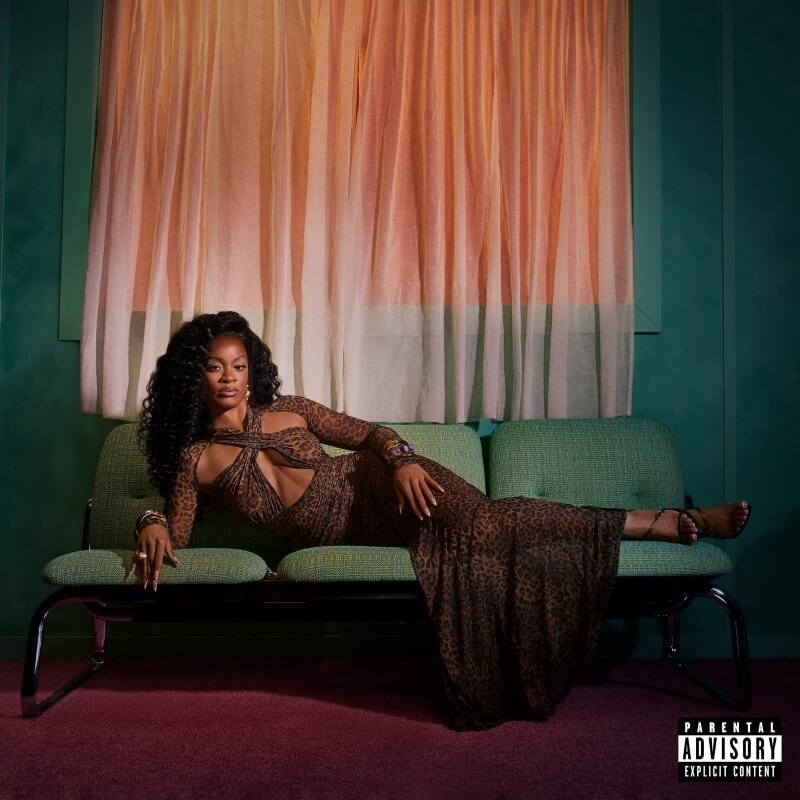
Ari Lennox: Vacancy
Ari Lennox has entered her “soft girl” era. On Vacancy, her first album since leaving J. Cole’s Dreamville label, the DMV singer sounds awoken and alive. I can’t get the bouncing “Under the Moon” out of my head, the airy, reggae/R&B cocktail powering “Cool Down” is sunny and nimble, and that nasty hook in “High Key” is a total thrill. Lennox is leaning all the way into her ‘90s hip-hop and soul interests, landing her in this fun zone of smooth, replayable moods. “Dreaming” is the best song on here, but don’t sleep on the back-half sequence of “Horoscope,” “Wake Up,” and “Company” that precedes it. And the title track shows off Lennox’s range and vintage soul inspirations. Vacancy isn’t without flaw: the album runs a tad too long, and some of its lyrics—like “That boy put the ho’ in horoscope”—sound written with virality as an end goal. But producers Jermaine Dupri and Bryan-Michael Cox are in the building and let Lennox’s voice take center stage, which becomes Vacancy’s star-making detail. She’s got some serious motion, and the writing here is her best since Shea Butter Baby. Werewolf imagery, yoga language, jacuzzis, astrology trends—Lennox is conquering them all, one Vacancy at a time. —Matt Mitchell[Interscope]
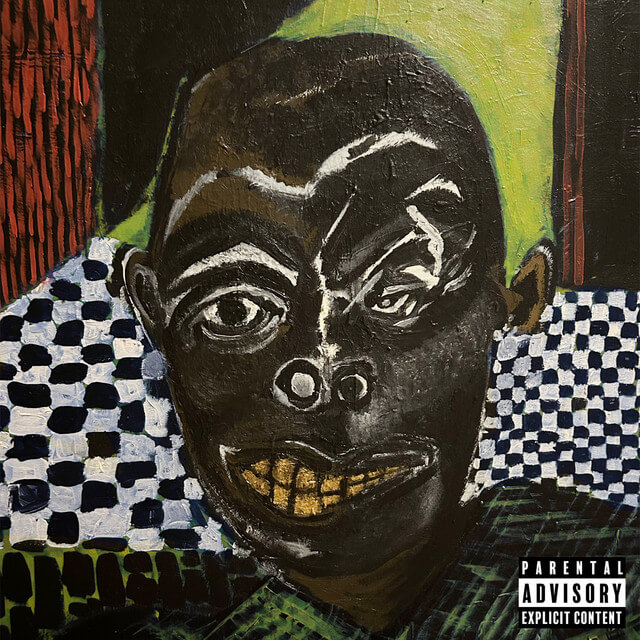
.idk.: e.t.d.s.
Time hangs over e.t.d.s. (an acronym for “even the devil smiles”) like a sentence that never fully got served. .idk. builds the project around the year he would’ve come home had his own 15-year sentence run its full course, and everything here moves with that clock in mind: measured, wary, alert to consequences. The tape opens under surveillance, literally—a collect call from a correctional facility—and never quite relaxes after that. Even the songs themselves operate like statements given with a lawyer in the room: detailed, controlled, careful about what gets said and what stays implied. When .idk. revisits robberies, jail time, and the routines of survival, he does it with the memory of someone who knows exactly how small decisions compound. The writing is sharpest when he leans into specificity—floor plans, wallets, commissary math—using detail not to glorify the past but to inventory it. Heavy-hitting guests (Black Thought, Pusha T, RZA, even the late MF Doom) drift in and out like apparitions from different eras of rap, reinforcing the mixtape’s lineage without fully hijacking its focus. There’s a tension here, always: between confession and performance, regret and bravado, honesty and self-preservation. Yet even at its most reflective, e.t.d.s. never settles into catharsis. It stays suspended in that uneasy space where freedom feels provisional and the door, though open, still creaks. —Casey Epstein-Gross[Rhymesayers]
Immaterialize: Perfect
The best pop record of this young year so far belongs to Perfect, the debut of Chicago duo DJ Immaterial and Lipsticism. Calling to mind the efforts of Snuggle, Immaterialize traffic in processed vocals and heavy reverb. It’s two prolific musicians coupling into a magnetic, magnificent pattern of spectral, ornate beauty. So many of the duo’s best ideas arrive in surreal harmony, in the margins around indie-rock and dream-pop. Immaterialize recorded the whole thing at home and you can feel that, in off-kilter song structures that don’t follow any one path. Look towards the Fire-Toolz-assisted “Everything But Myself” and you’ll see it all: confessionals shadowed in warm, trance-y cues. You’d be smart to let all of DJ Immaterial and Lipsticism’s impulses wash right over you. —Matt Mitchell[Fire Talk]
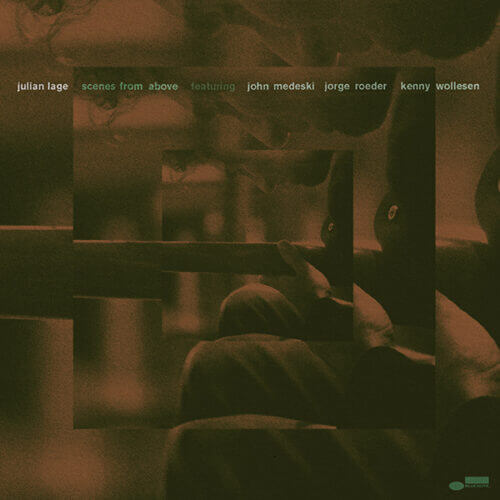
Julian Lage: Scenes From Above
“One of the greatest living guitarists returns with his best record in nearly ten years.” There’s your headline for Julian Lage’s Scenes From Above, a truly phenomenal jazz record done with the “egalitarian” quartet he mans with John Medeski, Jorge Roeder, and Kenny Wollesen—no doubt Lage’s most ambitious and successful effort since 2018’s Modern Lore. In a “compositional writing sprint,” Lage came up a textured standout, with songs like “Negra Presentuosa,” “Talking Drum,” and “Night Shade” showing off elegant singing, big, impossible grooves, and stillness, in that order. Even the piano from Medeski in “Red Elm” feels like an extraordinary set dressing. Scenes From Above is four maestros stepping into each other’s pocket. In their company, “chemistry” gets an upgrade. Strength arrives all over, in compositions written so the quartet would have “something to talk about once we’re together.” All we can do is listen and remember and listen again. —Matt Mitchell[Blue Note]
Louis Tomlinson: How Did I Get Here?
Tough breaks for Louis Tomlinson, considering that his old bandmate Harry Styles dropped a new single of his own the night before How Did I Get Here? arrived today. But looking past the old mates’ scheduling drama, there’s a neat, sunshine-y album from Tomlinson here. He doesn’t reinvent the wheel, but it’s a pleasant trip through his Costa Rica getaway-inspired, “pura vida” vibe. It’s clear from the first track that Tomlinson isn’t interested in replicating 2022’s Faith in the Future, and he’s put together a catchy packet of arena-scorchers (“Broken Bones”), syrupy singalongs (“Last Night”), and late-night moods (“Imposter”). Tomlinson couches his ambitions into splashy, cozy rock tunes that breeze by. I don’t know how I got here either, but I had a good enough time. —Matt Mitchell[78 Productions/BMG]
Lucinda Williams: World’s Gone Wrong
Lucinda Williams long ago earned the right to make any record she damn well pleases. In recent years, that freedom has led her down a gravel road to re-record earlier work, sample other genres, and pay tribute to her heroes as well as add to her own legacy as a great American songwriter. One of the reasons listeners have so readily followed Williams down these different paths is that she has remained an authentic voice with something to say—and on World’s Gone Wrong, boy, does she have a bone to pick. The latest from Williams doesn’t provide a survival guide to hard times, nor does it promise that things will necessarily get better. Instead, she offers a letter to listeners assuring them that they are not alone in their struggles or the fight to regain what America has lost. Much of the album finds Williams surveying the mess from different vantages and musical styles. Legendary gospel singer Mavis Staples lends her voice to Bob Marley’s eerily prophetic “So Much Trouble in the World.” Williams’ crack band have no trouble fusing country rock with wah-wah nods to reggae as she, Staples, and Marley’s words pull from their disparate experiences to find a common struggle. “The dream is deferred / And the churches are burning,” observes Williams as she sings the blues on “Black Tears,” borrowing from a long tradition of blood, tear-stained cheeks, and oppressed voices. And the stark and scathing “Punchline” turns skyward for answers to our shared plight but ultimately lands on humankind’s wickedness, deceit, and cruelty as the reasons so many of us are down and out. —Matt Melis[Highway 20]
Poppy: Empty Hands
Poppy doesn’t sound like she’s searching anymore. Empty Hands picks up where 2024’s Negative Spaces left off, doubling down on the push-pull that’s become her sharpest trick: gleaming, stick-in-your-teeth hooks wedged inside songs that pulse like a heartbeat. Jordan Fish returns as producer, and together they build tracks that move with a brutal kind of efficiency. Across its tight, bruising runtime, Poppy doubles down on the physical pleasures of heaviness: guitars that lurch and lock into place, riffs that hit clean and fast, industrial percussion that keeps snapping the grid tighter, her voice flickering from sing-song taunt to full-throated rupture without warning. She treats pop structure like a delivery system for pure force, toggling between taunt, chant, and explosion. The result is a precise, addictive kind of industrial-pop aggression: music that sounds engineered to overwhelm, then stick around in your head long after the bruises fade. —Casey Epstein-Gross[Sumerian]
Roc Marciano: 656
Marci has stayed busy this decade, hitting us with the self-produced Marciology in 2020 and then three straight Alchemist-assisted LPs—The Elephant Man’s Bones, The Skeleton Key, and Marciology—in succession. Following up his great collab album with DJ Premier from last August, Marci keeps the prolific streak ablaze with 656, another self-produced effort that is light on features (only Errol Holden shows up here, on “Rain Dance” and “Trapeze”) but filled up with street noir moods and soul-sampled luxuries. The beats on this thing are so smooth you might think it’s Conductor Williams who’s in the kitchen, but it’s just Marci doing Marci things. “Good for You,” “Easy Bake Oven,” and “Melo” are the big winners, though I’ve got to shout out the verbiage on the ever-hilariously titled “Tracey Morgan Vomit” and the decorated, referential “Childish Games.” 656 is just another reason why Roc Marciano is one of the all-time best. —Matt Mitchell[PIMPIRE RECORDS/Marci Enterprises]
Searows: Death in the Business of Whaling
On Death in the Business of Whaling—titled after a line from Moby Dick—Searows widens the emotional lens without softening the focus. Where his debut record often lived in quiet rooms and interior monologues, Alec Duckart’s sophomore album lets the outside world in: distance, labor, weather, time passing whether you’re ready or not. Recorded in a converted horse barn outside Seattle with co-producer Trevor Spencer, you can hear the difference in scale immediately: the songs have more air around them, more distance to echo across, more room to swell into something frighteningly big. Even when the writing stays intimate—worried, self-interrogating, fixed on bodies and aftermath—the arrangements insist on horizon lines: banjo and fingerpicked guitar giving way to drums that finally hit like a wave, guitars that blur at the edges, melodies that circle until they start to feel like rituals. The nine-song record doesn’t resolve its dread so much as dignify it—turning private fear into a kind of bleak, bracing scenery you can walk through without pretending it isn’t there. —Casey Epstein-Gross[Last Recordings on Earth]
Victoryland: My Heart Is A Room With No Cameras In It
Ex-Blood member Julian McCamman sounds like Robert Smith channeling Dean Wareham, or Dean Wareham channeling Robert Smith, all over My Heart Is A Room With No Cameras In It. Under the banner of Victoryland, McCamman unleashes strident guitars and skronky synthesizers. “Fits” is like a hypnosis tape, a track that makes me scream, “I LOVE MUSIC!” so loud my head vibrates. I wish those six minutes could go on forever. McCamman arrives at the mix by falling straight into its bursting contrasts of acoustic guitar, glitchy electronics, and brushed, scratchy drumming. I swear the instruments go ten different ways and his voice tries to follow each of them, revealing this messy, squirming pop song that grows and grows and grows until its muscles have no choice but to contract. My Heart Is A Room With No Cameras In It diverts from the indie-rock sameness of the first Victoryland LP, Sprain, and sounds upscaled, sometimes psychedelic on “I got god” and “I’ll Show You Mine.” The album blurs but never bores. McCamman’s guitars always sweep and his electronics always swirl. And My Heart Is A Room With No Cameras In It never lulls, instead falling into this romantic, exciting trance. The outro of “Fits” alone—a one-minute balm of sugary, winking modulation—will put you in a coma. —Matt Mitchell[Good English]


 Ari Lennox has entered her “soft girl” era. On Vacancy, her first album since leaving J. Cole’s Dreamville label, the DMV singer sounds awoken and alive. I can’t get the bouncing “Under the Moon” out of my head, the airy, reggae/R&B cocktail powering “Cool Down” is sunny and nimble, and that nasty hook in “High Key” is a total thrill. Lennox is leaning all the way into her ‘90s hip-hop and soul interests, landing her in this fun zone of smooth, replayable moods. “Dreaming” is the best song on here, but don’t sleep on the back-half sequence of “Horoscope,” “Wake Up,” and “Company” that precedes it. And the title track shows off Lennox’s range and vintage soul inspirations. Vacancy isn’t without flaw: the album runs a tad too long, and some of its lyrics—like “That boy put the ho’ in horoscope”—sound written with virality as an end goal. But producers Jermaine Dupri and Bryan-Michael Cox are in the building and let Lennox’s voice take center stage, which becomes Vacancy’s star-making detail. She’s got some serious motion, and the writing here is her best since Shea Butter Baby. Werewolf imagery, yoga language, jacuzzis, astrology trends—Lennox is conquering them all, one Vacancy at a time. —Matt Mitchell [Interscope]
 Time hangs over e.t.d.s. (an acronym for “even the devil smiles”) like a sentence that never fully got served. .idk. builds the project around the year he would’ve come home had his own 15-year sentence run its full course, and everything here moves with that clock in mind: measured, wary, alert to consequences. The tape opens under surveillance, literally—a collect call from a correctional facility—and never quite relaxes after that. Even the songs themselves operate like statements given with a lawyer in the room: detailed, controlled, careful about what gets said and what stays implied. When .idk. revisits robberies, jail time, and the routines of survival, he does it with the memory of someone who knows exactly how small decisions compound. The writing is sharpest when he leans into specificity—floor plans, wallets, commissary math—using detail not to glorify the past but to inventory it. Heavy-hitting guests (Black Thought, Pusha T, RZA, even the late MF Doom) drift in and out like apparitions from different eras of rap, reinforcing the mixtape’s lineage without fully hijacking its focus. There’s a tension here, always: between confession and performance, regret and bravado, honesty and self-preservation. Yet even at its most reflective, e.t.d.s. never settles into catharsis. It stays suspended in that uneasy space where freedom feels provisional and the door, though open, still creaks. —Casey Epstein-Gross [Rhymesayers]
 The best pop record of this young year so far belongs to Perfect, the debut of Chicago duo DJ Immaterial and Lipsticism. Calling to mind the efforts of Snuggle, Immaterialize traffic in processed vocals and heavy reverb. It’s two prolific musicians coupling into a magnetic, magnificent pattern of spectral, ornate beauty. So many of the duo’s best ideas arrive in surreal harmony, in the margins around indie-rock and dream-pop. Immaterialize recorded the whole thing at home and you can feel that, in off-kilter song structures that don’t follow any one path. Look towards the Fire-Toolz-assisted “Everything But Myself” and you’ll see it all: confessionals shadowed in warm, trance-y cues. You’d be smart to let all of DJ Immaterial and Lipsticism’s impulses wash right over you. —Matt Mitchell [Fire Talk]
 “One of the greatest living guitarists returns with his best record in nearly ten years.” There’s your headline for Julian Lage’s Scenes From Above, a truly phenomenal jazz record done with the “egalitarian” quartet he mans with John Medeski, Jorge Roeder, and Kenny Wollesen—no doubt Lage’s most ambitious and successful effort since 2018’s Modern Lore. In a “compositional writing sprint,” Lage came up a textured standout, with songs like “Negra Presentuosa,” “Talking Drum,” and “Night Shade” showing off elegant singing, big, impossible grooves, and stillness, in that order. Even the piano from Medeski in “Red Elm” feels like an extraordinary set dressing. Scenes From Above is four maestros stepping into each other’s pocket. In their company, “chemistry” gets an upgrade. Strength arrives all over, in compositions written so the quartet would have “something to talk about once we’re together.” All we can do is listen and remember and listen again. —Matt Mitchell [Blue Note]
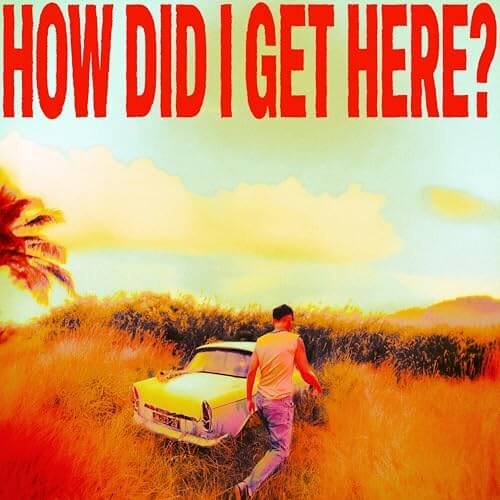 Tough breaks for Louis Tomlinson, considering that his old bandmate Harry Styles dropped a new single of his own the night before How Did I Get Here? arrived today. But looking past the old mates’ scheduling drama, there’s a neat, sunshine-y album from Tomlinson here. He doesn’t reinvent the wheel, but it’s a pleasant trip through his Costa Rica getaway-inspired, “pura vida” vibe. It’s clear from the first track that Tomlinson isn’t interested in replicating 2022’s Faith in the Future, and he’s put together a catchy packet of arena-scorchers (“Broken Bones”), syrupy singalongs (“Last Night”), and late-night moods (“Imposter”). Tomlinson couches his ambitions into splashy, cozy rock tunes that breeze by. I don’t know how I got here either, but I had a good enough time. —Matt Mitchell [78 Productions/BMG]
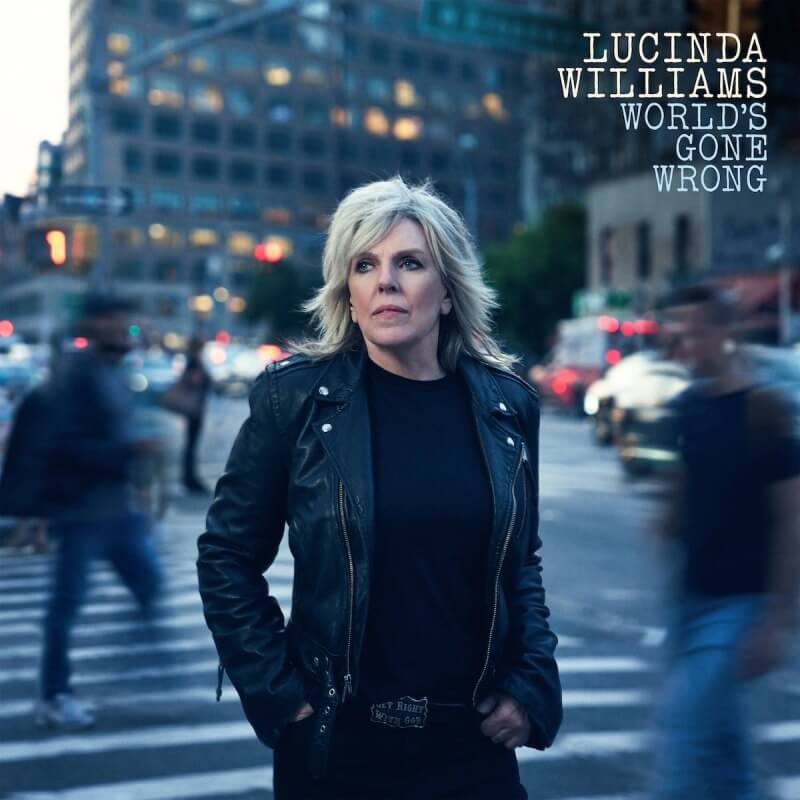 Lucinda Williams long ago earned the right to make any record she damn well pleases. In recent years, that freedom has led her down a gravel road to re-record earlier work, sample other genres, and pay tribute to her heroes as well as add to her own legacy as a great American songwriter. One of the reasons listeners have so readily followed Williams down these different paths is that she has remained an authentic voice with something to say—and on World’s Gone Wrong, boy, does she have a bone to pick. The latest from Williams doesn’t provide a survival guide to hard times, nor does it promise that things will necessarily get better. Instead, she offers a letter to listeners assuring them that they are not alone in their struggles or the fight to regain what America has lost. Much of the album finds Williams surveying the mess from different vantages and musical styles. Legendary gospel singer Mavis Staples lends her voice to Bob Marley’s eerily prophetic “So Much Trouble in the World.” Williams’ crack band have no trouble fusing country rock with wah-wah nods to reggae as she, Staples, and Marley’s words pull from their disparate experiences to find a common struggle. “The dream is deferred / And the churches are burning,” observes Williams as she sings the blues on “Black Tears,” borrowing from a long tradition of blood, tear-stained cheeks, and oppressed voices. And the stark and scathing “Punchline” turns skyward for answers to our shared plight but ultimately lands on humankind’s wickedness, deceit, and cruelty as the reasons so many of us are down and out. —Matt Melis [Highway 20]
 Poppy doesn’t sound like she’s searching anymore. Empty Hands picks up where 2024’s Negative Spaces left off, doubling down on the push-pull that’s become her sharpest trick: gleaming, stick-in-your-teeth hooks wedged inside songs that pulse like a heartbeat. Jordan Fish returns as producer, and together they build tracks that move with a brutal kind of efficiency. Across its tight, bruising runtime, Poppy doubles down on the physical pleasures of heaviness: guitars that lurch and lock into place, riffs that hit clean and fast, industrial percussion that keeps snapping the grid tighter, her voice flickering from sing-song taunt to full-throated rupture without warning. She treats pop structure like a delivery system for pure force, toggling between taunt, chant, and explosion. The result is a precise, addictive kind of industrial-pop aggression: music that sounds engineered to overwhelm, then stick around in your head long after the bruises fade. —Casey Epstein-Gross [Sumerian]
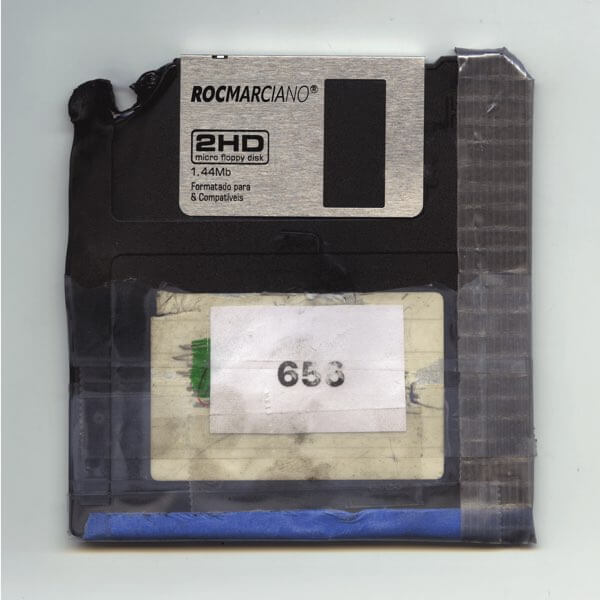 Marci has stayed busy this decade, hitting us with the self-produced Marciology in 2020 and then three straight Alchemist-assisted LPs—The Elephant Man’s Bones, The Skeleton Key, and Marciology—in succession. Following up his great collab album with DJ Premier from last August, Marci keeps the prolific streak ablaze with 656, another self-produced effort that is light on features (only Errol Holden shows up here, on “Rain Dance” and “Trapeze”) but filled up with street noir moods and soul-sampled luxuries. The beats on this thing are so smooth you might think it’s Conductor Williams who’s in the kitchen, but it’s just Marci doing Marci things. “Good for You,” “Easy Bake Oven,” and “Melo” are the big winners, though I’ve got to shout out the verbiage on the ever-hilariously titled “Tracey Morgan Vomit” and the decorated, referential “Childish Games.” 656 is just another reason why Roc Marciano is one of the all-time best. —Matt Mitchell [PIMPIRE RECORDS/Marci Enterprises]
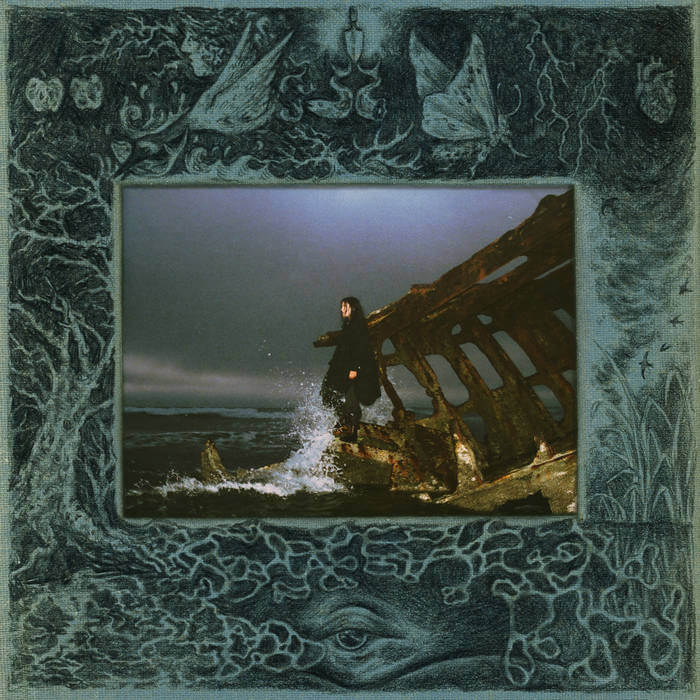 On Death in the Business of Whaling—titled after a line from Moby Dick—Searows widens the emotional lens without softening the focus. Where his debut record often lived in quiet rooms and interior monologues, Alec Duckart’s sophomore album lets the outside world in: distance, labor, weather, time passing whether you’re ready or not. Recorded in a converted horse barn outside Seattle with co-producer Trevor Spencer, you can hear the difference in scale immediately: the songs have more air around them, more distance to echo across, more room to swell into something frighteningly big. Even when the writing stays intimate—worried, self-interrogating, fixed on bodies and aftermath—the arrangements insist on horizon lines: banjo and fingerpicked guitar giving way to drums that finally hit like a wave, guitars that blur at the edges, melodies that circle until they start to feel like rituals. The nine-song record doesn’t resolve its dread so much as dignify it—turning private fear into a kind of bleak, bracing scenery you can walk through without pretending it isn’t there. —Casey Epstein-Gross [Last Recordings on Earth]
 Ex-Blood member Julian McCamman sounds like Robert Smith channeling Dean Wareham, or Dean Wareham channeling Robert Smith, all over My Heart Is A Room With No Cameras In It. Under the banner of Victoryland, McCamman unleashes strident guitars and skronky synthesizers. “Fits” is like a hypnosis tape, a track that makes me scream, “I LOVE MUSIC!” so loud my head vibrates. I wish those six minutes could go on forever. McCamman arrives at the mix by falling straight into its bursting contrasts of acoustic guitar, glitchy electronics, and brushed, scratchy drumming. I swear the instruments go ten different ways and his voice tries to follow each of them, revealing this messy, squirming pop song that grows and grows and grows until its muscles have no choice but to contract. My Heart Is A Room With No Cameras In It diverts from the indie-rock sameness of the first Victoryland LP, Sprain, and sounds upscaled, sometimes psychedelic on “I got god” and “I’ll Show You Mine.” The album blurs but never bores. McCamman’s guitars always sweep and his electronics always swirl. And My Heart Is A Room With No Cameras In It never lulls, instead falling into this romantic, exciting trance. The outro of “Fits” alone—a one-minute balm of sugary, winking modulation—will put you in a coma. —Matt Mitchell [Good English]
 Keep scrolling for more great stories.