
The fifth time is still pretty charming in a tech-forward Toy Story
The emotional core and big laughs remain, even if the plotting gets overbusy
Photo: Disney
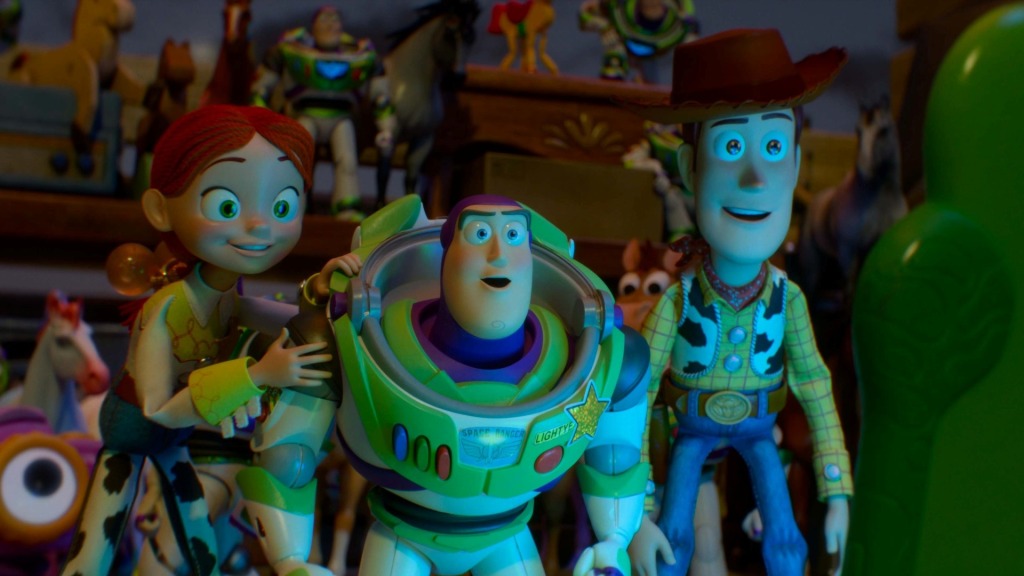
The last time we saw space ranger Buzz Lightyear on the big screen, he was caught in a vortex of origin-story failure, both in-universe and metatexual, in the unusual (and hard-to-clarify) form of the human Buzz that the toy is based on. The opening of Toy Story 5 brings Buzz—the toy one—back with a multitude of vengeances, as a wayward shipment’s worth of upgraded Lightyear toys emerges on a deserted island and attempts to get their bearing on this strange, unfamiliar planet. It’s possible to read this as a tacit self-rebuke to Disney and Pixar’s attempt to expand the Toy Story franchise into more serious sci-fi with the misguided Lightyear—and an assurance that this film will begin to make things right.
But this start scans more strongly as a clever switch-up on the Toy Story series formula that often sees the movies open with a depiction of the characters as their child owners see them—daffy, improvised adventures where a piggy bank becomes The Evil Dr. Porkchop and the good guys are threatened with death by monkey. Here, the Lightyears are abandoned and child-free before they’re even out of their packages, and must forge their own adventures to survive. This is something they’re hilarious well-suited to do, sharing the same delusion that the “main” Buzz Lightyear (Tim Allen) needed to overcome way back in the first movie, 31 years ago. The sequences of the Lightyears making their way in the world signal that maybe play isn’t quite what it used to be, while also piecing together a far more satisfying solo Buzz movie than anything in Lightyear.
Toy Story 5 is not a Buzz Lightyear survivalist thriller, much as it suggests that one would be wildly entertaining. (There’s just something about the Buzzes determinedly scampering around in unison that is supernaturally delightful.) The Buzz subplot is more of a fanciful diversion, a long-distance deus ex machina that gives director Andrew Stanton something else to cut to occasionally. Plotwise, the movie doesn’t really need it, but these scenes also provide crucial variety in a movie that otherwise mostly involves the ever-expanding gang of toys playing musical houses between a few different locations. Over-much of the story depends on characters showing up someplace after the toy they’re looking for has left.
One of those locations is familiar from previous installments: Bonnie’s room, where the lead toys have been left in the care of Bonnie, after Andy, the kid from the first three movies, went off to college. Bonnie hasn’t quite reached that point yet; she’s still only eight, and cherishes Jessie The Cowgirl (Joan Cusack, a little hoarser but no less spirited) despite her vintage origins. But Bonnie’s whimsical sensibilities (and seeming shyness) haven’t translated to her making any IRL friends. Jessie diagnoses neighborhood kids as overdosed on tech. Bonnie’s parents, on the other hand, wonder if maybe their kid has been left behind, and might catch up with a smidge of well-regulated social media. (Some will smack their foreheads in disbelief at this movie; just understand that part of parenting is making capricious decisions you immediately regret.) They cross their fingers and welcome into their home a very different sort of toy: Lily (Greta Lee), one of those kid-targeted tablets, which quickly transfixes Bonnie.
 Keep scrolling for more great stories.