While the general way Nihon Falcom’s Trails games work has been pretty set in stone for a while—take jobs to help people out, learn about the world and those people and the problems of both while you do it, see the overall narrative progress as villains swoop in to do their thing—the longtime RPG developer still likes to play with structure.
Last year’s The Legend Of Heroes: Trails Through Daybreak II instituted a rewind feature for Van Arkride and his Arkride Solutions crew that had you replaying sections of the game in order to avoid failure, injury, or even character death that had been baked into the narrative. Trails Into Reveriesplit the game up not just into acts with an intermission, as is the usual setup, but also broke you into separate paths with different parties, all converging on the same spot eventually and occasionally interacting with each other, sometimes without even knowing this was happening. And then there was Trails In The Sky The 3rd, a game that did away with the openness and the jobs of the first two games in the series in favor of a highly experimental setup based on memories and the experiences of the characters in your party, as everyone trapped in an alternate dimension was forced to look inward to fight the figurative and literal demons that manifested from it.
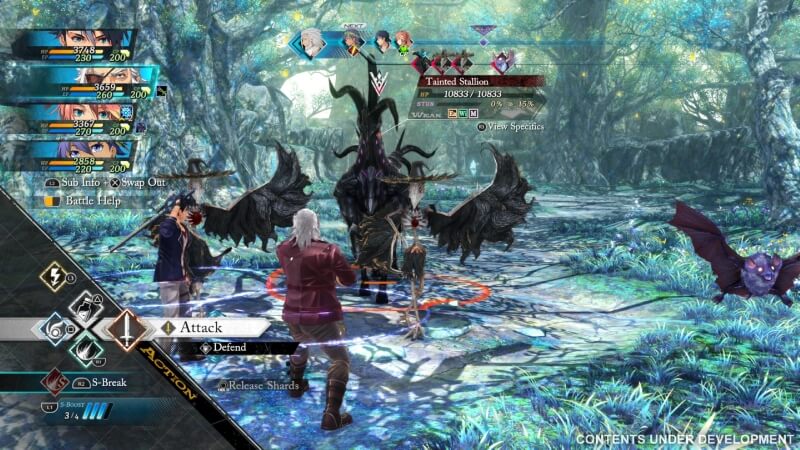
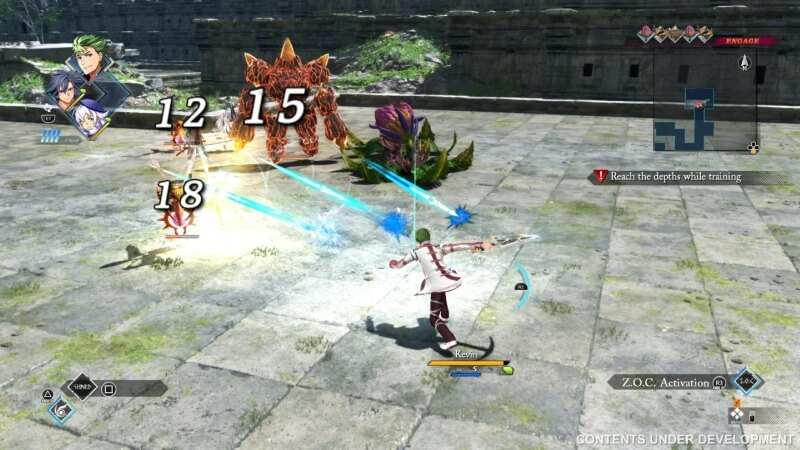
The Legend Of Heroes: Trails Beyond the Horizon is effectively Daybreak III despite the naming convention, as it’s the third game in the Calvardian portion of the saga—the latest country in the continent of Zemuria for Falcom to zoom in on. It plays nearly exactly like its predecessors, only now Falcom has added even more bells and whistles to the action-oriented “Field” combat that lets you, without pause, fight enemies in an action RPG style instead of in a turn-based format, if you so choose: you can now briefly slow down time to deliver a series of big hits in a row to stronger foes and larger groups of enemies so that these action-oriented battles go by more quickly, and there’s also a charge meter that lets you deliver devastating, powerful blows to rip through even the game’s “A-level” monster threats. In the “Command” battles—the turn-based ones—you can now use some of your built-up ability meter to set yourself up for back-to-back turns by a single character, and there are additional support opportunities from allies who aren’t in your party to extend combos and dish out more damage per turn. Otherwise? It’s more Daybreak, which is also the setup that the recent remake of Trails In The Sky FCis based on. If those games felt good in your hands, then this one will, too.
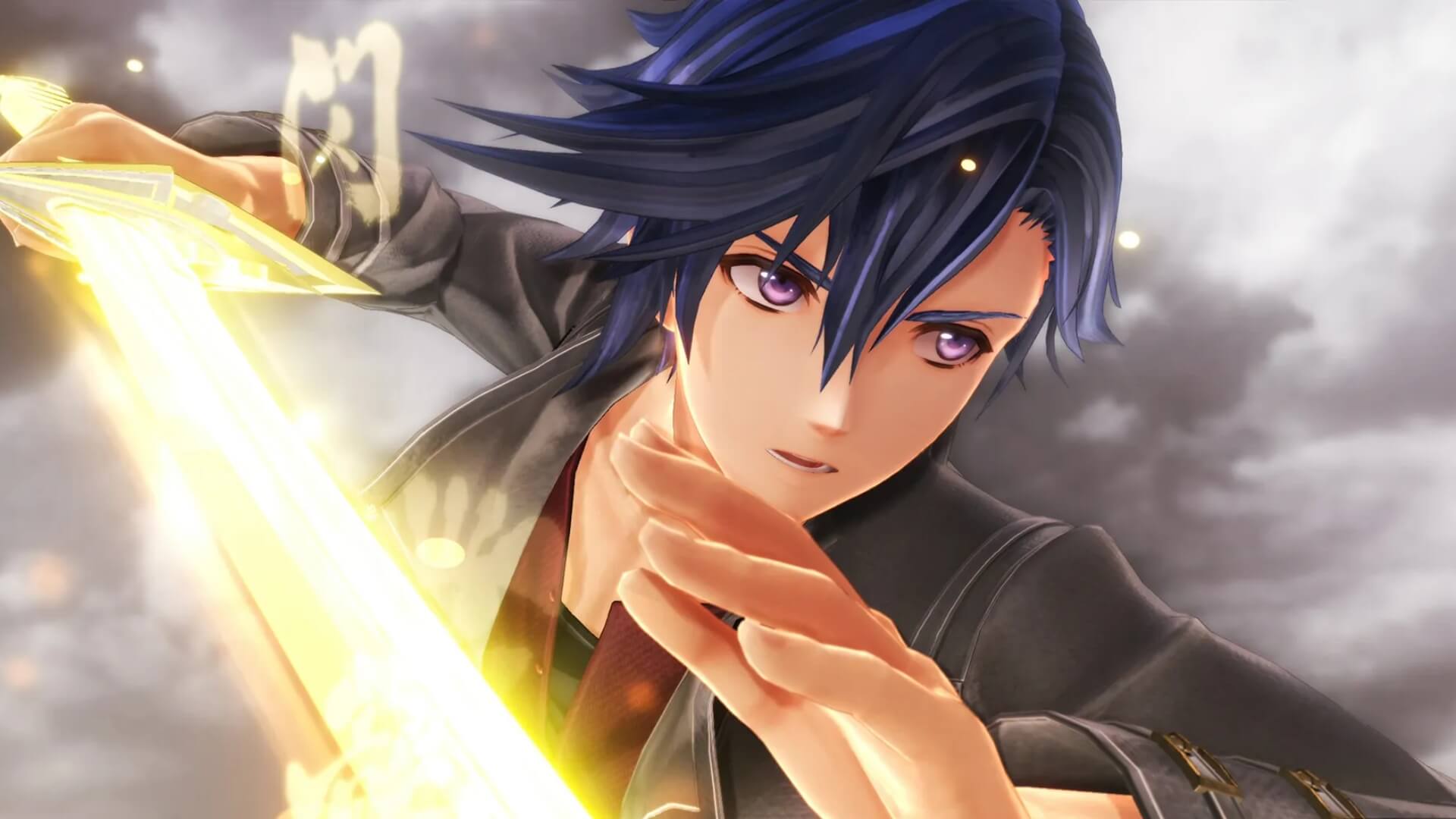
Trails Beyond The Horizon, of course, would share DNA with the preceding Daybreak games, in cast and in location and in general gameplay, but Trails Into Reverie and Trails In The Sky The 3rd get more than just a little shine and callbacks here, as well, in terms of structure and themes. Trails Beyond The Horizon borrows the multi-party, multi-path structure of Reverie, and brings back Sky The 3rd’s protagonist, the “Heretic Hunter” Kevin Graham, as well as his struggles with being a cleaner for the exceptionally powerful and seemingly all-knowing Septian Church. Trails Beyond The Horizon also gleefully borrows the penchant of both games to turn previous villains into uneasy, unlikely allies in the present in a way that lets you get a better sense of who they are and how they can be different—a perfect fit for the Trails subseries that focuses on those characters who straddle the line between lawful and chaotic, who live in the gray by choice or because society has forced that upon them.
What results is a game that is not just about building relationships in the way previous Trails games—especially the Daybreaks—have been, even and especially when the pairings seemed unlikely, but is also about testing those relationships when it turns out that the goals of the characters might not align. There’s a tension in the game nearly from the start when it becomes clear that everyone has their own agendas that they are unwilling to share for one reason or another—because a character or group likes to hold their cards close to the chest in general, because they are from another country and are wary of spilling secrets to a now-ally but former foe, or because a certain protagonist is hiding things from everyone, even their closest confidants and established allies. There’s an unease to it for you, the player, since you’re aware of the personalities and motivations of all these characters, who you’ve grown accustomed to liking and appreciating, and who now might very well be in conflict with each other.
It’s all told in an exceptional fashion that will have you guessing even when you think you know what’s going on or why any decision is made by the characters in question. Trails Beyond The Horizon is a 70-hour game that feels much, much denser than that, one that keeps piling new twists and realizations on top without those moments ever feeling forced, because they have been earned over the course of not just this subseries’ three games, but over the 13 that make up Trails as a whole.
Trails Through Daybreak II concerned itself with the personal more than with an arc that pushed the overall narrative of the series; it excelled at both the big and small pictures, but showed a clear preference for the latter in terms of what it mostly zeroed in on. That decision made plenty of sense in the moment, given how many loose ends there are to tie up for a series that is heading toward its overall conclusion—yes, a video game series telling a complete, start-to-finish story is allowed if publishers will only let it happen—but it is even more justified after seeing how Trails Beyond The Horizon plays out. Trails Through Daybreak II is its own worthwhile story and entry in the series, but it’s also 60 hours of staging for what’s to come, a slowed-down look at the game world and its characters to prepare you for the breakneck pace of Trails Beyond The Horizon, which is Vladimir Lenin’s quote about weeks where decades happen given video game form: the entire game takes place over a matter of days, with a clear deadline for its story to wrap up, and it is incredible how much happens in that span and how different the world is when it wraps.
Every little thing that has popped up in the Daybreak games to this point, whether new or building on previous Trails’ subseries, matters in Trails Beyond The Horizon. Every relationship, everything you know about Calvard and its status with its neighbors, what you know of the Septian Church and its seeming polar-opposite enemies of Ouroboros’ “Society,” the things that have been hinted at about the oddness of the continent of Zemuria and how it’s seemingly detached from the rest of the world in some way, of the speed at which technology is discovered and harnessed and discarded for something new, the cost of progress and the dangers inherent within it, what the characters who clearly know something beyond what has been revealed to the rest of the cast or even you yourself know about the world… it all comes to a head here. Falcom is so on top of it that they even manage to make the protagonist of the Cold Steel games, Rean Schwarzer, not an annoying distraction here, and instead a fit for what he’s used for that doesn’t detract from the experience. A miracle, really.
And it all results in the most dramatic cliffhanger the series has ever produced. If the cliffhanger in between the first two games in the series was an intensely personal one that mixed in larger-scale intrigue, this is the opposite: the scale of what’s happening is enormous and concerning in a way that’s never happened in the series before, which is saying something given how seemingly apocalyptic it’s been in the past. But it also doesn’t just tug at your heartstrings; it rips them right out of your chest not just with what actually happens in front of your eyes, but the implications of it, as well. It’s masterfully done, and of course happened when Trails finally caught up to the Japanese release schedule in the west: for the first time, we don’t know when the next brand-new Trails is coming.
As you can imagine given all of this detail above, Trails Beyond The Horizon is arguably the least-newbie-friendly game that Falcom has ever produced, but that’s not a negative nor a reason to ding it. Start at the beginning. Earn your way to this game’s payoffs, which tie together even moments you might have once thought wouldn’t matter beyond the one in which they were experienced, or ones you had even forgotten about entirely. Falcom didn’t just bring Kevin Graham back because it had been awhile—it is bad news when he shows up, because his job is to dirty his hands in the tasks no one else is equipped to handle, either mentally or physically. His being partnered with the Picnicking Front here—a group that, despite its intentionally goofy, lunch-loving namesake, is full of former child assassins, a major (former) series antagonist, and a constructed consciousness so powerful it’s been used for evil in the past—is no mistake. Graham is a conflicted misfit with dangerous abilities unsure of his own place in the world as well as his worth, with a weariness and desire for things to be different and an inability to know how to make them so. You can get a sense of that from how everyone discusses him within the context contained solely in Trails Beyond The Horizon, sure, but it all works so much better if you have lived through the very struggles that still haunt him, as you do in Trails In The Sky The 3rd. The same goes for understanding what the Picnicking Front’s whole deal is, which you need the Trails Of Cold Steel games, Trails Into Reverie, and Trails Through Daybreak II for in order to paint a complete picture of what is a whole bunch of tragic backstories and presents aiming to make the characters more than “just” that. This is less than one-third of the game’s playable cast, by the way, never mind the many, many key non-playable characters whose scent Van and the rest of the Daybreak crew spend the game chasing as “Spriggans,” the subseries’ regional answer to the Bracers Guild of the Sky games.
Trails is the most ambitious epic in games, and that’s only becoming truer with each new entry that builds on the previous ones. Every new Trails game starts a round of “is this a good one to start with?”, and the answer is “no” every time, unless you’re referring to the recent remake of the original, Trails In The Sky 1st Chapter. Which, if you want to experience Trails Beyond The Horizon in full, go start with that. Then play Trails In The Sky 2nd Chapter when that remake lands, then Trails In The Sky The 3rd on a Windows-compatible machine, then… you get the idea. It’s been said before, but you don’t start a lengthy book series in the middle; why would you do that with Trails, unless FOMO is your primary driving force? Respect yourself and Trails more than that, and do what’s right for the both of you. Only then will you get the full experience that you deserve.
The Legend Of Heroes: Trails Beyond The Horizon was developed by Nihon Falcom and published by NIS America. Our review is based on the Switch 2 version. It’s also available for PC, PlayStation 5, PlayStation 4, and Switch.


 Keep scrolling for more great stories.