
Transport Fever 3 seeks the cure to our transit woes
You can love the road, but the road might not love you.
Images: Urban Games
The dream of Woodstock died in the late spring of 1974—twice. First-time promoter Bart Korner, determined to make his mark on the world, had spent over five years planning and prepping for the rock festival, guiding the growing group of attendees who first gathered in 1969 from an informal campground into a small town with its own dedicated supply chains. Unfortunately Korner’s decision to dump the makeshift town’s toilets directly into a nearby river made many of its residents sick, and after the delivery trucks driving medicine from a pharmacy a few miles away got stuck in a year-long traffic jam, they diarrhea’d themselves to death. Twice.
If you know your rock ’n’ roll history, you know this isn’t what actually happened at Woodstock. The August 1969 festival wasn’t cancelled over a dysentery outbreak, and didn’t result in the creation of a new town. The only people to shit themselves to death at Woodstock was everybody who played Woodstock ‘99. And although traffic was pretty legendary that weekend, it probably didn’t take anybody 13 months to go five miles—no matter what Arlo Guthrie said about the New York State Thruway. This all can happen in one of the eight missions found in the campaign of Transport Fever 3, though, an upcoming logistics game about simulating transit systems—and did happen to us during a recent session, two games in a row.
Yes, it’s a little ridiculous. The timeline in these missions is so thoroughly divorced from the actual clock that it’s effectively useless; when the game tells you there are 12 months to get the medicine to the sick campers before the sheriff shuts you down, it seems extremely generous, and thus not even remotely urgent. By the time you realize the mother of all traffic jams has broken out, it might already be too late to solve it. But then the campaign is suffused with silliness, from archly stereotypical characters to intentionally comedic anachronisms. These don’t attempt to represent the real world, but aim to introduce players to the game and its mechanics—serving as an on-ramp to the game’s true thoroughfares, a “tycoon” mode that puts you in charge of a more realistic simulation of the last 125 years of transportation, and an open-ended sandbox mode that lets you create your own ideal transit system.
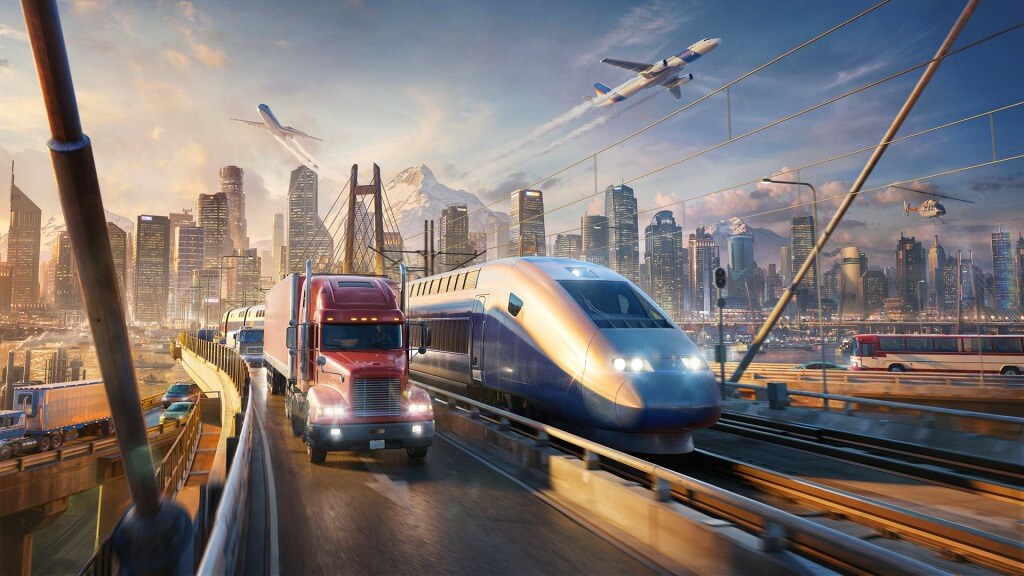
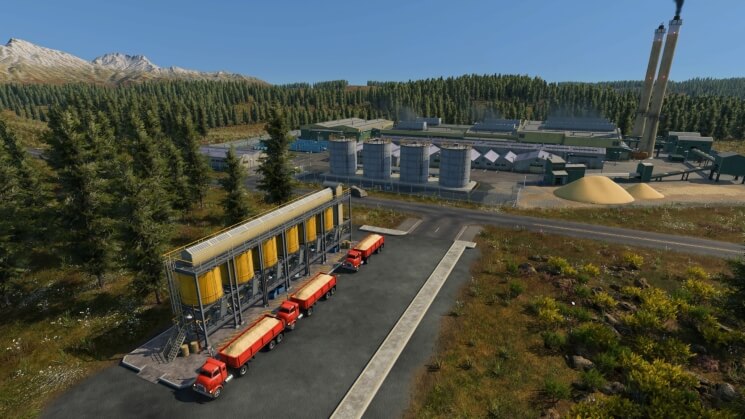
When you’re deep enough into a Transport Fever game, your map becomes a busy little clockwork world running on its own. Tiny vehicles ferry unseen people and crucial cargo across highways, railways, and shipping lanes, keeping the lifeblood of cities and countryside alike pumping. If you want to pamper the microscopic CEOs of your bustling world, Transport Fever 3 makes helicopters available for the first time in the series; sure, they’re inefficient, expensive, and irresponsible, but it’s another layer to add to your sprawling transit infrastructure. What’s next, private jets, for when the globe just isn’t warming quickly enough for you?
 Keep scrolling for more great stories.