
VisionQuest’s identity crisis is also the MCU’s
The show's end marks a (mostly) welcome breather from a sloppily executed TV experiment.
Photo: Marvel
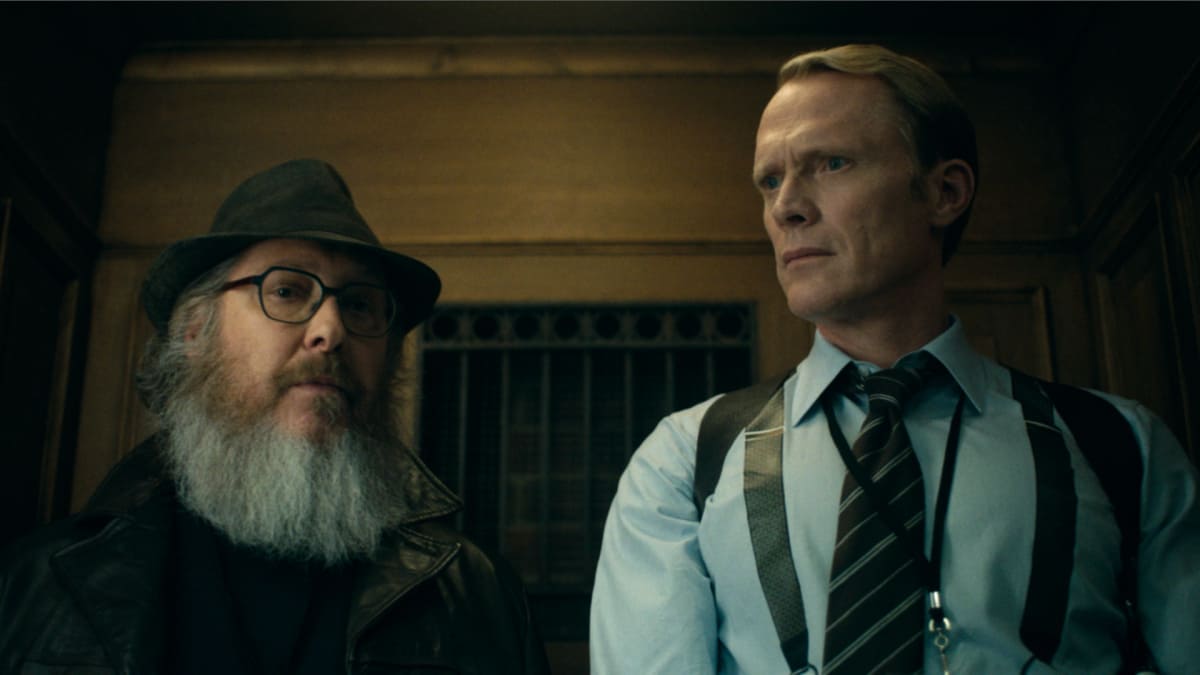
In VisionQuest, the synthezoid Vision (Paul Bettany) strives to answer the existential question: “Who am I?” Having survived as different versions of himself—as he frequently reminds us over eight hour-long episodes—Vision knows his reality is a little too convoluted after all this time. Is he Tony Stark’s original creation who, after acquiring a physical body, moved to Edinburgh with the love of his life before being killed in Avengers: Infinity War? Is he the same fella WandaVision‘s grieving Wanda (Elizabeth Olsen) conjured up with her supernatural powers, refashioning him as father to their sons Tommy (Ruaridh Mollica) and Billy (Joe Locke)? Or is he the reassembled, emotionless White Vision? It’s hard to keep track—a feeling any superhero fan with a Disney+ subscription can relate to. Vision’s dragged-out identity crisis in Terry Matalas’ series is emblematic of the one the Marvel Cinematic Universe faces as a whole.
Splintered by multiple phases, the long-running franchise has lived many lives in the almost two decades since it launched with 2008’s Iron Man. In its latest post-Avengers: Endgame and Disney+ iteration, Marvel has coughed up 14 live-action shows over five years (!) to try and fortify its big-screen blockbusters more than Netflix’s Defenders-verse or ABC’s Agents Of S.H.I.E.L.D. ever did.
2021’s WandaVision ushered in a TV experiment that promised in-depth, character-driven shows—perhaps wrapped in genres Marvel hadn’t explored on the big screen. But, with exceptions like Loki, Ms. Marvel, and the unjustly un-renewed Wonder Man, the novelty faded; the sheer volume of projects was exhausting, as was the effort to keep up with an interconnected universe of shows and movies. The lack of a streamlined strategy indicates they were throwing things at the wall to see what sticks. Since WandaVision did, it led to the spin-offs Agatha All Along and Vision Quest. And what is the MCU anymore if not a haphazard multiverse narrative persevering?
VisionQuest marks the end of the trilogy and offers a much-needed reprieve from Marvel’s live-action dramas until 2028’s Zodiac (and the final season of Daredevil: Born Again). VisionQuest best represents the current state of the MCU: its excessive philosophical treatise and overwrought subject matter require patience. The show ties into WandaVision and Agatha All Along by wholeheartedly diving into the complicated Maximoff family. After trying to evade his sons, Vision reunites with Tommy and Billy, and ponders whether his wife is alive (more on that in a minute). The series goes as far back as 2015’s Age Of Ultron because Vision’s nemesis/pseudo dad Ultron (James Spader) continues to reside in his Mindspace alongside Iron Man 2 and 3‘s J.A.R.V.I.S. (James D’Arcy), Spider-Man: Homecoming‘s F.R.I.D.A.Y. (Orla Brady) and Spider-Man: Far From Home‘s E.D.I.T.H. (Emily Hampshire), among other random AIs from previous movies viewers of WandaVision and Agatha may not have seen.
 Keep scrolling for more great stories.