Several years back, the three big console manufacturers realized two things about the financial burdens of running online multiplayer games in a modern gaming environment. One, that the whole system was expensive enough that they were going to have to start charging people to keep the servers connecting millions of active players running. And two, that actually extracting said charges was going to annoy their consumers sufficiently that manufacturers were going to need some bribes to make the whole thing go down smoothly. Sony and Microsoft opted for new (or at least new-ish) games as their dangling baubles, birthing their PlayStation Plus and GamePass models. Nintendo, true to form, looked backwards instead. The resulting Nintendo Classics catalog, originally launched for the Switch, now encompasses titles from most of the consoles Nintendo has produced over the years. (And even one that was once the hated competition, in the form of Sega’s Genesis.) The latest addition—exclusive to this year’s Switch 2—came in the form of titles from Nintendo’s purple little engine that couldn’t: The Nintendo GameCube. And it’s been kind of, well, underwhelming.
Anyone who’s poked into the GameCube library (only available to those shelling out extra for Switch Online’s premium version, by the by) can probably sum up the problem in just three words: “Is that it?” Admittedly, the library has more than doubled since it released with the Switch 2 back in June. But since it only started with three games (tried-and-tested titles The Legend Of Zelda: The Wind Waker, Soulcalibur II, and F-Zero GX), that means we’re rounding out the Switch 2’s first year with all of seven games on the service—pretty light for a library that’s supposed to be both a system and a subscription service selling point. At least the four new games that have trickled in over the last six months haven’t just been rote favorites, though, as Nintendo has instead gone with a more eclectic bunch: Super Mario Strikers!, Chibi-Robo! Plug Into Adventure, Luigi’s Mansion, and, just two weeks ago, 2003’s Wario World. When the most normal title on offer is either the oddball soccer game or the one where Mario’s brother moonlights as a low-rent Ghostbuster, you can tell that Nintendo is at least trying to steer into the GameCube’s weirdo charms.
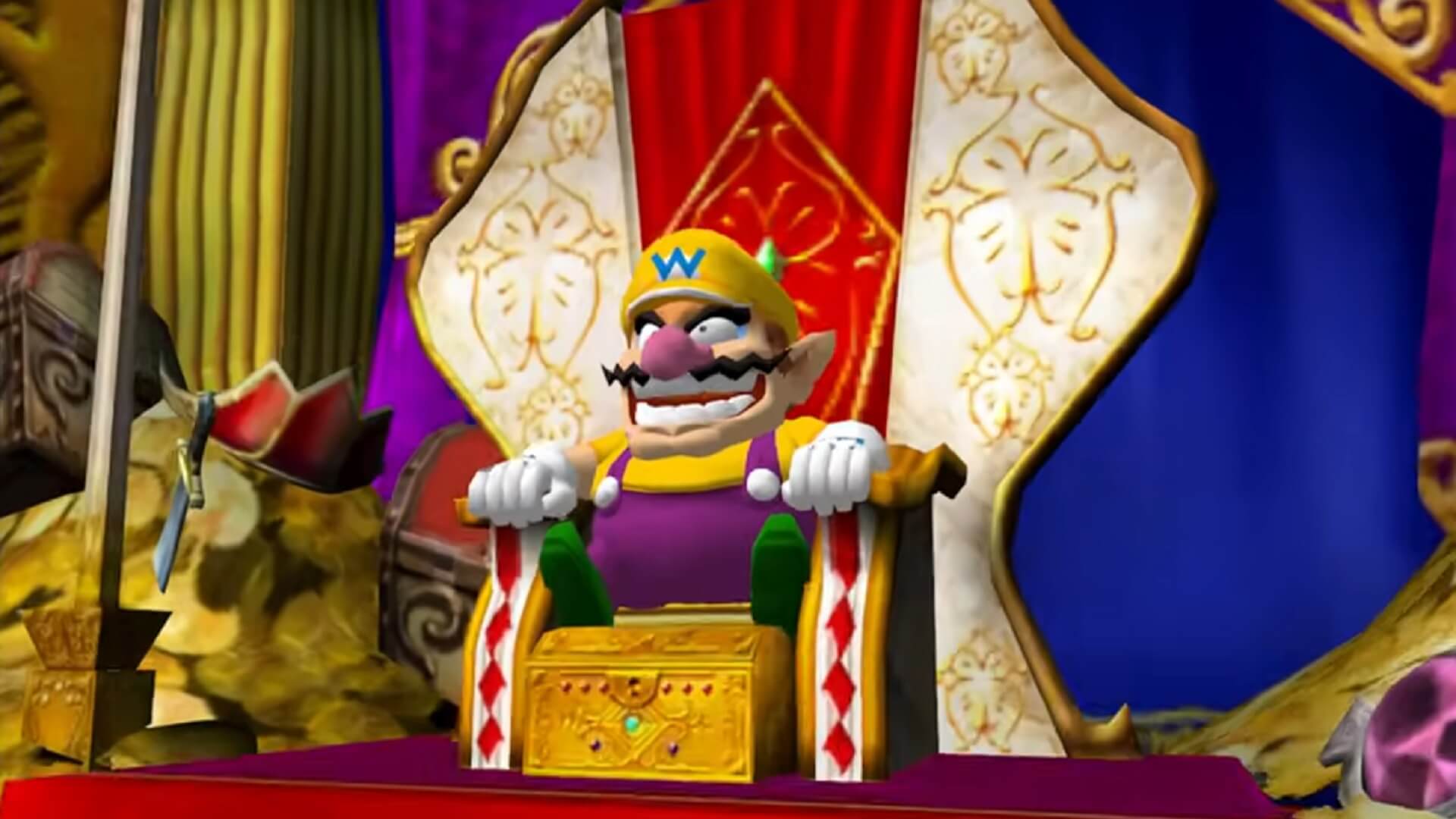
As someone mildly interested in Wario—which is to say, someone who once wrote a 2,250 word essay about why he represents all that is best in Nintendo’s spirit—I’ve spent a healthy chunk of time in recent weeks playing Wario World, a game that completely missed me on its first time ’round. What I’ve come away from it with is the impression I often get when tapping into all but the very best of GameCube offerings: “Well, that’s an interesting mess.” Not to, say, the extent of something like Odama—the game that asked players to use a microphone to control a rudimentary real-time strategy game while also playing soldier-smooshing pinball—but still a very familiar mish-mash of solid ideas and obvious “Who would think this was fun?” missteps.
The most important thing to know about Wario World—and one that would have helped me set my expectations more realistically before I first booted up the game—is that it was not primarily created by Nintendo’s legendary Research & Development 1, the team that created Wario, and then used him, across both the Wario Land and WarioWare games, to refine and present their evolving philosophies on game design. Instead, it was developed by studio Treasure, fresh off creating N64 cult hit Sin and Punishment, and it plays like it: Lots of hand-to-hand combat, slightly fuzzy platforming, and far less of the slapstick silliness that defined the Wario Land games. There are genuinely cool ideas in Wario World, including puzzle rooms that play with perspective and presage games like Super Mario Odyssey, a varied set of bosses, and the base thrill of seeing Wario bodyslam a bunch of dinosaurs. But it also lacks a big chunk of the character’s transformative charm, while feeling—in its all-important running and jumping—more like a Crash Bandicoot or a Spyro than anything with Nintendo’s fingerprints on it. The fluidity of movement that Treasure brought to bear so memorably with games like Gunstar Heroes is a much more complicated proposition when applied to the realities of a 3D platformer, and sending Wario plummeting down into what’s essentially a minute-long chore room every time I fell into a pit during my traversal of the game’s small number of levels quickly began to grate.
None of which, honestly, actually makes me mad to play the game, especially not in this format. If Nintendo is going to mine its past to sell multiplayer subscriptions, I’d much rather get a hard-to-find oddity like Wario World than my millionth playthrough of Super Mario Bros. 2 out of the deal. (On a similar note, I’m probably never going to actually play all the way through Ubisoft Montreal’s Tonic Trouble, which followed Wario World onto Switch Online’s Nintendo 64 library a week later, but I’m glad it’s there.) If there are any negative feelings about Wario World‘s inclusion, they come largely from how slowly Nintendo is dripping out games for the catalog: An interesting mess gets a lot harder to enjoy when it’s the only offering being presented, or when you get the sense that you’re getting it instead of a Super Mario Sunshine or a Fire Emblem: Path Of Radiance. (Both of which are supposedly coming out next year; meanwhile, I can’t help but wonder how long it’ll take Nintendo to finally give in and start teasing Super Smash Bros. Melee for the ‘Cube library. Or does the knowledge that they’ll basically never sell a new Smash game again once they give their audience its heart’s desire dampen enthusiasm?)
The GameCube was a weird little system that I loved a lot, mostly because it was home to so many games exactly like Wario World: Evolutionary sidesteps that couldn’t compete with other titles on strictly technological merits, and instead had to get stranger to stand out. I respect that Nintendo is curating a collection of these bizarre deviations; I just wish, six months in, that the resulting exhibit was a hell of a lot more robust.


 Keep scrolling for more great stories.