It’s hard to accept that the creative team that made one of the most sharply written games in recent memory, Disco Elysium, won’t make another. For those who didn’t follow the saga, the short version is thatZA/UM’s head business executives fired several key creatives at the studio, including lead designer and writer Robert Kurvitz, writer Helen Hindpere, and art director Aleksander Rostov.
Kurvitz claims this happened due to a power struggle over ownership of ZA/UM, one that left the business executives’ faction with a clear majority after they acquired another stakeholder’s shares. If that wasn’t enough, Kurvitz claims they raised the money to do this by stealing from the company; it certainly helps his claims that one of the producers involved in the alleged theft, Tõnis Haavel,had previously been convicted of investment fraud. In the wake of these firings, even more staff left, with many formingtheir own development studios geared at creating Disco Elysium’s “true successor.” To put it into numbers,according to Allen Murray, ZA/UM’s current studio head, only around 35% of those working on the company’s upcoming game contributed to Disco ElysiumFinal Cut.
Clearly, ZA/UM’s newest title, Zero Parades: For Dead Spies, comes with more than a little baggage. Every creative choice, every minor mechanic, prompts questions about what this project would have looked like if ZA/UM’s original creative team hadn’t been gutted by management. Recent history looms large, making side-by-side comparisons with Disco Elysium impossible to avoid.
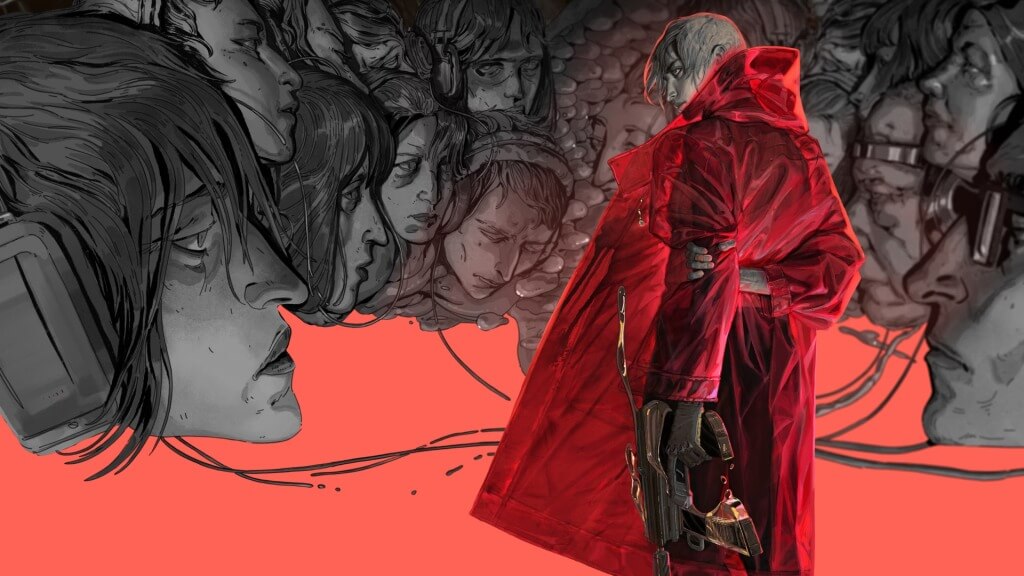
On the plus side, if we completely ignore these labor issues and broader context (something Disco Elysium argues against as a text), Zero Parades: For Dead Spies seems quite promising. This spy thriller’s first three hours quickly establish an intricate world inspired by the Cold War, as a power struggle between the communist bloc, the liberal “Developed Nations,” and the techno-fascist superpower of La Luz plays out in the formerly occupied nation of Portofiro. You play as Hershel Wilk (alias: CASCADE), a disgraced spy from the communist bloc whose previous assignment in Portofiro ended in total disaster. Finally redeployed after years in the “Freezer,” her latest mission goes off the rails before she even enters the picture. But when her handler tries to pull the plug, CASCADE decides to press on; more than just staging a comeback, she wants to finally make peace with what happened to those closest to her all those years ago.
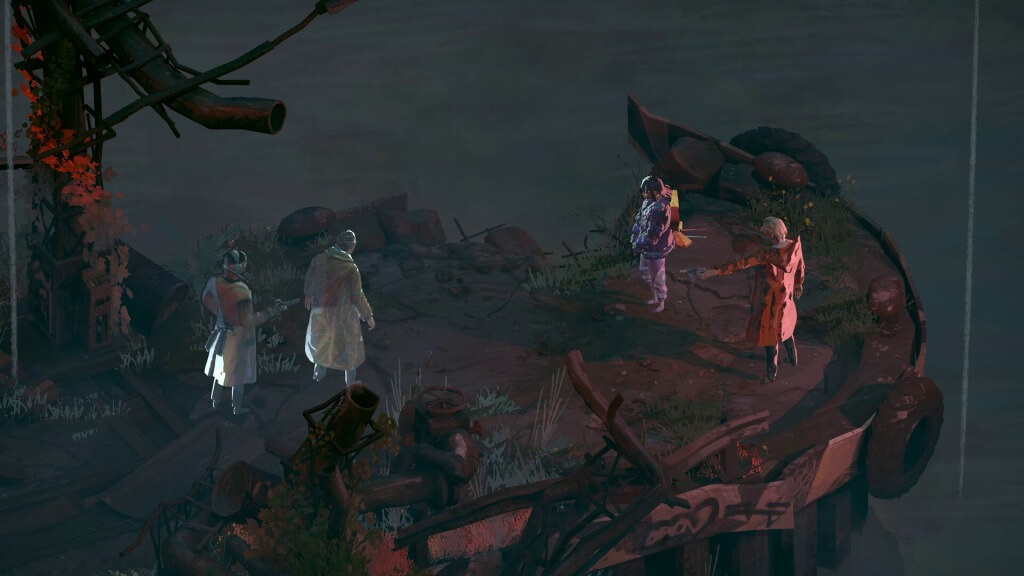
It’s a strong setup, and one that the game wastes no time in exploring, as a cold open literally puts us in CASCADE’s headspace. Much like Disco Elysium, her inner monologues are a Greek chorus of conflicting personas, with each reflecting aspects of her psyche. As they bicker or offer context, it becomes clear just how much this feels like a direct successor to the studio’s previous game. Other similarities hammer this home: the UI layout is the same; its art style, while a bit less hallucinatory, still has the look of a lived-in oil painting; and its central structure, where you pursue various open-ended leads in a sprawling mystery, is repeated verbatim. Again, Zero Parades isn’t afraid to directly evoke Disco Elysium.
This invitation for direct comparison backfires most notably with the game’s prose; it just doesn’t have the same weight. While CASCADE’s conflicting inner thoughts still impart her complicated brand of self-hate to the player, they don’t come with the same razor-sharp humor or sense of delirious unreality as Harry’s messed-up mind. This is definitely by design to some extent, given the differences in these characters—CASCADE hasn’t melted her gray matter with a lifetime of alcohol abuse—but even the more disembodied narration isn’t quite as poetic. Again, it’s still more evocative than what you’ll see in the vast majority of other games, even most narrative-focused ones, but it doesn’t have the same bite so far.
On the flip side, Zero Parades’ whole detective RPG element compares favorably to its predecessor. The basics work the same: like in a tabletop game, you have to perform dice rolls to determine if an action is a success, with your chance of victory corresponding to the stat relevant to that action. For instance, if you’re trying to escape someone tailing you, having a high Shadowplay stat will make it easier to sneak past.
The big difference is that in addition to this, you also have to constantly wrestle with three detrimental status effects: fatigue, delirium, and anxiety. There’s a push-and-pull between stat checks and these effects because, during any roll, you can “exert” yourself to gain a higher chance at success, with the cost being that you gain more of one of the afflictions. If your bar for any of these conditions fills up, you’ll permanently lose a point from one of your skills. It’s a brutal penalty, and one that will need to be carefully employed in the full game, but it incentivizes tracking down resources that can lower these status effects. And of course, these often come with their own trade-offs, like Study Pony cigs, which give -5 delirium but +2 fatigue, adding another layer. The constant push and pull of these status effects, which can cause permanent harm to your stats, captures the stress of CASCADE’s unforgiving profession.
Another cool idea explored in the demo is that during pivotal moments, you’ll encounter multi-step skill checks that call to mind Disco Elysium’s climactic duel against mercenaries; in this case, you’ll be doing spy stuff instead of (probably ineptly) trying to shoot fascists. It goes a long way in making clear that, much like how Harry is a great detective deep down, the self-flagellating CASCADE fundamentally understands spycraft.
Ultimately, it remains to be seen whether Zero Parades: For Dead Spies’ similarities to its predecessor will offer a foundation for something comparably special or if this overlap will mostly just remind us of what could have been if the ZA/UM Cultural Association stayed together. Following up on Disco Elysium is a near-impossibly tall task. Let’s hope corporate meddling doesn’t make it even harder.


 Keep scrolling for more great stories.