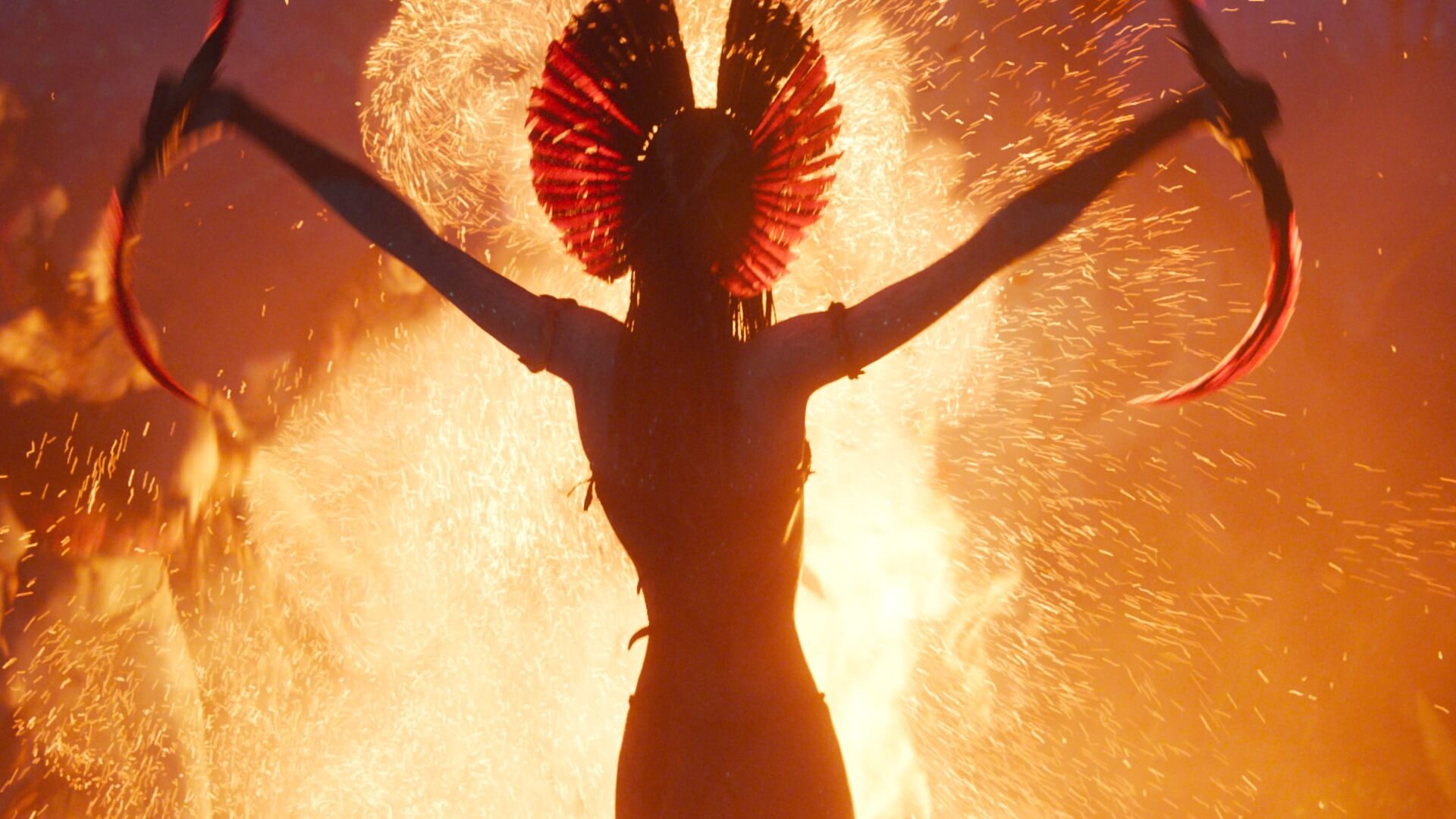
Jake and Neytiri don’t get especially frisky in Fire And Ash. The pair mourn their dead son and work through some marital problems. Instead, it’s a new character, Varang, leader of the volcano-dwelling Mangkwan Clan, played by Oona Chaplin, who shows a more unbridled side of the Na’vi as she sparks an unlikely relationship with the recombinant Colonel Miles Quaritch (Stephen Lang). After narrowly escaping the Mangkwan, Quaritch decides to walk right into the ruins of their hometree in an attempt to make an ally out of these aggressive Na’vi. He offers guns and human weapons to Varang. Intrigued, she responds by drugging Quaritch so that he’s higher than a Toruk, doing some light blade play as she cuts his chest while explaining her clan’s backstory, and forcibly connects her hair tendrils with Quaritch’s.
It’s a shocking moment—given how Na’vi use their hair tendrils to ride space horses, it’s not (just?) a sex thing, but there’s a display of power and lack of consent to Varang’s actions that feels like assault. Varang seems dangerous in a way that we haven’t seen before in Avatar. The humans were driven by greed and militarism, the rest of the Na’vi by tradition and respect for nature. Varang is more carnal. And Quaritch? He is super into all of this. Chaplin goes for it with her performance, so you can see where Quaritch is coming from. If some people walked away from the first Avatar deeply depressed because they desperately wanted to live on Pandora in real life, there are going to be some who walk away from Fire And Ash thinking “I could fix her.”
In his human life, Quaritch was a devoted soldier. The flora and fauna of Pandora had no appeal to him and the Na’vi were just a threat to be assessed and dealt with. It’s Varang who seduces him, literally, into “going native.” Before long, he’s painting himself Mangkwan colors and lying in bed, post-coitus, with Varang. The sex isn’t just an excuse to show some blue skin; it’s effective characterization. Quaritch and Varang are uninhibited in ways no previous protagonist or villain from the past movies has been—and the bad guys who aren’t horndogs come across as cartoons in comparison. Having Quaritch indulge in pleasure of the flesh makes him feel more like a real flesh-and-blood person than his cloned body imbued with the memories of a dead man might otherwise suggest.
Even if it’s clear from his filmography that what really gets James Cameron going is his true love, the ocean, he understands how and when to deploy sexuality in his films—think of the hand on the car window in Titanic. “Horny” was a lever that the Avatar franchise hadn’t yet pulled, and Cameron finally yanked it for this third film. Naysayers ding Avatar for simply rehashing old tropes, and yes, a hot, volatile, goth who someone might throw it all away for is certainly an established character type. But Cameron clearly knows what he’s doing with Varang, just like he knows what he’s doing with all his other familiarities. The success of the Avatar franchise at large, with all of its well-trod Dances With Wolves beats, proves that it’s not always about what you’ve got, but how you use it.
Avatar: Fire And Ash is a somewhat unlikely film to use as an argument for the importance of sex in cinema. But as debates about the necessity of sex scenes still flit around the discourse, the new Avatar movie benefits greatly from not being prudish. Neither Quaritch developing along a complex arc nor Varang selling out of her own people would have worked half as well if the pair had agreed to trade guns with a firm, respectful handshake. By getting their freak on, the villains became more convincing than ever.


 Keep scrolling for more great stories.