There is perhaps no entertainment environment more hostile than the Netflix queue, where there is no sense of proportion and hits are gleefully buried in junk. In this endless cascade, few additions to the streamer’s library feel like a true event. While the company is savvy enough to celebrate its hits and fete their respective fandoms, its longstanding all-episodes-at-once policy and sheer volume of original shows and movies means that it’s impractical to make too big a fuss over anything, give or take a Stranger Things. At the end of the day, Netflix is a tech company and its business is engagement farming, compelling subscribers to keep their queues filled. From that perspective, one show is just as good as another as long as you keep watching.
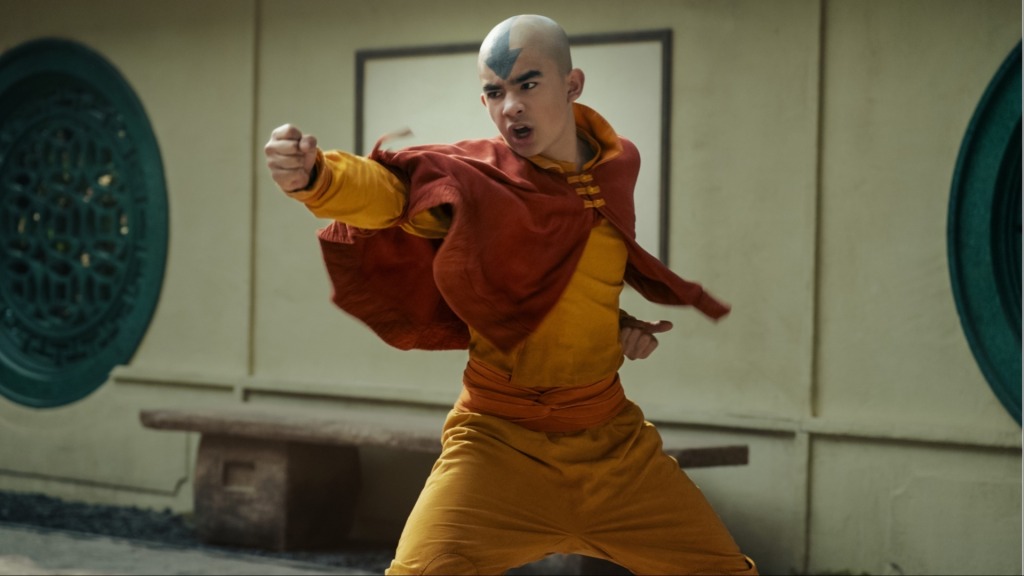
Netflix did, however, make a fuss of its plans to adapt the celebrated Nickelodeon series Avatar: The Last Airbender. A highwater mark in 21st-century animation, Avatar was a generational phenomenon, beloved by children and adults alike across a three-season run that only grew in estimation over time thanks to DVDs and, well, Netflix, where it once went on a two-month run as the most-watched show on the streamer. Netflix has long courted that passionate audience, announcing a “reimagined” live-action Avatar in 2018 with the involvement of the original’s creators, Michael Dante DiMartino and Bryan Konietzko.
But what seemed like a can’t-miss prospect quickly became arduous. DiMartino and Konietzko would depart the project in 2020. New showrunner Albert Kim would spend four more years shepherding the series to screens, the end result being a dour, plodding take that was either party to or unwittingly aligned with the definitive TV trend of the late 2010s: The desperate, foolhardy race to find the next Game Of Thrones.
This is a terrible fate for a landmark work of millennial pop culture, a show that, despite its influence, has been thwarted in every attempt at franchise expansion. Quality isn’t necessarily the issue—while the failure of M. Night Shyamalan’s The Last Airbender put Avatar movies on ice for a while (at least the sort not made by James Cameron), the sequel series The Legend Of Korra largely managed to live up to its predecessor’s high standards. Production of that show, however, was notoriously troubled, as an aggressive production schedule led to inconsistent animation and the latter half of the show became difficult to watch at all after Nickelodeon pulled the show from the air to stream exclusively on Nick.com.
Avatar‘s entire life after its 2008 finale is like this, a series of fumbles that speak less of the show’s stature and more to the diffuse and incoherent manner of television’s transition to streaming. Nearly every misstep can be attributed to studios’ and tech companies’ efforts to consolidate intellectual property and conquer their competitors in the streaming wars.
Promising creative decisions have almost always been matched with questionable business ones. Following their departure from the Netflix adaptation of Avatar: The Last Airbender, DiMartino and Konietzko were put in charge of Avatar Studios, as then-parent company Paramount wanted to leverage the franchise to fuel its ambitions for Paramount Plus. The news from the studio thus far has been a familiar mix of exciting and frustrating. A trio of theatrical animated movies were announced alongside a second proper sequel series, Avatar: Seven Havens. Paramount’s acquisition by Skydance Media in 2025 changed those plans, and the first project out from Avatar Studios, the film Avatar Aang: The Last Airbender, was shunted from the theatrical slate to Paramount+’s, a move that was further sabotaged when a hacker leaked the film in its entirety, taking the wind out from under the Airbender’s return. The movie is still slated to stream this coming fall, but its reception will be muted at a critical moment, as Paramount Skydance awaits its acquisition of Warner Bros. Discovery to be finalized, a destabilizing deal that will give Avatar Studios’ overseers a lot more IP to capitalize on at a time when companies (like the one Paramount Skydance is gobbling up) are happy to shelve projects rather than release them.
Beloved works being franchised poorly is no great tragedy. It is a feature of the streaming era, where no movie or show is too valuable to escape being ground down to mediocrity by the relentless content machine. If Star Wars can be reduced to forgettable cruft, anything can. This is just what happens when stories become IP, and as the pop cultural reign of superheroes begins to wane and the search for a new Game Of Thrones appears to be fruitless for anything outside of more Game Of Thrones (and what success there is to glean there remains shaky at best), every franchise is an IP first and a story second.
Which brings us back to Netflix’s Avatar: The Last Airbender. With its second season now streaming, new showrunners Christine Boylan and Jabbar Raisani handily clear the low expectations set by the first—the show is more colorful, its cast older and more comfortable, and the live-action series finds its footing at roughly the same pace the original did, even if it has many more deficiencies to overcome. It is still, however, more IP than show, better than its needlessly severe first season but wildly out of touch—like a sports team throwing a parade to celebrate a championship season that’s several years in the past.
Avatar: The Last Airbender really could have been a hit, the kind of hit that the studios and executives overseeing it want, the kind of hit that even Michael Dante DiMartino and Bryan Konietzko, in their ceaseless endeavors to make sincere and integrous sequels, may also believe the franchise deserves to be. For a generation of millennials who came of age surrounded by the superheroes of the mid-20th century and the bands and brands of the 1980s, Avatar is one of the few hits that sprang to life in their lifetime. Its Asian and Indigenous influences would presage a mainstreaming of anime and international pop culture, widening the bounds of mainstream acceptance and the push for greater onscreen diversity in the 2010s. Avatar: The Last Airbender could have been millennials’ Star Wars. It could have been as big as a Marvel movie. Instead it was bowled over by the same business logic that those brands to their currently humbled states.
It’s still possible, of course, that Avatar endures just fine. Seven Havens sounds like a promising show; DiMartino and Konietzko remain exciting creators. But when the new show is finally released, it will inevitably look like the thing that Avatar once stood in contrast to: a franchise beloved by a previous generation, clinging to modern relevance thanks to the cynical largesse of a corporation that won’t let go.


 Keep scrolling for more great stories.