
Bad Bunny collaborator Stillz leaves Latin superstars and music video affectations behind for Barrio Triste
A music video phenom resists an era of pop excess with a searing work about desperation.
Photo: Film Movement
Consider the plight of the modern music video director. Like everything else, music videos have been reduced to content, indistinguishable from a Hot Ones interview, a movie trailer, or a clip of a streamer saying something provocative, just grist for the algorithm. Add to that the complication of being a derivative work—few show up for the filmmaker, but instead for the artist featured, who is also likely struggling in a landscape that’s devalued their work. The solution has been to make videos that are statements, recent examples being Madonna’s “Confessions II” as a 14-minute reclamation of her “Vogue”-era dancefloor throne, or Olivia Rodrigo heralding her The Cure-inspired return by prancing around The Palace Of Versailles in “drop dead.”
Even in these difficult circumstances, Stillz has managed to service the needs of megastardom while slowly building out his own signature style. Born Matías Vásquez, the Colombian-American filmmaker was an early collaborator with Puerto Rican superstar Bad Bunny, earning him instant notoriety at the peak of Spanish-language pop music’s mainstream ascendance. That early creative partnership with Bad Bunny proved Stillz was adept at the sort of visual mythologizing today’s market demands, working jointly with the rapper to develop the Young Benito persona that would define the publicity cycle for his sophomore album, YHLQMDLG. Stillz’s early attraction to—and continued collaboration with—artists interested in metatextual storytelling has served his career well. But it’s also burdened him with a question endemic to his field: How much of a creative force is Stillz himself, and how much is his success due to his willingness to facilitate the vision of his subjects? In this, he faces the same predicament that has been confronted by countless music video directors before him, as he channels his clout into a debut feature film: Barrio Triste.
While the cinematic pantheon is full of filmmakers who made this transition with aplomb—Spike Jonze, Jonathan Glazer, and David Fincher all come to mind—it’s still accompanied by a healthy amount of skepticism to overcome. The assumption is one of style over substance, as the arresting aesthetic choices that make a music video pop do little to indicate how well a filmmaker can sustain a feature-length effort. Stillz does this by ditching his extravagant side entirely.
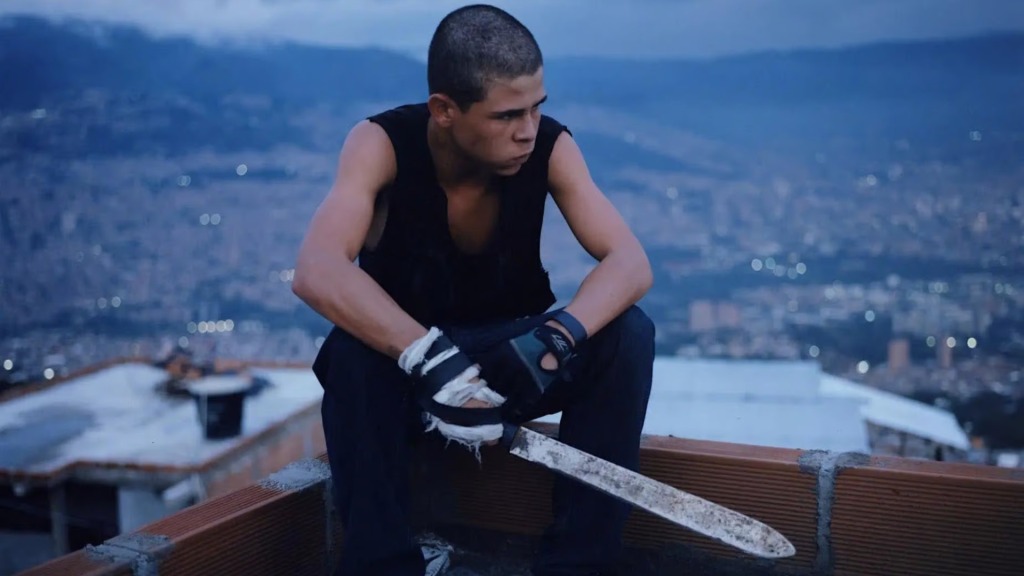
Barrio Triste is a loose, found-footage crime drama about young men living on the outskirts of Medillín, where boys disappear regularly and a life of violence feels all but inevitable in the struggle to survive. The film begins with a newscaster about to shoot a segment on location, only to be mugged by Caneco (Brahian Acevedo) and his gang of friends, who decide to keep the camera and document their lives, up to and including a robbery gone wrong. Haunted by the violence of their actions and the innocence they were denied, the subjects of Barrio Triste spiral into a deep melancholy, the film cutting between self-shot confessionals and lonely wandering through the eponymous neighborhood. The dispassionate, amateurish camera captures the strangeness of life on the margins and the fantasies conjured by the boys—a private hell shared publicly.
 Keep scrolling for more great stories.