In Home For The Holidays, The A.V. Club takes a closer look at the pop culture that most feels like home, brings our families together at this time of year, or represents a broader cultural homecoming. For the second installment, news editor Drew Gillis talks to The Book Of Mormon cast about returning to a cherished ensemble on the show’s 15th anniversary.
A couple of weeks into his return to The Book Of Mormon, original cast member Rory O’Malley decided to do something nice for the cast and crew: He ordered Krispy Kreme donuts ahead of the show and let the team backstage know that he was expecting a food delivery. “Being the old man that I am, I didn’t know that I needed to give them a code when they dropped off,” he tells The A.V. Club a few days later. During “All-American Prophet,” while dressed as the angel Moroni, he stepped off stage to a frantic stage manager asking him what the code was for the courier. “So I had to run under the stage, and everyone there was like ‘What are you doing here!’ They thought I totally lost it. I didn’t know where I was. I was just a lost old man who didn’t remember where I had to go.” But, after playing the role on Broadway from 2011 until 2013, O’Malley is a seasoned pro. He made it to the stage door, begged for the donuts, retrieved them, and made it back on stage before the number was over.
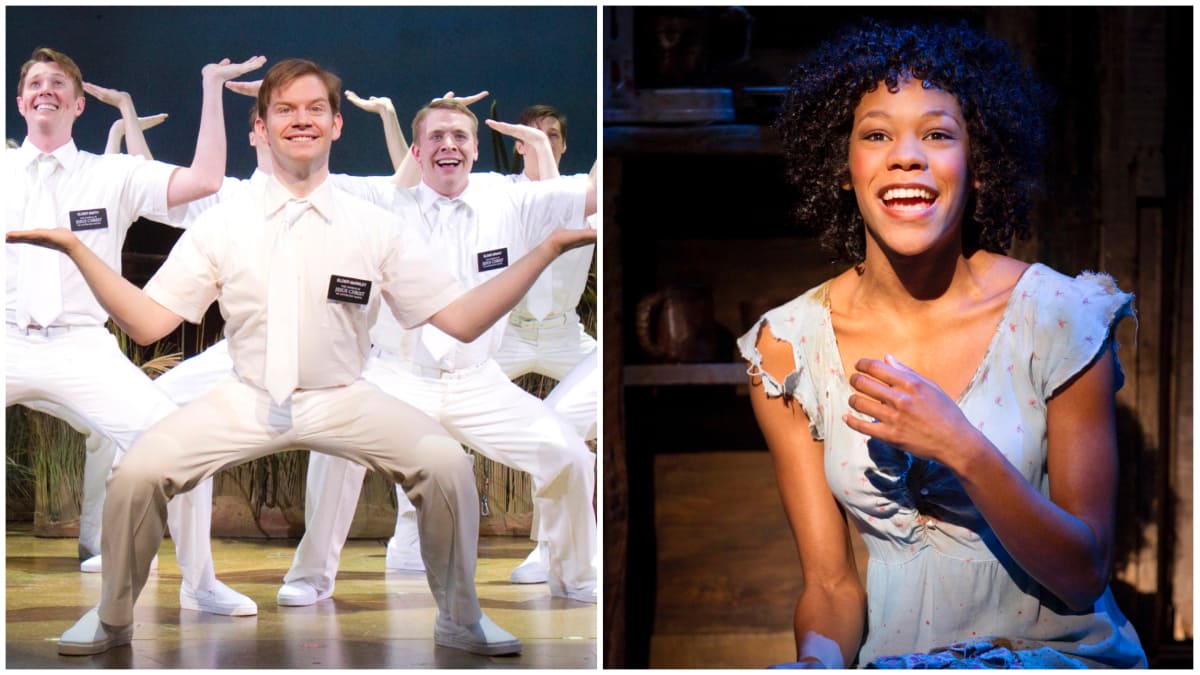
O’Malley is one of two original Broadway cast members currently back in The Book Of Mormon as the show marks its 15th year playing in New York. He’s joined by Nikki M. James, who originated the role of Nabulungi and won a Tony for it in 2011. “It felt crazy to be part of a show that leapt out of our ecosystem, that was being talked about outside of our industry,” she reflects now. The Book Of Mormon, created by the writers of South Park and the composer of Avenue Q (and, later, Frozen), is an often caustic comedy that follows two young Mormon missionaries as they’re sent to Uganda. It is now the ninth-longest-running show in Broadway history, ahead of Rent and Mamma Mia! and gaining quickly on A Chorus Line. “It’s in the zeitgeist,” says James. “It left New York, it left the Broadway community. People who were not into theater were coming to see it. I think that’s part of the legacy.”
Both James and O’Malley, who originated the role of Elder McKinley, joined the production early on in workshops, meaning they spent several years on the show. James initially agreed to participate in a two-week reading with Trey Parker and Matt Stone because she was working on a show in Canada and needed Equity weeks to keep her health insurance. “They’re not going to send you the script, and they’re not going to send you any music ahead of time. They just need to know that you are okay with the irreverent nature of their comedy,” she remembers her agent saying on the phone. She was already a fan of South Park, and the call had “so many caveats that I was curious. I’m sure a lot of people got that call and were like, ‘No, thanks.'”
O’Malley, meanwhile, was working as a temp at Black Rock Capital when he got a similar call; he had actually heard rumors of the project thanks to a cousin who lives in Utah. O’Malley quickly agreed to do it. “I got a call, like, the next day from [composer] Bobby Lopez, who I was obsessed with because of Avenue Q, saying, ‘Are you okay with a song that is basically: Eff you, God?‘” he recalls. “And I said, ‘Well, did you guys write it? Because if you wrote it, I know it’s going to have a reason and be funny.” O’Malley continued his temp job for the next three years while workshopping the show, turning down other offers to be sure he was always available for Stone, Parker, and Lopez. “It was so romantic. It was like a secret we couldn’t tell anyone. It was ours. It was very intimate,” he remembers of this period. “It was so special and so joyful and romantic.”
Even before the show officially opened, figures in the New York theater industry had their eyes on it. Stephen Sondheim was an early fan of the show, coming to a pre-opening presentation. “He was buckled over in laughter. Like, buckled over,” remembers James. “And of course he was!” Bill Hader was an early admirer; O’Malley remembers performing one night for Bono. And the show quickly became about as successful as a musical can be. Mormon won nine Tonys and spawned several tours and international productions. As of June 2024, it was estimated that 20 million people have seen the show worldwide; the New York production alone has grossed over $900 million.
Since James and O’Malley were last in the show, some changes have been made. Some of the jokes have been swapped for more current material, like a quip about Jeffrey Epstein being in Hell. Elsewhere, the presentation of some of the Ugandan characters was changed when the show reopened in 2021 after many of the show’s actors pressed to clarify the satire and to give the characters more agency. Many of these changes, including a pivotal climactic moment, affect Nabalungi the most, and James has been supportive of the changes, even as it means learning some new lines that weren’t in the script when she left the show. “It’s fun for me,” she says.”It’s kind of like the show being like, ‘You think you know me, but I’ve grown up too, Nikki.'”
Broadway in general has changed quite a bit since Mormon opened. Performers often have an expectation now to be active on social media; the financial model of Broadway seems to get harsher by the month. (Not to mention the advent of delivery apps for Krispy Kremes.) “I think it’s gotten more challenging financially in so many ways, but I also think it’s gotten a lot stronger and that there’s a lot more communication in terms of the younger people speaking up about what they want and what they need,” O’Malley reflects. “And I admire them for taking the stand on a lot of stuff. I’ve learned a lot from the generation below us coming in.” And the younger performers are surely learning a lot from having O’Malley and James back at the Eugene O’Neill. “Beyond the fear and the body aches and the I’m-older-than-I-used-to-be, it’s really just fun to tell this story. It’s fun to be in this show. It’s amazingly fun to be in this theater,” James says. “15 years later, people are still laughing because they haven’t heard it.”


 Keep scrolling for more great stories.