In September, two months before the release of David Fincher’s latest film, The Further Mis-Adventures Of Cliff Booth, news broke that the director would not renew his contract with Netflix, ending their 13-year partnership. During that time, he made three movies, shepherded numerous television shows, and watched his reputation for capturing the zeitgeist fade.
Netflix’s algorithms can be a black hole that reduces whole movies to a thumbnail, as budget-intensive releases like The Electric State, The Cloverfield Paradox, and Damsel attract millions of unverifiable views, then disappear almost as quickly as they appear in Netflix’s carousel. It has become increasingly rare for any of Netflix’s output to enjoy the sustained cultural conversation of a You Can See Everything or The Odyssey or The Invite. Even passion projects from Alfonso Cuarón and Martin Scorsese vanish after their Oscar hype dies, finding refuge in the Criterion Collection, lest they end up like Bardo, False Chronicle Of A Handful Of Truths, or, really, any of the movies David Fincher has made for the streamer.
Cliff Booth, a movie directed by David Fincher, written by Quentin Tarantino, and starring Brad Pitt (reprising his Oscar-winning role from Once Upon A Time… In Hollywood), should feel like a cultural event. Yet some chains are reluctant to give up IMAX space to a film most people don’t seem to know exists—let alone give Netflix an easy win in a so-called “outmoded” movie theater. This will be Fincher’s most robust theatrical release since Gone Girl, and it’s just a two-week run in 500 IMAX theaters globally. For audiences, Cliff Booth is a head-scratcher to some and nonexistent to the rest. Once a month, my dad, a man cursed to watch every Netflix movie with a man holding a gun in the thumbnail, calls to ask me when the next Quentin Tarantino movie is coming out. Every month I remind him about The Further Mis-Adventures Of Cliff Booth, and before I can say, “Popinjay Cavalier,” he asks, “What’s that?”
It wasn’t always like this: Netflix built its house around David Fincher. After shopping a remake of the British show House Of Cards to HBO, Showtime, and AMC, Fincher brought it to Netflix in 2012. The streamer looked at the data and found high completion rates for movies starring Kevin Spacey and movies directed by David Fincher. It was a good bet. The show was a monster success, one Netflix would replicate over the next decade, both in deciding its projects and, aesthetically, aping Fincher’s clean lines and chilly tones for true-crime documentaries and biodramas about sexy serial killers. It became Netflix’s house style. Unsurprisingly, Fincher’s signature work from this era isn’t a movie at all. It’s a TV show about our cultural obsession with killers: Mindhunter.
Since signing with Netflix in November 2020, Fincher has directed three films: Mank, The Killer, and Cliff Booth. The jury is still out on the latter, but the first two have been largely forgotten, an uncommon fate for a filmmaker who so frequently defined our culture. Over the last 30 years, few directors have given us a vocabulary for American society quite like David Fincher. Paul Rudd isn’t aging in reverse; he’s Benjamin Button-ing. Sherri Papini didn’t simply fake her own death; Fincher and Gillian Flynn made it so that she Gone Girl‘d her husband. Even Fincher’s lesser-known works, The Game and Panic Room, became cultural shorthand, and The Social Network went from its dismissive, pre-release reputation as “The Facebook Movie” to become the canary in the coal mine for the social media age. But after Gone Girl became his biggest box-office hit, his work became, like Fight Club, something that’s not talked about.
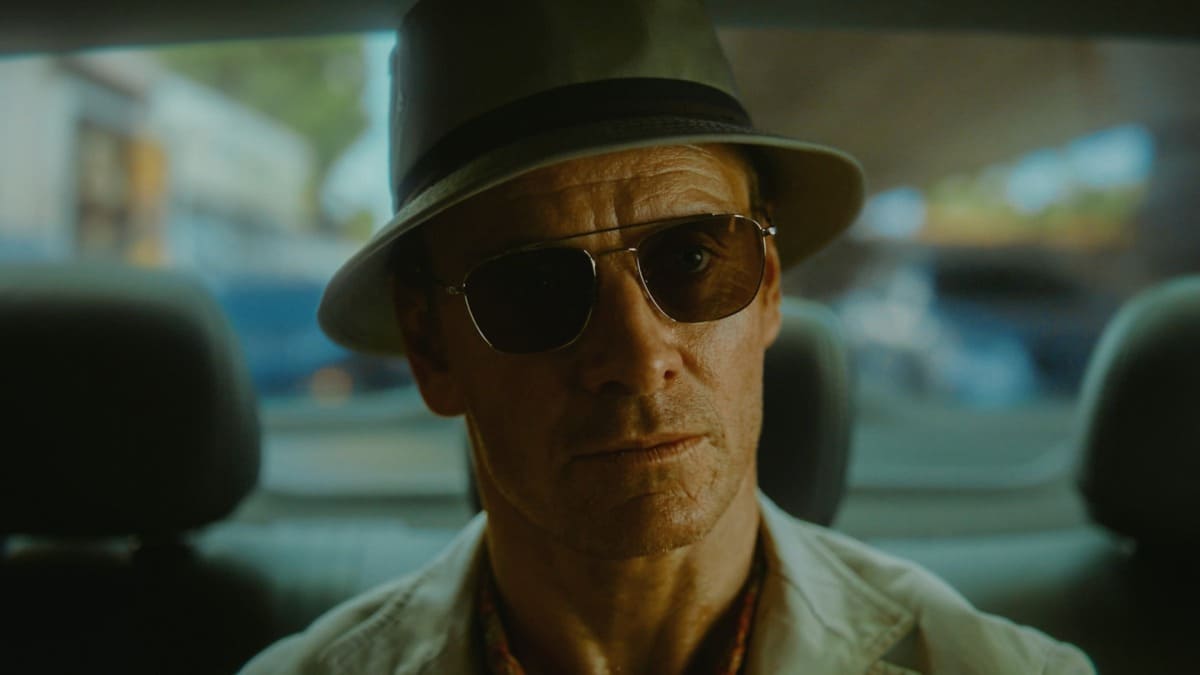
Still, Fincher’s Netflix output is worth reconsidering, if only because it’s among his most personal and insular. Written by his late father, Jack Fincher, Mank dramatizes and editorializes the events that inspired Herman Mankiewicz to write Citizen Kane. Mank is a movie about the burden of talent and being a cynical cog in the dream factory’s machine. It’s Fincher’s first movie about making movies and the thorny world of looking for credit in a business where art is made by committee. With The Killer, Fincher assumed the perspective of a gig-working assassin, who slips through the cracks of a tech-enabled world where avoiding others is easy if you try. (Sort of like a certain exacting director contracted to a tech company.) It’s a film best known for its opening sequence, in which The Killer (Michael Fassbender) meticulously plans one perfect shot, only for an extra to screw it up by moving out of position. As he slays his way through the supply chain, the Killer reminds himself of his mantra, narrating rules for survival to the audience—like an aged-up and even more pathetic Edward Norton in Fight Club—and consistently failing to abide by them.
Now, Fincher’s pitch-black but somehow rollicking Hollywood hangover, The Further Mis-Adventures Of Cliff Booth, his first sequel since Alien 3, is Once Upon A Time‘s dark inverse, a type of No Country For Old Stuntmen. But it’s also a film deeply in conversation with Fincher’s previous two straight-to-streamers, where credit isn’t something fought for and the magic of the movies has been drained out of southern California. It’s a movie that claims “movies are a trap” that do nothing for your career. Like The Killer before it, Cliff Booth is the work of a director reckoning with the movies he’s made, the characters he’s built, and the industry that’s changing too fast—and doing so with his typical irony, sarcasm, and provocations. Booth loads the film projector and switches on the dot like Tyler Durden before hitting a sprawling and hazy urban landscape reminiscent of Zodiac. Only this time, despite being twice as psychotic, Booth has slowed down in his old age and spends his downtime icing his aching hips. Booth has something to lose and people to love but no future in sight. It’s a fitting and bleak choice for Fincher’s final movie at Netflix.
The lack of cultural penetration attained by Mank and The Killer makes logical sense. Most notably, they weren’t liked much upon release. But that’s hardly anomalous for Fincher. Zodiac was mostly ignored in 2008, Fight Club bombed, and The Girl With The Dragon Tattoo doomed a proposed trilogy on its opening day. But these films had the benefit of a full theatrical run and a subsequent release on home video. Fincher’s work blossoms upon rewatch and becomes even more enjoyable through their special features. But the secrets of how Mank and Cliff Booth were made are also trapped in a walled garden, obscured by an algorithm too busy with what’s next to help viewers dig deeper into what they just saw.
Yes, Netflix gave Fincher the budgets and time to stage adult dramas. Other studios balked at the filmmaker taking 11 hours to get a single shot for Mindhunter; Netflix gave him two seasons. The streamer gave him everything he wanted, and it revealed the limitations of its reach. Without the sustained conversation of a real theatrical release, where people can argue about whether Gone Girl is sexist or if Benjamin Button is too schmaltzy, Fincher’s movies blend into the carousel of the endless array of Fincher lookalikes that’re already streaming. “This is a business where the buyer gets nothing for his money but a memory,” Louis B. Mayer (Arliss Howard) says in Mank. “What he bought still belongs to the man who sold it. That’s the real magic of the movies.” Maybe working in a different garden, under a different set of restrictions, Fincher can make magic again. But with his now-familiar cinematic sneer, Fincher closes Booth—and his time at Netflix—on Pitt, offering a pithy kiss-off: “This don’t mean sh-t to me.“


 Keep scrolling for more great stories.