Of the various projects that have been successfully based on video games over the last few years, few embody what we think of as the “Xerox Of A Xerox” paradox more than Peter Berg and Taylor Sheridan’s planned Call Of Duty film. See, there’s this whole run of modern video games that got big largely because they finally managed to successfully import the beats of popular films into a playable medium, as players of The Last Of Us got to shoot and sneak their way through a well-made zombie movie, while Uncharted fans were propelled through an explosion-heavy and exotic action adventure. When those imitations then get fed back into the Hollywood machine, your best-case scenario is usually just something with a spark of creativity to it, like the Last Of Us TV show; worst case, you get Tom Holland hanging off of stuff while Mark Wahlberg yells at him.
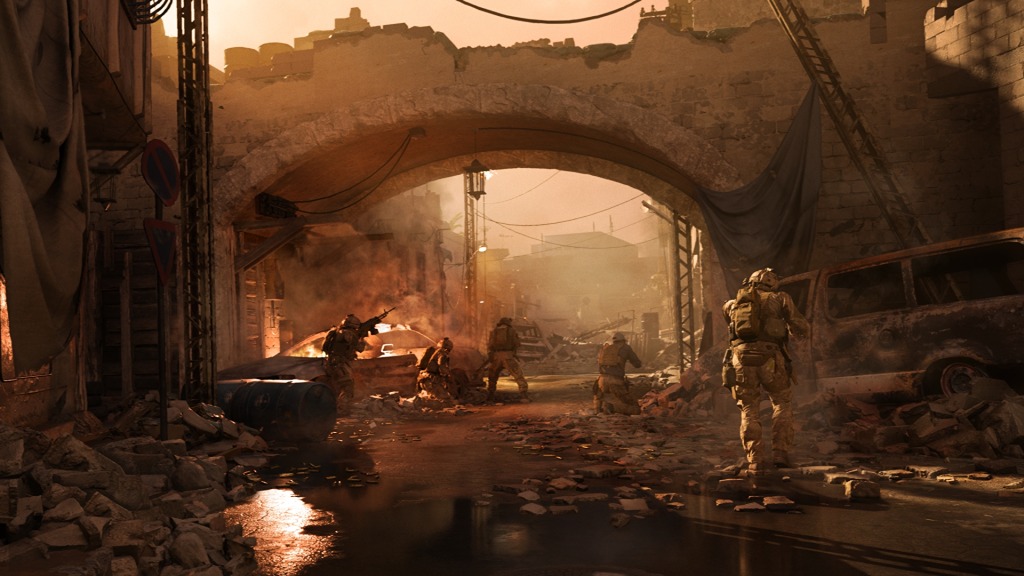
All of which we found ourselves thinking about today as Berg popped up at Fanatics Fest in New York on Saturday (per THR) to drop a few plot details about what he and the Yellowstone creator are getting up to with their adaptation of the massively bestselling shooter franchise. That primarily meant the reveal of which of the many settings in the larger Call Of Duty series Sheridan has picked to drop his story into, and, wouldn’t you know it, they’ve gone with the massively successful Modern Warfare. Which leads us back to our original question: If you’re making a modern-set war movie based on a video game based on modern-set war movies, what have you actually accomplished?
Of course, it was probably always going to go this way: Although Call Of Duty kicked off way back in 2003 with games set during World War II, the franchise only became culturally dominant with the first Modern Warfare game, Call Of Duty 4, in 2007. Lifting visuals and vibes liberally from films like Black Hawk Down (and nailing online multiplayer for a host of increasingly web-enabled consoles), the game was an enormous hit, kicking off a wave of military shooters set in slightly fictionalized modern conflicts. And while Call Of Duty has flirted with other settings since—including trying to get a future-set sub-series off the ground—it has returned to Modern Warfare so reliably that gamers have had to suffer the indignity of there being not one, but two video games published this century titled Call Of Duty: Modern Warfare 2. (Technically, though, they did use Roman numerals for the second one.)
The upshot is that the film—slated for a June 2028 release, with Berg directing and co-writing with Sheridan—is probably going to wind up looking like, well, a modern-set war film, albeit one where the franchise might get kind of bored after a few years and try to shoehorn some zombies in around the edges.


 Keep scrolling for more great stories.