Well, it’s halfway through the season, and we’re starting to get somewhere. Look, I understand why Cape Fear lost some people during the last three episodes; stretching out this story to 10 hours probably wasn’t necessary, especially with the rote kid storylines taking up so much time. I feel confident in predicting that this series won’t end up in my top TV shows of 2026. But it has remained pretty watchable for me anyway as a pulpy domestic thriller—especially thanks to Javier Bardem’s performance, some handsome filmmaking, and at least a passing attempt to create friction out of moral ambiguity. It’s possible this will all end in the most obvious ways possible, and that every teased secret will turn out exactly as it appears, but I’m having enough fun along the way.
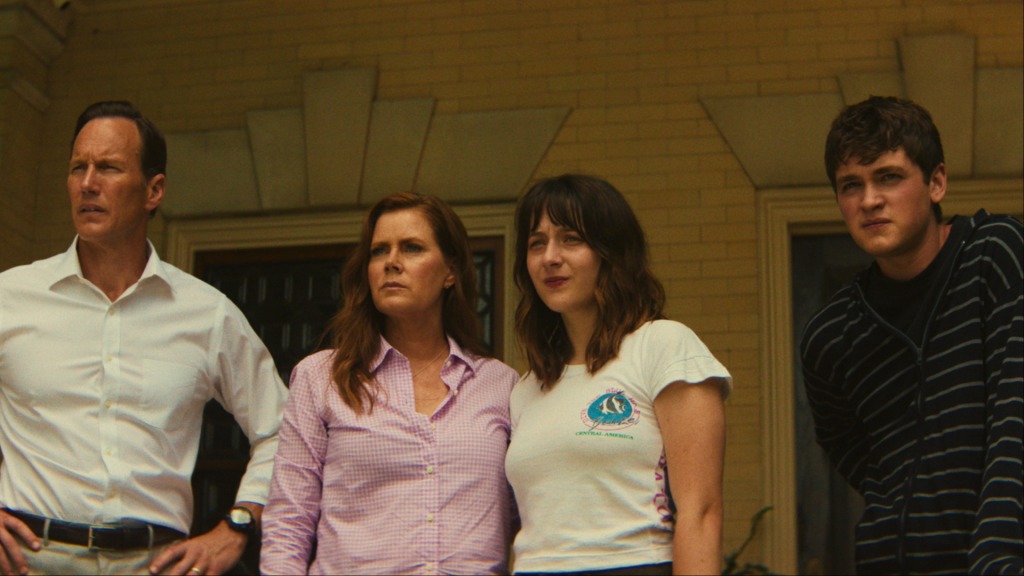
“Faith” breaks from the established structure of the last couple episodes, and it’s all the better for it. In fact, this might be the strongest episode so far, plunging all four of the Bowdens’ lives deeper into chaos and insecurity. It does that primarily by focusing on one subject: Anna’s obsession with Nevaeh, Max Cady’s daughter.
Now, as an actual character study of Nevaeh and/or her mother, the titular Faith, this episode falls short. Nevaeh should be compelling, in theory. According to Faith (herself a potential unreliable narrator), Cady groomed her to become the vicious manipulator she is today, using their burner video calls to indoctrinate her to his religion, poison her against her mother, and turn her into an abuser. (Cady maintains that he barely knows the girl, of course.) That’s a juicy, twisted backstory. But when the character is onscreen, she’s more annoying than scary. The writing is part of the problem, but so is the performance. I liked Malia Pyles well enough on Pretty Little Liars, but in this show, she leans so hard into feral rage and gleeful bloodlust that it’s hard to glimpse the wounded child within.
The real inciting incident of “Faith” is Anna’s confrontation with Nevaeh at the movie theater, which ends with Anna unintentionally pushing her in front of a car after Nevaeh bites her and calls Natalie “her bitch.” This gets caught on camera, obviously, because it’s a very public place, and I had to roll my eyes at the idea that Anna would report Nevaeh to the cops while conveniently leaving out what actually happened. The car accident was always getting back to the Savannah PD, who caution Anna against approaching Nevaeh or themselves again; it was always getting back to Tom, who’s beginning to trust Cady over his own wife; it was always getting back to Natalie, who is disgusted with her mother for assaulting the first girl who ever liked her; it was always getting back to Noa, who suspends Anna from work.
As silly as Anna’s decision-making is throughout this episode, it produces some decent drama for the show, both at work and at home. Natalie and Zack still aren’t very interesting, but learning that they’ve been “dating” the same girl represents a pretty big shift in their dynamic that could bear fruit down the line. That said, I wish we could see the two of them actually talk this out in a normal way, rather than the cryptic argument we do get about their broader issues. The show keeps mentioning that Nat “doesn’t know how to love her brother anymore,” but what does that actually mean—is it his depression and self-loathing that makes him difficult to feel close to, or is it drug use, or is it the way he treats the women in his life? How does the Nevaeh reveal (including the revelation that she’s Max Cady’s daughter) affect all that? The episode still plays coy, especially when it comes to Zack’s inaccessible perspective.
Anna’s life clearly revolves almost entirely around work, so it makes sense that getting suspended would throw her even further off her axis and drive her to take matters into her own hands. (She’s been doing that more and more lately, and it seems like she did it 17 years ago.) She does sloppy work with Faith, though, pressuring her into helping her put Cady back in jail via Nevaeh but then finding her butchered body only a few hours later. And she can’t call the police, because she’s already in hot water with them, and this looks really bad! Anna is kind of a fool, but there’s something almost satisfying about watching the Bowdens fall into these traps in Cady’s grand design. If this is all him, he’s an excellent improviser.
It’s also Tom’s turn to get played in this episode. Once again, much of the material here involving the supporting characters provokes eye-rolls, especially Lexi blackmailing Tom with an HR investigation that would expose him to his family and workplace. Her frustration with him downplaying his own role in their near-affair makes a lot of sense, but the show frames her as a secondary villain, and not a very nuanced one. The Catherine Buckley case also just doesn’t have much stakes; like Ruben Ramirez, she’s a stock character to fill out the leads’ work lives.
That said, everything with Tom and Cady connecting in “Faith” is fun stuff—from Cady effortlessly diagnosing Tom’s fear of “entropy” to their run-in with Ollie and Trish, the two intruders who snuck into the Bowdens’ pool a couple weeks back. You can see the fight coming from a mile away, but it works well as a parallel to Anna’s own reputation-threatening public incident earlier that day. It’s also solid proof that Cady was right in his analysis: Tom needs to let loose from time to time, to have an outlet for the inner turmoil that he can’t entirely disguise with a fancy house and happy-on-paper family.
Both stories collide when Tom gets suspended after leaving a very gross voicemail for Lexi—a message faked by Cady, it seems. Again, the Lexi stuff isn’t very compelling or morally complex, and it’s a bit of a shame Cady and Tom’s nascent bromance has to end so soon. But I’m interested in what both Anna and Tom being stuck at home represents for the show. Finally the two are on equal ground and on the same page about Cady’s machinations, especially after the delightful reveal that his nice new home happens to be right across the street. With this new phase of the story, the show can start showing more of its hand—and diving deeper into the actual marriage at the heart of the show, including both its messy origins and its more recent tensions.
Cape Fear remains an inconsistent series, but it’s moving at a steadier pace now, if you’re on board with the vibe and the questionable character choices. Five episodes in, the show has revealed or at least heavily hinted at the answers to many of its largest mysteries. I’m curious to see what’s next, whether it leaves me pleasantly surprised or completely bored.
Stray observations
- • Another week, another appearance by Crystal (Juliette Lewis). This time, she’s directly confronting Cady, who teases her with a kiss before calling her a delusional freak, threatening to kill her, and spitting in her mouth. I was intrigued by the idea that Cady might actually be scared of Crystal in previous episodes, but he seems in total control of her, like basically all the other women on this show.
- • Everyone seems to know everyone’s location at all times. Until the car accident, Anna seemed to spawn out of nowhere whenever she wanted to see Nevaeh.
- • Noa: “It’s not about what’s right. It’s about how it looks.” Thesis-of-the-show alert!
- • What’s with Zack’s fugue state in front of the fridge, not to mention his unsettling “I love you, ma”? I’m ready for something real to happen with the character, because Joe Anders’ constant dazed looks aren’t working for me.
- • Anna threw out the object that ended up killing Faith, so her fingerprints should be all over the murder weapon. Nice.
- • Nat speaking to Cady there at the end reminded me of both previous Cape Fear adaptations.


 Keep scrolling for more great stories.