The Apple TV miniseries Cape Fear shares a few elements in common with its source material. As in John D. MacDonald’s novel The Executioners—and in both of the film adaptations it inspired—a psychopath named Max Cady nurses an obsessive grudge against the attorney he blames for his prison sentence. Upon Cady’s release, he goes after the lawyer’s family for revenge, starting with small taunts before inevitably escalating to violence.
It’s not difficult to see why the story keeps getting told in new ways, even if this latest adaptation comes over 30 years after the last. Each Max Cady is a slightly different flavor of terrifying, but there’s something fascinating and unsettling about the reliance on implied threats in both movies—and about the sickening realization that our hero’s hands are tied. After all, you can’t put a man back in prison just because you think he might murder you and your family. You kind of have to just … wait until he does it. That feeling of helplessness, of being driven to insanity by the knowledge that someone out there wants to punish you and your family and there’s no way to really stop him, is core to every version of Sam Bowden.
There’s actually nobody named Sam Bowden in this new one. This time, the focus is on Anna (Amy Adams) and Tom Bowden (Patrick Wilson), two married lawyers who share a unique, twisted history with Max Cady, a man who allegedly killed his wife and unborn child 17 years ago. Back then, when the idealistic Anna was pregnant with her daughter Natalie (Lily Collias, so excellent as the lead in Good One), she took on Cady as a client. After a long trial, she cut a deal with the prosecution, putting Cady away for life—then, shortly after, she left her baby daddy Paul for Tom, who was the prosecutor.
It’s a big shift from the premise of previous adaptations. Sure, Martin Scorsese’s 1991 version dialed up Sam Bowden’s moral complexity—he buried a police report and purposely got his own client put away, rather than merely testifying as a witness to an assault—but we still rooted for him to beat Max Cady and protect his family. Here, we see Anna actively questioning whether she deserves this life, still hung up on the case that introduced her to her husband. (Tom finds it easier to cope and rationalize, based on a career of “putting poor people in jail and helping rich people stay out,” though he may be harboring his own secret vices.) This Cape Fear is clearly interested in critiquing the “criminal injustice system” from the perspective of both its perpetrators and its victims. There’s also a strain of eat-the-rich satire present here that feels well-suited to 2026, though it’s rarely as explicit as something like The White Lotus (thankfully!). This is still a psychological thriller above anything else.
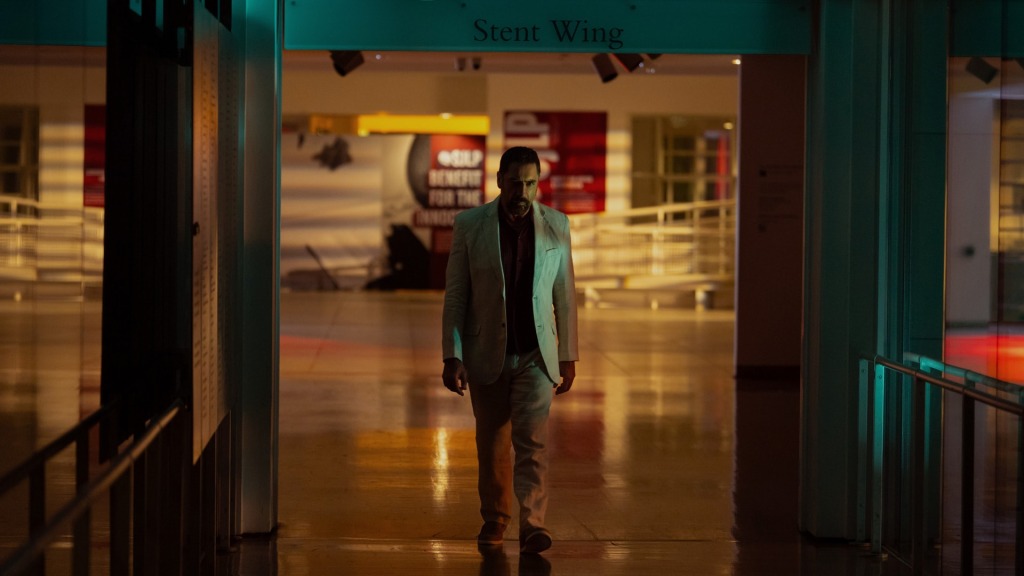
The newly released Max Cady (Javier Bardem) doesn’t actually show his face until 36 minutes into “Fingers & Toes,” when he shows up at an important fundraising gala for Anna’s workplace, the Savannah Justice League Project—a nonprofit dedicated, ironically, to helping the wrongfully accused. In this universe, there are true-crime docs about the man. He’s now “the most famous exoneree in America,” which makes him an ideal poster boy for SJLP’s cause. And Bardem immediately finds his own distinct take on the character, entering this scene fully formed: quiet, calm, confident, charismatic, and persuasive. He’s scary, because we can see how much he unnerves Anna, and because there’s good reason to believe his newly proven innocence is built on lies. (Also because we’ve seen Bardem play Anton Chigurh, one of the most frightening movie villains ever.) But there’s also plenty of plausible deniability: Maybe this man doesn’t mean us any harm. After all, he’s dedicated to helping out the falsely accused, right? It’s a different take on the character, but that plausible deniability is key to every version of Cape Fear.
Max Cady’s gala speech features some of the best writing of these first two episodes, paired perfectly with Bardem’s performance. He claims to hold “no hard feelings” about how his trial went down, but refers to his life sentence as “death by a thousand cuts,” criticizing Anna and Tom’s choices by implication while portraying himself as gracious and forgiving. By this point, though, he’s already executing the first stages of a revenge plot. The apparent reveal that he drugged their son Zack (Joe Anders, nepo baby of Sam Mendes and Kate Winslet), cut off his toe, and forced him to eat it is surprisingly gnarly, and I have to respect it.
That said, the Bowden teens are definitely not the most interesting part of Cape Fear. “Why Would I Want to Hurt You?” spends more time on Natalie and Zack than the premiere, and it’s no coincidence that it’s an inferior episode. Collias does a good job making Natalie likable, but there’s not much to the subplot about her crush on her friend yet. And Zack, whose backstory involves sharing his ex-girlfriend’s nudes and then getting ostracized, is even less interesting. Despite his ongoing depression and the occasional tender interaction we see with his sister, the show hasn’t made it easy to empathize with him yet. He’s obsessive and mentally unwell and sexting with a gamer girl who may or may not be Max Cady, and that’s it for now.
The episode also just isn’t quite as packed with plot. It’s a classic second episode, exploring the early ramifications of the first episode, filling in details, and introducing new subplots with little context (Anna’s estranged father showing up). Cady’s violent capabilities remained unspoken in “Fingers & Toes,” but this one opens with proof of how he can harness his body to brutal ends. Truthfully, I might have liked to wait a little longer to see him really in action, but the prison flashback still gets the job done and provides a handy parallel to his present-day attack on the cops who arrest him.
Much of the episode is about watching Cady work. He (deep breath) manipulates a guy into giving up his dog, looks at an extravagant four-bedroom house, further allies himself with the SJLP via Noa (the great CCH Pounder) and the soon-to-be-released Ruben Ramirez, and does an interview about his complicated upbringing. Truthfully, the character doesn’t need as much backstory as we’re already getting, especially of the “mom killed herself and dad didn’t want me around” variety, but I remain interested in puzzling out the split in his motivations. How much of this is for revenge, and how much is to actually help other people and fight back against a broken system? When Cady tells Ruben that he never killed anyone until he was incarcerated, should we believe him? Did Anna really let an innocent man go to prison as part of some Machiavellian plot with the opposing counsel, or did she just turn an already violent man into a complete monster? Which would be worse?
Stray observations
- • For the record, I’m still not totally sure if I prefer the 1962 or 1991 Cape Fear, but Robert Mitchum’s chilling portrayal of Cady is tough to beat.
- • Combined with Jeff Russo’s music, the show also makes use of Bernard Herrmann’s great score from the original movie, which was also reworked by Elmer Bernstein for the 1991 version. The premiere also opens with some color-inverted negative images, like early in the ’90s version.
- • It’s clear most of the characters on this show have secrets, but it’s difficult to tell who exactly knows what. Cady tells Anna he “won’t say a word about what happened,” but does he know something Tom doesn’t? And do the Bowdens know something Cady doesn’t?
- • RIP to the recently released Byron French (and his doting mother), one of Anna’s biggest success stories. Not very progressive of Cady to murder an exoneree, is it?
- • The nasty Amy Brancato cutaways seem to imply that Cady really did somehow convince his old flame to write a suicide note confessing to killing Cady’s wife and even providing the missing murder weapon. A testament to his manipulation abilities?
- • Zack’s possible allegiance with Cady against his parents is intriguing, even if I’m still waiting to care about him as a character.
- • Anna tricking Zack into unlocking his phone was pretty great, if infuriating from his perspective.


 Keep scrolling for more great stories.