
Carrie's finale is a bloody mess in more ways than one
Prime Video's otherwise poignant adaptation makes a pivot that’s more flabbergasting than rewarding.
Photo: Prime Video
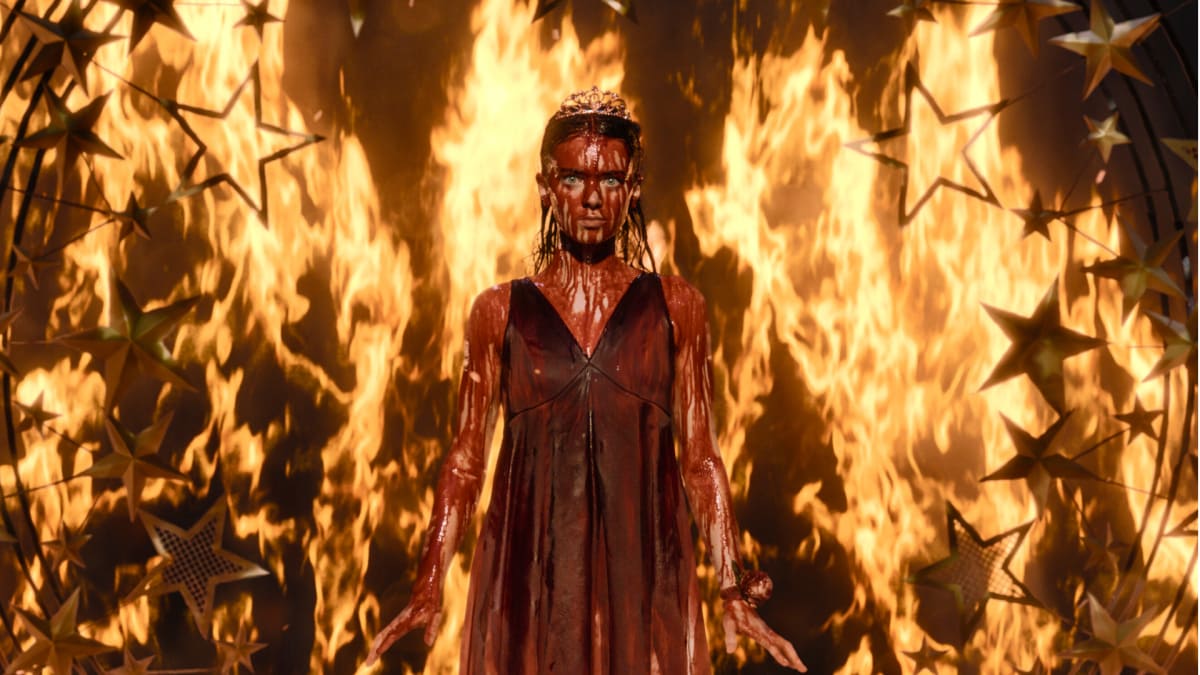
Carrie‘s eight-episode debut season is a pressure cooker waiting to explode. That blow-up finally occurs, as it does in every previous telling of this tale, at prom, where telekinetic teen Carietta “Carrie” White (Summer H. Howell) unleashes hell. As in the climax of the Stephen King novel on which it’s based (plus the two theatrical features, one made-for-TV movie, and stage musical that followed), the Prime Video series features freshly crowned homecoming queen Carrie covered in pig’s blood after a cruel prank by Chris Hargensen (Alison Thornton) and Billy Nolan (Arthur Conti). Out of long-simmering fury, she sets her school and small town of Chamberlain, Maine, ablaze, killing people and torching buildings along the way. But amid this faithfulness to the source material, series creator Mike Flanagan and team take some flabbergasting liberties that don’t so much make the story their own as they do corrode the very essence of Carrie.
As seen in the (first season?) finale “AP Physics,” a humiliated Carrie isn’t solely responsible for destroying Ewen High—although she does chase down and murder Chris and Billy alone. Otherwise, Carrie gets help from her astral projector pal, Emaline West (Thalia Dudek). Lodging herself in Carrie’s head, Emaline asks to “take the wheel” for Carrie at prom to instigate further carnage. Later, after Carrie demolishes her own house and presumably her mom, Margaret (Samantha Sloyan), with it, Emaline and Carrie go on the run from a cult tracking both the girls. Flanagan connects Carrie‘s singularly scary coming-of-age story to King’s broader opus, alluding to The Institute, Firestarter, and The Shining in the process. It’s an intriguing set-up for the second of what Flanagan envisions as three seasons of Carrie. Taken on its own, however, it robs Carrie of her unique breaking point and fails to grasp how rage can push a young person off the edge.
King’s 1974 novel concludes with a tragedy that comments on the difficulty of breaking a violent, abusive familial cycle. Carrie’s slow death in it after killing Margaret is a bleak portrayal of what happens when isolation and anger take over during adolescence. This evergreen concept makes Carrie ripe for adaptation and re-adaptation; the Prime Video version takes advantage of its modern setting to infuse the story with up-to-date coming-of-age troubles, particularly those created by social media. Chris, suffering through family drama of her own, launches an Instagram account called Carrie Red to vent. She uses it to harass Carrie and her peers by posting secrets and rumors. Once Chris’ identity is exposed, it leads to a dangerous riot, a media circus, and a divided community. Up until the end, Carrie confidently speaks to just how much we rely on social media to form opinions and how the tool can be wielded for harm, especially on impressionable minds. No wonder its influence reflects on how people treat Carrie—she’s a crazy, lonely pariah who loses her shit when she gets her period, talks to herself, and doesn’t dress as fashionably as her classmates. She’s automatically an outcast because Carrie Red helped make her one. Despite her efforts, Carrie can’t seem to change the situation. When a bucket of pig’s blood is dumped all over her during seemingly the happiest moment of her life, it’s not surprising that she finally snaps. So why does Emaline have to factor into Carrie’s mayhem at school or while dancing around town on her way home?
 Keep scrolling for more great stories.