The point is, there is serious franchise potential here, even if DC Studios’ new corporate overlords probably don’t see it. One of Clayface‘s strengths is watching Hagen shift into and then portray other people, letting his supporting cast express his simmering rage behind friendly masks as he moves closer to those he intends to harm. Every successful horror franchise needs a formula; luckily, one reveals itself in one of the film’s strongest sequences.
Midway through Clayface, Matt discovers his lifelong friend Corey (Joshua James) has betrayed him to Gotham mob boss Markos Szabo (David Dencik), who’d previously sliced Matt’s face and set him on the path to becoming a flesh-shifting monster. Matt confronts Corey in his old pal’s trailer on the set of a new film—his fledgling career is on the up thanks to Szabo’s string-pulling—and they share an emotional scene where Corey admits the betrayal and begs for forgiveness. Matt embraces Corey, suffocates him in his chest (you can see his face pushing through Matt’s back), then assumes his identity to get closer to Mia (Joana Ribeiro), Szabo’s moll, whose seductions put Matt in Szabo’s sights to begin with. Wearing Corey’s face, Clayface looks Mia in the eye, which further stokes his hunger for bloody revenge.
Now, scale this sequence to feature length. Put Matt on the run. (Have him leave Gotham for a spell to put those onerous “where’s Batman” questions on the back burner.) Show us how he uses his abilities to maintain the good life, far from his rough-and-tumble past in the Gotham Narrows. Have him meet someone who has something he wants—money, power, something more intimate—that triggers in him the psychotic impulse to take it. This formula, coupled with Matt’s shapeshifting abilities, could take him virtually anywhere.
A template exists in The Talented Mr. Ripley, which follows con artist Tom Ripley (Matt Damon) as he works his way into the social life of a well-to-do layabout (Jude Law) whose friends, wealth, and identity Tom covets. Through deception and violence, he becomes something he would otherwise never be. Kurtis David Harder’s criminally underseen Influencer series sets another example with CW (Cassandra Naud), a chameleon-like fraud who uses social media to ingratiate herself with online fame-seekers, leeching off their success until it’s time to lethally sever her new friendships. A cycle of desire, pursuit, deceit, and ruthlessness gives Ripley and Influencer (and Influencer‘s superior 2025 sequel) their sordid oomph. Watching Tom and CW squirm under their deceptions before the worst comes to pass is key to their lurid thrills.
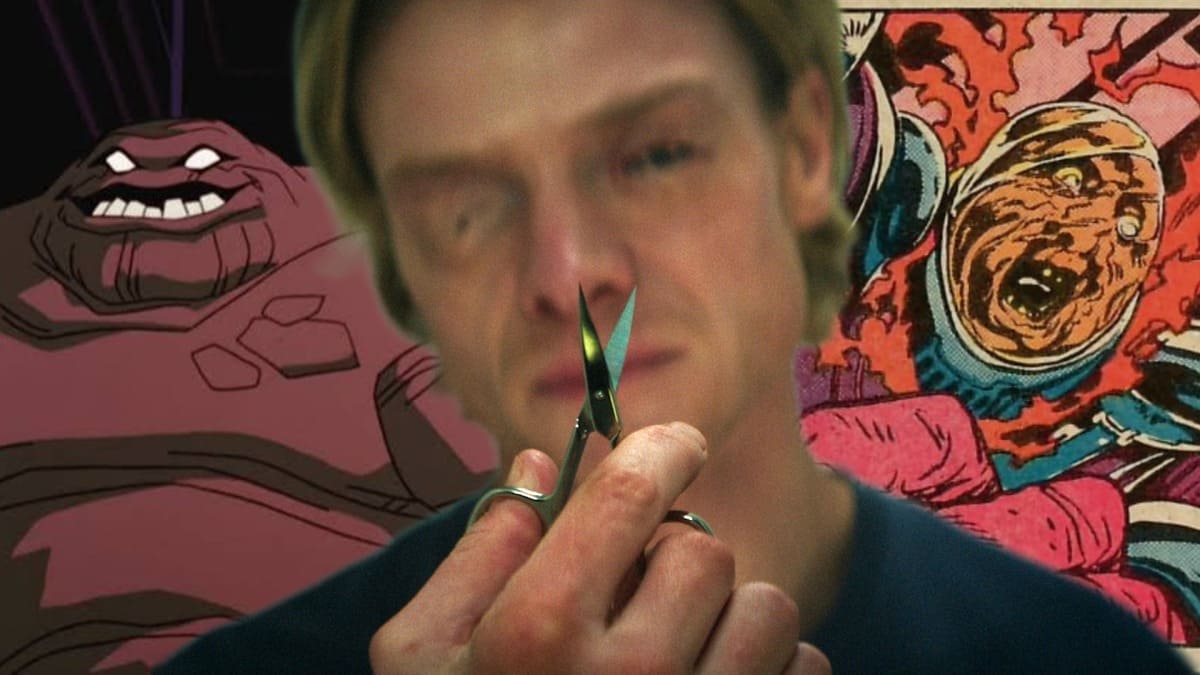
Clayface stories across film and comics could inspire future movies in this mold. One offbeat selection is “Mortal Clay” by Alan Moore and George Freeman, in which a crazed successor to the Clayface moniker, Preston Payne, has made a hideout inside a department store, suspecting that his wife, a mannequin, has met someone else. Swap Payne for Hagen, add a couple of burglars and a security guard or two, and let this cracked horror scenario play out as it must. A less slashery, more dramatic option is the terrific 1998 episode of Batman: The Animated Series, “Growing Pains,” where an on-the-lam Hagen (Ron Perlman) molds a separate, golem-like entity into a young girl named Annie (Francesca Smith) and sends her into Gotham to steal. This grim beat no doubt influenced Clayface‘s disturbing finale, where Hagen molds a version of Dr. Caitlyn Corr (Naomi Ackie) into a comforting mouthpiece to validate his lost brilliance and unrequited romantic interest. Both examples show Hagen’s ability to create illusions beyond performance; “Growing Pains” shows how those illusions can shape a sad form of life, one Hagen can destroy at will. Clayface’s monstrousness doesn’t have to be limited to his knack for mayhem.
And future Clayfaces don’t have to limit themselves to the art direction of James Watkins’ film, either. To cite Knives Out once more, director Rian Johnson shifted his visuals to match the locales and themes of each successive Benoit Blanc film. Knives Out was a cozy-sweatered, autumnal surprise generator; Glass Onion was a vivid, garish exercise in doomed billionaire hubris; Wake Up Dead Man was a foggy, locked-door ghost story. It’s an opportunity to expand on the cartoon and comic visuals that have made Matt Hagen such a fascinating heavyweight Bat-villain. Early in Clayface, Hagen appears on The Vic Chissler Show, which boasts a backdrop of the Gotham skyline and the red night sky seen in later seasons of BTAS. Imagine a Clayface sequel even more untethered from the visual language of superhero/villain movies, where that unearthly crimson night serves as the backdrop for Hagen’s bloody masquerades. Clayface has opened the lid on a near-limitless horror franchise, and if we ever see a sequel, part of the fun should be not knowing how the clay—and blood—will spill.


 Keep scrolling for more great stories.