InCult Of Criterion, The A.V. Club highlights a new release from The Criterion Collection each month, examining the films entering an increasingly accessible film canon.
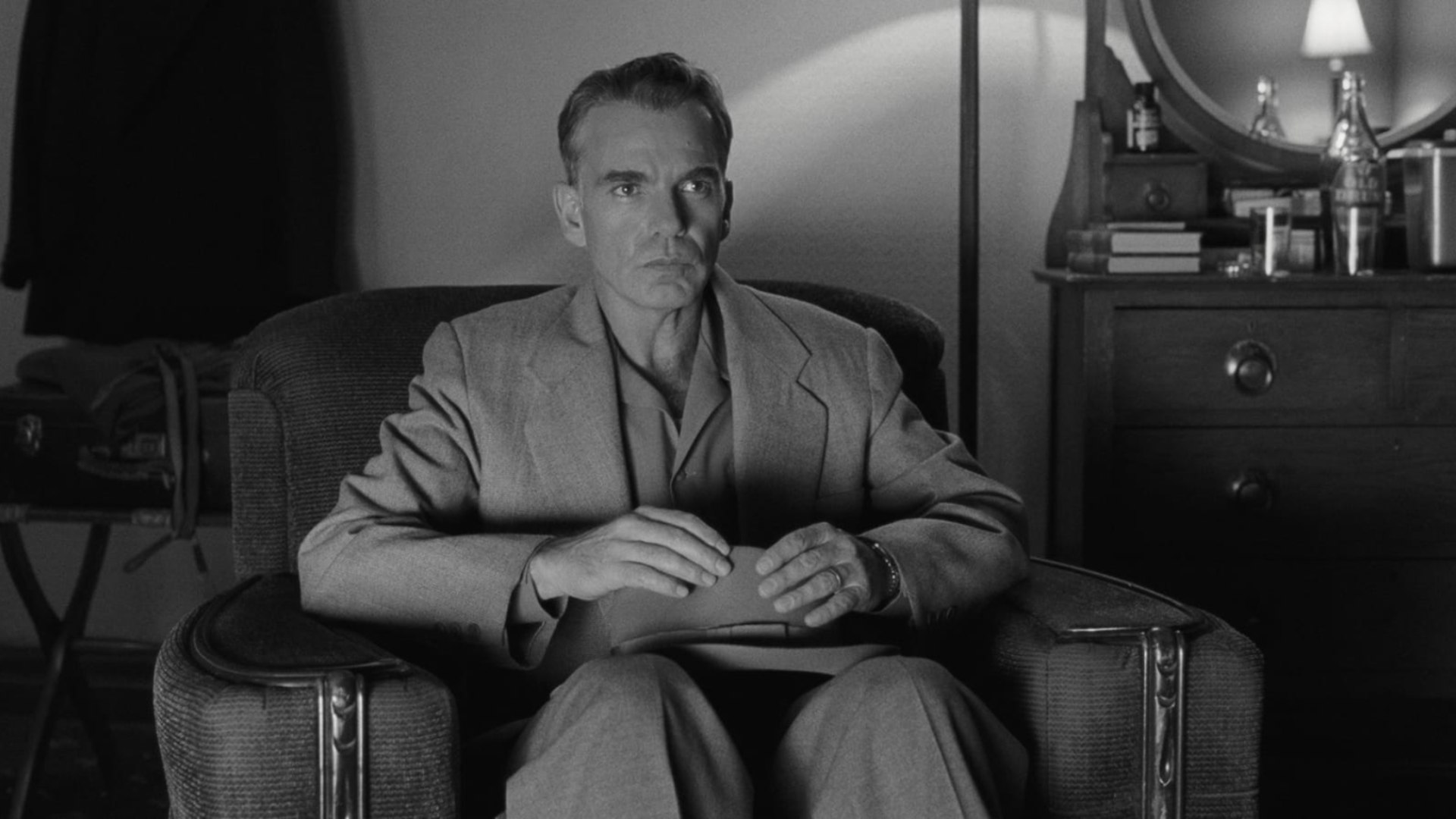
Perched atop the cliff overlooking the Coen brothers’ mid-career mire (Intolerable Cruelty and The Ladykillers), The Man Who Wasn’t There calmly lights its Chesterfields as the world falls apart around it. A black-and-white noir, whose lead (Billy Bob Thornton) almost exclusively speaks in confessional voiceover, the Coens’ sordid ode to hardboiled legend James M. Cain—replete with murder, infidelity, entrepreneurial schemes, pig-riding, and road head—is surprisingly mundane, and a strange contemporary of the brothers’ worst and silliest films. In context, this makes its existential musings and postwar anxieties all the bleaker. Though The Man Who Wasn’t There is another funny, black-hearted, cinephilic genre exercise, its somber and shadowy approach plumbs the Biblical, Shakespearean depths that would later define A Serious Man and The Tragedy Of Macbeth.
As in so many noirs, the allure of the forbidden—the entitlement of the American Dream, whether that’s for a big house, a bigger bank account, or a better-looking broad—shakes Thornton’s Ed Crane out of his barbershop stagnation. As in so many Coen brothers films, it’s undercut by understatement: The sensible investment opportunity that knocks Ed’s life at a Dutch angle is a newfangled technology called “dry cleaning.”
Ed’s pursuit of this change in career is inherently doomed, even before it leads to all the sensational plotting of its genre. As Keith Phipps put it, more than the leads of the brothers’ noirish Blood Simple or Big Lebowski, Ed is “a hero out of Camus or Walker Percy let loose in a world run by Zig Ziglar and Perry Mason.” He is a man whose lack of identity has been overwritten by his profession, which has itself become overwritten by routine. Though he doesn’t really consider himself one (or much of anything), Ed is mostly referred to as “the barber” by the cast of fools and heavies, and his Sisyphean fate confining America’s stray hairs back into flat-tops is his sole effect upon the world. He trims down ever-growing hairs and smokes down an endless supply of cigarettes. He silently chips away at his corner of California, unthinking and dazed, before it cuts him down.
Though the title of The Man Who Wasn’t There implies a sort of insubstantiality—a person whose presence changes nothing about the larger happenings around them, like that goofy observation about Indiana Jones in Raiders Of The Lost Ark—Ed’s ennui and the single decision it leads to changes everything. Acquiring the investment money necessary to become a silent partner in that lucrative and sexy dry-cleaning venture means confronting the fact that his wife (Frances McDormand) is sleeping with her boss (James Gandolfini). It means blackmailing that boss for some cash, which means someone ends up dead, and someone goes to prison. One choice, one whisper of an idea, sets off a chain of events that sentences Ed and pretty much everyone around him to death. It’s a killer punchline to the film’s reference to the uncertainty principle, where simple observation disturbs that which is observed. Rocking the boat is terminal, especially in a Sacramento suburb in the late 1940s.
This soft gray world, its sensible homes and storefronts and department store backrooms, is suffused with dread and despair by cinematographer Roger Deakins, shooting his first entirely black-and-white project since film school. Puncturing the blanket-lit monotony of apple-pie Americana with stark surreality, Deakins’ work channels another masterful manipulation of national iconography: Twin Peaks. A scene where a widow confesses to her husband’s encounter with a UFO feels right out of The Return:
The uncanny wind, the wide-eyed and unblinking paranoia, the too-bright night—this is an unstable world, clearly visible behind its mourning veil. It’s this instability that defines The Man Who Wasn’t There; it’s less a traditional film noir and more of a noir-shaped navel-gazer, full of little people with grand fears. Its residents stumble around in a fugue, back home from WWII with a political hangover (the uncertainty principle comes from Werner Heisenberg, key figure of the Nazi nuclear program) and a desire to buy themselves some existential Alka-Seltzer. Ed seeks purpose in the cleaning biz, then in the musical career of a teenage Scarlett Johansson. Those around him fill the dead air with chatter and grandstanding—Tony Shaloub’s smug defense attorney gets most angry when he’s robbed of his chance to land an argument—unattached from reality and their fellow man. The sometimes literalized otherworldliness that hovers in the air above The Man Who Wasn’t There accesses a similar intersection of national fear and historical genre fare toyed with by Wes Anderson’s Asteroid City.
That film, an alien-filled comedy of alienation, accesses a similarly stylized melancholy as The Man Who Wasn’t There. Every gag is bittersweet, every sadness comes laden with smirk-inducing irony. This fatalistic tone—the Coens’ screw-turning torture of a listless hero and his dryly absurd community—feels more self-effacing than some of their other work, perhaps because the filmmakers, making the movie that would stand as the midpoint of their collaborative efforts, were themselves straining against routine, repetition, and the sense that their obituaries had already been prewritten back in 2001. Like their doomed hero, the Coens confronted this by creating—”I’m glad that this men’s magazine paid me to tell my story,” Ed narrates. “Writing it has helped me sort it all out.”—even if it didn’t assuage any of their feelings.


 Keep scrolling for more great stories.