
Zahn McClarnon directs a propulsive Dark Winds
The star pulls double duty this week.
Photo: Michael Moriatis/AMC
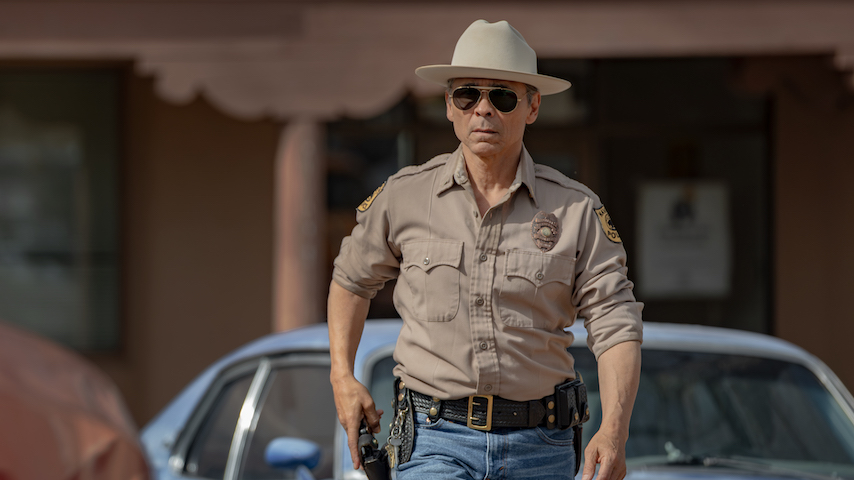
It’s not uncommon for stars of shows that have been on for years to eventually take the directorial reins. After all, who knows the show better than the people who have been on set every day? Noah Wyle directed the sixth episode of the current second season of The Pitt, Elisabeth Moss somehow found the time to helm 10 episodes of The Handmaid’s Tale, and even Bryan Cranston got the credit on three episodes of Breaking Bad. So it makes sense that Zahn McClarnon would take a stab at his directorial debut in a world he knows so well on Dark Winds. His episode, “Bikéé’ Doo Éédahoozįįdę́ę́góó (Toward Their Unknown Paths),” continues the confident setup of the season premiere and hints that McClarnon, unsurprisingly, may have a future behind the camera if he chooses it. It’s a propulsive episode that still takes the time to build character-driven arcs for the season like Chee and Bern’s growing relationship and what her promotion might do to it. It also has a very strong visual language, an element that has always separated this program from similar procedurals.
In one sense, “Bikéé’ Doo Éédahoozįįdę́ę́góó (Toward Their Unknown Paths)” is basically an extended chase episode, one that follows our trio of investigators—and, again, it’s so great to see them on a single case together instead of approaching one from different angles like the last couple seasons—as they assess the massacre at the diner and track Billie and Albert across the region, hoping to reach them before the mysterious blond assassin named Irene does so instead. However, the action begins with the episode’s best scenes, the ones right outside the diner after the opening credits (and the prologue that reminds us of the carnage that took place).
Let’s talk about those scenes. First, there’s the oner in which the camera slowly moves over the destruction caused by Irene that slows down as it reaches the doorway, framing a crouched Joe Leaphorn in the incredible red glow that the diner sign casts on the parking lot. The show has used the color red before to indicate danger, and the flow of the camera in this shot feels almost supernatural, akin to the “ghost sickness” that Leaphorn mentions the diner’s owner thought would haunt him and the otherworldly sensation produced by the final scene with Chee. And yet, there’s Joe and, later, Bernadette with their bright, white flashlight beams cutting through the red that’s all around them, a visual representation of warriors for good in violent worlds. Visually, it’s one of the best sequences in Dark Winds to date, especially when you consider it as a bookend to the last one, another sequence in which beams of light cut through darkness and another one in which ghost sickness, this time Chee’s, influences the flow of the camera.
 Keep scrolling for more great stories.