“Is everyone satisfied that we have figured this art form out enough that what we really need to do is go back to celluloid? How long have people painted? 40,000 years? We’re talking about a thing that’s a hundred years old and everyone’s going, ‘Stop. Pencils down. No more iterating. It’s not necessary to have at your fingertips the ability to change the color of that person’s eyes.’ Well, it exists. Should we not use it?'”
We suppose the obvious counter to that argument is “how far should we go before we’re no longer iterating and just allowing the computer to iterate for us?” But we digress. Fincher, who got his start at ILM on Return Of The Jedi and Indiana Jones And The Temple Of Doom, has long been an early adopter of new technology, like Steven Soderbergh, who also used AI in a John Lennon documentary earlier this year. Soderbergh’s results were lambasted at Cannes, and it’s unclear when the movie will ever be made available. In today’s parlance, it made so little cultural impact that John Lennon: The Last Interview doesn’t even have a Wikipedia page. Cliff Booth may have a release date (two of them: Theatrical and streaming, separated by a month), but it’s facing the same critiques as Soderbergh’s documentary.
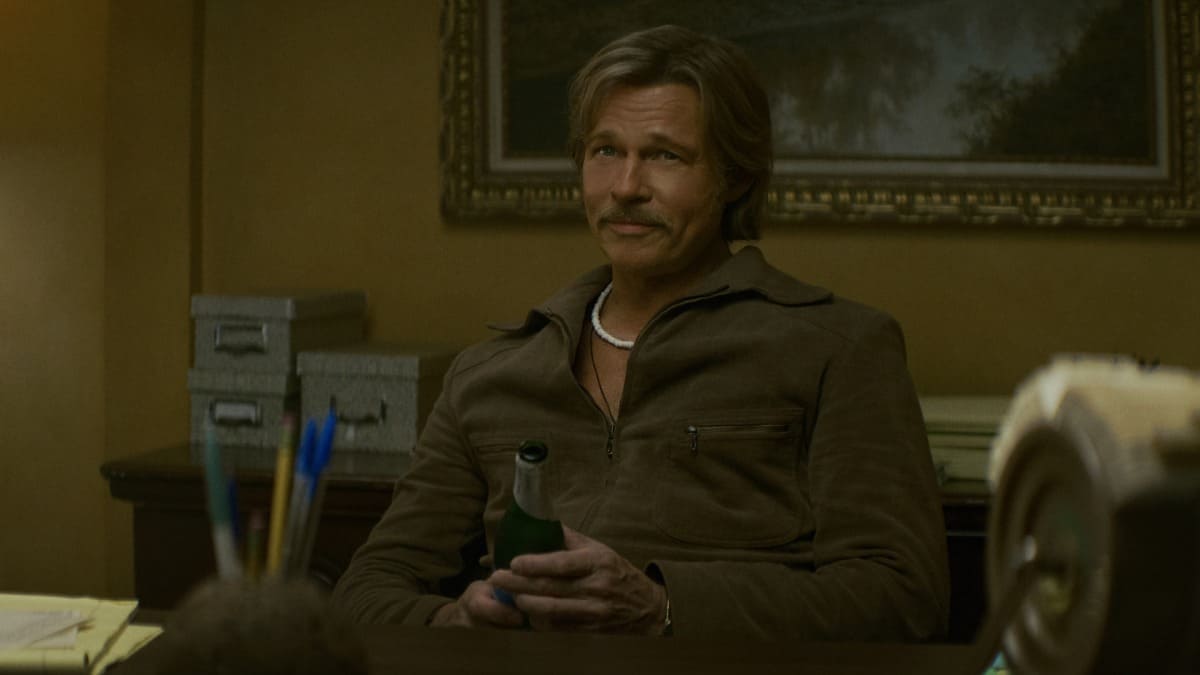
Per Kotaku, indie filmmaker and influencer Patrick Tomasso posted on X, “I walked out of Cliff Booth completely gutted” because “what could have been a really great sequel is overshadowed by some of the most blatant and egregious AI use I’ve ever seen in a studio film.” Similarly, Next Best Picture dinged the movie for “noticeably distracting […] use of generative AI in key moments of the film, which is nothing but an eyesore,” and the film credits a “generative consultant.” A Bloomberg piece from March reported Ben Affleck’s AI “ethical” company, InterPositive, for which Netflix paid $600 million, helped produce “an upcoming film starring Brad Pitt.”
Last month, Netflix announced that as many as 300 productions used the technology, an announcement that coincided with news that no one opens Netflix anymore. But it’s not just cheapo true crime documentaries using AI. Cliff Booth is one of many films from A-list directors taking heat for offloading artistic integrity to large language models. Earlier this year, Oscar-winning filmmakers Affleck and Danny Boyle admitted to using the technology for their respective new releases, Animals and Ink. So, too, did Academy Award nominee Ava DuVernay, who defended using AI to animate photographs in her new documentary about the 14th Amendment, 14th. “We actually animated some photos that are in the public domain, and from what we’ve been hearing from people, it does bring people closer to that time in history, which was our goal,” DuVernay said in October. “So people have to see it and check it out for themselves and make their decisions about how they feel.” Boyle used it for a similar effect in Ink and confirmed, “There’s about 30 seconds of it in our movie where we animate a couple of old photographs.” Considering Booth also reportedly uses the tech to animate fake issues of TV Guide, there is some sinister irony in Netflix movies specifically using AI to gussy up otherwise analog tech.


 Keep scrolling for more great stories.