It’s possible to forget the voices of those who are no longer here to speak for themselves. But in two new documentaries, Maiken Baird’s Edward Said: Between Worlds and Pegah Ahangarani’s Rehearsals For A Revolution, the voices of the past are in direct conversation with our present. Using extensive archival material, Baird and Ahangarani retrace a country’s history through lived experiences, capture their film subjects’ memories of home, and connect the dots between past conflicts to the news in today’s paper. At a time when Palestinians and Iranians, and their cultures, are once again under siege, it’s all the more moving to explicitly hear how the past repeats itself.
Made up entirely of archival interviews, broadcasts, taped lectures, and memoirs, Edward Said: Between Worlds uses its subject’s own words to narrate the story of his life. Said, a Palestinian author and professor, became an internationally renowned scholar during his lifetime, regularly appearing on talk shows and news programs to discuss his work and debate those who did not believe in the rights of Palestinians like himself. Decades ago, he was on national television advocating for the human rights of his community and combating anti-Arabic prejudice. Although Said died in 2003, his work exploring the nature of orientalism, challenging the legacy of colonialism, and questioning what happened to Palestine remains pertinent to the present day.
The documentary uses Said’s taped voice to trace his journey from his birth in “a country that doesn’t exist” through a tough diasporic childhood that landed him in America, where he found a semi-welcoming home in New York City and, eventually, a distinguished college career. In addition to his successes, Baird also includes the tougher moments in Said’s life, like the taunting he endured as a newcomer at a tony New England boarding school, and how his father feared for his safety when he spoke out against Zionists trying to eradicate Palestinians from their homeland.
Because the film uses Said’s own voice, Between Worlds takes on a personal poignancy beyond his passionate outrage, the audio capturing his grief and tiredness from having to constantly justify his existence. There’s an emotional resonance that comes through in hearing about the joy he shared with his wife during their time in Beirut and his heartbreak when Israeli forces killed one of his friends. Tucked between the award ceremonies and the high-profile meetings with state officials, there were also small memories like of an aunt helping Palestinian refugees after the Nakba, that give a personalized, ground-level view of history.
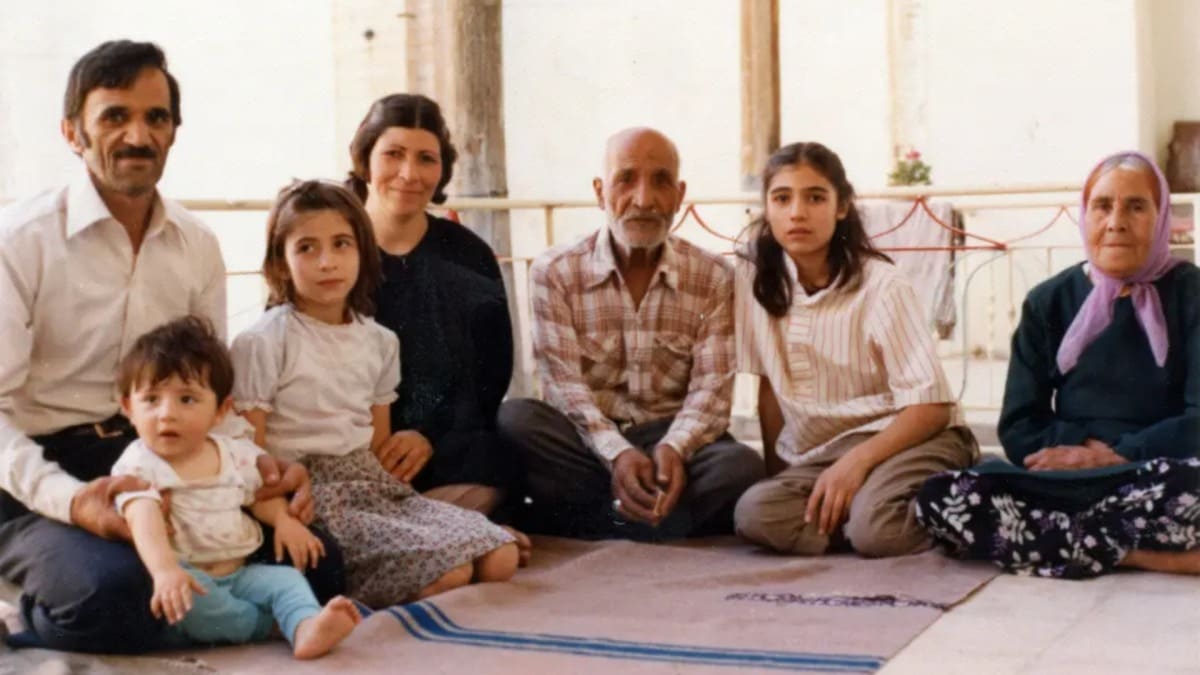
Rehearsals For A Revolution takes a much more essayistic approach to revisiting history. Broken up into five chapters, each section follows a different loved one in Ahangarani’s life. They each illustrate eras in Iran as experienced through the eyes of each one of the figures in Ahangarani’s film. The first chapter is dedicated to her father, also a filmmaker, who cheered on the oncoming revolution in the late ’70s, fighting for the cause. Unfortunately, the promise of the revolution does not bring the change he had hoped for; instead, he watches helplessly as his best friend is killed by the new leadership. Ahangarani’s next memory is that of a teacher she loved, but who was punished for falling out of step with the new regime’s rules. She later remembers a friend she went to a protest with in the 2000s who left the country shortly after, and ends the film on a chapter for her young daughter, wondering what version of the revolution that she will inherit in the wake of the government’s recent crackdown on protestors and mass executions.
The film’s middle chapter, dedicated to her uncle Rashid, includes the documentary’s most poignant moments. Like the chapter on her teacher, Ahangarani must do a lot with the little archival material she has left of her uncle. He was a politically active college student when he was arrested at a demonstration and tortured. He was never the same after the incident, and soon after ended his own life. In her grief and shame, his mother destroyed most of the photos of her son, and Ahangarani only has access to a handful of surviving images. Then, she discovers his old tape recorder and, for a brief moment, Rashid returns to life. His taped voice notes are energetic, the hope for a bright future still apparent. He sounds so young, because he never had the chance to grow old under the revolution.
Ahangarani’s own voice leads her audiences through these memories. She adds her musings on how her loved ones must have felt after a wave of political fervor gave way to even more crushing repression. When revisiting the footage of her friend, it’s Ahangarani who is stuck in the middle of the protest herself, trying to reach safety away from the Iranian police, narrating her own escape and putting her viewers in her panicked frame of mind as the men in tactical gear got closer and closer. Whether on the ground to witness another revolution or positing what it must have felt like for her dad to fight for a cause he believed in, Ahangarani uses these living memories of Iran’s past to illustrate her family’s saga.
There’s no shortage of ways for documentaries to use archival sounds and images to tell their stories. Both Edward Said: Between Worlds and Rehearsals For A Revolution benefit from the ways they compose and reassemble their voices from the past. The timeliness of revisiting these not-too-distant periods not only gives crucial context to what’s happening in these areas today, but also centers voices that are generally absent from our media landscape. There are few (if any) Palestinians or Iranians invited on to news programs to share their families’ stories or their experiences. Increasingly, social media has been one of the few outlets to share those stories, but even then, many must dodge shadow bans and digital repression over certain keywords or phrases that these services seek to suppress. By moving away from the immediacy of the news without removing its human element, both Edward Said: Between Worlds and Rehearsals For A Revolution restore the historical context to some of our most pressing modern issues.


 Keep scrolling for more great stories.