[Editor’s note: This piece contains spoilers for Hal & Harper.]
In the most universally disliked track on her new album The Life Of A Showgirl, Taylor Swift attempts to explain the burden of being the oldest daughter in your family: “Every eldest daughter was the first lamb to the slaughter / So we all dressed up as wolves and we looked fire.” She’s trying (and mostly failing) to tap into a broader internet discourse about “eldest-daughter syndrome,” the perfectionism and parentification that so leaves so many firstborn daughters burnt out by the time they reach adulthood. But responsible older siblings who don’t exactly feel seen by the lyric “I’m not a bad bitch / And this isn’t savage” need not fret. There’s much better oldest-daughter representation out there this year.
From The Hunger Games to Hamilton to 27 Dresses to Shameless, overburdened eldest daughters have long had their place in pop culture. But they’re popping up everywhere in 2025. In the opening scenes of Hulu’s Paradise, a teenage daughter dutifully makes her younger brother breakfast while their single dad is busy elsewhere. Joachim Trier’s acclaimed new film Sentimental Value is a 134-minute meditation on eldest-daughter burnout. The Bear is interested in how Abby Elliott’s Natalie steps into the role after the death of her older brother. And HBO’s Task is the rare series to explore eldest niece trauma, as Emilia Jones’ Maeve practically raises her two young cousins while their dad Robbie (Tom Pelphrey) is busy dreaming up get-rich-quick schemes.
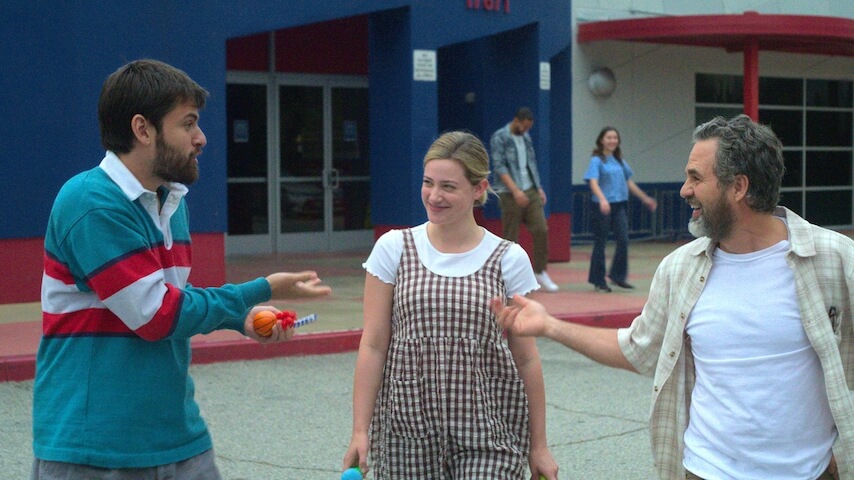
But the year’s best exploration of the eldest-daughter experience comes in Mubi’s heartbreaking indie TV show Hal & Harper, which stars Mark Ruffalo, Lili Reinhart, and creator/writer/director Cooper Raiff as a close-knit family who have grown together in complicated, codependent ways over the years. When Harper (Reinhart) was four and Hal (Raiff) was two, their mom drove off a bridge, leaving their overwhelmed Dad (Ruffalo) to single-parent through grief. Two decades later, the event still ripples through the family, freezing the titular adult siblings in the moment they had to grow up too fast. It’s an idea the show literalizes by having Reinhart and Raiff play their characters as elementary schoolers in flashbacks—him with bubbly childlike enthusiasm and her with a deadpan detachment that makes her feel nine going on 30.
While all three leads get moving arcs across the season, Harper’s is about the emotional toll of holding everything together. When police knock on the door with news of their mom’s death, she’s the one who goes to Hal while their dad collapses on the floor. By third grade, she’s smoking cigarettes and reading One Hundred Years Of Solitude in between coaxing her brother through his first-grade anxieties and ensuring their dad doesn’t forget to eat dinner. By adulthood, Harper is the one dealing with her girlfriend’s flight delays, letting Hal crash at her apartment when he’s stressed with his college workload, and warmly celebrating when Dad reveals he’s having a baby with his girlfriend Kate (Betty Gilpin). When Hal walks into a kitchen, it’s to ask for food; when Harper does, it’s to offer to help unload the dishwasher.
What Hal & Harper gets so right about the eldest-daughter experience is that no one specifically told Harper she needed to do those things and yet no one stopped her from doing them either. In one flashback, Dad tries to make up for his lackluster parenting by taking his kids to a big day out at an indoor adventure park. Only he’s happy to let Harper read in the corner while he focuses on entertaining the easier-to-please Hal. On the way home, Dad glances at his sleeping son and smiles, “Hal seemed to have a lot of fun, didn’t he?”—as if Harper is a co-parent, not another kid.
Dad’s question springs from a loving attempt to connect. As in his first two films, Shithouse and Cha Cha Real Smooth, Raiff has a deep empathy for anxious-avoidant men and their imperfect ways of showing affection—like when young Hal tells his sister she can open up to him when she’s sad or Dad hypes up Harper after a school concert. But Hal and Dad also operate on impulse, swinging wildly from one extreme to another with barely any emotional regulation. That means it falls on Harper to be the stable one, to make Hal’s breakfast and ensure they both get to school on the days Dad falls into depressive spells.
And because she never complains, it’s easy for her family to pretend that level of responsibility is easy for her to handle. The pressure on eldest daughters stems from a brutal combo of ideas that older siblings should be responsible for younger ones and that girls are more mature and even-keeled than boys—and naturally better at emotional caretaking and domestic labor. Yet Reinhart’s hollowed-out performance makes it clear that none of this is effortless for Harper; she’s literally draining away her own emotions to make space for everyone else’s.
Crucially, the show doesn’t sanitize Harper into a selfless angel. She can be cold as an adult, liable to snap and lash out, and quick to search for codependence rather than set healthy boundaries. But those flaws stem from a very clear source. Hal & Harper understands that once a family dynamic is set, it’s incredibly hard to change. When Harper calls to tell her dad she’s broken up with her college girlfriend and fallen in a love with a co-worker—a pretty common early twentysomething experience—he responds as if she’s committed a cardinal sin, as if she’s not allowed to step outside his image of her as a perfect, stable grown-up and do the messy work of finding her own identity.
While the adults-as-kids casting works as a metaphor for the fact that Hal and Harper had to grow up too fast, it’s an even more potent metaphor for the fact that Dad saw them as grown-ups well before they were. In one flashback, he yells at Harper for being a baby and snarks that she should be more mature. In another, he mentions something she used to like “when she was a kid.” Because of Reinhart’s double casting, it’s easy to forget he’s talking that way to a nine year old.
The series finale brings that reality to a shattering conclusion as we finally see young Harper enjoy her first afternoon of normalcy, a playdate with a friend where they read tween magazines and make friendship bracelets and get their hair braided by her mom. Later that night she runs away from home, collapsing on the sidewalk in tears when her dad chases her, sobbing that she wants her mom and she hates her life. It’s only then that the show finally subs in actual kids for Reinhart and Raiff, emphasizing just how little Hal and Harper have been this whole time.
It’s a devastating performance from a never-better Reinhart and a moving ode to just how much eldest daughters repress in the name of being everything to everyone else. While the series largely balances its screen time between its three leads, the finale shifts its perspective to reveal the show has always known one member of the trio has been carrying far more than her fair share of the burden. “She needs to stop holding on to everyone else’s pain because she has so much of her own,” Kate tells her husband when he once again refuses to put his grown-up daughter’s feelings first. “And she needs your help knowing what is hers.”
There’s optimism to the finale, as Harper’s father finally calls her up to say, “I’m sorry I wasn’t your dad. I’m sorry your parent didn’t hear you.” But that’s also a celebration of what makes eldest daughters special. The final flashback shows the day Hal got stuck in a tire swing on the school playground. Harper marches onto the scene, stating “I’m his big sister” like she’s flashing an FBI badge and proceeds to calm him down in a way no one else can. “If you’re really stuck here for the rest of your life, I will be here too,” she tells him. “All day, every day, I’ll be hanging out here. Every single night, all night, I’ll be sleeping on the ground.”
It’s a pledge a lot of eldest daughters can probably relate to—more so than the Swiftian take that being an eldest daughter is about people being mean to you on the internet. As one character reminds her big sister in Sentimental Value, “We didn’t have the same childhood. I had you.” Hal & Harper sees the pain in that dynamic. But it also sees the beauty.
Caroline Siede is a contributor to The A.V. Club.


 Keep scrolling for more great stories.