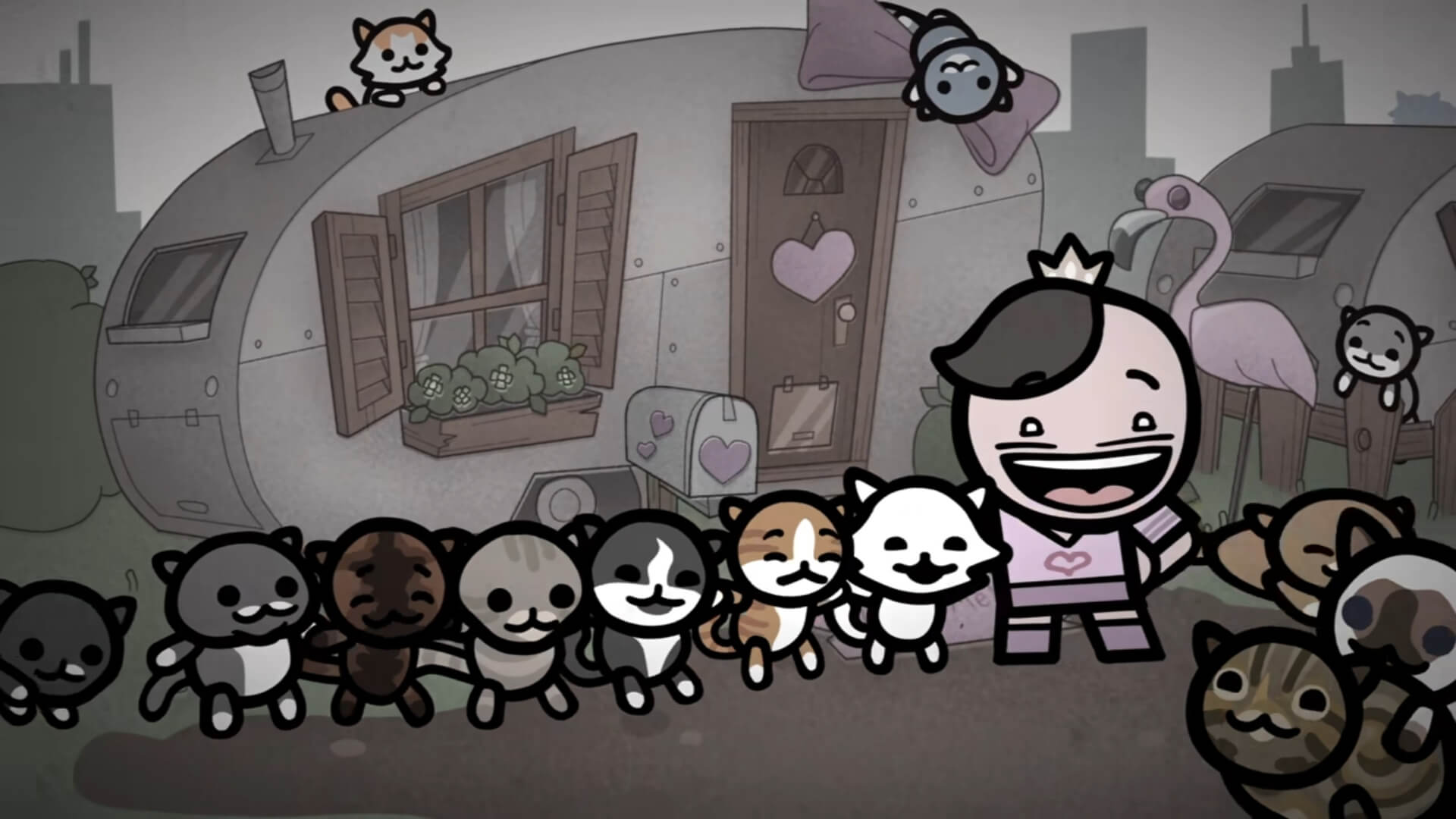
Mewgenics is, at long last, a worthy successor to The Binding Of Isaac

Edmund McMillen’s cat breeding/combat game is unafraid to give players a middle finger—or the power to break it in half.

Mewgenics is, at long last, a worthy successor to The Binding Of Isaac

I’ve said “fuck you” to Mewgenics more than any game in recent memory—usually after walking straight into one of the million or so ways that Edmund McMillen and Tyler Glaiel’s new tactical combat/cat breeding simulator happily offers to punish the inattentive player. I’ve muttered “fuck you”s both big and small, from the resigned “Aw, fuck you” that comes from misplacing my feline warriors in a way that means I won’t wipe a combat wave in a single turn—thus denying me delicious extra loot—all the way up to the huge, hollow “Fuck you” that comes from accidentally wiping my entire team of deranged cartoon cats because I failed to recognize the Rube Goldberg mechanics of kitty-on-kitty violence. I’d be lying if I said I enjoy these moments, where I have my own inadequacies of planning rubbed in my face like so many cartoonishly drawn feline buttholes. But “fuck you” also can’t happen without caring about the outcome of an encounter deeply. And Mewgenics has an absolutely staggering amount of deep, enjoyable turn-based combat for players to care about.

Although it’s technically McMillen’s third game since he first released landmark indie title The Binding Of Isaac in 2011—after 2017 platformer The End Is Nigh, co-created with Glaiel, and 2019’s interesting-but-undersupported The Legend Of Bum-boMewgenics is, in conceptual terms, The Big One: A 15-year labor of love that attempts to do for turn-based tactical combat games like X-COM or Into The Breach what Isaac once did for twin-stick shooters and dungeon crawls. Which is to say, transform them from discrete experiences into something almost endlessly replayable—the fabled “forever game.” And it does so through an oft-maligned force that McMillen has made an artform of: Randomness.

The random is everywhere in Mewgenics: In the starting stats of the mangy cats that show up at your doorstep (or get popped out of your current cats, once they start humping). (You can turn the cat-fucking animations off, by the way, the game’s one concession to the way McMillen’s gross-out aesthetic will inevitably alienate certain players.) There is randomness in the enemies and bosses you face, and in the special events that occur between fights—which can range from huge benefits all the way down to run-ruining twists of fate. (Spoiler note: If you see a Junji Ito-style crack in a cave wall: Stay the hell away.) And most especially in the abilities that each class of cats, drawn from classic Dungeon & Dragons templates, can develop. A Ranger cat with the Tower Defense trait, for instance—which fires a small, low-damage shot at every enemy that moves into its range—will play very differently from one that’s set up to lay traps across the battlefield. A Mage that focuses on ice spells will be doing crowd control, locking down enemies in giant ice cubes so that your team can whittle down the other targets; one focused on electricity will instead be trying to generate chains of liquids and conductive objects to hit as much of the battlefield as they can with every single spell.
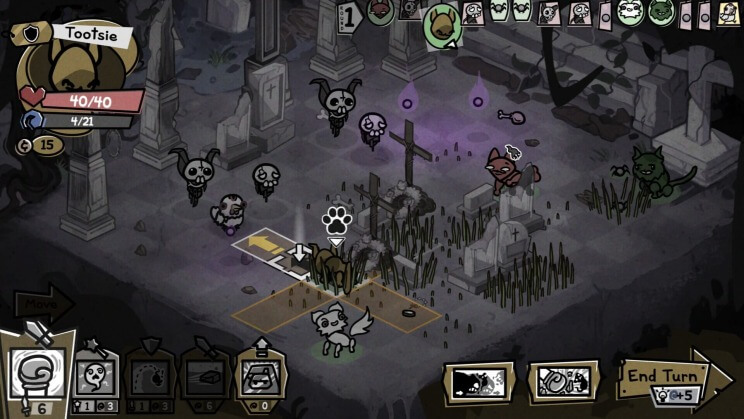

At the heart of all this chaos is the same design principle that made Isaac compelling across more than a thousand hours of gameplay: The idea that interesting decisions happen when players are forced to work with, and mitigate, randomness in service of breaking a game over their knee. This is the purest pleasure of Mewgenics, once you boil away its other layers (including an extremely hook-y progression system that cannily encourages the player to take on risky missions): Fielding a new team of cats, looking over their abilities, and then figuring out how they (and your equipment, and the stat and ability choices you get every time you level up) can synergize to create something that is both stupid, and stupidly powerful. In the same way that McMillen and Glaiel are not afraid to allow players to completely screw themselves over, they’re unafraid of—and, in fact, giddily support—those moments when you realize “Wait, if those two abilities go off in sequence, then… I can kill everything.” These moments consistently feel amazing, and Mewgenics is, in large part, a machine built to create them.

In case it sounds like I’m gushing aimlessly, like an animated cat with a suppurating head wound (apologies, playing this game too much starts you thinking in those kinds of terms), I should make it clear that I don’t love everything about Mewgenics. Although 15 years of playing Isaac have largely inured me to McMillen’s love of poop, pee, and fart jokes, the addition of both higher-resolution graphics and text to his arsenal are not going to make the game an easier sell to many people I know who would otherwise love it. (The music, as always, is impeccable, though, with a clever touch that sees the song you’ve been hearing throughout the level suddenly develop lyrics once you reach the area boss.) On a more fundamental level, the game sometimes struggles with clarity: Although the vast majority of status effects, enemy and unit stats, and other things that determine the game’s logic are clearly spelled out, every once in a while I’ve run into interactions or vaguely worded effects that screwed me in ways I didn’t expect—generating a much nastier variety of “fuck you.” (You can technically reset battles to try again, but only if you don’t mind getting an increasing sequence of run-ruining penalties delivered via an extended Animal Crossing reference.) The “cat breeding” mechanic feels like an afterthought (or maybe a beforethought, given how much it seems like an artifact of the game’s long and misadventure-filled development.) And, on a more emotionally honest note, it never feels good, in the moment, to find yourself trapped in a no-win situation, playing out the consequences of your past choices—no matter how fundamental that possibility of failure is to everything the game does so well.

Will Mewgenics catch on in the ridiculously successful way that Isaac did, defining a whole era of independent video game development? It seems impossible—in part because the game is being released into the world that Isaac created. (It’s also quite a bit more complicated, and less immediately “pick up and play,” than the earlier game, which feels like it will make it harder to evangelize.) But it is, undeniably, McMillen’s best game in more than a decade: Incredibly deep, immensely satisfying, and with a huge labyrinth of secrets lurking under its initially simple offerings. You just have to wade through a whole lot of dead cats—and a fair amount of “fuck you”s—to get there.

Mewgenics, Image: Edmund McMillen and Tyler Glaiel

 
Join the discussion...
Keep scrolling for more great stories.