Undead, not fun-dead: A brief history of the playable zombie in video games

Inspired by Halloween—and recent zombie brawler Stupid Never Dies—we walk you through the joys of joining the undead horde.

Undead, not fun-dead: A brief history of the playable zombie in video games

The zombie is the perpetually disrespected cannon fodder of the monster world: Lumbering, shuffling, and subject to endless indignities, like getting traffic cones stuck on his head, being stuck on literal leashes, or being turned into ironic photo fodder by photojournalist video game “heroes.” Pity this sad, dead man: The hapless grunt who exists, more often than not, to be the first thing a protagonist kills—often on the way to gunning down thousands, if not hundreds of thousands, of his brain-hungry ilk. Slow, stupid, and almost always presented as threatening only when organized into an accidental horde, the zombie has a crap lot in unlife. Which makes me ask, on this spookiest of Saturdays: Has there ever been a video game that’s really done these poor rotting saps justice? Is there a game that’s ever made playing as a zombie actually fun?

This question comes to mind primarily courtesy of new action game Stupid Never Dies, the first effort from new studio GPTRACK50, freshly minted home base for long-time Capcom producer Hiroyuki Kobayashi. (Whose credits include such horror-adjacent pit stops as Dino Crisis—the franchise that dares to ask whether velociraptors can be as scary as zombies— and a handful of Resident Evil games.) I take no great pleasure in reporting that I don’t actually like Stupid Never Dies very much, at least in its opening hours. Although the script—which centers on a hapless undead chump named Davy, who embarks on an absurd multiverse adventure to revive a girl he had a “love at first glimpse of her frozen corpse” experience with—is certainly energetic enough, it’s also got a high-volume, “Isn’t this all so wonderfully wacky?!” tone that I usually associate with perpetually exhausting game designers like Suda51. (What’s that? I start my levels by flushing myself down a sci-fi toilet? Oh, video games.)

Worse, Stupid’s gameplay suffers, ironically, from an overwhelming glut of ideas, causing its metaphorical belly to distend like a we’re-not-using-the-zed-word that’s spent too much time grazing at the all-you-can-eat people buffet. The core idea—of doing repeated roguelike runs while using Davy’s omnivorous abilities to Monster Mash your way into other abominable forms, like a Werewolf or Harpy, is solid enough. But it also quickly reveals that this is one of those games that thinks players will thrill to the idea of being offered an upgrade that provides a five-percent increase to attack damage done with a left-handed claw hammer on a Tuesday.

To put it another way: For a game about playing a guy so dumb his brain literally doesn’t work, it’s certainly happy to throw a lot of numbers at you. Worst of all, the gameplay you get out of all this system overload never feels especially zombie-esque—given that you try to spend as little time in Davy’s default form as you can, because all he can do in it is swipe at enemies and puke—or all that fun. It’s hard to imagine this as the game that helps fulfill a player’s secret undead dreams.

So we must look back, and further afield, to find our ideal shambling candidates. Specifically, I’m looking for games that really try to put the player into the zombie lack-of-mindset, and not just use the undead as a template for more traditional offerings. For instance, I’d argue that, as much fun as it is to play as the Zombie team in Valve’s online Left 4 Dead games, the actual experience of playing as those 28 Days Later-fast killing machines—with, arguably, the sole exception of the lumbering, constantly vomiting Boomer—doesn’t actually match-up with our core understanding of zombie-dom all that well. 

I’d also like to avoid focusing too much on arguments of zombiehood that you could, uncharitably, characterize as the “Yes, Okay, That’s Technically Correct” school of internet argumentation. To pick an example out of the irritating ether: Yes, okay, it’s technically correct that the characters you play as in most of From Software’s Dark Souls games are some manner of Undead—even if those games’ abjectly depressing cosmologies raise some questions about what “Undead” even means. But given how mobile and low-key ambitious you end up being in the Souls games (and the thematically similar Elden Ring), I’d still argue that they rarely play like games about being a zombie. You can also consider yourself preemptively acknowledged, spoiler warriors who want to talk about Resident Evils 7 and 8, Dead Island 2, or any other game where it turns out your player character has been hiding their undead inclinations all along.

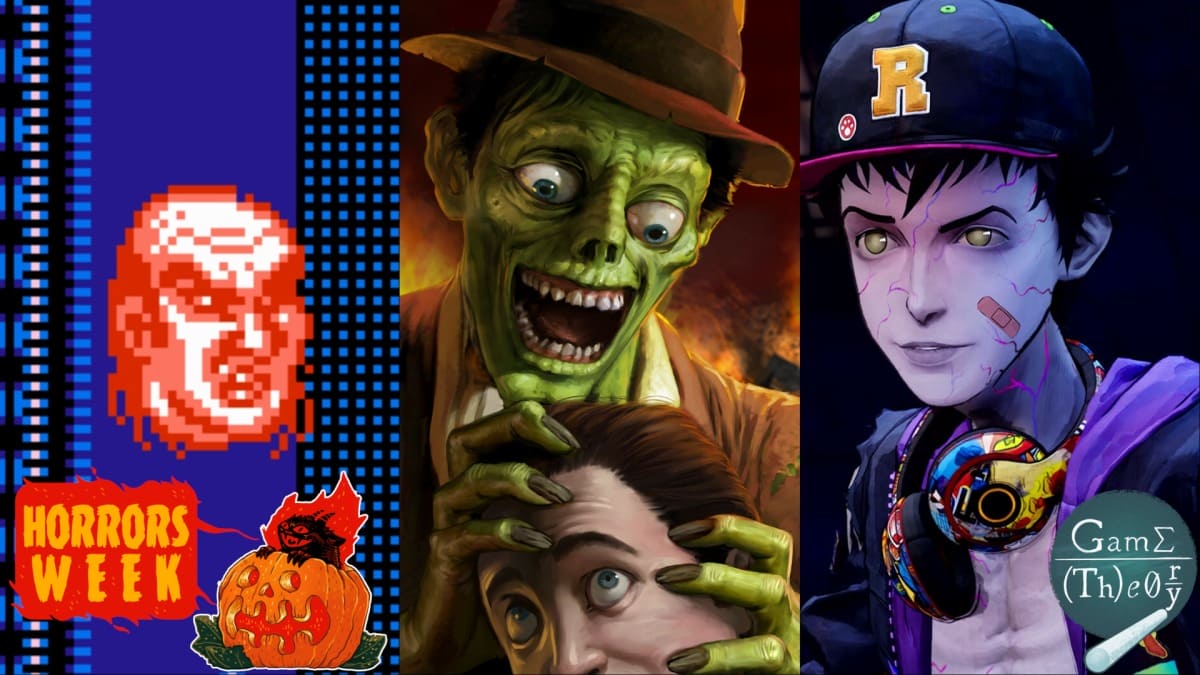
Looking back at the grand history of gore-soaked gaming, there is one early and obvious contender, though: 2005’s Stubbs The Zombie In Rebel Without A Pulse. Released by studio Wideload Games in the midst of one of gaming’s periodic growth spurts of subversiveness—this was the same year that gave us the similar “Playable B-Movie but you’re the monster” Destroy All Humans!—Stubbs checks a lot of the boxes the would-be brainmuncher might be looking for. Your playable zombie buddy, Stubbs, shambles around a 1950s-style town, happily devouring its inhabitants; his abilities all rely on the fact that he’s an ambulatory dead guy capable of turning other currently living humans into same; hell, in a bold movie against annoyingness (especially noteworthy for this era of gaming), he has the sheer dignity to not make constant quips, instead restraining himself to a simple “Brains.” (Including, somewhat famously, in a bit referencing Patton, every 2000s-era Xbox owner’s favorite comedy reference point.) 

For a pure expression of zombiness, he’s probably hard to beat, especially since the game got a semi-modern re-release just five years ago for anyone currently wanting to scratch that skull-cracking itch. (Meanwhile, it’s also fun to remember that this game, despite being pretty tame and cartoonish in its depiction of violence, got hit with one of those periodic bouts of gaming moral panic that opportunistic politicians gin up every few years—forcing Wideload to issue a straight-faced statement clarifying that zombies aren’t engaging in “cannibalism,” because they aren’t human anymore.)

But zombie-ism is, of course, a big, bloody tent. And while Stubbs embodies the surface principles of zombie schlock, delivering an early Romero-jolt of goofy undead action, he doesn’t necessarily worm his way deep into the rotting heart of ideas associated with playing as a card-carrying member of the undead horde. For that, more often than not, we have to turn to the world of multiplayer games, which are frequently a lot happier to let players play a minor cog in the machinery of evil. There’s the recent trend of asymmetric horror movie-based games, for instance; while we’re not touching, with a two-foot machete, the whole “Does Jason Voorhees count as a zombie?” debate, games like the since-shuttered Evil Dead multiplayer game let the player controlling the Evil take control of individual Deadites, which made for an enjoyable “Throwing yourself into the thresher, just hoping to get one nasty hit on those smug human bastards” gameplay. 

The king of this sort of “hell is other people pretending to be zombies” chaos, though, is also, sadly, now defunct: Kevan Davis’ fascinating 2000s-born browser game Urban Dead. Although technically not all that different from the MUDs and MUSHes that formed the Wild West of early massively multiplayer gaming—text-based worlds where you were nevertheless able to interact with other players, kind of like a chat room, with swords—Urban Dead distinguished itself both by its theming, and the surprisingly rich sociology that developed around it. With players self-sorting into either zombie or human camps, the game (which, in practice, mostly played out with players clicking around to move between connected rooms and trade resources or, possibly, gunfire with the “people” inside them) developed its own robust culture over two decades of online life. 

The tales of self-appointed rescue squads, or bounty hunters who would seek to punish in-game criminals, or huge sieges where survivors would have to band together to try to hold in-game shopping malls while massive coordinated teams of zombies attempted to storm the barricades, are the stuff of early MMO legend. Part of the fun of the game, meanwhile, was that it could play into the fantasy of scale that is inherent to the zombie apocalypse: Enough players were able to run around in its simplistic world to make you feel like you were part of a horde, or about to be messily devoured by one, years before technological advances made 3D zombie games like Capcom’s Dead Rising plausible. Against all odds, and in the face of evolutionary leaps in the gaming landscape surrounding it, Urban Dead actually managed to hang on into 2024, before changing laws surrounding online age verification made its single-person dev team give up the ghost; it remains one of the most interesting exemplars ever in the playable zombie sciences.

On the other hand, though, you also have 1990 NES game Zombie Nation, a game that lets you play as a giant undead disembodied samurai head flying across New York, blowing up an evil version of the Statue Of Liberty that’d been turned by aliens into a sort of democracy-hating Medusa; that’s also a pretty cool thing for a zombie to do. It’s your pick, honestly: Zombies, after all, are like any pop culture monster, insofar as they’re only as cool as the ideas that artists and creators imbue them with; it’s that care and thoughtfulness for our brain-deficient buddies that makes them so much fun to slaughter—and, occasionally, be.

 
Join the discussion...
Keep scrolling for more great stories.