Highguard set a new speed run record before it even came out: no game’s discourse turned exhausting faster than this shooter. Seven weeks ago nobody outside of Wildlight Entertainment knew it even existed, but after a single trailer reveal at the end of a farcical “awards” show, suddenly everybody had a deeply held opinion about it. The conversation around Highguard went from 0 to absolutely insufferable in 150 seconds, and it’s somehow only gotten worse in the weeks since, on all possible sides. From the too-cool cynicism of players tired of live service “forever games,” to the blind corporate boosterism of ostensibly journalistic enterprises, very little of the conversation around it has been constructive or well-considered—and none of it had anything to do with Highguard as an actual game. You know, those things you play—the things we’re theoretically talking about when we talk about games.
Highguard’s out today, free for anybody on PC, PlayStation 5, and Xbox Series X|S. Last week, journalists and critics spent a few hours with the game, which has been described as a “raid shooter” by its creators. What they played, and what you can download for yourself today, doesn’t seem like something that should’ve caused such controversy—either the instant dismissal of “gamers” or the wagon-circling of the media. Highguard arrives as a thoroughly competent squad shooter with a well-defined structure distinct from other entries in this space, and a financial approach that should avoid the most exploitative aspects of live-service gaming.
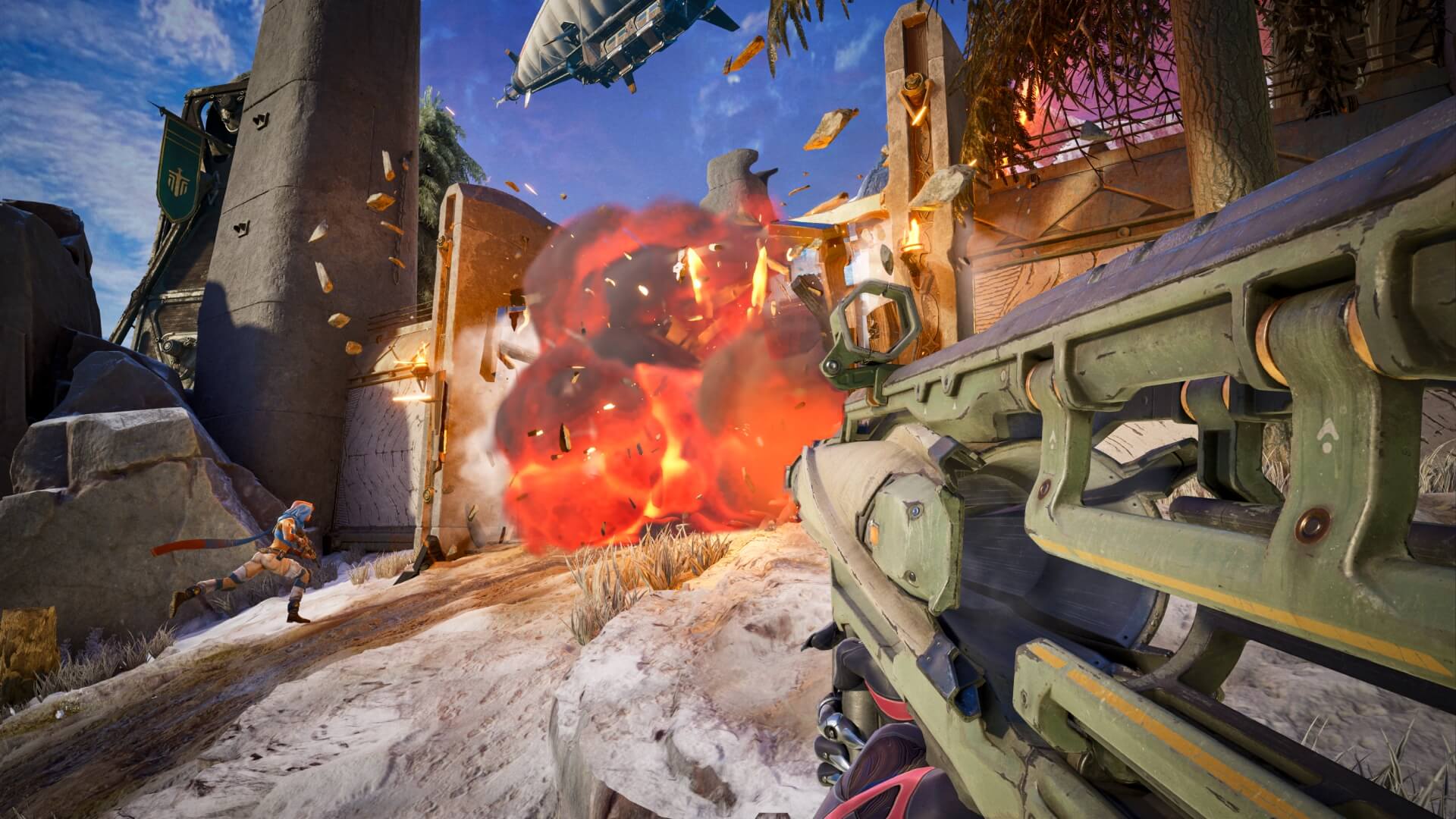
Highguard’s primary in-game focus is the raid. Two teams of three vie to destroy their opponents’ base, and they do that by breaking through its defenses and strapping a bomb to key targets. Each base has a health meter that starts at 100 and goes down after certain crucial actions; if that number ever gets reduced to zero, it’s game over. It’s effectively a way to keep score. If you bomb a base’s heart, a well-fortified spot deep inside the base, you destroy the whole fortress completely and immediately win the match; there are two other spots that are easier to get to and quicker to sabotage that will destroy the base when they’re both bombed, or do significant damage whenever one is successfully blown up.
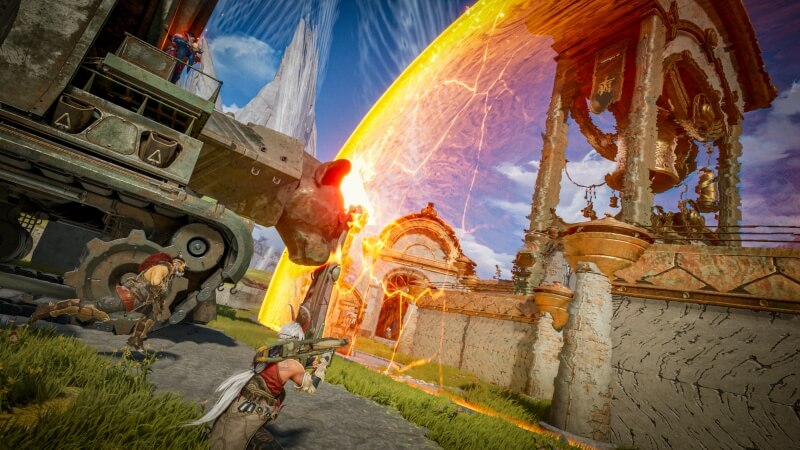
That raid is the heart of Highguard, but it’s the last in a regular sequence of phases that repeats until one team wins. You’ve got to build up to the raid. At the start of a game, you’ll spend a minute reinforcing your base, making certain walls impregnable by normal weapons or abilities. The map between bases then opens up, and you’ll have two minutes to collect as many armor and weapon upgrades as you can; they’re strewn about the countryside in easily spotted treasure chests, and to let you grab as much as possible, you can immediately call a mount that will zip you across the countryside. You can also use this time to mine vesper, a blue crystal that dots the landscape, and that can be used at Trader Flynn’s storefronts to buy armor and weapon upgrades. During this phase, you’ll see a giant swirling purple cloud somewhere on the map; beneath that cloud, the mystical sword known as the Shieldbreaker will appear at the end of the supply phase’s two minutes. Fighting over the Shieldbreaker will be the first serious action you’re likely to see in a match, and whichever team can get it to the other’s base first will start the raid. If the raiding team isn’t able to destroy the base’s heart or both of the other two targets within a set amount of time, the sequence begins again, with the raided base’s health reduced by however much it was damaged, and all newly acquired weapons and armor getting a level boost. If the team being raided is able to prevent the raiders from blowing up any of the three targets, they’ll inflict damage on the raiding team’s base, basically letting you score on defense. This cycle repeats until one base’s health is finally reduced to zero, which ends the game.
That concept of base health, and the various ways damage can be done to it, opens up the possibilities of a match. If one team dominates, destroying a base on its first possession of the Shieldbreaker, a game of Highguard can take as little as seven minutes. If two teams go back and forth, though, swapping possession of the Shieldbreaker and raiding each other’s base in alternating rounds, it can take over a half-hour. One match we played did exactly that. We traded off on raids, blowing up one target each time, until eventually winning on our second raid at a total time of 32 minutes; our base had only 10 hit points left.
This all gives Highguard a more overtly sports-like feel than most online shooters. Get the thing you’re fighting over (in this case, a glowing blue sword instead of a ball or puck) into the other team’s turf, and then win a tense scrum in the end zone (planting a bomb and preventing the defenders from defusing it before it blows) to score. It really does feel a bit like football; fighting over the Shieldbreaker on the open map resembles a drive down the field, with the ever-present chance of a turnover, and the raid is a smashmouth goal-line stand to keep the other team from scoring. Although raiding a base immediately does damage to it, keeping them from blowing up a target is like blocking the extra point kick, with the added benefit of scoring if you pull it off (in the form of dealing damage to the rival base through a successful defense).
That raises the obvious question of Highguard as an esport—something that Wildlight doesn’t want to discuss at the moment. They’ve revealed no plans for any kind of officially organized tournament component, but admit that the possibility is obviously there—and that they’d love to see high-level pros take a crack at their game.
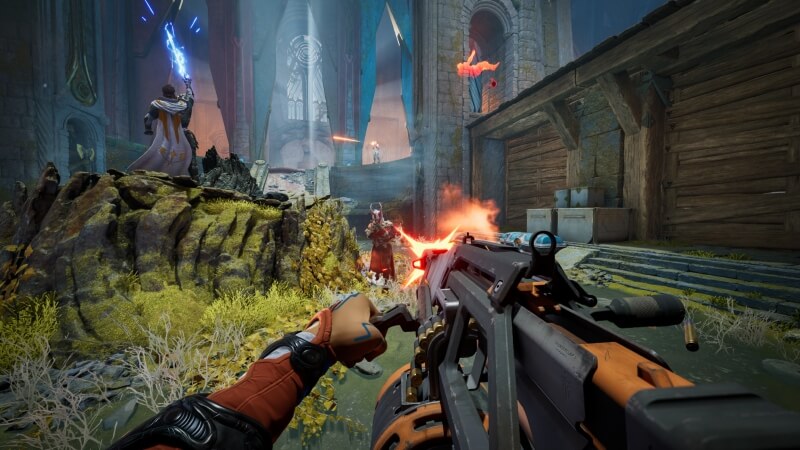
Highguard launches with eight playable characters, called “wardens.” Each one has one “tactical” ability, a useful skill with a relatively short cooldown meter, and one “ultimate,” which packs a considerable punch but takes much longer to generate. In addition to these magical superpowers, they’re also proficient with a variety of firearms—this is a shooter, after all. They can all freely use any of the armor and weapons scrounged up during the stockpiling phase, but are better suited at different roles based on their abilities. It’s fairly standard stuff, your tanks and supports and healers and strikers, and that familiarity—combined with a few high-profile failures in this live-service “hero shooter” genre—drives much of the negativity around the game. People might generally complain about the overreliance on intellectual property in entertainment today, but creating something new will always be riskier than adapting a presold concept, as with 2024’s breakout hero shooter hit Marvel Rivals. And it doesn’t help that, although Highguard’s eight launch wardens aren’t exactly stock types, it isn’t hard to see some of the inspirations that influenced their development, which can make them seem a little generic at first. Every game starts with dialogue between teammates, revealing their personalities, and there appears to be at least a little bit more depth to some of them than initially evident, but it takes time to see where and how they fit in as actual characters instead of formulaic stand-ins.
A new warden will be added during every two-month season, with six scheduled through the rest of 2026. New bases, maps, and weapons will also be released each season, along with various character skins. Outside of cosmetic items, Wildlight plans on all these additions to be free for players, so nothing that actually impacts gameplay will require a purchase. They also promise there’ll be no lootboxes and no randomized purchases, and that content won’t be removed or available for a limited time only; once it’s released, it’ll be available for future players, too. If they stick to all of this, it should ensure that Highguard feels less predatory in its monetization than certain other live service games.
Wildlight clearly thought carefully about how to do something different in what is a very crowded market. The overtly sports-informed back-and-forth nature of a Highguard match makes it stand out compared to other “hero shooters,” and their announced approach to monetization seems to treat consumers with respect. That said, exhaustion with this style of game is real, and the negative buzz around Highguard is palpable—so much so that Wildlight regularly addressed it throughout its preview event, taking blame for releasing what they now call a bad trailer that didn’t do a good job of explaining the game. Bad reveal aside, the core of this game is strong, and Highguard itself should stand a chance at success, if enough players look past the anti-hype and give it a chance.


 Keep scrolling for more great stories.