
Hoppers is a reminder of how good, and weird, Pixar can be when it aims small
The first Pixar movie from Daniel Chong overcomes the studio's frequent flaws for some big laughs.
Photo: Pixar
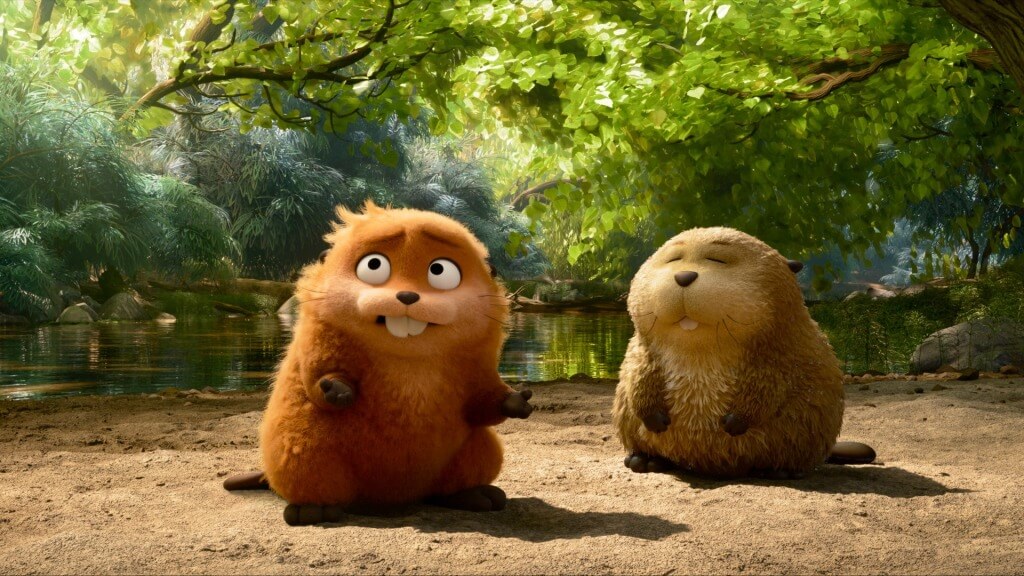
So many Pixar movies, especially those made during the company’s astonishing 15-year golden era, depict hidden worlds with amusing parallels to the humans who don’t know about them. These movies cannily fuse bustling fantasies with nervous realities: Beneath our feet or otherwise outside our purview are societies made up of toys, bugs, fish, or monsters whose stresses and struggles mirror our own (especially if our own involve parenting anxieties). So while there’s plenty of familiarity in Pixar’s small-scale animated romp Hoppers, there’s also a smart, unruly variation at its center. When human teenager Mabel Tanaka (Piper Curda) uses Avatar-style tech to send her consciousness into the synthetic body of a beaver, she doesn’t discover a heretofore hidden animal society like something out of A Bug’s Life. Or rather, she does discover an animal society, but it’s different enough from the human world so as to seem, at times, inscrutable, creating communication challenges even outside of the language barriers. Animals: They’re really not that much like us. Pixar has touched on this before—think of the seagulls quizzically cawing “mine?” in Finding Nemo, very much echoed here—but has rarely brought the weirdness to such a fever pitch.
Unlike a lot of its animated competitors, Hoppers is at its best when it’s most manic. That’s not to say that it lacks a sympathetic human center in Mabel, a college student who spends most of her time antagonizing the public official known as Mayor Jerry (Jon Hamm) over environmental concerns. But Mabel’s origin story, which of course involves a prologue where she’s depicted as an even-more-adorable miniature version of herself for shamelessly maximized (and formulaic) “awws,” has a familiar animated-movie arc. As an animal-loving outcast, she bonds with her grandmother (Karen Huie), then reels from her loss. This also fires up Mabel’s determination to save their favorite spot, a peaceful but small animal habitat, from the mayor’s construction project. Mayor Jerry can build as long as there aren’t any animals making their homes there—and they’ve mysteriously cleared out in recent months. So Mabel hijacks her professor’s head-hopping tech to go undercover as a beaver and attempt to coax some wildlife back to the pond.
Though the set-up of Mabel’s character is extended, the leap from introducing crazy consciousness-transferring tech to Mabel chucking her brain into it feels like the product of a big story meeting: Can she get into the beaver body faster? The impatience is understandable. Mabel’s robo-mammal body gives her the ability to perceive chitters and squawks as English voices, largely provided by Saturday Night Live alumni and other comedians, and communicate back in kind. This is how she meets and befriends King George (Bobby Moynihan), benevolent ruler of the beavers. The other various species’ monarchies are not quite so chill, and Mabel, who has plenty of anger and frustration to vent, accidentally spurs them to plan a full-on uprising against the humans for their encroachments.
 Keep scrolling for more great stories.