
It’s time for Netflix to slay its Monster
A glib telling of The Lizzie Borden Story only reminds us of the futility of Ryan Murphy's salacious true-crime series.
Photo: Netflix
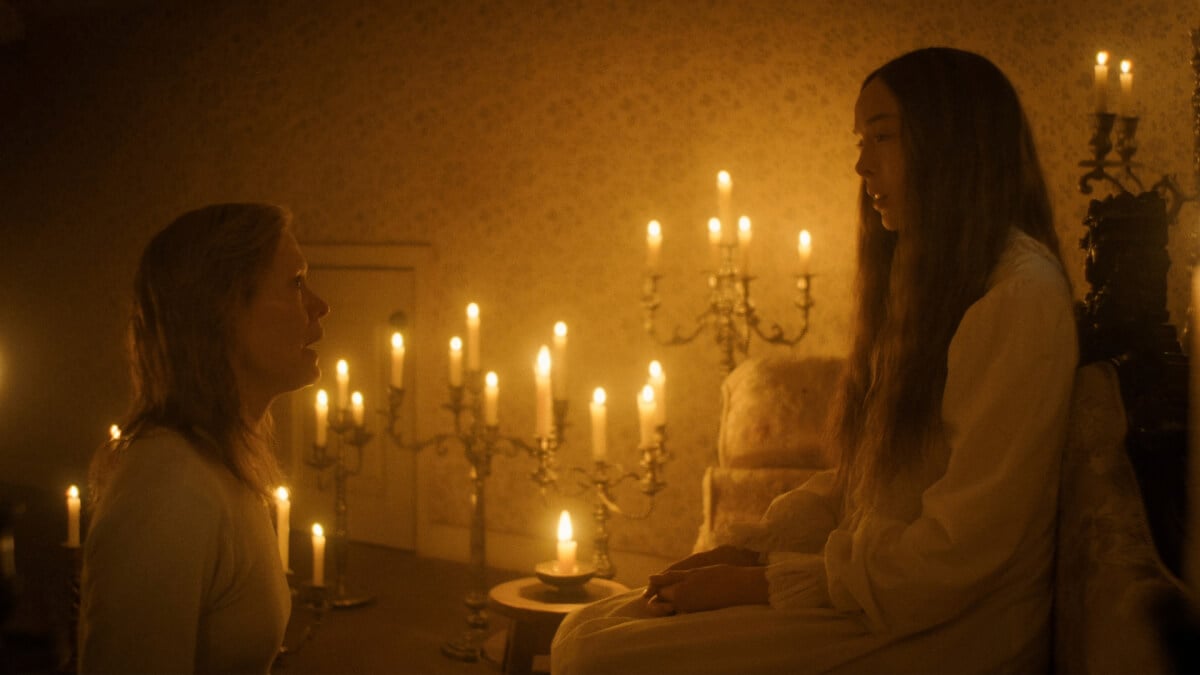
The sixth episode of Monster’s fourth season is an insufferable, contrived fever dream. In the Ian Brennan-penned hour, serial killer Aileen Wuornos (Sarah Paulson) spends a night in the childhood home of Lizzie Borden (Ella Beatty), the accused axe murderer who Brennan positions as something of a feminist icon to Wuornos. At one point, while hooking up with her partner, Aileen pictures Lizzie’s dad’s hacked-up corpse on the couch next to them. She later imagines herself dancing with Lizzie and her housemaid/alleged co-conspirator and lover, Bridget (Vicky Krieps), to Bronski Beat’s “Smalltown Boy.” They groove together in a moment meant to illustrate a shared kinship between Aileen and Lizzie. After all, despite belonging to entirely different time periods, the two are connected simply because they’re… murderous women?
That’s the loosely defined, delirious link co-creators Ryan Murphy and Brennan draw in Monster: The Lizzie Borden Story, which desperately wants to also be Monster: The Aileen Wuornos Story. Except, a 2003 biographical thriller about Wuornos’ life also called Monster already won Charlize Theron an Oscar. So now, the stories of Borden and Wuornos are interwoven, along with that of the Hungarian countess Monster wants us to see as their 16th-century predecessor, Elizabeth Báthory (Krieps), for a far too glib true-crime saga. Take, for example, episode two dropping the needle on Lambrini Girls’ “Cuntology 101,” when Lizzie and Bridget try to poison the former’s neglectful parents. Or the result of that particular endeavor, when Andrew (Charlie Hunnam) and Abby Borden (Rebecca Hall) vomit all over their dining room in a lengthy take that director Max Winkler says was designed to evoke the experience of watching the fountains of Las Vegas’ Bellagio Hotel.
 Keep scrolling for more great stories.