The White House, operating as always with the emotional maturity of a group chat that peaked in middle school, responded exactly how you’d expect. Communications Director Steven Cheung reposted Kesha’s statement with the smug addendum: “All these ‘singers’ keep falling for this. This just gives us more attention and more view counts to our videos because people want to see what they’re bitching about.” Gotta say, putting scare quotes around “singers” like performing music is not a real job is a bold move from a man whose boss once starred in a Pizza Hut commercial with his ex-wife. Kaelan Dorr, another White House comms staffer, piled on with the baffling claim that “Kesha quotes are like Popeye’s Spinach to this team,” a simile so tortured it should probably file for asylum.
The administration’s argument, insofar as it has one, is that artists objecting to unauthorized use of their music is actually a 4D-chess engagement strategy: they complain, people click, and the war-glorifying TikTok gets even more eyeballs. I mean, like, technically, yeah, but at the same time, what a way to conveniently ignore the fact that the White House keeps getting publicly dressed down by beloved pop stars, settling lawsuits, and deleting videos. It also sidesteps the part where, three weeks after that “Lethality” video went up, the United States actually went to war with Iran—a conflict that has already murdered over a hundred young Iranian girls at a brutally-bombed primary school for no discernible reason, with the Strait of Hormuz closed and the region in freefall. Suddenly a TikTok of a fighter jet blowing up a ship to Kesha’s “Blow” reads less like edgy social media and more like a trailer for a war the administration was already planning.
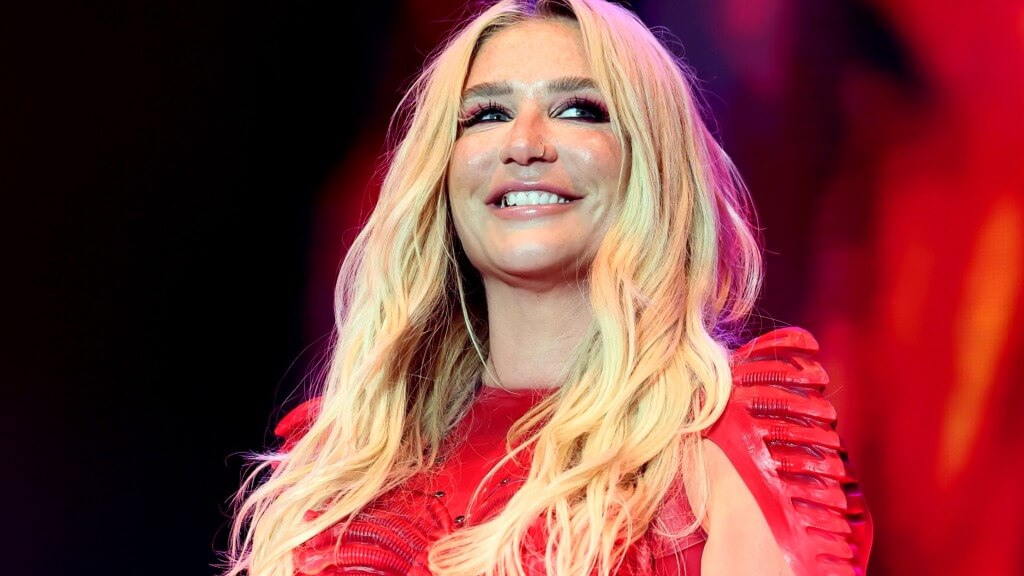
Kesha’s retort was beautiful in its simplicity: “Stop using my music, perverts @WhiteHouse.” And for whatever it’s worth, at the time of writing, Steven Cheung’s initial diss has 63,000 views. Kesha’s reply has 3.7 million. Do the math.
The “We R Who We R” singer is, of course, only the latest artist to tell the administration to keep its hands off their catalogue. At this point, the list reads like the lineup of a festival no one asked for (but would honestly go pretty hard): Olivia Rodrigo called ICE’s use of “All-American Bitch” “racist, hateful propaganda”; Sabrina Carpenter got a video of ICE agents set to “Juno” deleted after calling it “evil and disgusting”; Radiohead told the Department of Homeland Security to “go fuck yourselves” over a cover of “Let Down”; SZA accused the White House of deliberately provoking artists; and the estate of Isaac Hayes just settled a lawsuit over Trump’s unauthorized use of “Hold On, I’m Coming” at rallies—which, given that the campaign reportedly used the song over 130 times without permission, suggests less an oversight than a pathology. Even Pokémon and Semisonic have objected, which means the Trump administration has managed to unite Pikachu and the guy who wrote “Closing Time” in bipartisan disgust. Quite the coalition.
There is something uniquely grotesque about a government that posts a fancam of a ship exploding set to a pop song, mocks the artist who objects, and then, three weeks later, starts actually bombing elementary schools. The “Lethality” TikTok is a glimpse into the content-poisoned brain of an administration that sees war as an engagement opportunity and human-rights objections as fodder for the algorithm. To paraphrase both Radiohead and Kesha: go fuck yourselves, perverts.


 Keep scrolling for more great stories.