Madonna’s work in film has been, to put it politely, a mixed bag. She has an obvious appreciation for Hollywood history that has shown up in some excellent music videos. As an actor, she is sometimes competent; both of her feature directorial efforts have been panned. Though she obviously loves film, it is not her medium. Her medium is dance-pop music. If you were to tell the story of Madonna, one of the most prolific producers and performers of dance-pop music ever, it would be best told in that medium.
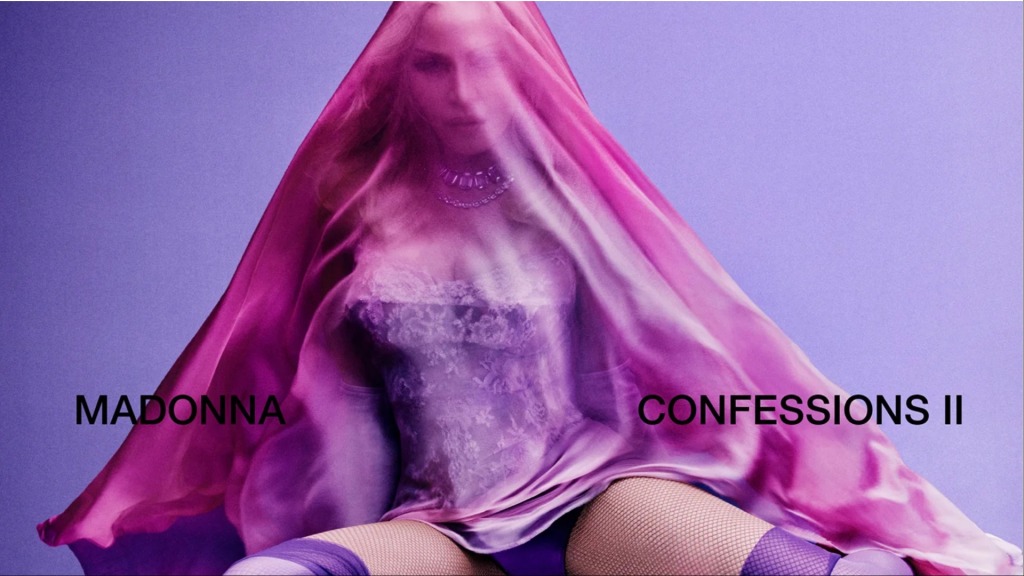
For a long time, Madonna has staunchly refused to become a nostalgia act. Up until her 2023 Celebration Tour, her live shows have existed to promote her new work, making the case that she is not a legacy act, but someone still producing new, trend-conscious pop music about what’s happening right now. I find this admirable, even if it has usually missed the mark in the past 20 years; those more critical may call this a stubborn refusal to acknowledge the fact that she is aging. But after a greatest hits tour, a brush with death, and a scrapped biopic, it seems she is finally in the mood to reflect on her life. That is essentially what she does on Confessions II: reflect on her rise in the downtown Manhattan scene of the 1980s, her relationships with her parents, brother, and daughter, her former flames. The album is not a Wikipedia summary, and it is not a meticulously crafted recreation of Madonna’s most iconic images. Confessions II tells us what those memories feel like, in a way that only music can.
For this endeavor, Madonna has chosen a sonic palette reminiscent of some of her previous highs, particularly 2005’s Confessions On A Dance Floor (for which Confessions II is a sequel, at least in name) and 1998’s Ray Of Light. There are more specific musical and lyrical references to her existing body of work, too. In “The Test,” which Madonna sings with her daughter Lordes Leon, she addresses her daughter as “Little Star,” the title of the Ray Of Light track dedicated to her. “Danceteria,” a cut as solid as anything in Madonna’s discography, deploys a bridge similar to that of “Vogue.” But here, instead of name-checking the icons of Hollywood’s Golden Age, we hear the names of people that Madonna might have seen at the titular club: best friend Debi Mazar, collaborator Martin Burgoyne, doorman Haoui Montaug, artists Fab Five Freddy, Keith Haring, Basquiat, Kenny Scharf, Nile Rogers, David Byrne, the B-52s. The sense of excitement and inspiration that a 20-something Madonna would have felt dancing and performing in this environment is palpable in the musical production. It’s showing us, not telling us, what it felt like to be there in a way that only a musician who was actually there could manage.
Other tracks are a bit more confessional, seemingly referencing specific instances and characters from her life. “Bizarre,” a driving track with production from Martin Garrix, lyrically references “deep blue eyes” and a Shelby Cobra, which have been connected to ex-husband Sean Penn. The more atmospheric Fragile” is about her brother, with whom she had a semi-estranged relationship. “Betrayal” seems to be about her stepmother (“You’ll never take my mother’s place”). All of these tracks are directed at people who Madonna has had issues with, but the topics are handled surprisingly gracefully and maturely. Instead of score-settling, Madonna tends to throw her hands up, adopting an attitude of “life’s crazy, man.” By going backwards, it seems she’s actually able to move on. The second chorus of “Betrayal” lyrically changes from “this is a story of betrayal” to “this is the story of survival,” ending with, “Open the dam, let the water crash in / Let it go, let it go, let it go.”
Confessions II ends on its most poignant note: “L.E.S. Girl.” The song, one of the most beautiful and moving in Madonna’s entire body of work, looks back on her early days in New York being young, broke, and in love. She sings directly to this version of herself, telling her “everything fades away, except for you.” But when the song ends, the lyric is now just “everything fades away.” It’s a stunning admission of aging and mortality from an artist known for resisting those things. She’s not the Lower East Side girl of the “Borderline” era anymore, even if that image is frozen in time forever. There’s a sense of relief in recognizing that even if Madonna the icon is eternal, Madonna the person isn’t, nor does she need to be.
It’s details like these that make Confessions II feel less like a monument to the greatness of Madonna, as an autobiopic almost certainly would have been, than an interrogation of it. Of course, it’s not without self-mythologizing—”Bring Your Love,” her collaboration with Sabrina Carpenter, practically demands worship—but you couldn’t have the story of Madonna without it. Much of Madonna’s life and long career exists because of her unyielding belief in her own exceptionalism. Confessions II is a pretty good case for that exceptionalism; it’s not just good for a late-career Madonna album, but one of the strongest pop albums in recent years. There will almost certainly be some kind of onscreen depiction of Madonna’s life eventually, whether in her own lifetime or not. But for understanding how and why Madonna is Madonna, Confessions II will likely remain the ultimate text.


 Keep scrolling for more great stories.