This lowest common denominator, as Scorsese sees it, is “content.” Over a big chunk of the Fellini essay, Scorsese discusses how “content” was once only used when “people were discussing the cinema on a serious level” (as opposed to “form,” he says), but now it has become a “business term” that encompasses everything. Now, everything from “a David Lean movie, a cat video, a Super Bowl commercial, a superhero sequel, a series episode” are all considered the same thing because they’re all “content,” with the blame for this falling on the shoulders of the streaming platforms that are taking over the “moviegoing experience” just like how “Amazon overtook physical stores.”
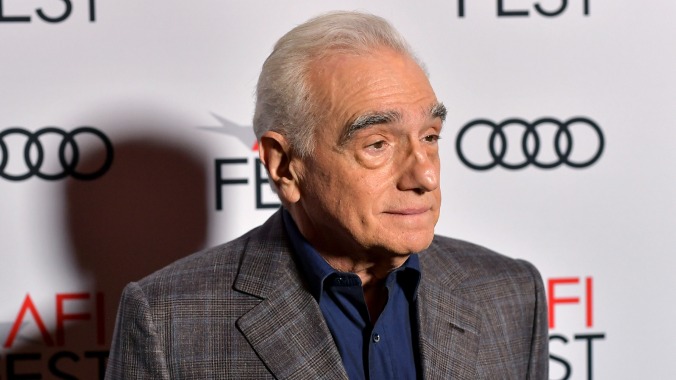
He acknowledges that he has benefitted from the rise of streaming platforms (his next movie will be on Apple TV+), but their algorithms are reducing everything to “subject matter or genre” and rendering any kind of curation meaningless—outside of things that are “actually curated,” he says, like MUBI, the Criterion Channel, and TCM. It’s not that he’s just upset about things being bad now, though, it’s more that he’s mourning the disappearance of the wild, risky days when now-legendary filmmakers were still figuring out how to redefine the art form in real time. It’s fair for him to miss those days, but also it’s 2021 and both the ways that movies are made and the ways that movies are released are completely different from what they were in the ‘60s. He’s not just an old man yelling at a cloud (get it?), he just misses the days when the thing he has dedicated his life to was still new and revolutionary.
The point he’s making, though, is that people who love movies the way he does need to be firm in their belief that films like the ones Fellini made “amount to much, much more than mere property to be exploited and then locked away” because “they are among the greatest treasures of our culture.” (That all being said, there are some really good cat videos out there that he should check out.)


 Keep scrolling for more great stories.