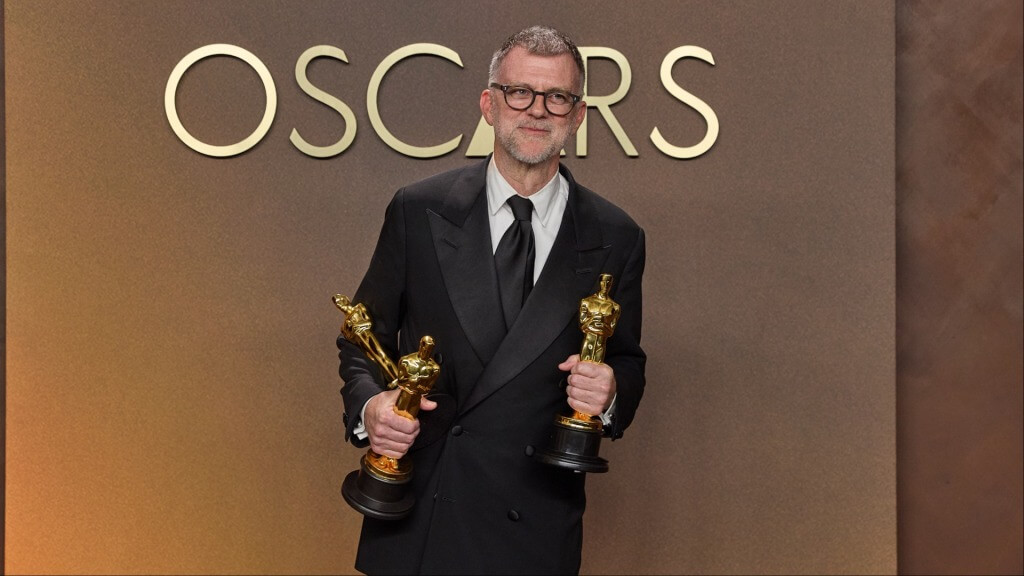
Before that martini, however, Anderson stopped backstage to field questions about his win. When asked how One Battle After Another reflects our times, Anderson joked, “I thought we were supposed to be partying!” before explaining that the parallels to current events should be clear in the film. Anderson was then asked by HuffPost‘s Njera Perkins about the film’s racial politics and its depiction of Black women in particular, which it has received some criticism for in the past.
“I know a little bit about that critique,” Anderson said. “I know that Teyana has talked about it a lot. I know we have the portrayal of many different characters. In particular, her character, who is so flawed, and unfortunately makes decisions that are detrimental to the revolution she is trying to fight. It’s complicated. We always knew we were trying to make something complicated. We knew we weren’t making something that was heroic, and we needed to lean into that, and we needed to own the fact that this woman was suffering not only from postpartum depression, but she was suffering from issues of her own, that she hadn’t really reconciled with.”
“It’s a pretty dangerous thing when you start out and want to change the world, but you start to kind of become selfish,” the director continued. “You read your own reviews. That was our hero in Perfidia, who becomes an anti-hero. The point of it is to set up the story of Willa, the next generation. What happens when your parents who are damaged and have handed quite a difficult history to you, how do you manage that? That’s our story, and our story in Chase and her evolution.”
His comments are similar to Taylor’s response to the criticism when she was asked about it at the Golden Globes. “It will never be a moment of judgment, because a lot of her mistakes have come from her being in survival mode, dealing with postpartum depression and the title of being a strong woman—a strong Black woman,” said Taylor (via Hot 97) about Perfidia’s characterization and the sex scenes with Penn’s character. “We don’t get the same amount of compassion as everybody else. We don’t get the same amount of grace as everybody else. Everybody just assumes we’re okay.”


 Keep scrolling for more great stories.