With Podcast Canon, Benjamin Cannon analyzes the history of podcasts and interrogates how we talk about the art form.
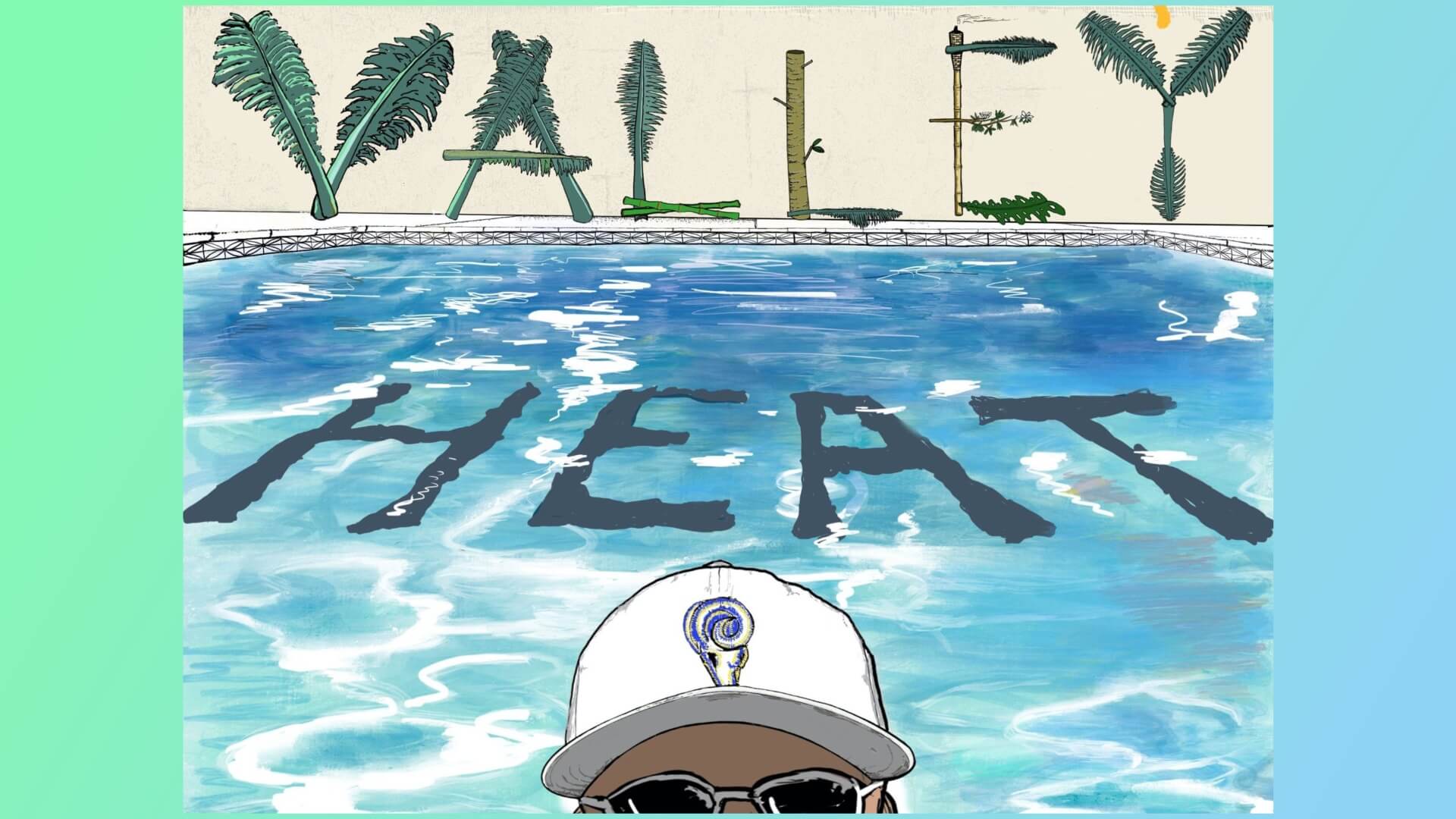
Freelance insurance adjuster Doug Duguay has a nose for sniffing out problems in his life and an even greater talent for making them worse. That simple premise is the distilled essence of Valley Heat, one of the most sublime works of comedy podcasting I’ve encountered. What’s more, this exceptionally hilarious program leverages the medium’s inherent strengths to further amplify its impact, from rich sound design and production to committed, organic acting performances that manage to ground the show’s absurdity, and, above all, some truly incredible original songs. For those reasons, as we start 2026 in dire need of some levity, I’m inducting Valley Heat into the Podcast Canon.
Debuting in the fall of 2020 and releasing a scant 19 episodes in the intervening years, the show purports to be a chronicle of the quotidian goings-on in the Rancho Equestrian District of Burbank, California, but in practice it is a miraculous oddity. Duguay’s comedic sensibility feels somewhat like Curb Your Enthusiasm by way of Mike Judge and Brad Neely. It is just as often a comedy of manners as it is a maximalist, anarchic, prog-rock indulging fever dream. Valley Heat is the kind of program whose unique voice and approach to storytelling highlight the importance of podcasting as a place where risk-taking can thrive.
Operating like a work of autofiction, the show is hosted by the aforementioned Doug Duguay, portrayed by actor and comedian Christian Duguay, and his wife Emily Maya Mills plays Doug’s oft-exasperated wife, Faye. (From here on out, I’ll refer to the character as Doug, and use Duguay when talking about his creator.) Initially feeling like a shambolic send-up of the true-crime genre—Doug believes that his longtime pool guy, Pete (Billy Wayne Davis), is using their garbage as a covert drug drop, and can’t help but investigate—the narrative spirals out of control in the most ridiculous fashion as Doug stumbles into more and more chaos through his sheer inability to let the mystery be, or ever say no to anyone.
Each episode unspools seemingly extemporaneously, with Doug rhapsodizing at length about life in his neighborhood, interspersed with field recordings of his interactions with the various characters he encounters along the way. They are never flattering for him, as we listen to him continually capitulate or dig himself into further trouble. In spite of its narrow focus, the world of the show is florid, populated by so many engagingly eccentric personalities, like Doug’s father-in-law, the muffler king Chuck Baker (Mike O’Connell), whose acidic antipathy provides many of the show’s biggest laughs. Doug’s neighbor, Gary Janthony (Chris Garcia), who has constructed a full-sized automatic car wash in his driveway, to the consternation of the neighborhood. There’s the Canadian foosball champion John Macdonald (Frankie Quinones), who is a dark spectre haunting Doug’s life, or the litigious recumbent bike enthusiast, Terry Melon (Dan Cronin), and the transition lenses-obsessed optometrist, Dr. Dean Fernari.
The specificity of Duguay’s comedy—droll and exacting yet completely surreal at the same time—proves to be the show’s creative engine. Whether it’s the way he unwittingly becomes the owner of a talking parrot named Green Banana, who only ever says “Michael Douglas,” or the way Doug becomes fixated by the perceived inappropriateness of Faye’s male yoga teacher sending her a mermaid emoji, on account of it being almost naked.
All of this is missing one of the show’s most reliable highlights however. Those are the ad breaks, of which there are a staggering amount. Episodes are studded throughout with fake ads for in-universe businesses that often provide the biggest laughs. Whether it’s the mundane relatability of serial entrepreneur Jan Robinson’s shirts and pants (it’s not just a shirt, it’s a Jan Robinson shirt), or the curiously malevolent Used Foosball Tables, Karate Trophy City (home of North America’s tallest karate trophy).
The ads feature extensive jingles from the show’s not-so-secret weapon, the band Cephalopods Are People, fronted by prog-rock obsessed siblings Rick and Randy Poole, who live in a Toluca Lake castle once owned by Frank Sinatra. Which is to say that the Pooles and their band are also a creation from Duguay’s brain, with him writing and performing all of their music as well. The songs are often operatic in their storytelling aims, as in the case of “Frisbee Golf (The Legend Of Tom Clutch),” a nearly five-minute long ballad on the life of fictional disc golf champion Tom Clutch. It’s like nothing else I’ve ever heard in a podcast.
It’s Duguay’s bone-deep commitment to the dry strangeness of the show, along with its occasional baroque flourishes, that makes it such a singular success. His choice of using the podcast medium to tell the story has paid dividends, it feels like a perfect marriage between comic stylings and storytelling medium. The show’s format invites patient, close listening, and he rewards his audience with a carefully crafted program filled with equal parts of subtle comedy and truly bananas moments. The lack of visuals allow Duguay to grow the world of the show in unhinged fashion as well, as with his neighbor Gary Janthony’s ever evolving property that contains the carwash, a Chicago-style pizza parlor, a brewery, and even a man-made cliff for high diving. Valley Heat is a constantly surprising production, the kind which exists on the fringes of the podcast medium but that stands high above it at the same time; a bright beacon for what one can achieve through the magic of audio-only storytelling.
Come back next month when we will be diving into 2017’s expansive historical audio fiction work Bronzeville, exploring the world of Chicago’s so-called Black Metropolis in the 1940s with a star-studded cast toplined by Laurence Fishburne, Larenz Tate, and Tika Sumpter.


 Keep scrolling for more great stories.