With Podcast Canon, Benjamin Cannon analyzes the history of podcasts and interrogates how we talk about the art form.
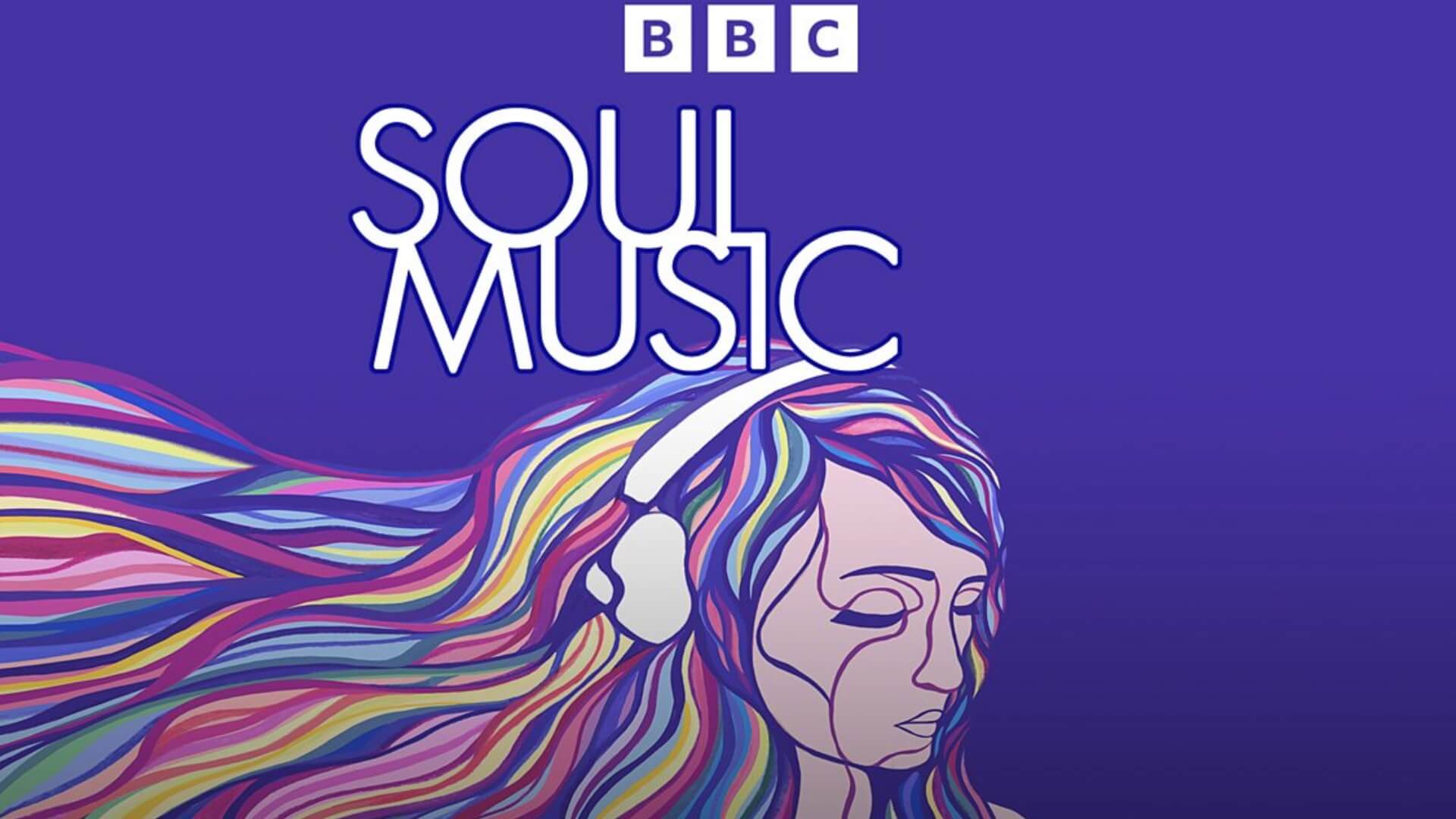
The way a piece of music attaches itself to our lives feels like the closest we will come to experiencing actual magic. Songs become totems, intangible capsules into which our memories of time and place are contained, each entirely unique to every listener. If we wish to return to that feeling or moment, we need only put on a recording and in an instant we’re whisked away. To my mind, no podcast has better explored that phenomenon than BBC Radio 4’s Soul Music. Having recently celebrated its 25th anniversary last month, it feels like an ideal moment to reflect on what makes the show such a special production and, of course, induct it into the Podcast Canon for its contributions to the medium.
Every installment of this documentary program focuses on a particular piece of music, from pop songs like The Beach Boys’ “God Only Knows” and Prince’s “Purple Rain,” to classical western works by the likes of Brahms, Bach, and Mozart, and even includes liturgical music. However, unlike other music podcasts, the producers’ primary concern isn’t what makes the piece special from a technical or musicological standpoint. They are instead more focused on the role that these songs have played in the lives of others. It’s through this simple shift in framing that we’re offered glimpses at the ineffable, plumbing the depth and power of this spiritual connection.
There is such a simplicity to the concept of the show—one song, several personal stories enumerating the impact it has had on their lives—but, thanks to its creators’ tireless pursuit of the most emotionally charged and disparate tales, it becomes vastly more than the sum of its parts. This is largely due to the sense that there are no half measures in its production. Episodes are reputed to sometimes take years to come together, chasing down and soliciting a wide variety of leads in order to winnow them, ending up with only the most resonant and unique examples.
One of its smartest moves comes in foregoing a narrator. Instead of following the conventions of a straightforward narrative documentary, Soul Music takes an appropriately more artful shape. One where a chorus of voices drift in and out of the foreground, recounting moments from their lives and how they were indelibly marked by the work in question. Absent the voice of an interlocutor, the show doubles down on its intimacy. It has the effect of feeling like these stories are being recounted directly to us in our capacity as listeners, with patience and great care. As a result their reverberations are all the more powerfully felt.
The stories are often so charged and specifically tied to one piece of music that it’s hard to conceive of a producer managing to track them down, let alone recording these tales for the consumption of a broad audience. They’re often poetic and unguarded, describing what are surely some of the most climatic moments of the teller’s life. There’s the story of how a hostage negotiator in Lebanon is himself kidnapped and held in solitary confinement for four years, only to find solace and succor in Edward Elgar’s “Dream Of Gerontius.” Or how the success of Ryu Sakamoto’s “Ue O Muite Aruko (Sukiyaki)” in the US helped a generation of Japanese Americans feel renewed connection to their country after their unlawful internment during World War II. There’s maybe no more surprisingly emotional entry than Arvo Pärt’s “Spiegel Im Spiegel” with stories including the parents of a child killed in an IRA bomb attack and an artist reconnecting—through her art—with the son she gave up for adoption decades ago.
Make no mistake, this is a crying podcast. The kind of wonderfully cathartic production that highlights the myriad ways that music can permeate almost every aspect of our lives, in ways both good and bad. Undergirding these stories is a beautifully gossamer bed of sound design and a variety of different recordings of the central work, whether they’re covers, interpolations, or live performances. It connects the listener even more immediately to the stories being related, as well as providing an assured propulsion to the trajectory of each episode.
You may wonder how it is that a show that has been running for 25 years fits into the canon of podcasts? I believe that there are certain programs that predate the adoption of RSS as an audio syndication mechanism, but they have a sensibility that speaks specifically to what the medium is at its heart. Soul Music is experimental at its heart. The kind of program that only produces a handful of episodes each year, a product of a U.K. style of radiomaking that isn’t beholden to advertising revenue, unafraid to take risks, untethered from traditional structures of a systematized, replicable daily broadcast schedule. All of these elements would later come to be synonymous with the late aughts and early 2010s podcasting boom.
The following is a near-exhaustive list of the show’s producers, going back to 2000. They have all worked with love and care to craft this exceptional program, and we wish to recognize those efforts: Sophie Anton, Maggie Ayre, Mair Bosworth, Rosie Boulton, Terry Carter, Sara Conkey, Toby Field, Toby Field, Karen Gregor, Sally Heaven, Nicola Humphries, Lindsay Leonard, Eliza Lomas, Lucy Lunt, Rachel Matthews, Kate McAll, Melvin Rickarby, Becky Ripley, and Natalie Steed.
Next time: Come back at the end of January when we’re going to dig into one of the most original audio comedies of all time, Christian Dugay’s incredible Valley Heat.


 Keep scrolling for more great stories.