
R.I.P. Mike Ditka, former head coach of the Chicago Bears
A statement regarding the football titan's passing was posted on X on Friday on behalf of the Ditka family.
Photo: Rob Kozloff/Associated Press
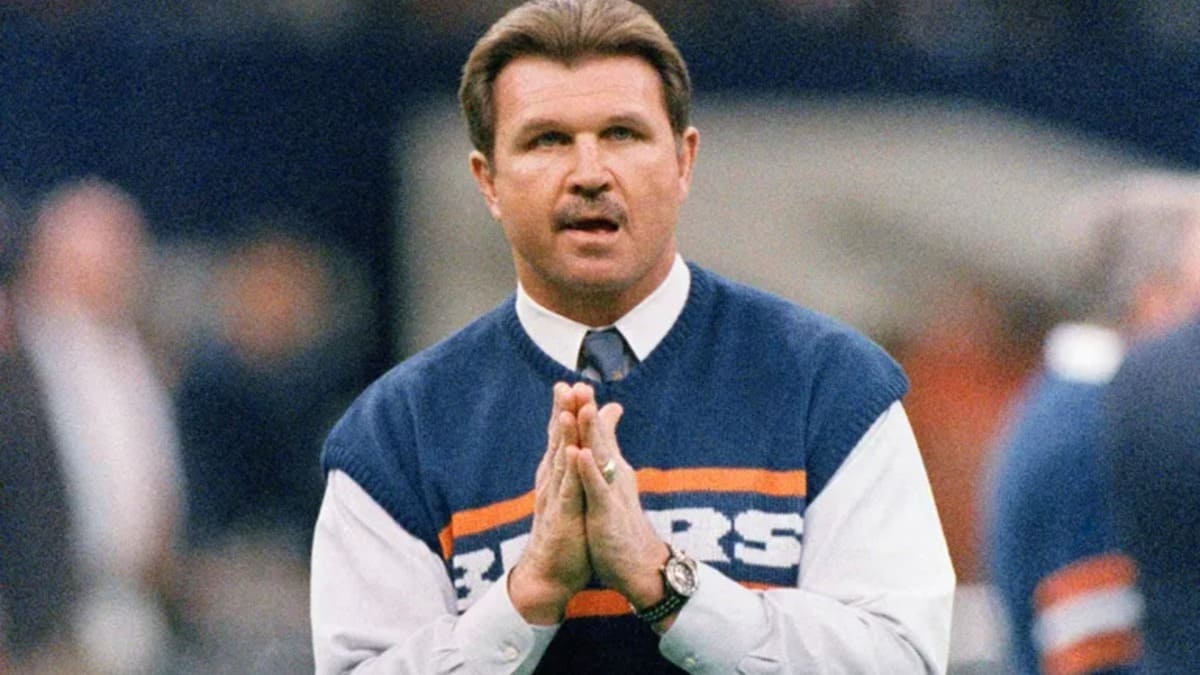
Mike Ditka, the ferocious titan who defined the scrappy determination of the Chicago Bears as player and coach, and the football commentator and product endorser whose sharpness and good humor made Sunday afternoons feel like quality time with dad, has died at 86. An announcement was posted on X by WSCR’s Jarrett Payton on Friday, who shared a statement on behalf of the Ditka family.
“It is with profound sadness that we announce the passing of our beloved husband, father, grandfather, and friend, Mike Ditka,” the post read. “While the world knew Mike as a Hall of Fame football player, legendary coach, and leader of the Chicago Bears’ Super Bowl XX championship team, we knew him as the heart of our family. Mike will be missed beyond measure and remembered forever.”
Indeed, the world’s image of Mike Ditka as a dominant presence in the National Football League, with his push-broom mustache and wry, crinkled grin that belied a gruffness that rankled many who worked with him, is just shorthand for a life defined by as many setbacks as triumphs. Michael Keller Ditka’s storied career took shape during high school in the steel town of Aliquippa, Pennsylvania, where he was encouraged to play for the Pitt Panthers at the University Of Pittsburgh. Before he could pursue his ambition of becoming a dentist, Ditka led the Panthers for three successful seasons. Despite this versatility on the gridiron, football wasn’t Ditka’s only college interest. His bullish frame, which he would use to his constant advantage during play, established him as a three-sport varsity athlete in football, basketball, and baseball, and an intramural wrestling champion for his school.
Ditka’s belligerent prowess as a quadruple-threat was well-known: Kentucky basketball coach Adolph Rupp once referred to him as a “hatchet man” on the court, while the Panthers’ wrestling coach, Rex Peery, once said Ditka had the grit to be an NCAA wrestling champion if he’d gone for varsity. This scrappiness benefitted Ditka all his life. By the time he signed with the Chicago Bears in 1961 (as a first-round draft pick), his reputation as a heavy-hitter preceded him. He was known for his brute strength and brick-wall blocks, and a noted impatience for fellow players he felt weren’t hitting hard enough during practice. These qualities made him an asset on the field and a source of aggravation for the Bears’ owner, George Halas, who ultimately traded Ditka to the Philadelphia Eagles in April 1967 in a fit of exhaustion. “Mr. Halas made the right decision,” Ditka recalled in 2013. “I was a pain in the ass.”
Ditka considered his time away from the Bears a personal low, and took to drink during his short-lived Eagles run. “I really drank a lot,” he said in Ditka: An Autobiography, which he co-wrote with the Chicago Tribune‘s Don Pierson. “Almost killed myself drinking.” Yet, like most everything in Ditka’s life, he endured this low point with the Eagles, and that perseverance eventually led to Dallas Cowboys coach Tom Landry tossing him a career lifeline in 1969. Under Landry’s mentorship, Ditka renewed his focus, playing for the team until 1972. After he and his team defeated the Miami Dolphins in Super Bowl VI, he accepted an assistant coach role from Landry from 1973 to 1981. “[Before the Cowboys,] I was done, finished, and I had made the decision to retire,” he said during a jersey-retiring ceremony in 2013. “I was hurt all the time; I didn’t enjoy the game. I was in bad shape physically, mentally, and socially… I only came back because of a call from Tom, who told me he was willing to take a chance on me, if I was willing to take a chance on myself.”
As his reputation grew on the sidelines, where Ditka could be seen bellowing at players next to the comparatively stoic Landry, a call from Chicago would steer Ditka back to the city that he would ultimately call his home. George Halas, now in his eighties, had chosen Ditka over a heavy field of candidates—a move precipitated by a letter Ditka sent to the Bears owner in 1981, which he hoped would mend their professional and personal rifts and put him in contention as the Bears’ head coach someday. The letter seemed to have worked. “I asked [Tom], ‘Do you think I’m ready?’ and he said, ‘Yes, I think you’re ready.’ An endorsement like that from Coach Landry was all I needed,” Ditka said.
 Keep scrolling for more great stories.