As video games mature, recurring design conventions become widespread across titles and studios, ultimately cementing themselves as universal game language. Spikes hurt you, hearts heal you, and coins raise your score. Culturally embedded game conventions are usually difficult to extricate from common sense; spikes hurt in real life, after all. But a phenomenon that has no real world application, that nevertheless persists across games from Dark Souls to Banjo-Kazooie, is the behavior of skeletons.
When you kill a skeletal enemy in a game, be it The Legend of Zelda: Majora’s Mask or Elden Ring, odds are it’s going to topple into a pile of bones. But after a few moments, that pile of bones will come back to life, reassembling into the skeleton you just defeated. Does every game developer possess the innate impulse to give skeletons the power of resurrection?
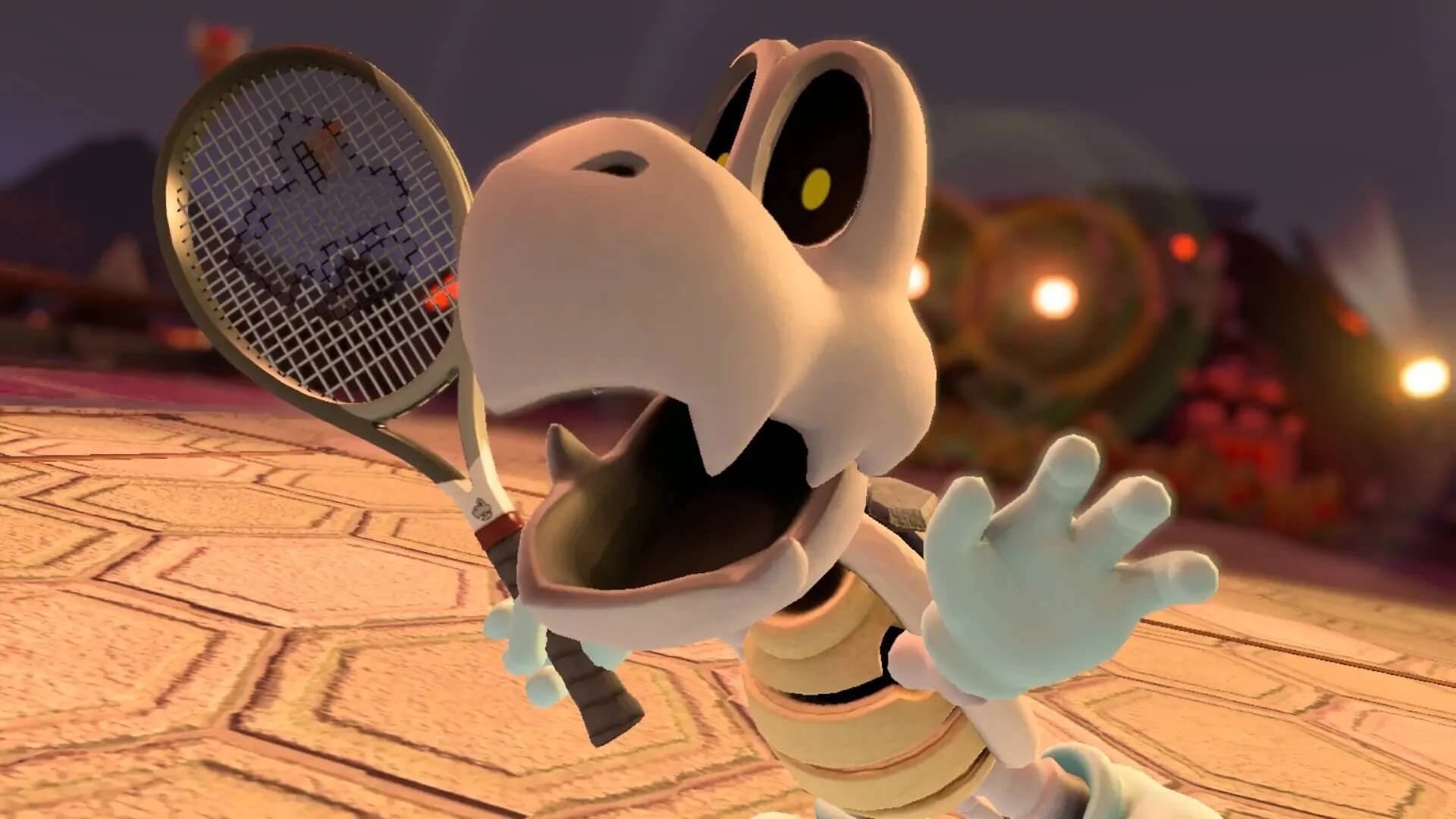
Let’s first look at one of the most iconic examples of reanimating skeletons in video games: Dry Bones. The undead Koopa Troopa was introduced to the Mario franchise all the way back in 1988’s Super Mario Bros. 3 with the ability to reassemble himself after being stomped on. While this does not make Dry Bones the first regenerating skeleton in video game history, he is certainly one of the oldest, and we can learn a lot about the origins of the trope from him.
Dry Bones’ name and regenerative abilities stem from the very first lore bible: the Bible. As detailed in Ezekiel 37:1-8, a prophecy called Vision of the Valley of Dry Bones reads:
The hand of the LORD was upon me, and carried me out in the spirit of the LORD, and set me down in the midst of the valley which was full of bones, and caused me to pass by them round about: and, behold, there were very many in the open valley; and, lo, they were very dry. And he said unto me, Son of man, can these bones live? And I answered, O Lord GOD, thou knowest. Again he said unto me, Prophesy upon these bones, and say unto them, O ye dry bones, hear the word of the LORD. Thus saith the Lord GOD unto these bones; Behold, I will cause breath to enter into you, and ye shall live: and I will lay sinews upon you, and will bring up flesh upon you, and cover you with skin, and put breath in you, and ye shall live; and ye shall know that I am the LORD.
So I prophesied as I was commanded: and as I prophesied, there was a noise, and behold a shaking, and the bones came together, bone to his bone. (Ezekiel 37:1-8 KJV)
Spoilers for the Book of Ezekiel: in the vision, God reveals the undead men to be the exiled people of Israel, and Ezekiel prophesies the flesh to return to their bones and the wind to their lungs. While the OG dry bones are technically reanimated skeletons, it’s important to note that they regenerate their skin as well.
Okay, so Dry Bones isn’t actually likely to be modeled after the Book of Ezekiel. At least, not directly. Vision of the Valley of the Dry Bones is the inspiration for two different folk songs, either (or both) of which could’ve influenced the undead turtle. Probably the more popular of the two is “Dem Bones,” a children’s song that you may recognize: “The head bone’s connected to the neck bone,” etc. Many—myself included until time of writing—are not aware of the song’s spiritual roots, as the chorus is often omitted: “Dem bones dem bones dem dry bones / Dem bones dem bones gonna walk around / Now hear the word of the Lord.” The song is typically presented alongside imagery of dancing skeletons, making it a popular classroom anthem during Halloween. Another folk song, “Dry Bones,” also references the story from Ezekiel; Bascom Lamar Lunsford’s 1929 recording of it was included in Harry Smith’s massively influential collection Anthology of American Folk Music. It’s entirely possible that whichever Nintendo of America employee coined the Dry Bones name while localizing Super Mario Bros. 3 was familiar with the Book of Ezekiel, but it’s just as possible that either of these songs were the direct inspiration. (In its original Japan, Dry Bones is known as Karon, a reference to the sound of bones clattering.)
The tradition of animated skeletons doesn’t come directly from the Bible, either. Almost the opposite. Dancing skeletons in art and culture trace back to Medieval Europe, when the Great Famine and the Black Death disrupted the Christian ideal of death being peaceful. Newfound fascination with morbidity in the wake of disaster led to new depictions of death in memento mori art. The Danse Macabre, an allegory originating in late 13th century literature, became prevalent in fine art, portraying the living dancing alongside rotting corpses and skeletons. These artistic renderings of animated death paved the way for modern depictions of jovial dancing skeletons, including Disney’s deeply influential 1929 animated short The Skeleton Dance.
For nearly as long as video games have existed, undead skeletons have been in them. Early games featuring skeleton enemies such as Dungeon (1975), Aklabeth: World of Doom (1979), and Dandy (1983) took heavy inspiration from the then-new tabletop fantasy role-playing game Dungeons & Dragons. D&D’s fantastical setting and creatures, including undead skeletons, drew from the work of J.R.R. Tolkien, which pioneered the modern fantasy genre. And the image of reanimated skeleton warriors armed with swords and shields designed by stop motion animation legend Ray Harryhausen in movies like Jason and the Argonauts and The 7th Voyage of Sinbad left an indelible impression on pop culture, including games. The 1978 Advanced Dungeons & Dragons features the Animate Dead spell, which “creates the lowest of the undead monsters, skeletons or zombies, from the bones or bodies of dead humans. The effect is to cause these remains to become animated and obey the commands of the cleric casting the spell.” Unfortunately, the skellies found in the first D&D-inspired video games were unable to be resurrected by themselves, the player, or any other entity.
The earliest example of regenerating skeletons in video game history I could find comes from Castlevania (1986), which features a variety of skeletal enemies for Simon Belmont to battle, each with different attack patterns. One variant, the red skeleton, topples into a pile of bones upon impact, only to reassemble shortly after.
Castlevania is deeply influenced by classic pre-slasher horror films such as Dracula (1931) and The Hunchback of Notre Dame (1923). In a 1993 interview with Micom BASIC Magazine, Castlevania director Hitoshi Akamatsu says, “I think not just vampires, but all the classic horror movie characters (such as Dracula and the hunchbank) have their unique presence and charm to them. While I personally don’t have any particular attachment to vampires, I think their power to revive as many time [sic] as possible, even after having a stake stabbed through their hearts, as well as their many weaknesses such as sunlight and garlic, are conversely charming as well.” It is likely that Akamatsu was directly inspired by vampires in giving the red skeleton—also known as the blood skeleton—the ability to regenerate.
Many of the classic horror films that inspired Castlevania were made by Universal, whose series of classic monster movies adapted Gothic literature from 1913 to 1956 (it technically still exists today, but the classic era ended with the release of The Creature Walks Among Us). And get this: the 1800s Gothic horror novels that spawned the classic horror film adaptations were in turn influenced by the morbidity of Medieval European culture.
There is something beautiful about how some of the most eternal and unifying cultural phenomena derive from great disaster. In the face of unspeakable tragedy, when the flame of humanity flickers at its weakest, we turn to creation for salvation. And then those creations inspire more, spanning generations and centuries, influencing humanity throughout the world and across the ages. Art and culture unite us in our suffering, and, in spite of everything, we survive—like video game skeletons.


 Keep scrolling for more great stories.