
Scrabdackle turns a notebook into the best vehicle for discovery
A personal touch goes a long way with the new adventure's in-game notes.
Scrabdackle screenshots
If a giant frog were to start hopping in my general direction while I brandished a weapon, in most games, it wouldn’t be long before I snuff its life out. Mercilessly. Years of walking into a game and being met with immediate violence has taught me to be on edge, to be prepared to kill or be killed, to be ready to fend off the loss of progress towards credits. But Scrabdackle Act 1 isn’t like most games, so instead of murdering the giant frog hanging around the entrance of Duck Castle, I pulled out my magical Scry and learned what the frog’s deal was. Turns out that these giant frogs, known as Rogs in the land of Scrabdackle, are super chill if you leave their dopey selves alone.
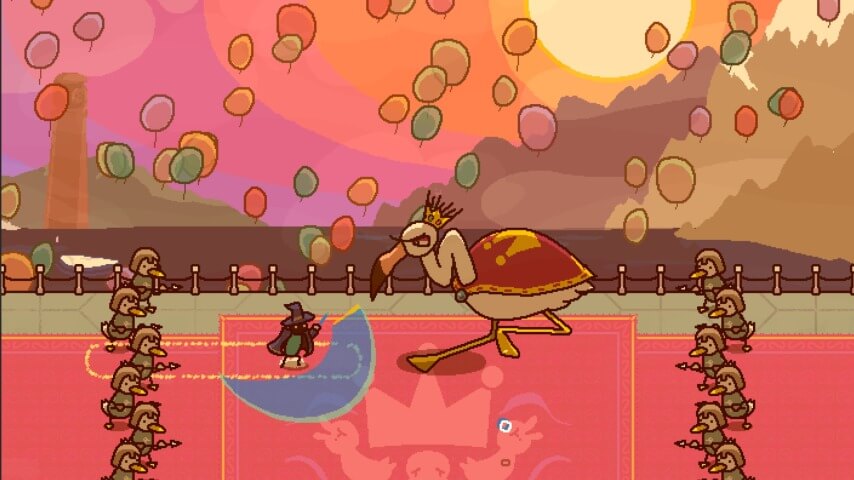
It is this relationship with the land and its whimsical inhabitants that makes the Kickstarter-backed action-adventure game Scrabdackle particularly stand out. While it’s reminiscent of Zelda titles for its layered side quests, environmental puzzles, and endless amounts of pots to break, and also conjures Fromsoftware’s essence with some particularly tough boss fights and a non-linear open world full of hidden shortcuts, this game from developer jakefriend quickly forms a unique identity. Playing as the novice wizard Blue, you’re tossed (literally, right out of the window of your academy) into the strange, hand-drawn land of Scrabdackle with the goal of finding your way back. While it sounds simple enough, it quickly becomes apparent that more than a few hills and one bat-ruled mountain will need to be traversed if you want to figure out how to return home, as well as who threw you out in the first place.
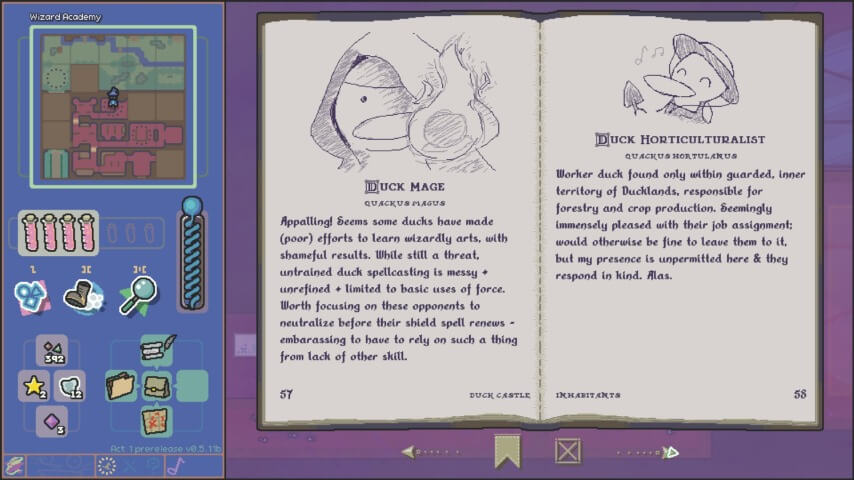
The game has many strong points—combat is snappy, fights are tough but rarely unfair, and the interconnected nature of the land makes everything feel part of one sprawling ecosystem—but its academy notebook, which functions as an ever-growing encyclopedia of Scrabdackle, is an ingenious addition. Blue’s doodles are cute and silly, their entries whimsical while being helpful and generally informative. You can even decorate the front with stickers of Scrabdackle’s creatures acquired by solving head-scratching puzzles. It might sound like a fairly standard video game feature, but this notebook is where Scrabdackle most explicitly breaks from its obvious influences and strikes out its own weird, authentic identity.
What Scrabdackle’s notebook does is turn the game into something to be explored and understood, not sped through and extracted from. The notebook goes hand-in-hand with the Scry tool Blue has from the very start, which allows players to hover their cursor over eligible objects and creatures, focus on them for a few seconds, and then add relevant info to the notebook. By giving players an option that encourages them to preemptively pause before engaging with a new creature (or keep dodging, since many won’t wait for you to attack first), Scrabdackle’s world slowly but surely becomes a setting not for another “chosen one” power fantasy of magical proportions, but a place for players to carve out their own experience within a space that seem to live independently of the player. (It also helps that enemies like Batnik and the damned Duck Knight beat my ass into the ground enough to never allow for anything resembling a power trip.) While there are a few story beats that hint at Blue having a special role in whatever’s plaguing his academy, most of my time wandering between oddly-shaped forests and dangerous ruins decentered Blue in a way that put him on equal ground with everything else.
 Keep scrolling for more great stories.